


New Syria Defines Its Economic Identity: ‘Partnership’ Replaces Privatization in Recovery Plan

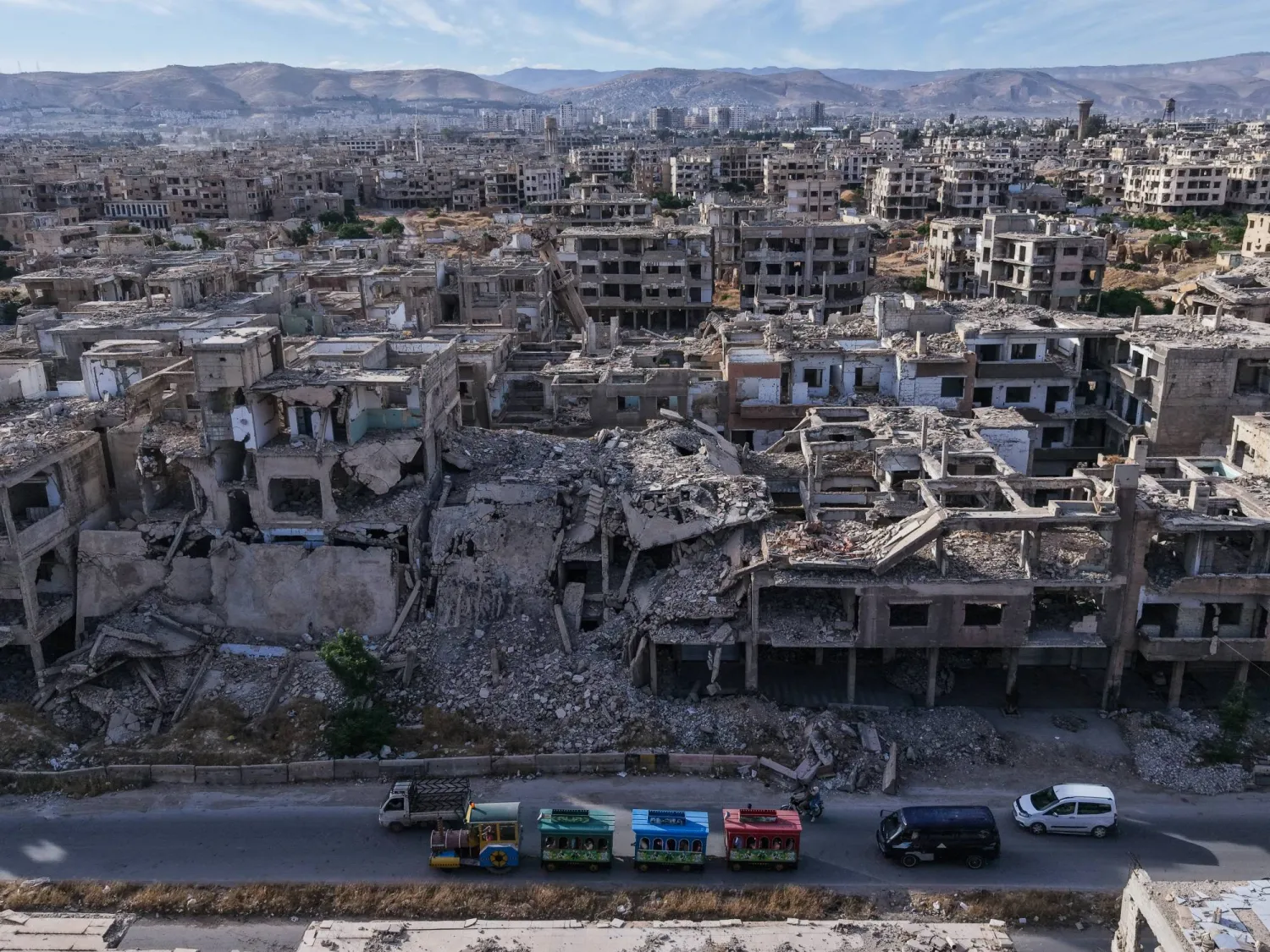
28 May 2026, Syria, Jobar: Syrians play in an Eid al-Adha amusement park in a devastated area amid the completely destroyed Jobar neighborhood on the outskirts of Damascus during the second day of the Muslim Feast of Sacrifice, Eid al-Adha. Photo: Moawia Atrash/dpa
TT

New Syria Defines Its Economic Identity: ‘Partnership’ Replaces Privatization in Recovery Plan

28 May 2026, Syria, Jobar: Syrians play in an Eid al-Adha amusement park in a devastated area amid the completely destroyed Jobar neighborhood on the outskirts of Damascus during the second day of the Muslim Feast of Sacrifice, Eid al-Adha. Photo: Moawia Atrash/dpa

Syria has settled the debate over the identity of its new financial and investment system, adopting a model of “strategic partnership” between the public and private sectors as a fundamental alternative to outright privatization. The shift officially elevates the private sector from a marginal supporting role to the “engine of economic development” and the principal partner in leading the recovery and reconstruction phase.

The strategic approach, crowned by the launch of a broad national dialogue in 2026, aims not only to attract domestic and expatriate capital and reconnect local value chains, but also to redefine the state’s role as a regulator and guarantor of a free market. Supported by an international vision focused on sustainability and an unprecedented package of legislative incentives, the strategy seeks to bridge a trust deficit that has persisted for years and build an open social market economy that balances freedom of individual initiative with broader developmental responsibility.

First dialogue after the political transition

Damascus recently concluded the First National Conference for Private Sector Dialogue in Syria 2026, held over three days at the Conference Palace.

The event was the first of its kind in the country since the beginning of the political and economic transition following the fall of the former regime at the end of 2024.

Organized by the Ministry of Economy and Industry in cooperation with the United Nations Development Programme (UNDP), with funding and support from the Japanese government, the conference drew nearly 500 economic figures, including ministers, representatives of public institutions, chambers of commerce, industry and agriculture, business councils, experts and businesspeople from inside and outside Syria, as well as international organizations.

According to official Ministry of Economy and Industry materials, the conference aimed to formulate practical visions and recommendations to support the path toward recovery and comprehensive development.

Syria’s new economic vision aligns with UNDP principles that view “economic diversification as a strategic asset.” Under this framework, the Syrian private sector is not regarded as a monolithic bloc but rather as a diverse and resilient ecosystem. Its structure spans several levels, most notably micro, small and medium-sized enterprises, which account for more than 90 percent of Syria’s business landscape and represent the country’s primary reservoir for absorbing the national workforce. It also includes family businesses and craft workshops that preserved productive skills locally throughout years of crisis under severe pressure, as well as agricultural producers and local manufacturers who ensured the continued minimum flow of goods into domestic markets.
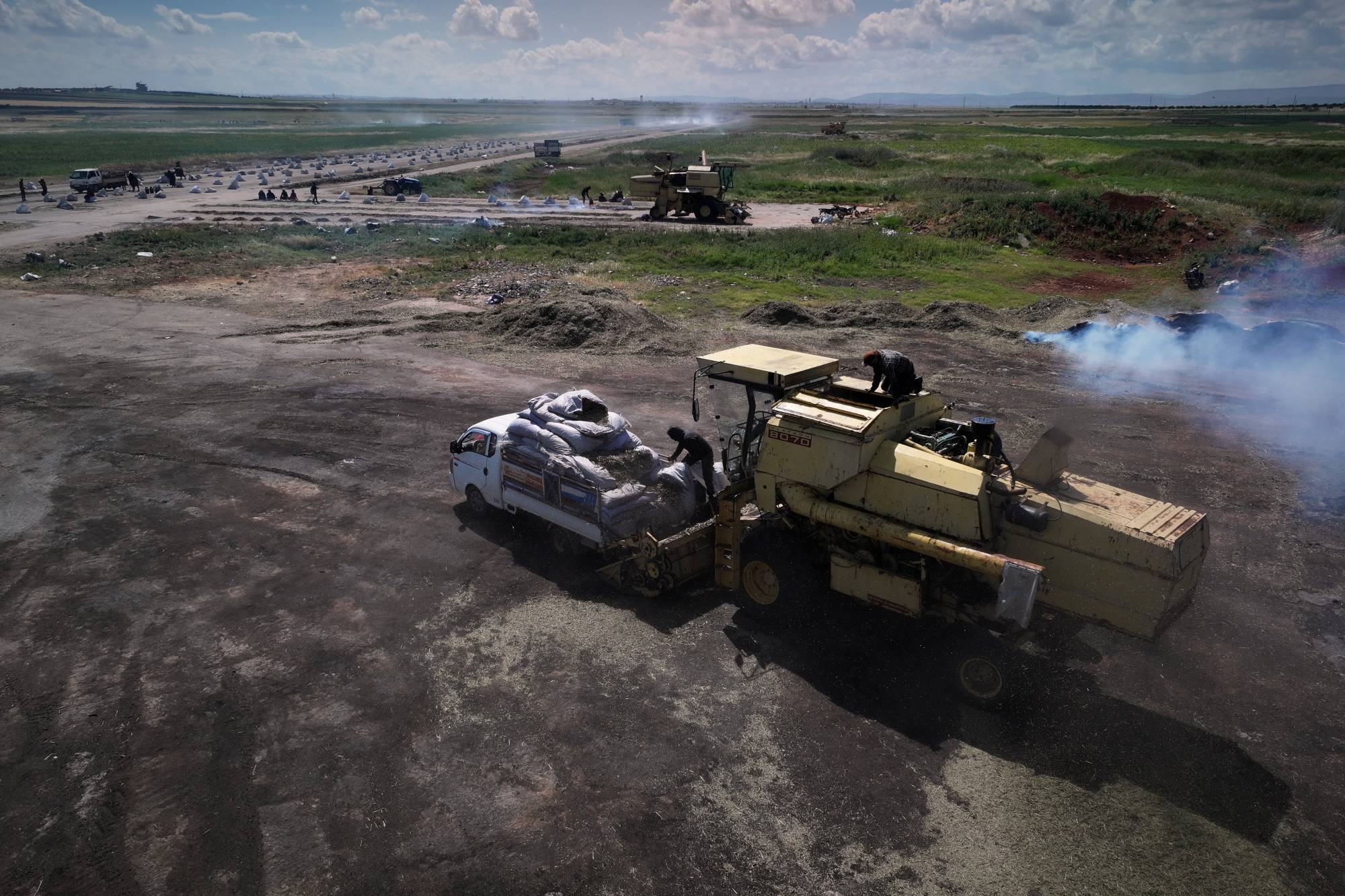
Syrian workers load sacks of freekeh, a roasted green wheat grain widely used in Levantine cuisine, after burning and roasting immature wheat over open flames to separate and preserve the grains, on the outskirts of Taftanaz, northwestern Syria, Sunday, May 24, 2026. (AP Photo/Ghaith Alsayed)

Identity of the new economy

In comments to Asharq Al-Awsat, Osama Kadi, an economic expert and senior adviser for local economic policy affairs at Syria’s Ministry of Economy and Industry, said the conference had “removed ambiguity” regarding the identity of the Syrian economy in the coming phase.

He explained that the country’s economic direction is closest to a guided market economy, or social market economy, similar to those found in Germany, much of Europe and Canada. The private sector, he said, is viewed as the driver of economic development, while the public sector is not destined for privatization, with the government instead pursuing a partnership model with private enterprise.

Kadi added that the economic identity of the new Syria is based on free supply-and-demand mechanisms without monopolistic practices, while emphasizing good governance and the state’s role in monitoring the implementation of laws, ensuring their flexibility and fostering an attractive investment environment through tax rates designed to encourage economic activity.

Investment Law No. 114

Under Investment Law No. 114 of 2025, the Syrian government exempted all agricultural and educational activities from taxation and introduced incentives for industrial production.

Any investment company that exports more than 50 percent of its production receives an 80 percent tax exemption, while the general tax rate does not exceed 15 percent. Production lines and machinery used in manufacturing operations are also exempt from taxes.

Kadi noted that the law’s executive regulations support micro, small and medium-sized enterprises, which make up more than 90 percent of Syria’s businesses, through credit lines, concessional loans, business incubators and accelerators. The regulations also encourage such enterprises to participate in local and international exhibitions through business councils announced during the conference in more than 17 countries.
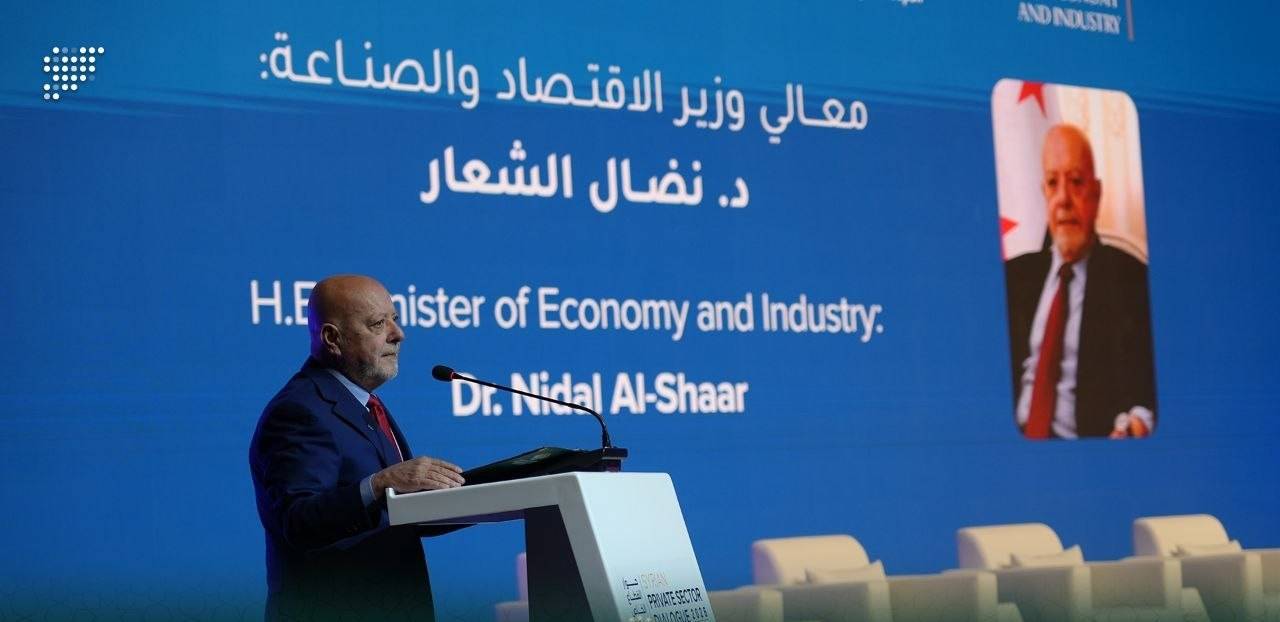
Mohammad Nidal al-Shaar speaks during the opening of the First National Conference for Private Sector Dialogue in Syria (X).

Balancing private initiative and the role of the state

Speaking at the conference’s opening session, Minister of Economy and Industry Mohammed Nidal al-Shaar said Syria is moving toward building a new economic model that combines realism, ambition and openness.

He said the country is closely examining states that have achieved successful models and rapid development over relatively short periods in order to learn from and adapt those experiences while building its own model based on its capabilities, strategic location and the expertise of Syrians at home and abroad.

Al-Shaar said that “adopting a free-market approach does not mean the absence of the state or the abandonment of market controls. Successful experiences have proven to be based on a balanced model between freedom of initiative and the strategic role of the state.”

He added that “modern economic revival is not built on slogans, but on efficiency, discipline, stability and genuine partnerships, as well as an economy that provides opportunities for initiative, creativity and production within a clear national vision.”

He stressed that the state’s economic role should not be reduced to a debate between public ownership and privatization, nor should privatization be viewed as a stigma, a default option or an automatic solution to economic challenges. The real value of public assets, he said, lies not in their sale price but in their ability to generate sustainable added value for the national economy.

Sectors for strategic partnership

Speaking to Asharq Al-Awsat, Kadi identified agriculture, agro-industry, energy, transport, infrastructure and reconstruction as the key sectors expected to lead public-private cooperation.

He said Syria remains an underdeveloped opportunity, with no more than 5 percent of its human potential, resources and underground wealth having been utilized. He also said Syria's geopolitical position had long been underutilized despite its potential and now contributes more than one-third of the state budget. As an example, he said that 11,800 aircraft crossed Syrian airspace in May alone, generating revenue for the public treasury.

Kadi said the most important element in relations between the public and private sectors is the clarity of the partnership itself, particularly through transparency in contracts and the adoption of environmental, social and governance (ESG) standards.

In this context, he said, the shift toward a green transition and the efficient use of resources should be viewed not as a luxury but as an economic necessity that can reduce long-term operating costs and prepare Syrian products for global markets.
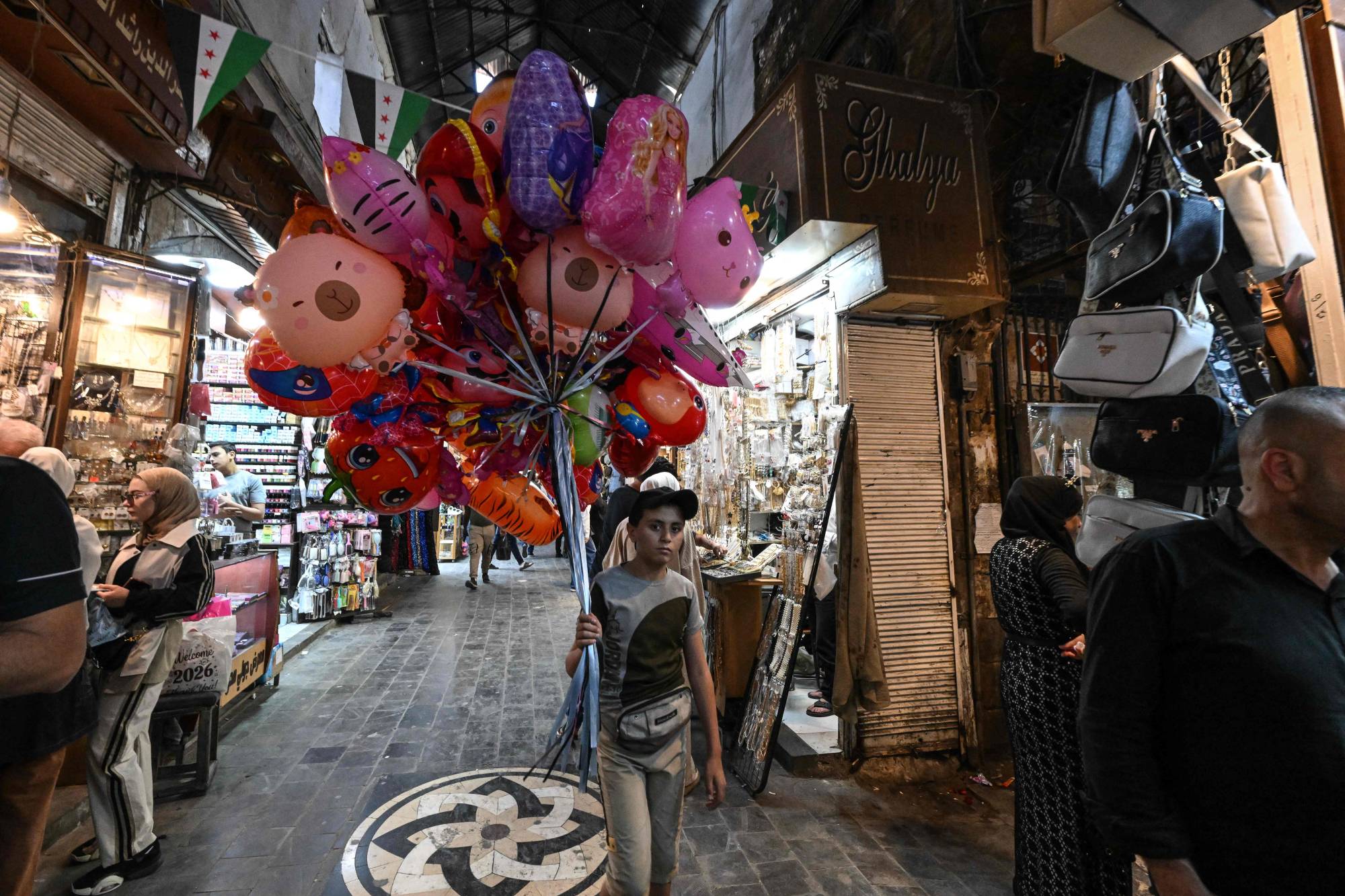
A boy carries balloons as shoppers stroll through the old market in Damascus ahead of the Eid al-Adha holiday on May 26, 2026. (Photo by LOUAI BESHARA / AFP)

Institutionalizing partnership

The convening of the private sector dialogue in Damascus for the first time since its launch in 2018 marked a milestone in institutionalizing and localizing the process.

The question now, observers ask, is how far this shift can help bridge the “perception gap” and build mutual trust and accountability between traders and industrialists on one side and government institutions on the other.

Syrian economist Ziad Arabsh said the move contributes to narrowing that gap by transferring discussions from exile to the domestic arena, where industrialists, traders and government officials confront the same challenges, including electricity, raw materials and procurement.

He said trust is strengthened through direct dialogue without international intermediaries, while bringing all stakeholders together in one place creates social pressure to follow through on commitments.

Arabsh added that institutionalization helps bridge perceptions by transforming dialogue from a temporary initiative into a permanent institutional mechanism linked to the Ministry of Economy and UNDP. The conference, he said, also turns discussion from a theoretical exercise into a practical decision-making process.

Since the fall of the former regime, the Syrian government has been working to restore economic growth and attract domestic and foreign capital to participate in rebuilding the economy.

The World Bank estimated in November 2025 that rebuilding Syria would cost about $216 billion, while direct physical damage to infrastructure and residential and non-residential buildings amounted to roughly $108 billion.

Given the caution of foreign investors, experts broadly agree that expatriate Syrian capital and diaspora networks represent the most realistic and fastest source of financing in the near term.

Arabsh said translating policy recommendations into implementation plans with binding timelines requires a clear institutional mechanism. This should include a joint executive committee tasked with converting recommendations into action plans and specific projects, establishing implementation schedules, linking plans to realistic budgets, creating monitoring and evaluation systems, and tying compliance to incentives and penalties.

Without binding deadlines and public accountability, he said, recommendations risk remaining merely words on paper.

Regarding legal guarantees and banking mechanisms designed to encourage expatriate capital to return, Arabsh pointed to the protections contained in Law No. 114, including safeguards for private and industrial property, regulations guaranteeing the transfer of profits in foreign currencies, easier financial transfers from abroad, concessional financing for joint ventures and the activation of leasing finance.

He added that investment incentives include tax exemptions lasting between five and 10 years, industrial land at symbolic prices in industrial cities, and build-operate-transfer partnerships with the public sector that preserve state ownership while allowing efficient private-sector management.

Arabsh also highlighted diaspora initiatives, including European Union and International Fund for Agricultural Development support for members of the Syrian diaspora to strengthen agricultural investment, as well as digital platforms such as “Bunyan Syria” that connect expatriates with reconstruction projects.

“Expatriates need legal certainty, banking liquidity and tangible incentives, not just emotional appeals,” he said.

An international co-financing platform

In concluding remarks, Arabsh stressed the strategic importance of building strong ties with international financial institutions.

He said the prominent involvement of UNDP and the Japanese government provides a trusted international guarantee that could encourage the World Bank, the International Monetary Fund and regional development banks to engage with Syria’s emerging economic landscape.

Arabsh argued that UNDP’s strength lies in its ability to create structural integration on two fronts: a local track focused on supporting livelihoods and developing the micro, small and medium-sized enterprise sector, and a strategic track aimed at improving the national business environment.

He concluded that the most urgent priority today is to transform the dialogue into a “co-financing platform” capable of bringing together public resources, donor funding and private capital within a single productive framework, ensuring that the diverse capacities of the private sector evolve from a tool of resilience and survival into a genuine driver of sustainable economic revival.



Hormuz Disruptions Drive Saudi Re-Exports to Historic High

King Fahd Industrial Port in Yanbu, Saudi Arabia (SPA)
TT

Hormuz Disruptions Drive Saudi Re-Exports to Historic High

King Fahd Industrial Port in Yanbu, Saudi Arabia (SPA)

Preliminary data released by the General Authority for Statistics on Thursday revealed a remarkable positive shift in Saudi Arabia's international merchandise trade during April 2026.

The merchandise trade surplus doubled by 100.8 percent compared to the same month last year, reaching 25.4 billion riyals (approximately $6.77 billion), driven by an increase in total merchandise exports and a decrease in spending on imports.

According to the official bulletin, total merchandise exports grew by 9.3 percent to reach 101 billion riyals (approximately $26.93 billion), compared to 93 billion riyals in April 2025.

This growth was primarily driven by an 11.7 percent rise in oil exports, reaching a value of 69.6 billion riyals (approximately $18.56 billion), compared to about 62.7 billion riyals (approximately $16.72 billion) in the previous year, alongside a 4.5 percent growth in non-oil exports (including re-exports), reaching 31.4 billion riyals (approximately $8.37 billion). Among these, the "re-exports" item alone saw a historic jump of 20.4 percent, reaching 15.5 billion riyals (approximately $4.13 billion).

Conversely, a 5.2 percent decline in total merchandise imports, decreasing from 80 billion riyals (approximately $21.33 billion) to 76 billion riyals (approximately $20.26 billion), contributed to the Kingdom's trade balance gains; the merchandise trade surplus doubled by 100.8 percent, rising from approximately 13 billion riyals (approximately $3.47 billion) in April 2025 to expand to 25.4 billion riyals (approximately $6.77 billion) in April 2026.

Logistical Resilience

The re-export movement in the Kingdom recorded unprecedented historic performance; the value of re-exported goods jumped by 20.4 percent to reach a record level of 15.5 billion riyals (approximately $4.13 billion), which is the highest monthly level recorded by statistical data since 2017.

This strong performance was bolstered by a 74.0 percent increase in exports from the "machinery, electrical appliances, and equipment and their parts" sector, which alone accounted for 53.5 percent of total re-exported goods.

This intensive logistical activity occurred as the Kingdom benefited from diverting part of the regional shipping traffic to avoid navigation disruptions in the Strait of Hormuz, which accompanied the Iranian war.

Saudi Arabia enhanced the role of its ports as alternative routes by diverting shipping to Red Sea ports (Jeddah and Yanbu), while raising the readiness of eastern and western ports and activating the "East-West" pipeline to ensure the continuous flow of oil and goods. These efforts culminated in a rise in the ratio of non-oil exports (including re-exports) to imports, reaching 41.6 percent compared to 37.8 percent in April 2025.

Goods Structure and Trade Partners

Regarding non-oil trade details, "machinery, electrical appliances, and equipment" topped the list of non-oil exports with a share of 28.1 percent, followed by "plastics, rubber, and their products" at 17.1 percent. As for imports, the same group (machinery and electrical equipment) led the imported goods with a share of 33.3 percent, followed by transport equipment and parts at 10.2 percent.

In terms of international partners, China maintained its position as the Kingdom's main trading partner, accounting for 15.2 percent of total Saudi merchandise exports, followed by the UAE at 10.6 percent, and then South Korea at 9.7 percent. China also ranked first in the Kingdom's import list with 29.4 percent, followed by the UAE at 7.9 percent, and the United States of America third at 7.2 percent.

Jeddah Islamic Port played a pivotal role during this period, topping customs ports as the most important gateway through which 33.7 percent of imported goods passed, and also ranking first as the most important port for the Kingdom's non-oil exports with 23.3 percent.


SIRC: Waste Management to Add $32 Billion to Saudi Economy by 2040

SIRC headquarters in Saudi Arabia (company website)
TT

SIRC: Waste Management to Add $32 Billion to Saudi Economy by 2040

SIRC headquarters in Saudi Arabia (company website)

Saudi Arabia’s waste-management sector is set to evolve from a routine environmental service into an independent industrial and economic engine, potentially adding more than SAR120 billion ($32 billion) to the Kingdom’s GDP by 2040, according to Alwaleed Alzahrani, Business Development Manager at the Saudi Investment Recycling Company (SIRC).

Speaking to Asharq Al-Awsat on the sidelines of Riyadh International Industry Week 2026, Alzahrani projected the sector will create more than 77,000 quality jobs and cut carbon emissions by 73 million tons annually.

Waste in Saudi Arabia, he noted, is no longer merely an environmental challenge linked to urban expansion but an emerging economic and industrial pillar that recycles resources and transforms waste into productive inputs, reducing reliance on oil.

SIRC, wholly owned by the Public Investment Fund and established in 2017, is the main driver of Saudi Arabia’s waste-management sector. It serves as a platform to empower the private sector and develop the infrastructure needed to meet Vision 2030 sustainability and economic diversification goals.

Alzahrani described the shift as a fundamental move from the traditional service-based model of waste treatment to a standalone industrial sector built on circular-economy principles.

SIRC functions as a national arm and strategic investor, working with government entities and the private sector to build an integrated system for sorting, treating, recycling, and converting waste into value-added industrial resources.

The sector aims to divert 90 percent of waste away from landfills by 2040 while helping save more than 60 million barrels of crude oil through waste-to-energy and alternative fuel production.

The strategy, he added, goes beyond addressing a growing environmental challenge by creating a new industrial sector capable of generating added value, strengthening local content, and positioning Saudi Arabia among the world’s leading circular economies.

Investment opportunities extend beyond recycling plants to the entire value chain, including collection, sorting, digital solutions, logistics, and the development of stable markets for recycled materials.

These opportunities span municipal waste, construction and demolition debris, plastics, metals, and electronic and industrial waste.

According to Alzahrani, SIRC’s central role is to transform these opportunities into commercially viable projects by “reducing investment ambiguity,” providing accurate market data, ensuring stable supplies and economic feasibility, and creating a regulatory environment attractive to domestic and international investors.

On the broader economic impact, he explained that returning recovered materials to the production cycle keeps value within the national economy for longer. It also gives local manufacturers greater resilience against global market volatility and raw-material price swings by enabling them to rely on high-quality recycled domestic resources available in stable commercial quantities, while reducing environmental impacts and carbon emissions.

Official data from the General Authority for Statistics show total recorded waste in Saudi Arabia rose to 135.1 million tons in 2024, up from 111.4 million tons in 2023. Agriculture, forestry, and fishing generated the largest share at 46.9 million tons, followed by construction (32.2 million tons), households (20.5 million tons), and industry (26.7 million tons), with manufacturing accounting for 68.6 percent of industrial waste.

By material type, organic waste represented the largest share at 45.7 percent (about 61.7 million tons), followed by construction materials (22.8 percent) and plastics (5.8 percent).


Ministry of Tourism Highlights Investment Opportunities at FHS Saudi Arabia 2026

The Ministry highlighted Saudi Arabia’s growing appeal as a tourism investment destination and showcased the wide range of opportunities emerging across the Kingdom’s rapidly developing tourism sector. (SPA)
TT

Ministry of Tourism Highlights Investment Opportunities at FHS Saudi Arabia 2026

The Ministry highlighted Saudi Arabia’s growing appeal as a tourism investment destination and showcased the wide range of opportunities emerging across the Kingdom’s rapidly developing tourism sector. (SPA)

Saudi Arabia’s Ministry of Tourism participated in the Future Hospitality Summit (FHS) Saudi Arabia 2026, held in Riyadh from June 22 to 24, bringing together investors, developers, operators, and leading global brands from across the hospitality and tourism sectors.

Through its participation as the Strategic Enabler of the Kingdom's premier hospitality investment forum, the Ministry highlighted Saudi Arabia’s growing appeal as a tourism investment destination and showcased the wide range of opportunities emerging across the Kingdom’s rapidly developing tourism sector, reported the Saudi Press Agency on Wednesday.

In his opening address, Deputy Minister for Tourism Destinations Enablement Eng. Mahmoud Abdulhadi said: “Saudi Arabia is not asking investors to invest in a promise. It is inviting them into a market already moving at scale.”

Highlighting the breadth of this opportunity, he added: “Saudi tourism is not built on one project, one city, or one market segment. It is a national portfolio of destinations shaped for diverse demand.”

Abdulhadi also participated in a fireside chat titled “From Opportunity to Bankability: Saudi Tourism’s Next Investment Chapter,” where he stressed that Saudi Arabia’s tourism sector has entered a new phase focused on elevating the quality of the visitor experience.

“My advice to investors is simple: come, explore, and engage with the ecosystem. The opportunity is not only in building assets, but in creating high-quality experiences for the traveler,” he said.

Throughout the three-day event, the Ministry of Tourism presented Saudi Arabia’s evolving tourism landscape, highlighting its efforts to foster an investment-enabling environment and unlock new opportunities across the Kingdom’s destinations in support of Saudi Vision 2030 and the sector’s long-term growth.

The Ministry also introduced local and international investors to its targeted incentive programs and initiatives designed to support their investment journey, most notably the Tourism Investment Enablers Program (TIEP) and the Hospitality Investment Enablers (HIE) initiative.

During FHS, the Ministry launched the Global Investment in Saudi Tourism report, which highlights key growth indicators in the sector, the expansion of leading global hospitality brands in the Saudi market, and ongoing efforts to strengthen the Kingdom’s position as a premier global destination for tourism investment.

The Ministry of Tourism’s participation in FHS Saudi Arabia 2026 forms part of its ongoing efforts to engage local and international investors and partners, unlock high-quality investment opportunities, and support private sector participation in the development of the tourism industry, advancing the objectives of the National Tourism Strategy and Saudi Vision 2030.