


Iranian-American Journalist Jailed in Tehran Pleas for US Help

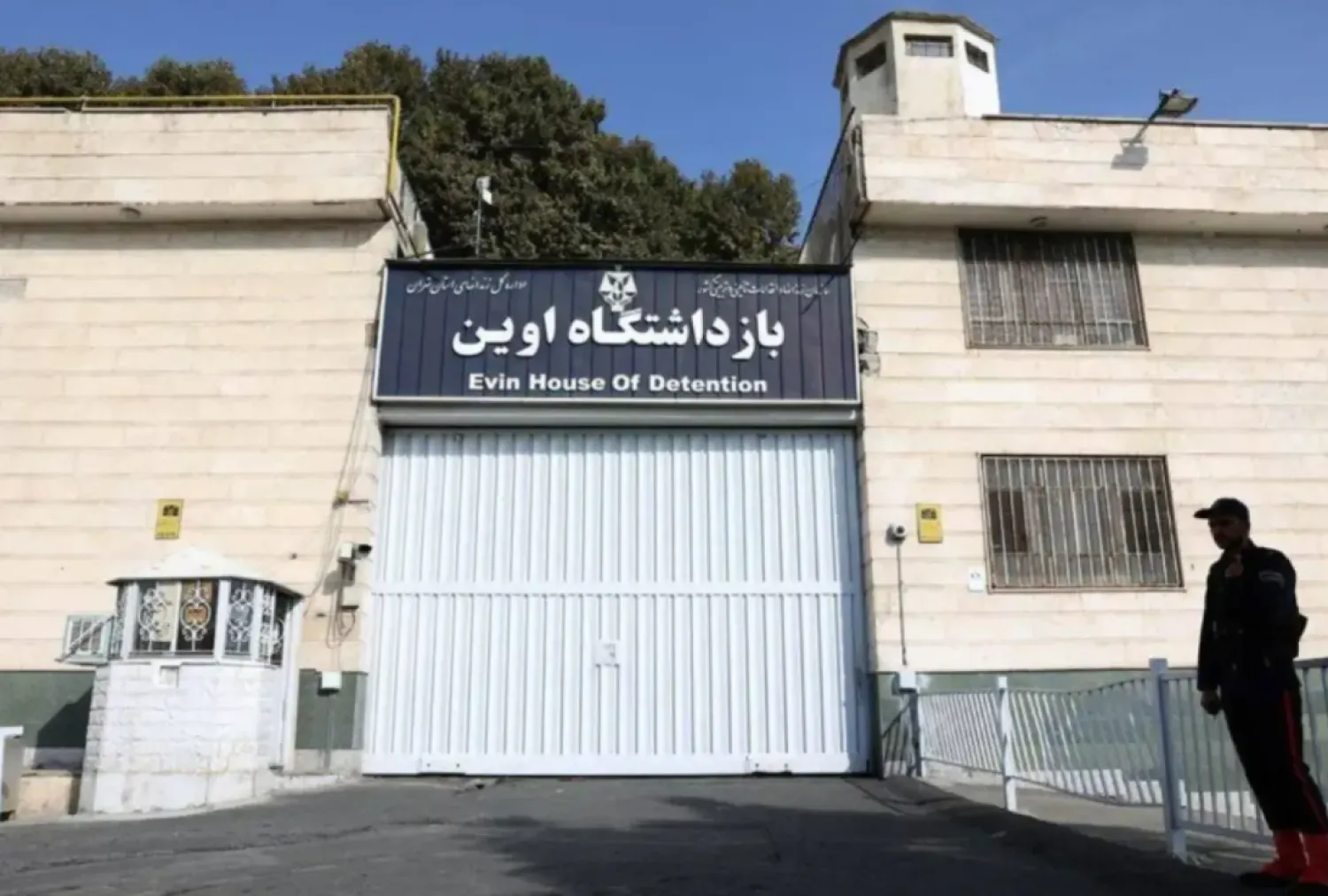
Iran's Evin Prison (File photo: Reuters)
TT

Iranian-American Journalist Jailed in Tehran Pleas for US Help

Iran's Evin Prison (File photo: Reuters)

An Iranian-American journalist sentenced to 10 years in a notorious Tehran prison called on Washington to provide medical help for him and other US detainees, CBS News reported Friday.

Reza Valizadeh, who holds both Iranian and US citizenship and worked for US-funded Persian-language Radio Farda, is in prison on charges of collaborating with a hostile government, according to his lawyer.

A voice message from the journalist obtained by CBS News comes amid a shaky truce as Tehran and Washington conduct slow-moving negotiations to resolve a war launched by President Donald Trump in February.

Valizadeh said in the two-minute recording that he and three other Americans held at Tehran's Evin prison were sick and being denied medical treatment.

"While the four of us are suffering from various diseases and are deprived from real medical services, the US government could have at least demanded real medical services for us in exchange for the release of Iranian sailors," he says.

"Even if treating our diseases is a big demand, it would have at least asked the Iranian authorities to reduce not all the physical pressure and mental torture against us in captivity, but at least some of it."

AFP was not able to verify the authenticity of the recording. CBS News said the recording was recent and had been made after Iranian authorities loosened wartime communication restrictions last week.

Valizadeh's lawyer Ryan Fayhee told CBS News that Valizadeh was suffering from persistent coughing, back pain and dental problems.

"He's survived an airstrike on the prison, he survived the prison itself," Fayhee said, referring to an Israeli strike which damaged parts of the facility in June last year.

The United States said in 2024 it was aware of Valizadeh's detention and called on Iran to free him.

Rights groups have denounced conditions in Iran's prisons, where detainees suffer from overcrowding and shortages of food, water, hygiene supplies, medicine and medical care.



Hegseth: US Plans Attacks on Land Against Drug Cartels in Latin America

US Defense Secretary Pete Hegseth arrives to observe a US-sponsored multinational military exercise in Panama City, Thursday, Aug. 13, 2026. (AP Photo/Matias Delacroix)
TT

Hegseth: US Plans Attacks on Land Against Drug Cartels in Latin America

US Defense Secretary Pete Hegseth arrives to observe a US-sponsored multinational military exercise in Panama City, Thursday, Aug. 13, 2026. (AP Photo/Matias Delacroix)

The United States is planning land attacks against drug traffickers in Latin America, expanding an airstrike campaign against presumed drug-running boats in international waters, US Secretary of Defense Pete Hegseth said in Panama.

Last September President Donald Trump's administration launched a bombing campaign against alleged drug boats in the Caribbean and eastern Pacific, leaving at least 215 people dead. The campaign has been criticized as amounting to extra-judicial killings.

Plans for anti-drug operations on land are on the agenda of an alliance of 19 countries led by Trump that could expand to wherever drug gangs operate, Hegseth told journalists.

According to AFP, he said the United States hopes to deploy forces alongside its allies with "operational capability like you saw with the strikes on the drug boats" in the Caribbean and Pacific.

It will be the "same effect on land, and so we're working with Ecuador, we're working with Colombia, we're working with partners to bring the fight to the DTO's on land," Hegseth said Wednesday night in an unidentified location in the Panamanian jungle, referring to drug trafficking organizations.

He traveled to Panama for annual joint military exercises carried out by over 20 countries.

"Anywhere you traffic drugs or you threaten the American people or our partners, you are a target just like ISIS or Al Qaeda," Hegseth said, wearing an olive-green shirt while surrounded by soldiers.

The Americans Counter Cartel Coalition brings together countries with right-wing governments, including Argentina, Bolivia, Chile, Colombia, Ecuador, Honduras, and Peru.

Hegseth said cartels should be "on notice."

Mexico, with a left-leaning government, is not part of the alliance even though it is home to powerful drug cartels.

Hegseth defended the attacks against alleged drug boats, which legal experts and human rights organizations have warned could constitute extrajudicial executions.

"We're going to close with and destroy these networks with every capability of the American government," he warned.


Sources: US Could Not Verify Israeli Warnings of Iran Plots Against Trump

Catering trucks are parked at Air Force One on the tarmac as the motorcade carrying US President Donald Trump arrives on the tarmac to depart following the NATO summit at Ankara International Airport in Ankara, Türkiye, Wednesday, July 8, 2026. (AP Photo/Alex Brandon)
TT

Sources: US Could Not Verify Israeli Warnings of Iran Plots Against Trump

Catering trucks are parked at Air Force One on the tarmac as the motorcade carrying US President Donald Trump arrives on the tarmac to depart following the NATO summit at Ankara International Airport in Ankara, Türkiye, Wednesday, July 8, 2026. (AP Photo/Alex Brandon)

The US has received several warnings from Israel over the past year that Iran intended to assassinate President Donald Trump, including before a secret Air Force One ruse in Türkiye, that US intelligence officials could not independently verify, according to a current US official and two former officials.

The warnings, passed to US intelligence agencies and in some cases relayed directly by Israeli officials to senior White House officials, included possible plots to shoot Trump with a sniper or recruit someone to attack him with a knife at a large public event, the sources said. The tips began in the lead-up to the 12-day war in June 2025 and intensified prior to the US decision to go to war in Iran in February, the sources said.

The most detailed warning came ahead of the NATO summit in Ankara in July, the US official and the other person familiar with the matter said. Israeli officials briefed the White House about intelligence that indicated Iran may try to kill Trump, potentially with a shoulder-launched missile, while he traveled on Air Force One for the summit, Reuters quoted the officials as saying.

The US intelligence community has long assessed that Iran wants to retaliate for Trump’s killing of Iranian military commander ⁠Qassem Soleimani in ⁠2020. But the Central Intelligence Agency has not been able to corroborate some of the specific threats against Trump's life shared by Israeli intelligence since early last year, the officials said.

In the case of the NATO episode, a Turkish official said the country's intelligence agencies also did not have any evidence to corroborate the Israeli claim about the threat to Trump's life, an assessment the host country shared with Americans.

Despite the lack of verification, White House officials and the Secret Service have taken steps to mitigate the threats out of an abundance of caution, including an extraordinary deception operation during the Türkiye trip that involved moving Trump from Air Force One to a different aircraft for his flight out of the country.

That episode underscores how Israeli intelligence is influencing the Trump administration's decision-making about Iran at a time ⁠of heightened tensions with Tehran — and broader disagreement between US and Israeli intelligence assessments on Iran's threat overall.

Earlier this year, American intelligence agencies assessed that Iran was not actively building a nuclear weapon, even as Israel argued Tehran posed an urgent threat. Despite the reports from the US intelligence community, Trump moved forward with strikes in Iran in February.

Trump also took into consideration intelligence shared by Israel that Tehran had tried to assassinate him before launching the military campaign, Reuters previously reported.

FILE - President Donald Trump boards Air Force One, Aug. 7, 2026, at Joint Base Andrews, Md. (AP Photo/Julia Demaree Nikhinson, File)

A spokesperson for the Israeli embassy disputed that Israel was using its intelligence to influence US policy on Iran.

"The same people who claim that Israel is trying to influence US policy through alleged intelligence sharing would just as soon accuse Israel of concealing critical information if it benefited their own agenda," the spokesperson said.

The White House and CIA both declined comment.

Secret Service spokesman Anthony Guglielmi declined to discuss specific intelligence matters but said the agency remains focused on Trump's security amid recent assassination attempts and an increase in threats against the president. "The US Secret Service continuously analyzes a wide range of information to guide our protective operations in real time and across every location we secure," he said.

The US has long relied heavily on Israeli intelligence ⁠on Middle East matters, particularly as they ⁠relate to Iran.

The current and former officials said Israeli intelligence on Iran typically flows to the CIA or the National Security Agency through formal channels and is subsequently analyzed, two former US officials said.

The US intelligence agencies often cannot verify Israeli intelligence but will use other forms of information to make judgment calls on its authenticity and accuracy, the officials said.

In several instances over the course of the two US military offensives in Iran, the CIA assessed it had "low confidence" in the Israeli intelligence about the threats posed by Iran, including any plans to assassinate Trump, according to one former official and another person familiar with the matter.

It is unclear how widely those assessments have been circulated inside the administration.

The NSA declined to comment.

Two of the former US officials described to Reuters several instances in which senior Israeli officials and representatives over the last year called the White House, including in the Situation Room, to brief senior Trump officials on Iranian threats directly.

The direct engagement comes amid a breakdown in US intelligence sharing inside the Trump administration.

Last year, amid increased tension with the Office of the Director of National Intelligence, the CIA stopped working on joint assessments with the National Intelligence Council, the former officials said.

The council is the US intelligence community's elite analytical group overseen by ODNI to turn out reports reflecting the view of the broader intelligence community, with the CIA being the largest contributor to its assessments.

Fewer recent Iran assessments by the NIC have stemmed partly from recent layoffs at ODNI, the officials and another person familiar with the matter added.


US Says It Can Keep Naval Blockade on Iran 'Indefinitely,' Vows More Economic Pressure

FILE PHOTO: Vessels near the Strait of Hormuz, as seen from Musandam, Oman, August 6, 2026. REUTERS/Stringer/File Photo
TT

US Says It Can Keep Naval Blockade on Iran 'Indefinitely,' Vows More Economic Pressure

FILE PHOTO: Vessels near the Strait of Hormuz, as seen from Musandam, Oman, August 6, 2026. REUTERS/Stringer/File Photo

The United States on Thursday said that it could maintain a naval blockade of Iran indefinitely and would ratchet up economic pressure on Tehran as ceasefire talks have floundered, global oil supply is dropping and regional tensions are rising.

Defense Secretary Pete Hegseth told reporters that the US military has the capability to maintain a naval presence in the region to enforce its blockade of Iran, which has inflicted severe economic damage on the country, reported Reuters.

"Indefinitely the United States Navy can maintain a blockade like that because we'll rotate ships in and out, as we have, and we'll continue to," Hegseth told reporters during a trip to Panama.

Treasury Secretary Scott Bessent said on Thursday that the United States planned to inflict more financial damage on Iran.

"Watch this space for more announcements coming next week because we are going to apply measures like have never been seen in the history of ‌economic isolation on ‌a country," he said in an interview on Newsmax's "Rob Schmitt Tonight" program.

With a tentative June ‌deal ⁠to end the ⁠war in tatters, Iran has sought to exert leverage on Washington in return by controlling the Strait of Hormuz.

It has attacked some vessels trying to transit the strategic waterway, through which a fifth of the world's oil and liquefied natural gas traveled before the war began in February.

US President Donald Trump is under pressure at home to end a war that is deeply unpopular, with high fuel prices dragging down his approval ratings and potentially eroding his party's control of Congress in midterm elections ⁠in November.

Trump has repeatedly asserted that the US has "total control" over the strait, prompting Iranian denials. ‌Tehran has said it will not allow the waterway to reopen until its conditions ‌are met. These include removing economic sanctions and releasing frozen Iranian assets.

Shipping traffic through the Strait of Hormuz fell to eight vessels on Tuesday, compared ‌with a 10-day average of about 12 vessels, and 130 to 140 ships before the war.

The US lifted its blockade ‌of Iran's shipping and ports for a month in mid-June but has since reimposed it, cutting off Tehran's primary source of hard currency and compounding earlier losses from wartime strikes on its energy infrastructure.

Washington previously said it would lift the Iranian blockade once Iran and Oman, which sit on either side of the strait, reach an agreement to restore commercial shipping.

SHRINKING OIL SUPPLY Trump has also repeatedly threatened to escalate military strikes and "hit Iran hard," although ‌he has thus far resisted deploying ground troops or seizing strategic islands and bombing desalination plants. Earlier this week, Trump suggested he would rely on economic means, rather than military action.

The ⁠US has tightened economic sanctions ⁠against Iran and other individuals and entities that it says are helping it procure weapons, but the pressure campaign has failed to bring Tehran back to the negotiating table.

Stress is mounting on the global economy. The International Energy Agency on Wednesday forecast that global oil supply would fall by 4.3 million barrels per day, or around 4%, this year.

Just a month ago, the agency had forecast a drop of 3.7 million barrels per day.

Oil prices settled down more than 2% on Thursday after a week of gain, as investors focused on signs of weaker global demand and a sharp increase in US crude inventories.

Global economists have forecast a sharp drop in global growth as a result of the war, and potentially a swing into recession in some areas, warning that the impact will grow if the war is not ended soon.

Hegseth declined to comment on a question about whether, in retrospect, it was a mistake to declare a ceasefire in April, a move that ended high-tempo bombing of Iran in exchange for peace negotiations that have failed to resolve the conflict.

"I'm never going to comment on that. We're doing exactly what we need to, to ensure that Iran never has a nuclear weapon," Hegseth said.