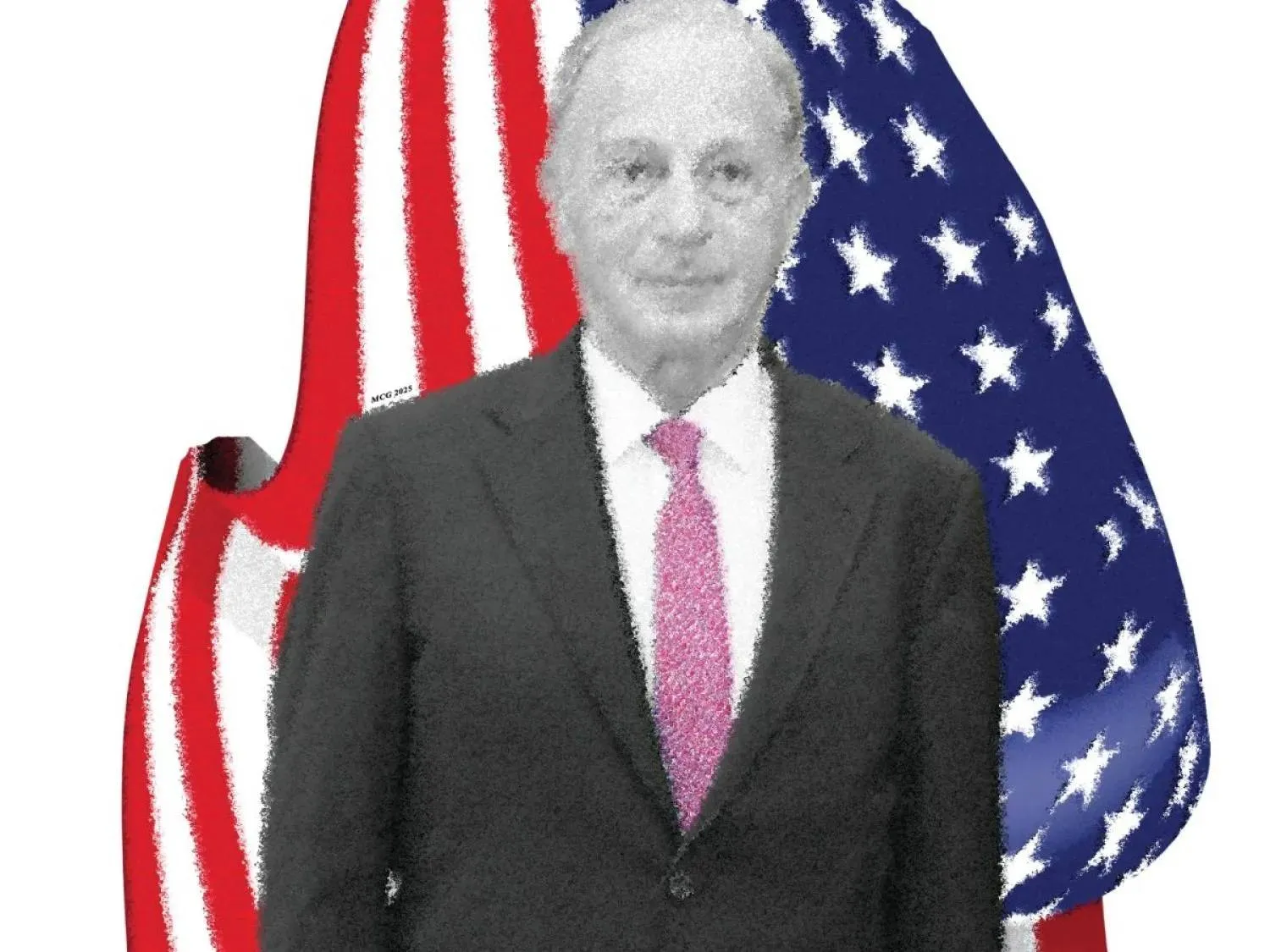
Lebanese-Born US Envoy Michel Issa Arrives with High Expectations

During his Senate confirmation hearing, Issa outlined the contours of his policy, setting out several themes that later became central to his performance
TT

Lebanese-Born US Envoy Michel Issa Arrives with High Expectations

During his Senate confirmation hearing, Issa outlined the contours of his policy, setting out several themes that later became central to his performance

When the new US ambassador to Lebanon arrived in Beirut, he did not need a learning period or special State Department training before taking up his first diplomatic post after a brief retirement from the world of business and automobiles.

Ambassador Michel Issa knows Beirut and the rest of Lebanon better than he knows the corridors of the State Department, with which he had no connection before President Donald Trump appointed him.

Issa was returning to the city where he was born, and to a country he had carried with him on a journey from Lebanon to France and then the United States.

Today, he is coming back as the representative of the world’s most powerful country at one of the most sensitive moments in Lebanese-US relations.

From the moment Issa was appointed US ambassador to Lebanon, it was clear his selection was no routine decision inside the US administration. Washington did not send a traditional career diplomat to Beirut, nor a former security official.

It chose a veteran businessman and banker with deep Lebanese roots and a direct relationship with Trump.

But more importantly, Issa’s appointment came as Lebanon was passing through a historic turning point.

The country was trying to emerge from the worst economic and financial crisis in its modern history, while the repercussions of the war on the southern front and the future relationship between the Lebanese state and Hezbollah dominated international and regional discussions.

More than one message

Many saw Issa’s selection as carrying multiple messages.

“On one hand, Washington wanted to send a figure who knows Lebanon from the inside and understands its complex makeup,” his friend, Lebanese lawmaker Fouad Makhzoumi, said.

“On the other hand, it wanted to rely on a man who has the personal confidence of the US president and can convey the White House’s direction directly to one of the most complicated arenas in the Middle East.”

Among the notable steps that accompanied Issa’s move into diplomacy was his decision to renounce Lebanese citizenship before taking up his duties as US ambassador, aimed at removing any potential legal or political ambiguity over dual allegiance.

From Bsous to Wall Street

Michel Issa was born in 1955 in the Lebanese capital, Beirut, but traces his roots to the town of Bsous in the Aley district, in the Mount Lebanon governorate.

He grew up in Lebanon during the years of relative stability that preceded the civil war, and received his school education in Beirut before his family left the country as part of the Lebanese emigration wave of the 1970s.

France was his first stop. There, he continued his studies in economics and finance, and his professional identity began to take shape. He earned a DEUG (Diplôme d'Études Universitaires Générales) in economics from Paris Nanterre University and also studied at the Graduate School of Banking Studies in Paris.

In the late 1970s, he moved to the United States, the country where he would build his career and achieve his biggest successes.

Finance and banking

For decades, Issa worked in finance and banking, moving between prominent international institutions.

He held executive posts at well-known banks and investment firms, gaining broad experience in debt management, corporate restructuring, investments, and financial markets.

In American finance, he built a reputation as a man able to handle complex files, manage risk, and find solutions to financial crises.

Over the years, his name became known in economic and investment circles, especially in New York, where he settled and built a wide network of professional relationships.

Entering Trump’s circle

Perhaps the most intriguing part of Issa’s biography is his relationship with Trump. He was not merely a political supporter of the US president.

US media reports have described him as close to Trump and as one of his golf partners. Their relationship goes back years before they both entered direct political work.

When Trump announced Issa’s nomination as US ambassador to Lebanon, he used striking words to describe him, praising his broad financial experience and his career in business and international trade.

In Beirut, as in Washington, that relationship is not viewed as a secondary detail.

“An ambassador who has a direct channel to the White House has a wider margin of movement than what is usually available to traditional diplomats,” Makhzoumi said. “For that reason, Issa’s appointment gained added importance in Beirut.”

He said Issa “does not represent only the State Department, but also carries the confidence of the US president himself.”

For Lebanon, that relationship gives the post a different weight. Every message Issa conveys or position he announces, is read as closer to the political mood of the White House than to a routine diplomatic view.

An ambassador under scrutiny

From his first weeks in Lebanon, Issa found himself drawn into files that went beyond traditional diplomacy. He took part in meetings on the future of US support for the Lebanese army, economic reform files, and international efforts to consolidate stability along the southern border.

During his Senate confirmation hearing, Issa outlined the contours of his policy, setting out several themes that later became central to his performance.

He spoke of the importance of supporting Lebanon’s “legitimate” institutions, strengthening economic reforms, and “empowering the state to extend its authority” across all its territory.

Those positions were welcomed by some Lebanese forces, while drawing reservations and criticism from others who saw them as an extension of the traditional US approach toward Lebanon.

But what made his presence different from many of his predecessors was his Lebanese background.

Issa speaks Arabic fluently, understands the details of Lebanese political life, and knows the fine distinctions among its forces, parties, and sects. These elements give him a greater ability to read the local scene.

At the same time, that background has made him a target of greater scrutiny. Every statement he makes is sometimes read from two angles, that of the US ambassador and that of the Lebanese who knows the details of the country where he serves.

A very private life

Away from politics and diplomacy, Issa appears different from the stereotypical image of many financiers. Sport plays an important role in his life.

Official information says he was an international athletics competitor in his youth, before his interest later shifted to other sports, most notably tennis and golf.

That sporting background also reveals an important side of his character. Discipline, competition, and the pursuit of results are qualities many link to his long career in finance.

Golf also played a role beyond personal hobby. It became one of the bridges that connected him to Trump, who is known for his passion for the sport.

At the family level, unlike many public figures, Issa is careful to keep his family life out of the spotlight. Available information about his wife and two sons is extremely limited, reflecting a clear desire to separate his private life from his public work.

Between Lebanese roots and US interests

In reality, Issa stands at the intersection of two parallel paths. The first is personal, beginning in the neighborhoods of Beirut and the town of Bsous more than half a century ago. The second is political and professional, leading him to the heart of the US administration.

Perhaps the uniqueness of his experience lies in combining these two paths. He understands the complexities of the Lebanese system, but is tasked with implementing policies set in Washington, not Beirut.

Makhzoumi said Issa is “clear, bold, and transparent.”

“He wants Lebanon, and we are betting on his Lebanese origins and on what he is trying to do, because it leads us toward a better Lebanon,” Makhzoumi said. “He is building good relations with everyone, and that is the reason for the ambassador’s strength.”

“Lebanon exists in areas where Israel is on one side, and Syria is on the other, and it has the Palestinian file. Here, there is also the distinctive Christian presence in the region,” he added.

“All of this creates a unique case. But if there is no one to convey the picture to the White House, as Ambassador Issa does, that will not happen.”

“Ambassador Issa can speak directly with those who make decisions in the United States, and this gives us a point of strength. We can build on it to obtain a better understanding in the US of the Lebanese position.”
In Shadow of War, Israelis to Decide if Hard-Right Turn Is Permanent

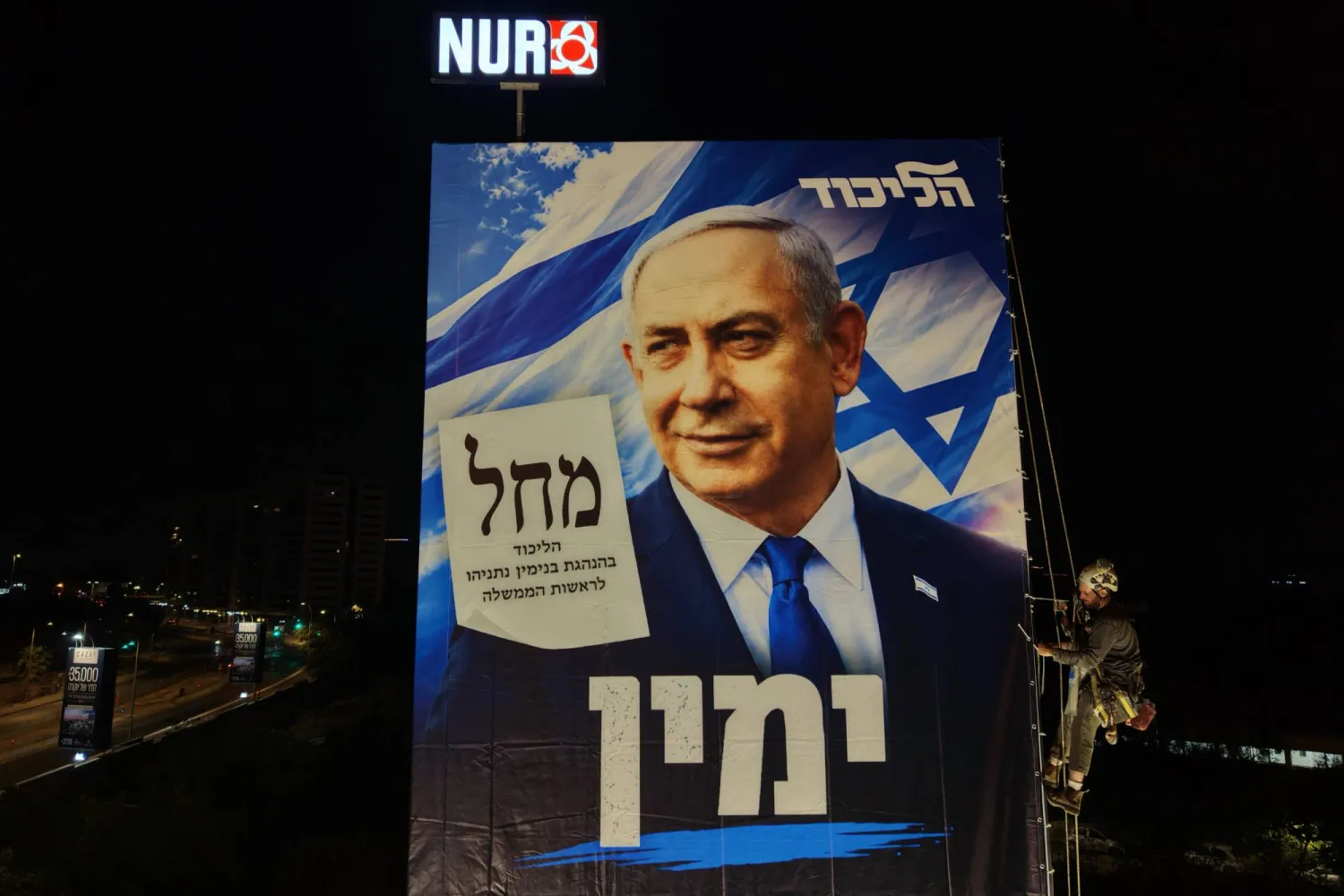
Rappelling workers install an election billboard featuring an image of Israeli Prime Minister Benjamin Netanyahu, and reading in Hebrew "It's either the Right or Palestine," in Ramat Gan near Tel Aviv, Israel, 18 October 2026. (EPA)
TT

In Shadow of War, Israelis to Decide if Hard-Right Turn Is Permanent

Rappelling workers install an election billboard featuring an image of Israeli Prime Minister Benjamin Netanyahu, and reading in Hebrew "It's either the Right or Palestine," in Ramat Gan near Tel Aviv, Israel, 18 October 2026. (EPA)

Three years after suffering their deadliest single attack, Israelis will deliver their verdict on veteran Prime Minister Benjamin Netanyahu in an October 27 election that could decide if the country moves definitively into hard-right nationalism.

The trauma of October 7, 2023 remains raw across Israel. Faded stickers bearing the smiles of young people killed by Hamas cover station walls and lampposts, and at bustling restaurants, no one bats an eye as patrons dine with their assault rifles, now liberally allowed.

Netanyahu, Israel's longest-serving prime minister who polls show is in a tight race, is seeking a new mandate after leading a multi-front regional war in response to October 7, with Israel reducing Gaza to rubble, occupying part of Lebanon and, with US help, bombarding Iran.

The relentless Gaza campaign has brought pariah status to Israel in many once-friendly Western countries, and Netanyahu himself faces an arrest warrant from the International Criminal Court.

Even if the public broadly has supported the war's aims, the effects at home have been much more divisive, including emboldening Netanyahu's far-right allies bent on reshaping Israel into a religious-nationalist Jewish state.

"I really think that these elections are about the future of the state in a literal sense," said Gideon Rahat, a political scientist at the Hebrew University of Jerusalem and the Israel Democracy Institute.

Netanyahu's government has ramped up settlements in the occupied West Bank where settlers armed with the blessing of far-right National Security Minister Itamar Ben-Gvir have been attacking Palestinians on their lands with only occasional pushback from authorities.

"The state without a monopoly on the use of force is a failed state," Rahat said.

Netanyahu, who turns 77 on October 21, has served as prime minister on and off for more than 19 years.

The wily political operator returned to power in December 2022 bringing in once-shunned ultra-nationalists and quickly tried to rein in the judiciary, which is examining corruption charges that could land him in jail.

The proposed reforms brought out some of the largest protests in Israel's history in the months before the Hamas attack.

"Everyone in the country has a strong opinion about Netanyahu. People either hate him or adore him," said Alon Yakter, a political scientist at Tel Aviv University.

"When you want to see who people vote for, the first question you have to ask is their emotional feelings about Netanyahu."

- Anti-Netanyahu in style, not stance -

Seeking to unseat Netanyahu is an informal bloc of parties united mostly around their distaste for him.

Netanyahu's most formidable rival, according to polls, is former military chief Gadi Eisenkot, who is in many ways his antithesis -- a political novice who wants to unite centrists rather than rally a base, and a phlegmatic speaker with halting English and none of the American-raised Netanyahu's flair for blistering, headline-grabbing speeches.

Eisenkot, as well as other opposition leaders, have zeroed in on why Netanyahu failed to prevent October 7.

Netanyahu has been rocked by reports he ignored warnings. He vehemently denies the charges, blaming security chiefs who he said failed to wake him up that morning.

Netanyahu "may have his perfect English, but even with perfect English he got us October 7", Eisenkot, in Hebrew, told a security conference at Reichman University.

Eisenkot's son died in the Gaza war -- offering an unspoken contrast to Netanyahu's son Yair, a globe-trotting social media provocateur.

The working-class son of Moroccan Jewish immigrants, Eisenkot would be the first prime minister of Middle Eastern ancestry, a watershed in a country politically dominated since its founding by an elite of European descent.

Opposition leaders have not criticized Netanyahu's decision to wage war, likely a losing stance in a country where a recent survey found that only 21 percent of the population identifies as anywhere left of center.

Eisenkot, as military chief during the 2006 Lebanon war, promoted the Israeli doctrine of using massive force even against civilian infrastructure when in areas used by militants, such as Hezbollah.

The opposition has instead heavily focused on social issues including Netanyahu's tight alliance with ultra-Orthodox Jews, a fast-growing segment of the population due to high birth rates that has promoted religious priorities, such as keeping public transit closed on Saturdays.

Netanyahu, while personally secular, has allowed religious students to remain exempt from military service, a source of particular resentment when stretched reservists have served multiple tours.

Opposition figure Naftali Bennett, prime minister in a short-lived 2021-22 government, has vowed to end all exemptions to military service and said that social divisions were putting Israel on a "slow-motion suicide mission".

- Hardline appeal -

While the opposition attacks Netanyahu over October 7, for some Israelis, the aftermath of the attack shows the government has brought stability.

While Israelis have died in Iranian and Hezbollah retaliatory attacks, fire has stopped from Gaza, even as Israel keeps striking the territory and Hamas remains.

Israel's economy has boomed since October 7, with construction sites dotting the major cities and the stock market soaring, led by the technology and defense sectors.

Neriah Yarchi, 19, a barber from Bat Yam near Tel Aviv, came of political age after October 7. He said he would vote for far-right Finance Minister Bezalel Smotrich, who wants the "voluntary" removal of Gaza's two million Palestinians.

"If Gaza had been ours, they wouldn't have had a place to infiltrate from and there wouldn't have been a massacre," Yarchi said.

Netanyahu has sought to seize on his international notoriety, with his Likud party putting up posters of leaders including New York Mayor Zohran Mamdani, an outspoken critic of Israeli policies, that read, "They want Netanyahu to lose. Don't let them win."

Netanyahu has also vowed loudly never to align with parties representing Arab Israelis, who make up around one-fifth of the population and who some expect to turn out in higher numbers after the intense anti-Arab stances of some of Netanyahu's ministers.

Arab lawmakers broke precedent to be kingmakers in the 2021-2022 government.

If the new election's results are as close as expected, it could take weeks or months to form a government. Eisenkot has said he would not ally with Arab parties or Netanyahu, but some critics do not believe he would refuse.

Uriel Reichman, a former lawmaker who founded the university bearing his name, told the conference addressed by Eisenkot that a Netanyahu triumph could permanently entrench Israel's right-wing turn.

He drew a parallel to countries where an elected populist packs the government with loyalists and transforms once-independent institutions.

"Experience shows that once such a system is put in place, it would be extremely difficult to dismantle it," he said.


‘It’s Family’: Lebanese Villagers Dread Looming UN Peacekeeper Pullout

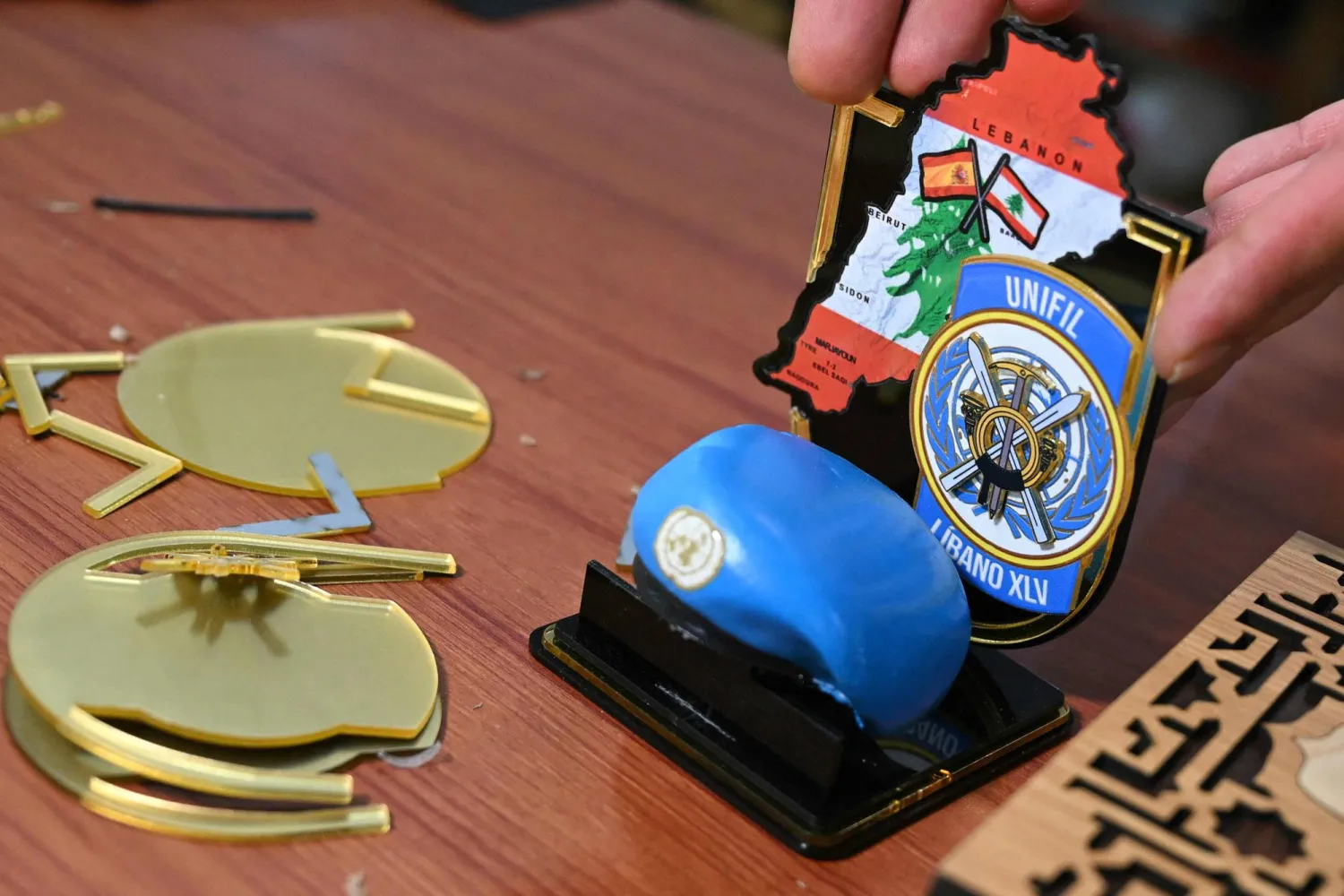
A worker arranges souvenirs made for personnel of the United Nations Interim Force in Lebanon (UNIFIL) at a factory showroom in Lebanon's southern border village of Ibl al-Saqi on October 13, 2026. (AFP)
TT

‘It’s Family’: Lebanese Villagers Dread Looming UN Peacekeeper Pullout

A worker arranges souvenirs made for personnel of the United Nations Interim Force in Lebanon (UNIFIL) at a factory showroom in Lebanon's southern border village of Ibl al-Saqi on October 13, 2026. (AFP)

From his shop in south Lebanon near the Israeli border, Mark Diab says life in his village will be turned upside down when a decades-long United Nations peacekeeping force pulls out next year.

"UNIFIL isn't just business, to us it's family," said Diab, 59, whose sister is among residents of Ibl al-Saqi who have married peacekeepers from the UN Interim Force in Lebanon over the years. She now lives in Spain.

"We're basically open because of the UN. We started when I was young," Diab said from his shop, just down the road from a UNIFIL base, selling clothes.

The force's withdrawal will hurt the local economy and "will impact our relationships... and we'll lose security and stability," he said, as the sound of an explosion rang out in the distance.

"I'm very sad they're leaving... We've spent a lifetime with them."

UNIFIL has served as a buffer since Israel first invaded Lebanon in 1978.

It has become part of the fabric of south Lebanese villages like Ibl al-Saqi after decades spent monitoring border hostilities and supporting local communities, including with humanitarian assistance.

But after pressure from Washington, the UN Security Council last year voted to end the force's mandate on December 31, 2026.

In a narrow garden in Ibl al-Saqi called Norway Square, tattered Norwegian and Lebanese flags flew near plaques paying tribute to peacekeepers from the Scandinavian country whose arrival decades ago forged ties that run deep.

A street sign points to a town in Norway about 5,200 kilometers (more than 3,200 miles) away.

Nearby, an Indian flag flew at Mahatma Gandhi Park close to a statue, posters and plaques set up by Indian peacekeepers.

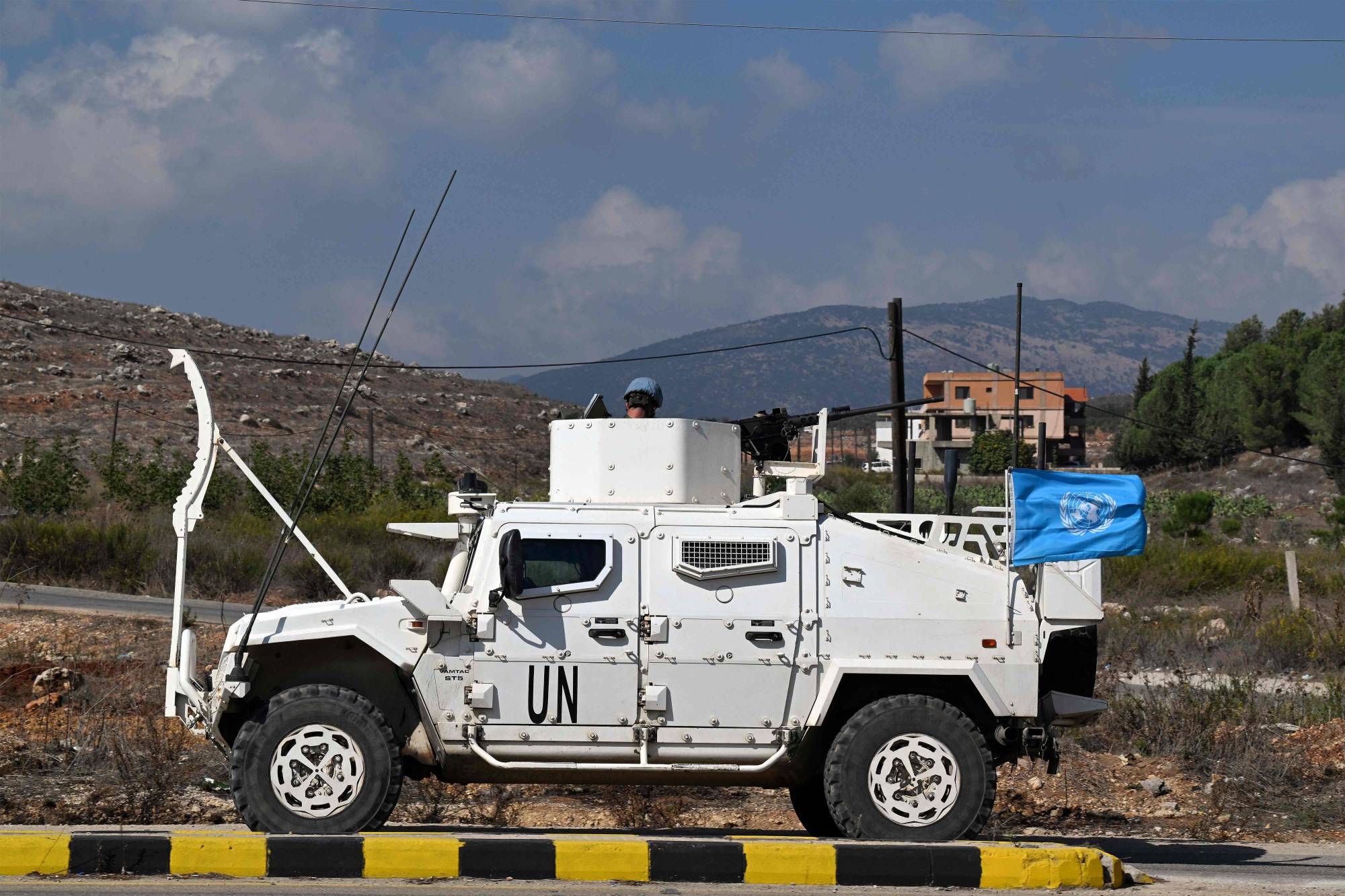
An armored vehicle of the United Nations Interim Force in Lebanon (UNIFIL) moves along a road in Lebanon's southern border village of Ibl al-Saqi on October 13, 2026. (AFP)

- 'Positive mark' -

Ibl al-Saqi is located just outside an Israeli-declared "security zone" which runs around 10 kilometers deep in Lebanese territory along the border. It was established after the latest war between Israel and the Iran-backed Hezbollah group erupted this year.

Israeli troops operate nearby, and locals advised AFP journalists to avoid southern parts of the otherwise quiet, peaceful village, nestled among hills covered in olive groves.

From his municipal office near framed UNIFIL pictures and paraphernalia, mayor George Rahhal said the peacekeepers had brought stability and reassurance to villagers over years of conflict and uncertainty.

"They've left a positive mark on everybody's hearts, firstly through security, then the economy, healthcare, supporting schools, the sick," said Rahhal, who like others in the village also has Norwegian citizenship and speaks the language.

"At some point the UN has to leave... but not in these circumstances."

Lebanon has called for UNIFIL's mandate to be extended, fearing a security vacuum at a time when hostilities prevent the Lebanese army, whose resources are limited, from deploying across the country's south.

Rahhal said many Ibl al-Saqi residents were UNIFIL employees or contractors.

Almost "the entire community will be impacted" economically by the withdrawal, directly or indirectly, he said.

"We can live after the international force (leaves), but how and where and who will be responsible for us?"

UNIFIL now counts about 7,500 personnel from nearly 50 countries.

Spokesperson Kandice Ardiel told AFP it also "has around 400 national staff" and works with numerous local companies providing contracted services.

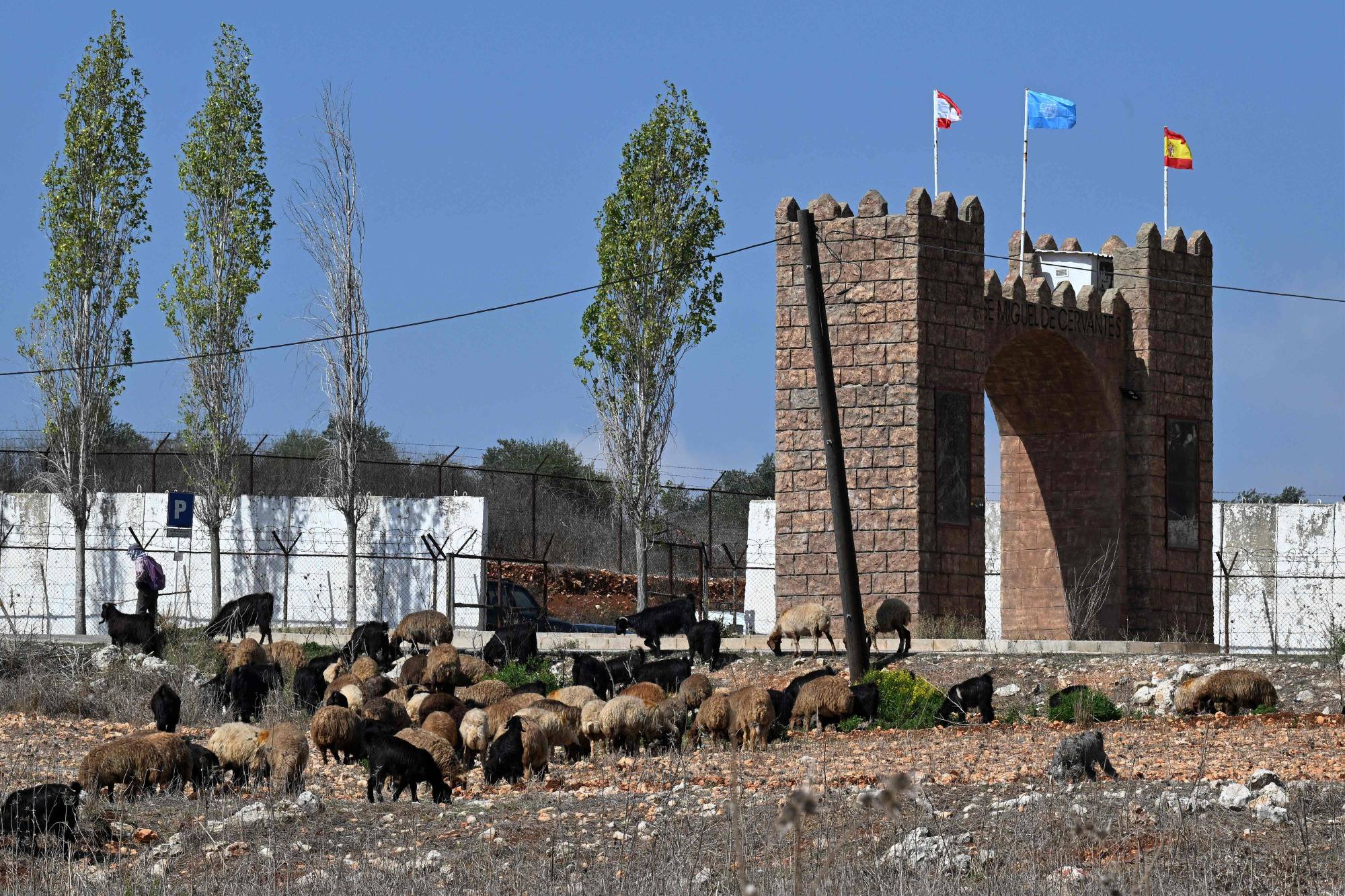
A shepherd tends to a flock near the base of the Spanish contingent of the United Nations Interim Force in Lebanon (UNIFIL), in Lebanon's southern border village of Ibl al-Saqi on October 13, 2026. (AFP)

- 'Stayed in our village' -

Peacekeepers are stationed in many Israeli-occupied areas now off-limits to most Lebanese after the most recent war. Many border villages have seen heavy destruction.

More than 4,300 people have been killed in Lebanon since March, including seven peacekeepers caught in the crossfire.

Israel still carries out strikes and demolitions despite a lull in hostilities since late June.

Andrea Tenenti, who served as UNIFIL spokesperson for almost 20 years, told AFP that the force's presence "was not simply about maintaining peace and security".

UNIFIL "has long been the second largest employer and economic contributor in southern Lebanon, after the Lebanese state", he said.

"Its economic footprint, however, extended far beyond its direct workforce," he added, with associated activities "supporting a much wider network of businesses and livelihoods".

Its withdrawal "risks creating a significant vacuum... at a particularly critical time".

At a workshop in Ibl al-Saqi, laborers supervised clattering embroidery machines sewing customized items including banners and tags for peacekeepers stationed nearby.

Shelves were packed with colorful souvenirs and keepsakes for UNIFIL personnel -- the business's main market after Lebanon's economy collapsed in 2019.

Co-owner Khaled Nahra, 48, said the workshop had been running for some 25 years and had around a dozen employees, but would be forced to close when UNIFIL leaves.

"We've stayed in our village... this was the best thing about working with the UN," he said.

"There are people who've been working here for 15... 20 years. They're like me. They don't know what to do."


Policing of France's School Protests Clouds Macron's Final Months and Sparks Uproar

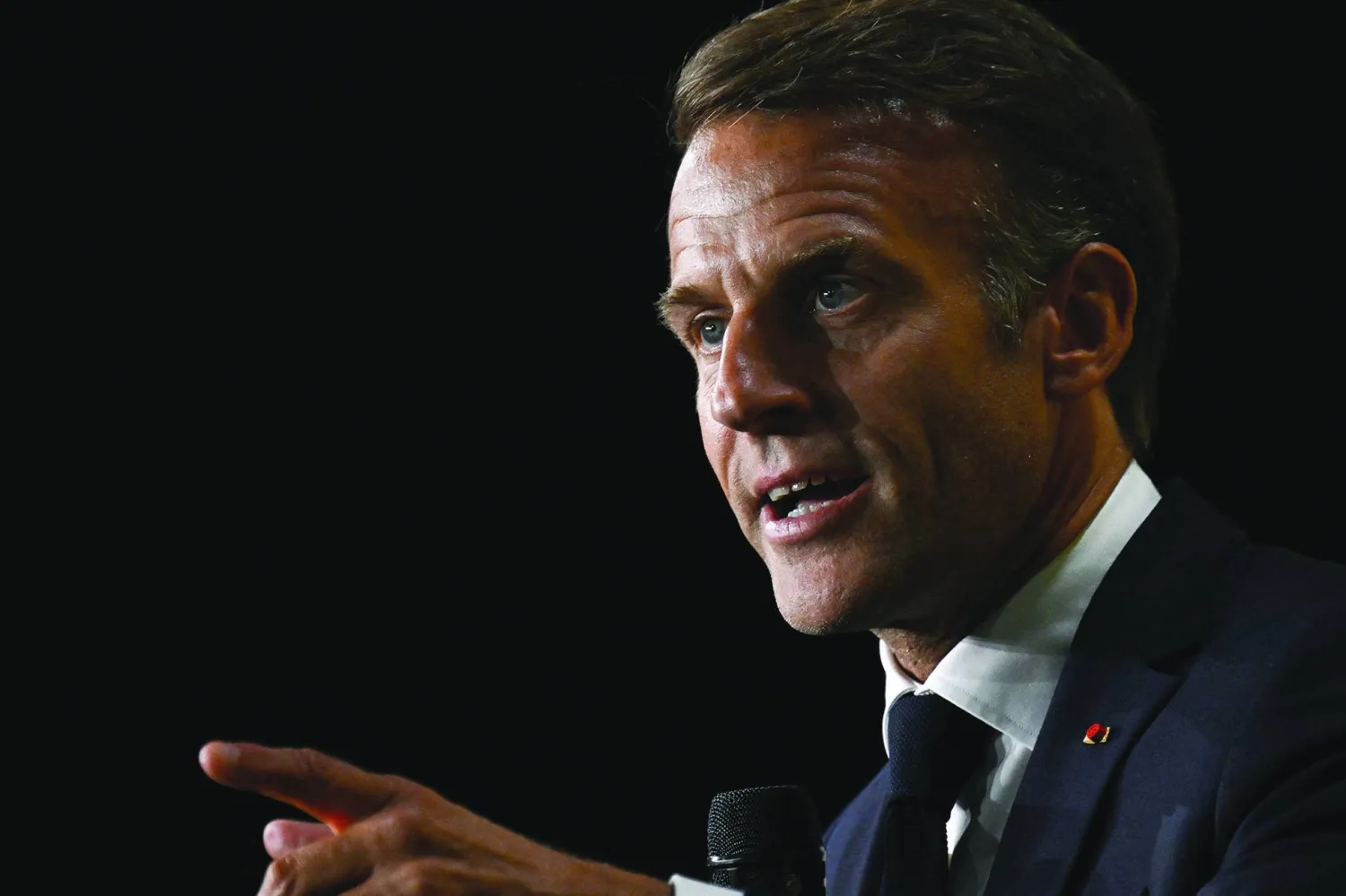
France's President Emmanuel Macron delivers a speech during the "Bpifrance Inno Generation (BIG)" event, in Paris, France, October 8, 2026.  Julien De Rosa/Pool via REUTERS
France's President Emmanuel Macron delivers a speech during the "Bpifrance Inno Generation (BIG)" event, in Paris, France, October 8, 2026. Julien De Rosa/Pool via REUTERS
TT

Policing of France's School Protests Clouds Macron's Final Months and Sparks Uproar

France's President Emmanuel Macron delivers a speech during the "Bpifrance Inno Generation (BIG)" event, in Paris, France, October 8, 2026.  Julien De Rosa/Pool via REUTERS
France's President Emmanuel Macron delivers a speech during the "Bpifrance Inno Generation (BIG)" event, in Paris, France, October 8, 2026. Julien De Rosa/Pool via REUTERS

On one side, legions of determined teenagers protesting for their future by blockading schools and taking part in marches that have sometimes spiraled into violence.

On the other, one of the largest internal security forces in Europe, deployed by the government of an unpopular and outgoing president, The Associated Press said.

The result, playing out almost daily outside high schools and on the streets of France, is a nationwide storm of unrest. The mayhem of recent weeks — with mass arrests and hundreds of injured — has sparked an uproar in a country steeped in a centuries-old culture of protest. Even some police have turned on the government's handling of the demonstrations.

Discontent shrouds Macron's final months

For President Emmanuel Macron, who leaves office in May, it’s hardly the dream ending to his decade in power. He has faced a succession of protest movements that sapped his popularity and fueled broad criticism of how his ministers use police against demonstrators.

With the high schoolers, the outcry has grown particularly loud. That's partly because the vast majority of the 8,000 people arrested in recent weeks are under 18 and because police riot-control weapons are blamed for life-changing injuries suffered by some young teens.

The protesters' push for better-resourced schools, particularly in poorer Paris suburbs and other cities and towns, also has a sympathetic audience as France hurts from record poverty and record public debt.

But police complain that they're facing violent rioters who are latching onto the protests and using the crowds as cover to attack officers, pelting them with rocks, fireworks and other projectiles and wreaking havoc with fires, vandalism and other destruction. By the government's count, more than 900 officers and more than 150 teachers and other school staffers have been injured. More demonstrations, by a variety of groups with broader complaints beyond schools, are planned Saturday.

French history partly explains why protests are veering into confrontations between riot police and some demonstrators who come ready to fight in masks and black clothes, says Walid Hrar, a police officer and union representative in the northern suburbs of Paris.

“This is the country of the French Revolution. Everyone boasts about it, in fact. Some political parties don’t hesitate to say that we need to disobey the law. That’s what Robespierre and other revolutionaries taught us in 1789,” he said.

“France always tends to react rather than anticipate,” he added. "In other words, we’re always going to extremes.”

Attention focusing on police weaponry

The police have drawn sharp scrutiny for their efforts to control crowds using a variety of so-called non-lethal weaponry, particularly grenades and other projectiles, but also tear gas, water cannons and riot shields equipped with powerful strobe lights.

"We’re sending poorly equipped, untrained public security police officers to violent demonstrations who are likely to become agitated very quickly out of anger and fear,” said Jean-Marie Godard, an author who specializes in French policing.

Hrar said some of his police colleagues “aren’t specialized in crowd control and aren’t equipped for it. We send them in because we need the manpower, so we have officers wearing uniforms that aren’t flame-resistant. And if you’re hit by a firework mortar and your uniform isn’t flame-resistant, you can catch fire. We also have officers with worn-out helmets. We have shields that aren’t suitable."

He said officers who haven't been given permission to use riot-control projectiles and grenades sometimes struggle to keep attackers at a safe distance.

“So unfortunately we make do,” he said. “You’ll inevitably end up in direct physical confrontation. When that happens, there are injuries on both sides.”

His Alliance police union announced this week that it is filing a legal complaint against the state, accusing it of endangering lives. It alleged that officers are being issued with vague and contradictory orders, leaving them “isolated, betrayed, abandoned, exposed to violence."

Probes of alleged misconduct grow French Interior Minister Laurent Nunez said this week that security forces have used crowd-control weapons at least 18,000 times during the protests — mostly smoke and tear gas but also projectiles and grenades.

They include a deafening launcher-fired grenade that Nunez said was used “about 40 times” before he suspended its deployment against high schoolers, after a 15-year-old lost a hand.

“All this equipment, all these forces, all these intermediate weapons, are used whenever necessary, with proportionality, to mark an escalation of the response, to keep people at a distance or sometimes to put them out of action,” he said.

The minister said rules governing the use of riot-control projectiles are “very clear, very strict.”

“We avoid everything above the neck,” he said.

Still, an officer suspected of firing a round that partially blinded a 16-year-old was this week charged with aggravated violence.

That case is among a growing number of investigations — totaling 36 as of Tuesday — into alleged police misconduct.

Four involve “mutilating injuries,” another six involve “significant injuries” and others are for “blows, insults and suspected sexual assaults” and include the case of an officer accused of attempting to drown a protester, Nunez said.

Expert says different groups get different policing France has more than 250,000 police and gendarmes.

Sebastian Roché, a policing specialist at France's National Center for Scientific Research, said their use can depend on the political needs of the government, which commands them. Officers have been less forgiving with the teenagers than they previously were with farmers, a powerful lobby in France, who doused government buildings with manure, blocked roads and set fires.

“It’s the political definition of the movement that defines the police response,” Roché said.

Public perceptions of the police also change and are influenced by what people see on social media, said Hrar, who noted that officers were applauded for their bravery during terror attacks in 2015.

"When you bombard people every single day with images of police intervening with batons, shields and tear gas, you’re inevitably going to create a negative impression.”