


Lebanon’s Ambassador to Asharq Al-Awsat: Saudi Decision on Exports Came after Beirut Met Standards

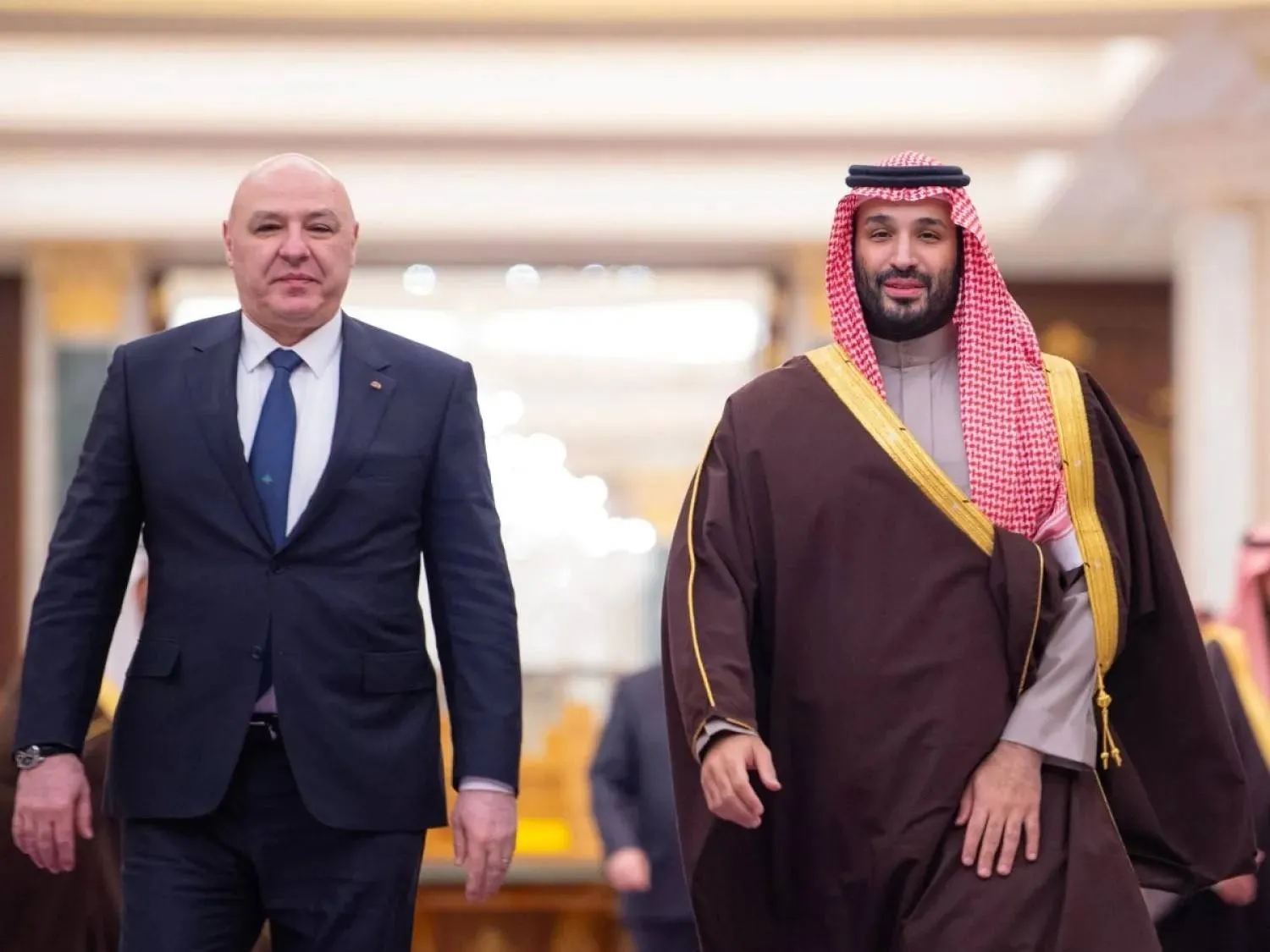
Saudi Crown Prince Mohammed bin Salman and Lebanese President Joseph Aoun at Al-Yamamah Palace in Riyadh, Nov. 3, 2025 (SPA)
TT

Lebanon’s Ambassador to Asharq Al-Awsat: Saudi Decision on Exports Came after Beirut Met Standards

Saudi Crown Prince Mohammed bin Salman and Lebanese President Joseph Aoun at Al-Yamamah Palace in Riyadh, Nov. 3, 2025 (SPA)

Lebanon’s ambassador to Riyadh said Saudi Arabia’s decision to resume imports from Lebanon came after Beirut met the required standards to ensure the goods posed no risk.

The diplomat said the fight against drugs had involved intensive work and high-level security and political coordination between the two countries.

Saudi Crown Prince and Prime Minister Mohammed bin Salman on Wednesday ordered the resumption of Lebanese exports to the Kingdom at the request of Lebanese President Joseph Aoun and Prime Minister Nawaf Salam.

The move followed what were described as positive steps by Lebanon’s government to rebuild state institutions, work by specialist teams over the past year, Beirut’s cooperation and the required pledges it had made.

In a phone interview with Asharq Al-Awsat on Thursday, Ambassador Ali Karanouh welcomed the Crown Prince’s decision, saying it reflected “the depth of the brotherly and historic relations between the two countries, and the Saudi leadership’s keenness to support Lebanon, its institutions, economy, and people, especially in these difficult circumstances.”

‘A lifeline’

Karanouh said Lebanon was going through a period in which it needed “a lifeline,” adding that the step “is not surprising from Saudi Arabia, which has always stood by Lebanon.”

He cited Riyadh’s role in the Taif Agreement that ended Lebanon’s civil war, as well as its support during reconstruction and recovery.

The ambassador said Lebanese people were grateful for the decision, which he said would benefit agriculture, industry, trade, and services, and help Lebanon regain access to one of the most important Arab and Gulf markets at a time when it badly needs support.

He said the decision was the result of efforts that began with Aoun’s election and the formation of Salam’s government.
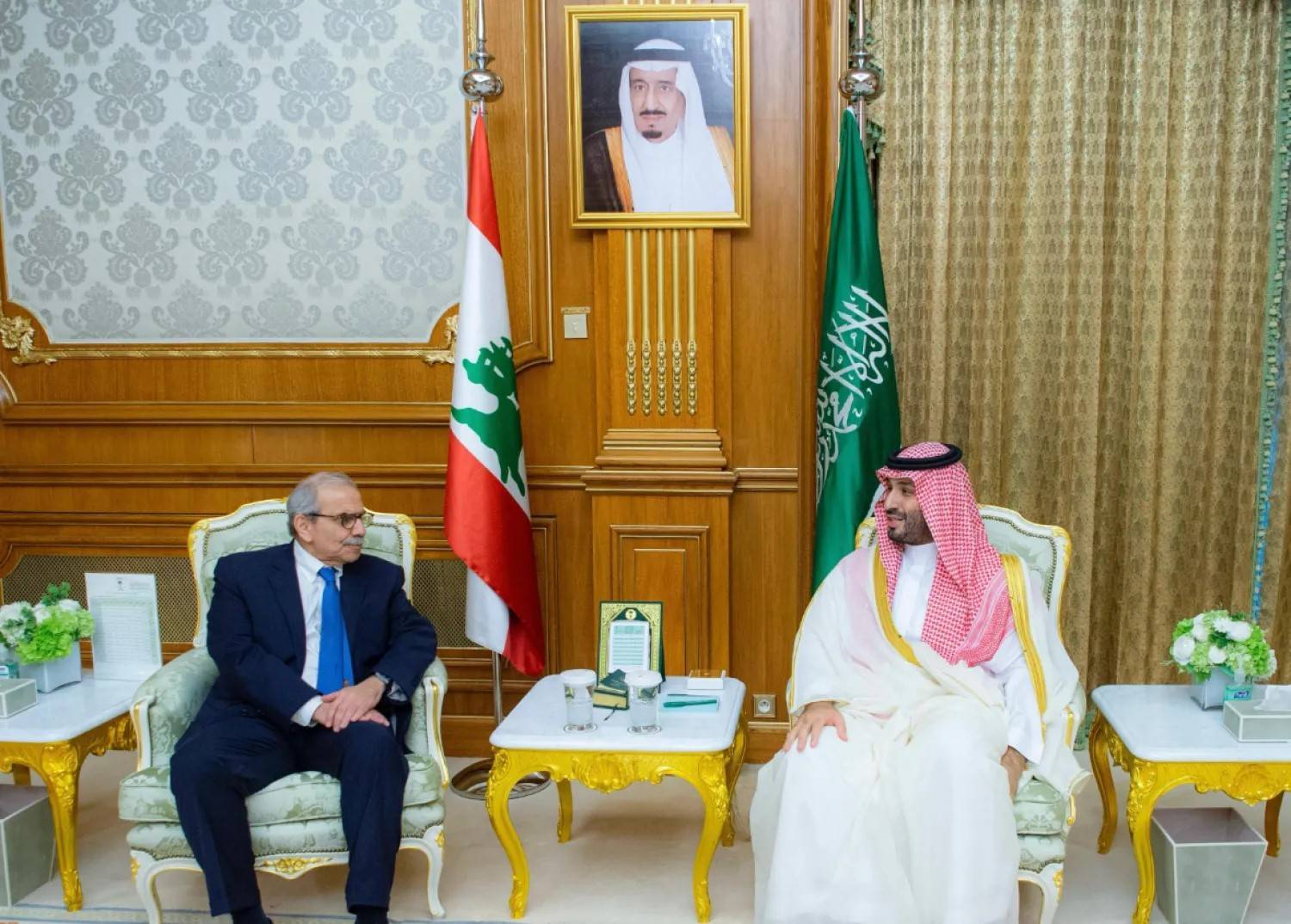
 

Saudi Crown Prince Mohammed bin Salman and Lebanese Prime Minister Nawaf Salam in Makkah on March 30, 2025. SPA

Intensive security coordination on drugs

Karanouh said the new Lebanese government “showed from the first day its determination to return Lebanon to its natural place among its Arab brothers, after a period of distance caused by political choices that were not in its interest.”

He said the government had repaired relations with Arab states, especially Gulf countries, on the basis that Lebanon is an integral part of its Arab surroundings.

He said Beirut was determined from the start not to allow Lebanon to be used as a platform to harm Arab countries. The anti-drug file, he added, had seen intensive work and security and political coordination at the highest levels between Lebanese and Saudi authorities.

Karanouh said Saudi authorities had appreciated Lebanon’s efforts, including tighter controls at border crossings, airports and ports.

Those efforts, he said, continued for about 18 months and helped restore confidence in Lebanon and its institutions, turning the page on a period that had damaged the country’s reputation and foreign relations.

Lebanon, he said, was now on the right path.

Karanouh said the decision to resume Lebanese exports to Saudi Arabia was a major step that would benefit Lebanon’s economy and economic cooperation between the two countries. He said it came after Lebanon met the required standards, ensuring Lebanese exports posed no danger to brotherly countries.

The ambassador said Lebanese exporters were ready to enter the Saudi market and that the remaining technical and procedural issues were minor and could be resolved easily.

He said the Saudi decision would push bilateral ties into a broader phase, whether through the signing and activation of partnership agreements or through the Saudi-Lebanese Business Council, whose formation was completed months ago.

He expressed hope that the move would be followed by the return of Saudi flights and Saudi tourism to Lebanon when conditions allow.

Broad welcome in Lebanon

The Crown Prince’s decision was widely welcomed across Lebanon, nearly five years after Saudi Arabia halted all Lebanese imports, citing at the time “the importance of taking all necessary measures to protect the security of the Kingdom and its people.”

Saudi Foreign Minister Prince Faisal bin Farhan conveyed the Crown Prince’s directive in a phone call with Salam on Wednesday. He affirmed Saudi Arabia’s support for Lebanon’s stability, sovereignty over all its territory and the well-being of its people, as well as Riyadh’s confidence that Lebanon would take all necessary measures to ensure it is not used as a platform to harm its brothers.

Aoun expressed deep gratitude to Prince Mohammed bin Salman, saying the decision was “a sincere expression of the depth of Arab brotherhood that binds the two brotherly countries, and an embodiment of the wise Saudi leadership’s keenness to support Lebanon and its people during the phase of recovery and revival it is undergoing.”

Aoun said: “This kind step will make a tangible contribution to reviving the national economy and supporting broad segments of Lebanese producers and exporters.”

He added that the entire Lebanese people appreciates the decision, and “views it as a gesture that strengthens the path of Lebanese-Saudi relations rooted in the bonds of history and shared destiny.”

Salam said the decision to lift the ban on Lebanese exports reflected the depth of the brotherly and historic ties between the two countries. He said it embodied Saudi confidence in Lebanon and a shared desire to strengthen economic and trade cooperation.

Salam said the move was an important step that would support Lebanon’s economy, open new opportunities for Lebanese producers and exporters, and help promote growth and stability.

He said Lebanon looked forward to continued work and coordination with Saudi Arabia to strengthen cooperation and partnership in various fields for the benefit and prosperity of both countries.

Nine Riyadh-Paris Visits Chart Path from Coordination to Strategic Partnership

Mohammed bin Salman and Macron during the French president’s visit to Riyadh in December 2024 (AP) 
TT

Nine Riyadh-Paris Visits Chart Path from Coordination to Strategic Partnership

Mohammed bin Salman and Macron during the French president’s visit to Riyadh in December 2024 (AP) 

Saudi Crown Prince and Prime Minister Mohammed bin Salman’s current state visit to France marks the ninth official visit exchanged between the Saudi and French leaders since 2015, according to an Asharq Al-Awsat review of official sources.

The crown prince has traveled to France six times on official visits since 2015, including the current trip, while French President Emmanuel Macron has made three official visits to Saudi Arabia since taking office in 2017.

2015: First Visit

Mohammed bin Salman made his first official trip to France in June 2015, meeting then-President François Hollande at the Élysée Palace.

He also led the Saudi delegation at the inaugural meeting of the Saudi-French Permanent Coordinating Committee. The trip saw the signing of 10 agreements worth a total of $12 billion.

2016: Vision 2030 Joins the Agenda

Mohammed bin Salman returned to Paris in June 2016, meeting Hollande and other senior French officials.

Talks centered on developing bilateral ties and cooperation under Saudi Vision 2030, unveiled by the Kingdom two months earlier, as well as developments in the Middle East and efforts to bolster regional security and stability.

The trip broadened economic cooperation, placing Saudi Arabia’s transformation and diversification plans at the heart of discussions alongside political and defense coordination.

Several agreements and memorandums of understanding were signed, while the third Saudi-French Business Opportunities Forum brought together companies and business leaders to explore investment opportunities.

2017: Macron Makes First Saudi Trip

Macron traveled to Saudi Arabia on Nov. 9, 2017, months after taking office.

He met Mohammed bin Salman in Riyadh for talks on regional stability, counterterrorism and peace efforts, according to the French presidency.

The French leader also condemned a Houthi ballistic missile attack targeting Riyadh and voiced his country’s solidarity with the Kingdom.

2018: Three Days in France, AlUla Agreement

In April 2018, Mohammed bin Salman traveled to France for the first time since becoming crown prince and for the third time since 2015.

During the three-day trip, he held wide-ranging discussions with Macron covering political, economic, defense and cultural ties, as well as regional issues.

The two countries signed an intergovernmental agreement on cooperation to develop AlUla, while Saudi and French companies concluded 19 agreements worth more than $18 billion.

2021: Macron in Jeddah

Macron returned to Saudi Arabia in December 2021 for talks with Mohammed bin Salman in Jeddah.

Discussions focused on regional security and stability and ways to expand the bilateral partnership under Vision 2030, alongside Lebanon, Yemen, Iran and counterterrorism.

Riyadh and Paris also sought to broaden economic and investment cooperation, particularly in new technologies, future industries, renewable energy, culture and tourism.

2022: Energy and Global Crises

Mohammed bin Salman traveled to France again in July 2022, meeting Macron at the Élysée Palace as the Russia-Ukraine war weighed on global energy markets and food security.

Their discussions covered diversifying energy supplies to Europe and mitigating the impact of the food crisis, as well as developments in Lebanon and Yemen and Iran’s nuclear program.

Riyadh and Paris agreed to deepen cooperation in defense, energy, digital transformation, transport, sustainable cities and culture. France also renewed its support for Riyadh’s bid to host Expo 2030.

2023: A Broader Partnership

Mohammed bin Salman’s fifth official trip to France came in the summer of 2023, when he held bilateral and expanded talks with Macron at the Élysée Palace.

The leaders discussed bilateral ties and regional and international developments.

The crown prince also headed the Saudi delegation to the Summit for a New Global Financing Pact and attended an official reception promoting Riyadh’s Expo 2030 bid.

The trip reflected the widening scope of Saudi-French ties, extending beyond politics and defense to climate action, the global economy, investment and culture.

2024: Strategic Partnership

Macron traveled to Saudi Arabia for a third time from Dec. 2 to 4, 2024, on a state visit encompassing Riyadh and AlUla.

The trip saw the establishment of a strategic partnership between the two countries and the signing of a memorandum of understanding to create the Saudi-French Strategic Partnership Council, an umbrella framework for cooperation in politics, defense, the economy, culture, energy and technology.

Macron also attended an investment forum bringing together more than 200 Saudi and French companies and took part in the One Water Summit in Riyadh before traveling to AlUla in northern Saudi Arabia.

2026: Ninth Visit

Mohammed bin Salman’s current state visit to France is his sixth official trip to the country since 2015 and brings the total number of official visits exchanged between the two countries’ leaders to nine.

Macron has traveled to Saudi Arabia three times since becoming president in 2017.


GCC, India Discuss Ministerial Meeting Set to be Held Next Month

Secretary-General of the Gulf Cooperation Council (GCC) Jasem Albudaiwi
TT

GCC, India Discuss Ministerial Meeting Set to be Held Next Month

Secretary-General of the Gulf Cooperation Council (GCC) Jasem Albudaiwi

Secretary-General of the Gulf Cooperation Council (GCC) Jasem Albudaiwi met in Riyadh on Sunday with Indian Ambassador to Saudi Arabia Shri Vipul.

During the meeting, the two sides reviewed a number of topics of common interest, most notably relations between the GCC and India, and ways to develop and enhance them in a manner that serves common interests.

They also discussed the latest developments regarding the launch of negotiations on the Free Trade Agreement (FTA) between the GCC and India, signed in February 2026, in addition to preparations for the GCC-India ministerial meeting scheduled to be held next September.

The two officials also exchanged views on the latest developments in the region and the world, affirming the importance of continuing coordination and consultation on issues of common interest.


GCC Secretary-General Holds Separate Meetings with South Korean, Georgian Ambassadors

Gulf Cooperation Council (GCC) Secretary-General Jasem Albudaiwi
TT

GCC Secretary-General Holds Separate Meetings with South Korean, Georgian Ambassadors

Gulf Cooperation Council (GCC) Secretary-General Jasem Albudaiwi

Secretary-General of the Gulf Cooperation Council (GCC) Jasem Albudaiwi met in Riyadh on Sunday with South Korean Ambassador to Saudi Arabia Kang Shin-chul.

During the meeting, the two sides discussed several topics of common interest, most notably GCC-Korean ties and the latest developments on the signing of the Free Trade Agreement (FTA) between the GCC and South Korea, SPA reported.

They also exchanged views on developments in the region, and international and regional efforts aimed at enhancing security and stability.

Albudaiwi also met with Ambassador of Georgia to the Kingdom Nikoloz Revazishvili.

During the meeting, the two sides discussed a number of topics related to strengthening relations between the GCC and Georgia, as well as ways to develop them in a manner that serves common interests, including the latest developments regarding the Joint Action Plan for 2022–2026.

They also discussed the latest developments in the region and the world and exchanged views on a number of issues of common interest.