
Al-Aradah to Asharq Al-Awsat: Saudi Arabia Spared Yemen from Another Civil War

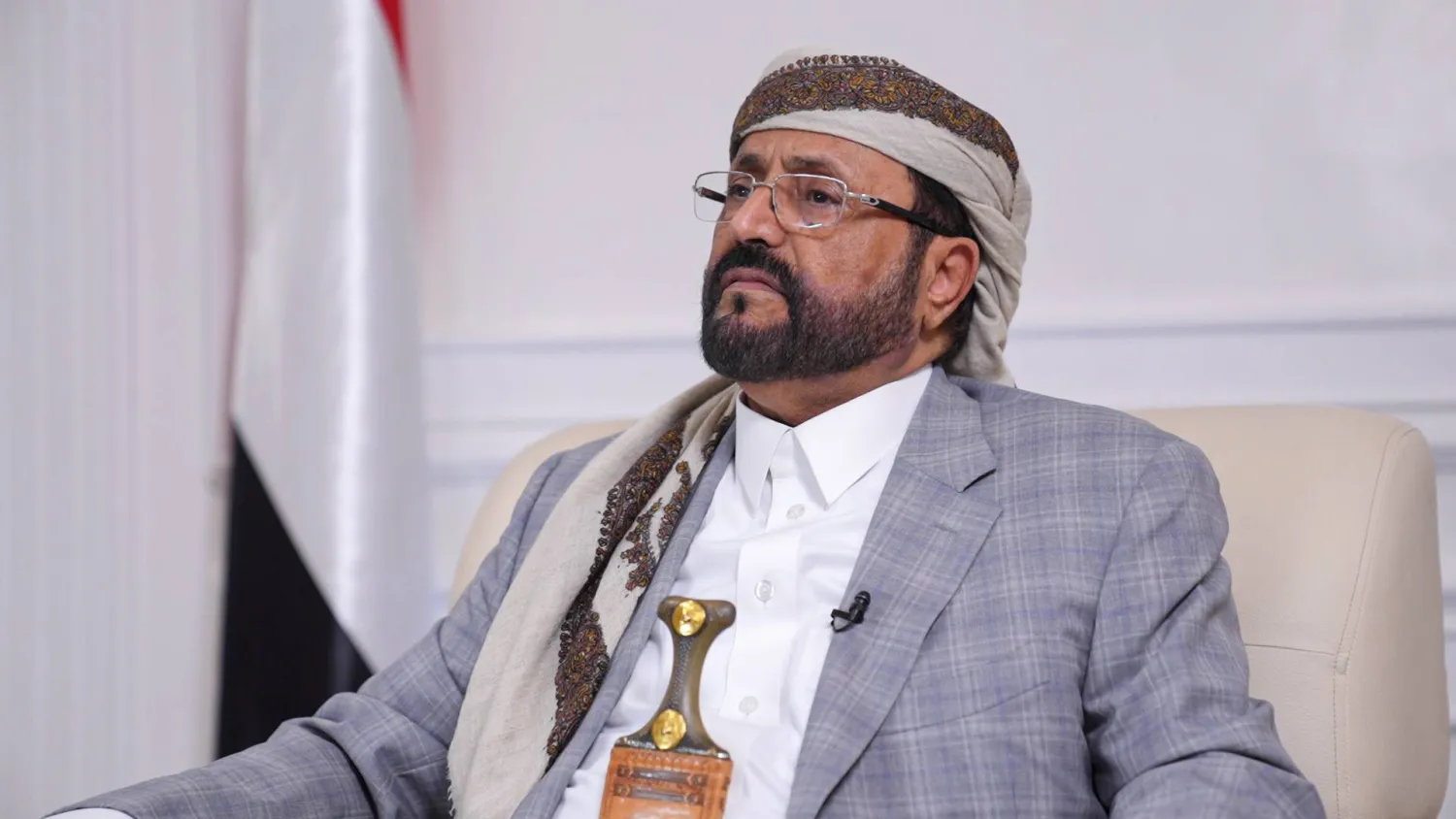
Al-Aradah stressed that Saudi Arabia averted a new civil war in Yemen. (Asharq Al-Awsat)
TT

Al-Aradah to Asharq Al-Awsat: Saudi Arabia Spared Yemen from Another Civil War

Al-Aradah stressed that Saudi Arabia averted a new civil war in Yemen. (Asharq Al-Awsat)

Maj. Gen. Sultan Al-Aradah, a member of Yemen’s Presidential Leadership Council and governor of Marib, said Saudi Arabia helped prevent Yemen from sliding into a new civil war through what he described as its “sincere” support during the tensions that unfolded in Hadramawt and Al-Mahra last December.

In an interview with Asharq Al-Awsat, Al-Aradah maintained that the Yemeni people, with their long history, civilization and standing, cannot remain hostage to a militia – a reference to the Iran-backed Houthis. “Sometimes peace can only be achieved by imposing peace,” he said.

He described relations with Saudi Arabia as far deeper than conventional political ties, calling them “a relationship of shared destiny,” and praised Saudi development projects across Yemen, noting their visible impact on communities throughout the country.

German ambassador’s visit

Al-Aradah viewed last week’s visit by German Ambassador Thomas Schneider to Marib as evidence of the strength of Yemeni-German relations and Berlin’s commitment to supporting Yemen through difficult circumstances.

Germany has played an important role in humanitarian and development efforts over many years, he noted.

The relationship between the two countries spans decades and includes a wide range of shared interests, making the ambassador’s visit an opportunity to gain first-hand insight into conditions in Marib and the challenges facing the province.

The Houthis and the regional conflict

Al-Aradah criticized the Houthi involvement in the wider regional conflict, arguing that it serves neither Yemen’s interests nor those of the region and does nothing to preserve state institutions.

“What interest do the Houthis have in intervening in issues that have no direct connection to Yemen?” he asked.

Such policies, he said, have brought Yemen repeated crises and deepened the suffering endured by Yemenis over the past decade.

According to Al-Aradah, Yemen cannot achieve lasting stability until the state regains its authority and institutions.

He indicated that the legitimate government and its regional and international partners will continue working toward that objective.

“The Yemeni people, with their history, civilization and stature, cannot remain hostage to a militia, whatever form it takes,” he said, adding that Yemenis will continue their efforts, with the support of allies and partners, to rebuild their state and restore its institutions.
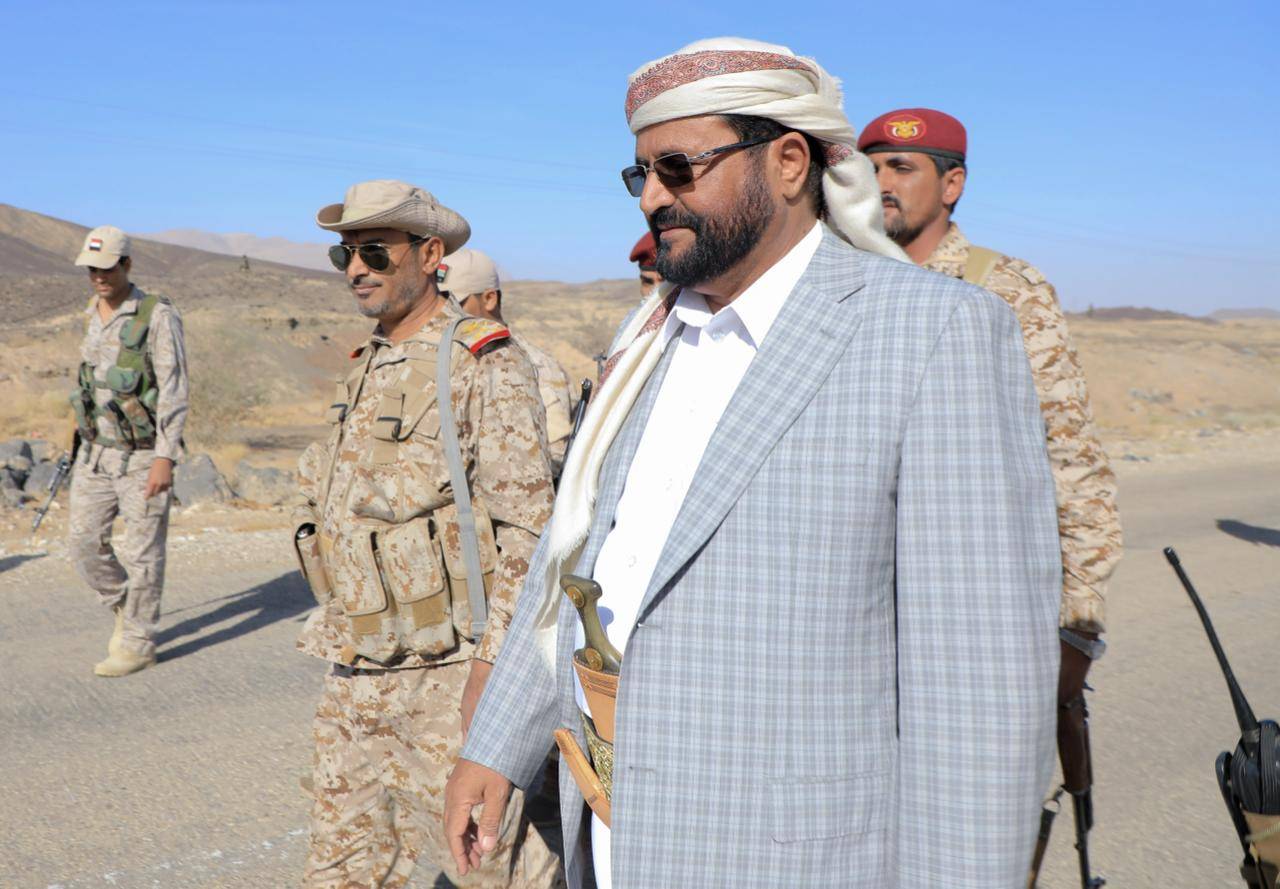
Maj. Gen. Sultan Al-Aradah, a member of Yemen’s Presidential Leadership Council and governor of Marib. (Saba)

Why Marib held firm

Asked about Marib’s ability to withstand years of military and political pressure, Al-Aradah dismissed the idea of any “secret” or “magic formula.”

The province’s resilience stemmed from a profound sense of responsibility at a decisive moment in Yemen’s history, he explained. As state institutions collapsed and Yemenis faced attacks on their lives, dignity, property and national values, many rallied behind Marib.

For many Yemenis, Marib became more than a safe haven; it became the center of the struggle to defend the republic and restore the state, he added.

Assessing the performance of the legitimate government over recent years, Al-Aradah acknowledged that numerous domestic and external factors had hindered progress.

Without elaborating, he noted that these obstacles affected development, the economy and security. Nevertheless, he described them as challenges that can be overcome and suggested that meaningful progress has already been made in addressing some of them.

Peace efforts

Al-Aradah reiterated that peace remains the preferred option, but argued that it requires parties willing to embrace it.

“The problem is that we do not have a party that believes in peace,” he said. “The other side views peace as the end of its project. We want peace, but the question is: with whom?”

One of the principal reasons the war continues, he added, is the belief among the Houthis that a genuine settlement would undermine their political and ideological project.

Asked whether that implied a military solution, Al-Aradah replied that history offers many examples of conflicts that ended only through decisive action after negotiations failed and one side showed no real commitment to peace.

Perpetual war is not a viable option. The interests of the Yemeni people must take precedence over all other considerations, he stressed.

Keeping the state intact

Al-Aradah described the Presidential Leadership Council’s ability to preserve the state and maintain cohesion under extraordinarily difficult circumstances as a significant achievement in itself.

Yemen, he observed, faced challenges that could easily have led to fragmentation and dangerous divisions. Instead, the council endured and overcame many obstacles with support from regional and international partners.

The council is pursuing several priorities simultaneously, including unifying military formations, strengthening joint operations, improving coordination among national forces, supporting the government and preserving state institutions.

It is also working to improve economic conditions, consolidate state revenues and help government institutions resume normal operations.

While acknowledging the scale of public suffering, Al-Aradah said that the current situation must be judged against the alternative.

“When we look at the alternative, we realize the other option was chaos, fragmentation and total collapse,” he noted.
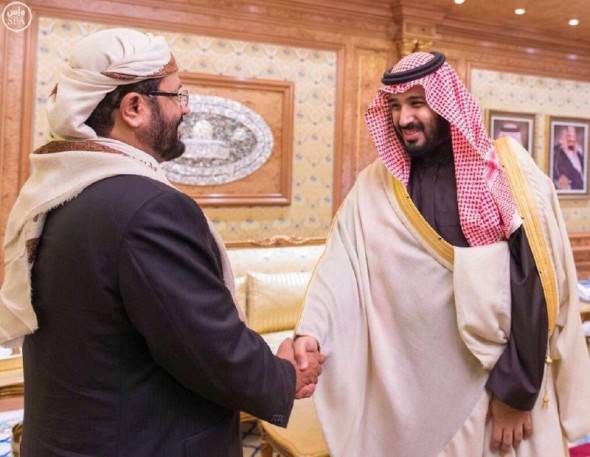
Prince Mohammed bin Salman, Crown Prince and Prime Minister, meets with Al-Aradah. (SPA file)

The challenge within

The most difficult challenge facing the PLC, Al-Aradah noted, has been internal rather than external.

The council has grappled with major internal issues since its formation, although many of those matters were not suitable for public discussion at the time.

He credited PLC Chairman Dr. Rashad Al-Alimi with playing a central role in containing those challenges.

“He has shown remarkable patience and endurance and has faced considerable criticism,” Al-Aradah said. “We have now seen the results of that patience.”

Collective leadership models are inherently difficult and often encounter serious obstacles, he remarked.

The council was not created arbitrarily, but emerged from a careful assessment of Yemen’s political, military and regional realities, he went on to say. Its members represent different forces, constituencies and regions, with the aim of unifying national political and military power against common challenges.

Building a unified military

Discussing efforts to unify military formations, Al-Aradah said important progress has been made through joint operations and military committees that bring together commanders from different forces.

He credited Saudi Arabia with playing a pivotal role, not only through political backing but also through logistical and military support and sustained coordination among various factions.

The Kingdom views military unification as an integral part of the broader effort to restore the Yemeni state and works directly with different military formations, providing support and funding, he told Asharq Al-Awsat

Hadramawt and the threat of escalation

Turning to developments in Hadramawt, Al-Aradah expressed regret over the tensions that unfolded there, arguing that the province never deserved to be drawn into conflict.

Hadramawt has long been one of Yemen’s most peaceful and stable regions, he noted. The tensions resulted from poor calculations at both local and external levels, prompting Yemen’s leadership to act in order to preserve national unity and prevent broader confrontations.

He praised Saudi Arabia’s role during the crisis, describing the Kingdom as “a sincere brother” that stood beside Yemen at a critical moment and helped prevent the country from sliding further toward fragmentation.

According to Al-Aradah, that coordinated effort protected Yemen from a new civil war that could have spread across large parts of the country.

Yemen is already fighting a war against the Houthis while enduring a severe economic crisis, he noted. Opening new fronts inside government-controlled areas would have posed a grave threat to the country’s future.

Many Yemenis, including some who disagreed with decisions taken at the time, will eventually recognize the significance of the Kingdom’s role in preventing further divisions and conflict, he predicted.

A reckoning for Yemen’s political elite

Al-Aradah argued that the key question facing Yemen’s political elite is not their own future but whether they can guide the country out of its crisis and restore state institutions.

The political class, he suggested, must undertake an honest assessment of its own record, since much of Yemen’s current predicament resulted from rivalries, disputes and conflicts among competing elites.

Their moral and national responsibility now is to correct those mistakes by working to restore the state and improve the lives of ordinary Yemenis.
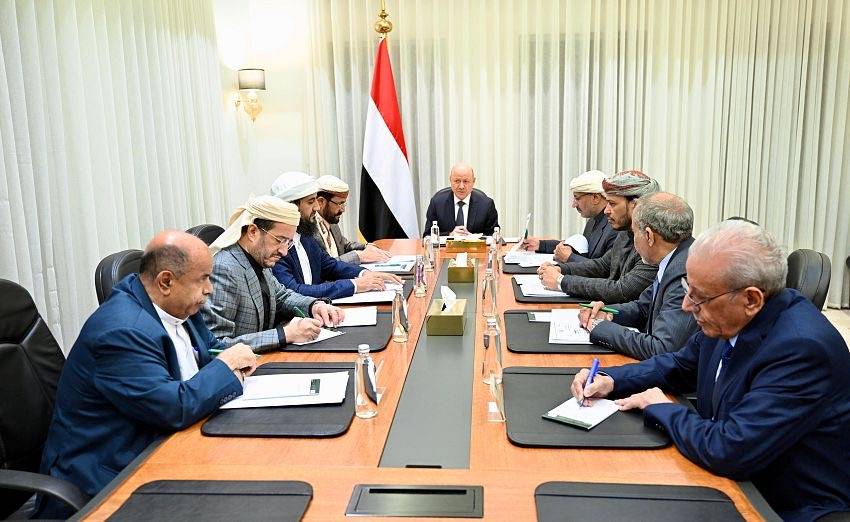
The Yemeni Presidential Leadership Council during a meeting. (Yemeni Presidency)

Saudi-Yemeni relations

Speaking at length about Saudi-Yemeni relations, Al-Aradah described them as ties of “shared destiny” that transcend ordinary politics.

Al-Aradah said the relationship is rooted in history, kinship, religion, common interests and intertwined security concerns.

Saudi Arabia’s greatest contribution to Yemen, in his view, has been political rather than financial.

“The most important thing Saudi Arabia provided was diplomatic and political backing for Yemen’s legitimate government from the very beginning of the crisis,” he said.

Without that support and the accompanying diplomatic efforts, parts of the international community might have treated the Houthis as a permanent authority or alternative government.

The Kingdom has also supported state institutions, assisted the government and provided humanitarian aid and relief.

“Saudi Arabia is committed to restoring the Yemeni state and its sovereignty perhaps more than many Yemenis themselves,” Al-Aradah said.

Saudi development efforts in Yemen

He praised Saudi-funded projects throughout Yemen and thanked Custodian of the Two Holy Mosques King Salman bin Abdulaziz and Prince Mohammed bin Salman, Crown Prince and Prime Minister, for their continued support.

He highlighted the work of the King Salman Humanitarian Aid and Relief Center and commended the Masam landmine-clearance program, noting that Houthi landmines continue to threaten farmers, shepherds, travelers, children and civilians.

He also praised the Saudi Development and Reconstruction Program for Yemen, led by Ambassador Mohammed Al Jaber, crediting it with strengthening health care, education, water services, infrastructure and local development.


Lebanon-Israel Talks Head for Stalemate

The US Embassy in Rome, Italy, where the seventh round of Lebanese-Israeli negotiations was held. (AP)
TT

Lebanon-Israel Talks Head for Stalemate

The US Embassy in Rome, Italy, where the seventh round of Lebanese-Israeli negotiations was held. (AP)

Lebanese-Israeli negotiations appear headed for a period of drift, with no serious signs that political and technical discussions will translate into practical steps.

The seventh round, held in Rome last week, ended without tangible results.

The next round will be held next month, a State Department official announced Tuesday.

"The political track will reconvene in Rome in early September, and conversations will continue in Beirut, Jerusalem, and Washington in the interim," the official said on condition of anonymity.

Lebanese ministerial sources following the negotiations said the deadlock was driven mainly by Israeli and US political calculations, making a meaningful breakthrough unlikely in the near term.

Israeli Prime Minister Benjamin Netanyahu does not appear ready to make concessions or take major steps before Israel’s elections in October, the sources told Asharq Al-Awsat.

With the outcome uncertain, they said, Netanyahu would be reluctant to approve a withdrawal from areas in southern Lebanon that could carry domestic political costs or be used against him during the campaign.

Limited US pressure

The sources said Washington was also unlikely to put heavy pressure on Netanyahu at this stage, despite continuing to sponsor the negotiations.

They linked that caution to US domestic politics ahead of the midterm elections and the administration’s desire to maintain strong ties with Israel and segments of the Jewish American electorate.

That leaves Washington with limited room to push the Israeli government, the sources said.

The United States appears keen to keep the talks alive and prevent their collapse, but not to press Israel into major steps before the Israeli political picture becomes clearer.

Talks, but no implementation

The seventh round underscored the limits of the current process, the sources said.

“If there had been a serious desire to make progress, it would at least have been possible to agree on the pilot areas and identify them by name as a prelude to implementation,” they said.

Instead, discussions shifted to border issues, working mechanisms and technical arrangements.

No practical steps were agreed, including Lebanon’s demand for an end to the war and destruction, the sources said.

The problem, they added, is that the talks are increasingly focused on mechanisms and details while the political decisions needed to begin implementation remain absent.

That risks turning the negotiations into an open-ended process with no tangible outcome.

Prisoners and remains

The sources said bringing the issue of Israeli remains into the talks and linking it to the prisoners’ file was also pulling attention away from the core issues.

If there were a serious and positive effort to address the prisoners’ issue, they said, the International Committee of the Red Cross should at least be allowed to meet them, something Israel continues to refuse.

Raising such issues without taking clear steps only prolongs the negotiations, the sources said, rather than moving toward the issues Lebanon wants addressed.

Against that backdrop, Beirut is using its channels with US officials to press Israel, at least to halt the continuing bulldozing and destruction in the south.

Lebanon is stressing to Washington that ongoing destruction, alongside negotiations, makes it difficult to portray the process as serious or capable of producing a settlement, the sources said.

Beirut hopes for some progress on that front in the near term.

Could Lebanon walk away?

On whether Lebanon might suspend its participation, the sources pointed to an episode during the seventh round in Rome.

Lebanese delegation head Ambassador Simon Karam wanted to withdraw after Israel threatened to strike the town of Mansouri and called for its evacuation, they said.

The Lebanese presidency, however, favored continuing the talks.

Its view was that any suspension should come from the other side, not Lebanon, so Beirut would not be blamed for derailing the negotiations.

Iran remains a factor

The US-Iranian negotiations are also feeding into the Lebanese-Israeli track, alongside Israel’s elections, the sources said.

Any progress between Washington and Tehran could affect the situation in Lebanon.

The main impact, they said, would be on efforts to disarm Hezbollah, ease tensions and push the group toward a more positive approach to Lebanon’s negotiating track.


Sources to Asharq Al-Awsat: Gaza Factions Assured Political Work after Disarmament

Members of Hamas’ Qassam Brigades. (Reuters file)
TT

Sources to Asharq Al-Awsat: Gaza Factions Assured Political Work after Disarmament

Members of Hamas’ Qassam Brigades. (Reuters file)

Israel has repeatedly vowed to eliminate Hamas and keep the group out of Gaza’s political, administrative and security future. But that goal, along with others, appears increasingly difficult to achieve.

Sources in Hamas and other Palestinian factions told Asharq Al-Awsat that months of talks in Cairo, particularly those held in recent days and weeks, included assurances that the factions would face no obstacle to continuing political activity in the Palestinian territories.

A Hamas source based abroad said the assurances amounted to guarantees from several parties, including mediators and the US administration, that Palestinian factions would be free to exercise their political rights under Palestinian law.

Their members and activists would also not be targeted or pursued over their political activity or previous political or security-related activities, the source said.

Another senior Hamas source said the issue had been clear since negotiations began around US President Donald Trump’s initiative in September and October 2025.

The negotiating team, the source said, had rejected Israeli efforts to dismantle Hamas completely, exclude it from Palestinian political life, and force its leaders into exile.

Those understandings were reaffirmed in the latest talks as Hamas agreed to the inventorying and storage of weapons, the source said.

Some factions had nevertheless raised concerns that parties could later use the new arrangements to launch unjustified campaigns against activists for their affiliations or political activity, particularly after the weapons inventory process was completed.

A source from a Palestinian faction that took part in the Cairo talks said the agreed roadmap contained nothing to prevent factions from operating politically as usual.

Those concerns have gained importance after Palestinian President Mahmoud Abbas set Nov. 28 as the date for legislative elections, including in parts of the Gaza Strip where voting can be held, particularly central Gaza.

Palestinian sources told Asharq Al-Awsat more than a month ago that Arab and Islamic countries, along with other parties, were working to bridge differences between the factions and the Palestinian Authority so the elections could take place under broad national consensus in line with the new phase in Palestinian internal politics.

Hamas on Tuesday urged Palestinians to register or update their details on the electoral roll to secure their right to take part in the coming elections.


Syria Condemns Colombia's Recognition of Israeli Sovereignty over Golan Heights

Israeli soldiers operate in the Israeli-occupied Golan Heights near the border with Syria, amid the conflict between Israel and the Palestinian group Hamas, December 28, 2023. (Reuters)
TT

Syria Condemns Colombia's Recognition of Israeli Sovereignty over Golan Heights

Israeli soldiers operate in the Israeli-occupied Golan Heights near the border with Syria, amid the conflict between Israel and the Palestinian group Hamas, December 28, 2023. (Reuters)

Syria strongly condemned on Tuesday the Colombian government's statement recognizing what it described as "Israeli sovereignty" over the occupied Syrian Golan Heights, saying the position, which was reportedly based on security considerations, contradicts international law and relevant United Nations resolutions.

The Syrian Ministry of Foreign Affairs and Expatriates categorically rejected Colombia's position, reaffirming that the Golan Heights are an integral part of Syrian territory, said Syria’s state news agency SANA.

The ministry said the Colombian statement is a flagrant violation of the UN Charter and contradicts the position of the UN Secretary-General affirming that the Golan Heights are Syrian territory, as well as the established principle prohibiting the acquisition of territory by force and relevant UN Security Council resolutions.

The ministry welcomed growing international support for Syria's legitimate rights over the Golan Heights, saying this reflects continued international rejection of attempts to legitimize the occupation or recognize its consequences.

It stressed that the Golan Heights remain subject to the principles of international law and the relevant UN resolutions.

The Syrian foreign ministry also condemned the continued Israeli attacks and incursions into Syrian territory, calling on states and international organizations to uphold their responsibilities under international law and respect UN resolutions.

Syria will continue to employ diplomatic and legal means to defend its sovereignty, territorial integrity and established rights, and to work toward the restoration of its occupied territories, it vowed.