
Hezbollah's Financial Arm Referred to Lebanese Prosecutors

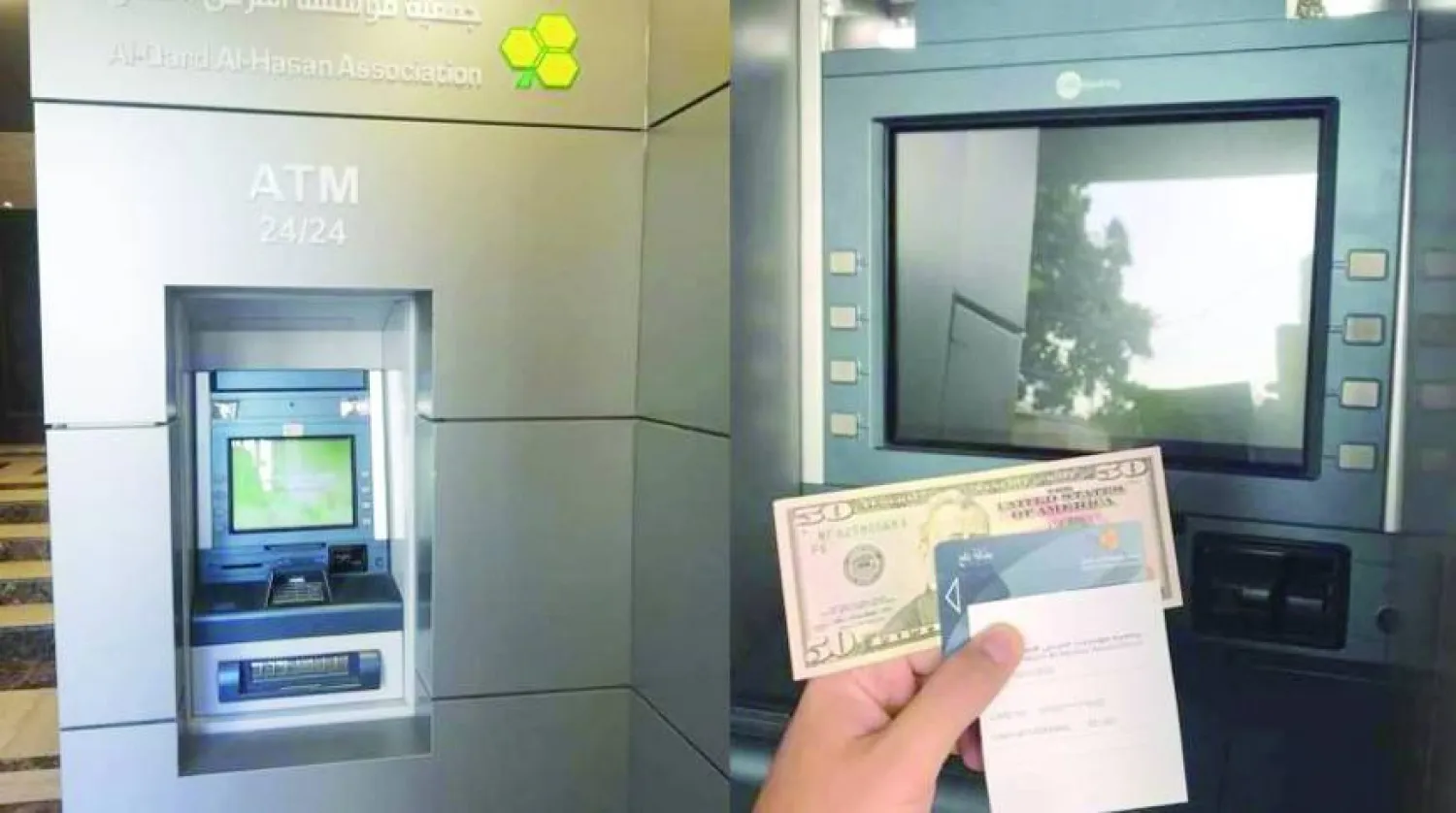
A photo circulating on social media showing an Al-Qard Al-Hassan ATM installed in Beirut's southern suburbs in 2018 (file photo).
TT

Hezbollah's Financial Arm Referred to Lebanese Prosecutors

A photo circulating on social media showing an Al-Qard Al-Hassan ATM installed in Beirut's southern suburbs in 2018 (file photo).

In a move carrying legal, financial, and political implications, Lebanon's justice minister has referred Al-Qard Al-Hassan, Hezbollah's financial arm, to the Public Prosecutor's Office, requesting the opening of an investigation into its financial activities.

The step revives a longstanding dispute between Hezbollah and state institutions over financial operations that function outside Lebanon's banking system and the extent to which they comply with the country's laws and regulations.

The referral comes as Lebanon faces growing international pressure over anti-money laundering and counterterrorism financing measures, alongside repeated calls for all financial and lending activities to be brought under the supervision of Banque du Liban and the relevant regulatory authorities.

Justice Minister Adel Nassar said the decision followed a ministry review of the matter.

"Based on a study conducted by the ministry, we reached conclusions and identified grounds that warranted placing the case before the Public Prosecutor's Office, which will now take the necessary steps," Nassar told Asharq Al-Awsat.

He added that the ministry had examined more than one issue and found sufficient reasons to make the referral, stressing that determining whether any offense had been committed was a matter for prosecutors.

"The ministry's role is limited to making a referral when information emerges that warrants an investigation," he said.

Internal Initiative, Not External Pressure

Al-Qard Al-Hassan has for years been subject to sanctions imposed by the US Treasury Department, which accuses it of providing financial services that support Hezbollah and its illicit activities. The institution is neither licensed nor recognized by Lebanon's banking authorities, while Banque du Liban has previously issued directives prohibiting licensed banks and financial institutions from dealing with it.

Asked whether the move resulted from requests by foreign parties, Nassar insisted that it stemmed from the ministry's own responsibilities and was not prompted by any external approach or demand.

"This is not limited to Al-Qard Al-Hassan," he said. "It also involves other entities, including Joud."

Nassar said the ministry's internal review had identified questions regarding the nature of the activities carried out by these entities and the financial operations that could stem from them.

He stressed that the judiciary would independently determine whether any violations or crimes had occurred and whether prosecution was warranted.

"That is a matter for the courts to decide, independently and without interference from any authority, including the Ministry of Justice," he said.

Investigation Taking Shape

Attention is now focused on the course of the judicial proceedings and whether they will lead to concrete decisions or legal measures against the institution or those responsible for running it.

A judicial source said Public Prosecutor Judge Rami Hajj received the referral on Monday and is currently reviewing it before setting dates for investigative sessions.

The source said the inquiry was likely to be complex and involve multiple authorities.

"Part of it may fall within the jurisdiction of General Security, while another part may involve the Interior Ministry in order to determine whether Al-Qard Al-Hassan's association license remains valid or has been suspended," the source told Asharq Al-Awsat.

The source added that if financial violations are established, part of the investigation would involve Banque du Liban and the Special Investigation Commission to determine the origin of the funds involved.

The move is widely seen as an important test of the Lebanese state's ability to enforce regulatory oversight over all financial institutions operating within the country, particularly after the financial collapse that struck the traditional banking sector in 2019.

That collapse was accompanied by the expansion of alternative financial networks, most notably Al-Qard Al-Hassan, which Hezbollah used to circumvent US sanctions. Over time, the institution developed into a de facto banking system serving the party and its support base, providing loans to thousands of clients in exchange for collateral including jewelry and real estate.

A photo circulating on social media showing an Al-Qard Al-Hassan ATM installed in Beirut's southern suburbs in 2018 (file photo).

ATMs and Transfers Under Scrutiny

The case is also expected to trigger political controversy and draw a response from Hezbollah, which views mounting pressure on Al-Qard Al-Hassan as part of a broader campaign of sanctions and financial restrictions imposed on the group and its constituency for years.

That perception has been reinforced during the recent conflict, as the institution played a role in providing assistance to large numbers of displaced residents from southern Lebanon, Beirut's southern suburbs, and the Bekaa Valley.

The judicial source said Hezbollah was expected to cooperate with the investigation and provide evidence to demonstrate that the institution had not engaged in unlawful activity.

The source also disclosed that a delegation of Hezbollah lawmakers met the Public Prosecutor around two weeks ago and pledged to suspend the institution's ATM operations, as well as any transfer or deposit activities that might conflict with the scope of its authorized license.


Israeli Military Takes More Territory, Kills Two People in Gaza, Medics and Witnesses Say

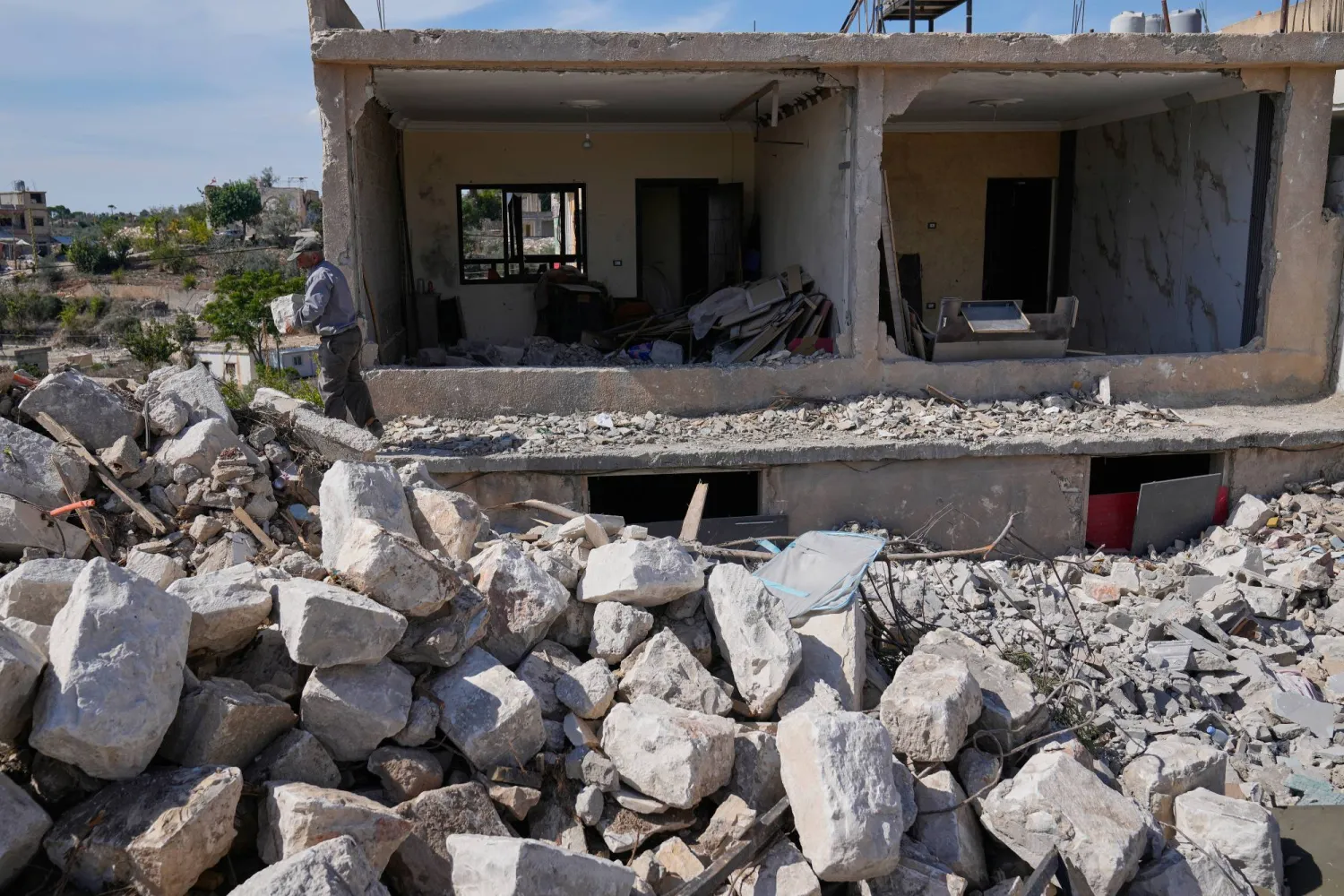
 Palestinians make their way past the rubble of residential buildings destroyed during the Israeli offensive as displaced people shelter in tents, in Gaza City, June 15, 2026. (Reuters)
Palestinians make their way past the rubble of residential buildings destroyed during the Israeli offensive as displaced people shelter in tents, in Gaza City, June 15, 2026. (Reuters)
TT

Israeli Military Takes More Territory, Kills Two People in Gaza, Medics and Witnesses Say

 Palestinians make their way past the rubble of residential buildings destroyed during the Israeli offensive as displaced people shelter in tents, in Gaza City, June 15, 2026. (Reuters)
Palestinians make their way past the rubble of residential buildings destroyed during the Israeli offensive as displaced people shelter in tents, in Gaza City, June 15, 2026. (Reuters)

An Israeli ‌strike killed at least two Palestinians in the central Gaza Strip, health officials said, as residents of an area in the north of the enclave fled their homes after Israeli forces expanded their control in the territory.

Medics said an Israeli strike near a residential building in the Nuseirat refugee camp, in the central Gaza Strip, killed two brothers, Ahmed and Mahmoud Abu Heen. The Israeli military did not immediately comment.

An October 2025 truce brokered by US President Donald Trump has so far failed to halt Israeli attacks in Gaza or to secure the disarmament of the Hamas group.

The new deaths brought to nearly 1,000 the number of Palestinians killed by Israeli fire since October, according to the Gaza health ministry. Israel says four of its soldiers have been ‌killed by fighters ‌in that period.

The violence comes as Nickolay Mladenov, Trump's ‌Board ⁠of Peace envoy for ⁠Gaza, arrived in Cairo to pursue talks that mediators from Egypt, Qatar and Türkiye have held with Hamas leaders over implementing the second phase of Trump's Gaza plan, sources close to the talks said.

Israel and Hamas remain deadlocked over how to proceed with the next stage of Trump's Gaza plan, which involves Hamas laying down its arms and Israeli withdrawals.

ISRAEL TAKES MORE GAZA LAND

Israeli troops still control more than 60% of Gaza's territory, where they have ordered residents out ⁠and destroyed remaining buildings.

On May 28, Prime Minister Benjamin Netanyahu reaffirmed ‌that he had directed Israel's military to expand its ‌hold and take control of 70% of the enclave.

Witnesses in southern Gaza have said Israeli forces ‌have in the past few days expanded the "Yellow Zone" - the areas they control - in eastern ‌Khan Younis and northern Rafah, where new markers and concrete blocks have been placed.

On Sunday, Israeli forces sent tanks further into the Al-Tuffah neighborhood of Gaza City in the north, forcing several families to flee. Reuters footage, taken on Monday, showed two yellow blocks used as boundary markers that had been moved ‌closer to houses.

"I swear we don't know where to go," said Umm Muhammad Junaynah, a resident of Al-Tuffah, as she struggled ⁠to hold back tears. "We ⁠are getting our furniture out, we don't know where to go. We don't know where to go, we have nowhere to go."

Nearly the entire population of 2 million people, most of whom have been displaced several times, now live in a tiny strip of land along the coast, mainly in makeshift tents or damaged buildings, under Hamas control.

"It was a night of terror, we were scared," said Nour Shabat, a 27-year-old woman, referring to events of Sunday night in Al-Tuffah.

The territory has been bombarded to ruins by Israel's two-year military assault that followed the 2023 Hamas attack on southern Israel.

"I'm tired of displacement, honestly I'm tired of displacement. What is our fault that this is happening to us?" said Shabat.

"Should I take my belongings, myself and go sleep in the street? I have slept in the streets many times and I have been displaced many times. I'm tired and can't handle anymore. Enough, I am tired."


Israeli Drone Strikes Kill at Least 4 in Southern Lebanon

A photograph shows destroyed buildings in the southern village of Srifa on June 16, 2026. (AFP)
TT

Israeli Drone Strikes Kill at Least 4 in Southern Lebanon

A photograph shows destroyed buildings in the southern village of Srifa on June 16, 2026. (AFP)

Israeli drone strikes targeted three vehicles in southern Lebanon on Tuesday, killing at least four people and wounding ‌others, Lebanon's ‌National News ‌Agency reported.

Two ⁠people were killed ⁠in a double-tap strike, with a drone hitting a car ⁠in the village ‌of ‌Mayfadoun followed ‌by a second strike ‌after people had gathered at the scene.

Another drone ‌strike on the town of ⁠Shoukin ⁠killed two other people, the agency said.

There was no immediate comment from the Israeli military on the reported strikes.


Türkiye Opposes Iraq Pipeline Deal Extension under Current Conditions, Official Says

A general view of oil tanks at Türkiye's Mediterranean port of Ceyhan, which is run by state-owned Petroleum Pipeline Corporation (BOTAS), some 70 km (43.5 miles) from Adana February 19, 2014. . REUTERS/Umit Bektas
TT

Türkiye Opposes Iraq Pipeline Deal Extension under Current Conditions, Official Says

A general view of oil tanks at Türkiye's Mediterranean port of Ceyhan, which is run by state-owned Petroleum Pipeline Corporation (BOTAS), some 70 km (43.5 miles) from Adana February 19, 2014. . REUTERS/Umit Bektas

Türkiye does not want an extension of the existing Kirkuk-Ceyhan oil pipeline agreement under current conditions, a senior Turkish official said, after Baghdad asked Ankara to extend it for at least a year to allow time for more talks.

The decades-old Türkiye-Iraq Crude Oil Pipeline Agreement, which governs exports through the pipeline, is due to expire on July 27. Baghdad and Ankara are still discussing a new draft agreement.

"There is no point in extending an agreement that has been subject to arbitration," the Turkish official, speaking on condition of anonymity, said when asked about Iraq's extension request.

Ceyhan is a crucial export outlet for Iraqi oil, with the state's main export terminal in Basra suffering from the closure of the Strait of Hormuz since US-Israeli strikes on Iran in late February.

Türkiye last year announced the end of the accord covering the pipeline and asked to renew it under new conditions. Türkiye's proposal included a mechanism to ensure the full use of the pipeline and options, such as extending the pipeline to the south of Iraq. The pipeline had remained offline for 2-1/2 years after an arbitration court ruled for Ankara to pay $1.5 billion in damages for unauthorized Iraqi exports Türkiye received between 2014 and 2018. Flows began late last year.

There is also a second arbitration case that covers a period from 2018 onwards and an award enforcement case running in a US court. The pipeline has a capacity of almost 1.5 million barrels per day but has been working significantly below capacity due to security and other issues. Crude exports from Kirkuk to Türkiye were at 177,000 barrels per day in April, according to shipping data reviewed by Reuters.