


Oil Dips as Investors Weigh Deal on Iran War as Uncertainty Persists on Hormuz

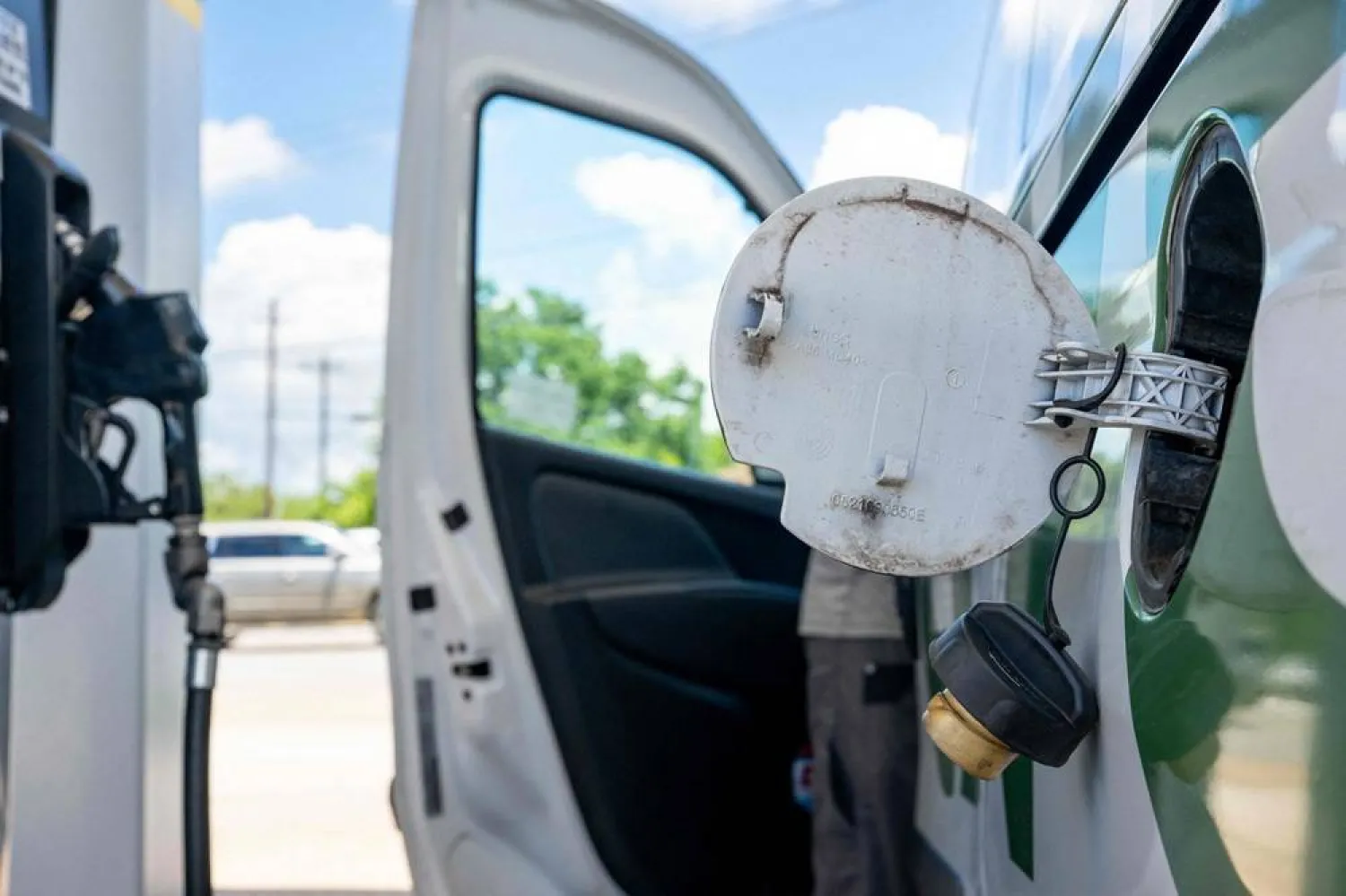
 A person prepares to pump gas at a Valero gas station on June 16, 2026 in Austin, Texas. (Getty Images via AFP)
A person prepares to pump gas at a Valero gas station on June 16, 2026 in Austin, Texas. (Getty Images via AFP)
TT

Oil Dips as Investors Weigh Deal on Iran War as Uncertainty Persists on Hormuz

 A person prepares to pump gas at a Valero gas station on June 16, 2026 in Austin, Texas. (Getty Images via AFP)
A person prepares to pump gas at a Valero gas station on June 16, 2026 in Austin, Texas. (Getty Images via AFP)

Oil prices inched lower on Wednesday, extending the previous session's declines as investors assessed the US-Iran peace deal, though uncertainty over the full resumption of shipping through the Strait of Hormuz limited further falls.

Brent crude futures dipped 16 cents, or 0.2%, to $78.80 a barrel by 0340 GMT, while US West Texas Intermediate fell 25 cents, or 0.3%, to $75.80 a barrel.

Both benchmarks fell about 5% for a second straight session on Tuesday to stand at three-month lows, on hopes that a US-Iran deal would allow oil flows through the Strait.

"Markets are broadly stripping out ‌the embedded geopolitical risk ‌premium in oil prices," said Priyanka Sachdeva, senior market analyst at ‌Phillip ⁠Nova.

"That said, the ⁠path toward normalization remains far from straightforward. While political agreements may be progressing, physical tanker traffic through the Strait has yet to fully recover."

The deal would provide for the United States to lift its blockade of Iran's ports, while Tehran would allow oil tanker traffic through the Strait, effectively blocked since US and Israel strikes on February 28.

"Oil markets retreated on expectations the Strait of Hormuz would reopen following the peace agreement, but traders held off further ⁠selling pending details," said Hiroyuki Kikukawa, chief strategist of Nissan ‌Securities Investment.

WTI is likely to stay volatile in ‌a range of $10 above or below $80 a barrel, he added.

Before the closure, about a fifth of ‌global crude oil and liquefied natural gas supplies flowed through the Strait.

Details of ‌the interim peace deal began to emerge on Tuesday, with President Donald Trump saying it would rule out a nuclear weapon for Tehran and a US official saying it would allow Iran to sell oil upon signing.

The memorandum of understanding, not yet public, extends by another 60 days a ‌tenuous ceasefire agreed in April, so as to allow room for talks toward a permanent truce.

Still, industry officials say a ⁠full return to ⁠pre-war production and refining levels is likely to take weeks, months or even years.

Israel has distanced itself from both the April ceasefire and the latest US-Iran pact, fueling uncertainty about whether it will hold.

Israeli drone strikes targeted three vehicles in southern Lebanon on Tuesday, killing at least four and wounding others, Lebanon's National News Agency said, prompting a rare public rebuke from Trump.

China's crude oil throughput fell 9.1% in May on the year to its lowest in almost four years, data showed, also signaling that refiners were starting to draw on stockpiles amid the Iran war.

The American Petroleum Institute report showed US crude stocks fell 8.3 million barrels in the week ended June 12, the sources said.

It exceeded expectations for a draw of 4.6 million barrels, with official numbers due from the Energy Information Administration at 10:30 a.m. ET (1430 GMT) on Wednesday.



Strait of Hormuz Ship Crossings Remain in Single Digits

FILE PHOTO: Vessels near the Strait of Hormuz, as seen from Musandam, Oman, September 2, 2026. REUTERS/Stringer/File Photo
TT

Strait of Hormuz Ship Crossings Remain in Single Digits

FILE PHOTO: Vessels near the Strait of Hormuz, as seen from Musandam, Oman, September 2, 2026. REUTERS/Stringer/File Photo

Vessel transits through the Strait of Hormuz remained in the single digits at four on Tuesday, down from seven a day earlier, preliminary shipping data showed on Wednesday, falling well short of the 10-day average of 18.

The drop in traffic through the waterway that handled one-fifth of the world's oil and liquefied ⁠natural gas supply before ⁠the Iran war comes after attacks in the region intensified.

Of the total on Tuesday, two ships were exiting and two were entering, according to the data.

No very large crude carriers ⁠or liquefied natural gas tankers were involved.

Some ships may be sailing through the waterway with their transponders turned off and they are therefore not counted.

One very large gas carrier, Salute, carrying around 470,000 barrels of liquefied petroleum gas exited via the Iranian route, while Panamax-sized tanker Nautilus, carrying around 510,000 barrels of naphtha, exited ⁠via ⁠an unknown dark route, Reuters reported.

The two ships that entered were both laden, with one being a short-range dirty products tanker and the other a dry bulk carrier. Both entered via the Iranian route.

Meanwhile, the number of ships sailing through the Bab el-Mandeb Strait was at 22, little changed on Tuesday compared with a day ago at 24.


Türkiye 2027 Inflation Target Realistic, Minister Says

People shop at the Eminonu district of Istanbul, Türkiye, April 25, 2025. (Reuters)
TT

Türkiye 2027 Inflation Target Realistic, Minister Says

People shop at the Eminonu district of Istanbul, Türkiye, April 25, 2025. (Reuters)

Türkiye's 2027 inflation target in its medium-term program is regarded as realistic by markets, provided that the Iran war does not continue next year, Finance Minister Mehmet Simsek said in an interview with broadcaster Haberturk on Wednesday.

Türkiye should normally operate a floating ‌exchange rate regime, ‌as it provides the ‌basis ⁠for responding correctly ⁠to shocks, Simsek said.

Türkiye has always provided wage increases of at least the rate of inflation for all public workers and retirees, and will continue to do so, ⁠he added.

Once inflation ‌falls to ‌single digits, mandatory export proceeds sales requirements could ‌be lifted in favor of ‌a freer regime, he also said.

Conditions for removing the mandatory export sales requirement have not yet been met and ‌Türkiye will review the matter when they arise.

The government expects ⁠inflation ⁠to slow to 28.4% this year and to 21% in 2027 before dropping to single digits in 2029 — about two years later than previously predicted.

The US-sanctioned Golden Global Yatirim bank is small and poses no systemic risk, Simsek also said, calling on other banks to comply with international regulations and strengthen compliance.


Bahrain's Alba Says Produces 1.3 Million Tons Per Year of Aluminium

The Bahraini capital (Reuters)
TT

Bahrain's Alba Says Produces 1.3 Million Tons Per Year of Aluminium

The Bahraini capital (Reuters)

Aluminium Bahrain, known as Alba, is currently producing aluminium at an annualized rate of 1.3 million metric tons, versus a pre-Iran war capacity of around 1.6 million tons, its CEO said on Wednesday.

Alba, which describes itself as the world's biggest aluminium smelter on one site, shut down production ⁠lines 1, 2, and ⁠3 following the outbreak of the war as the closure of the Strait of Hormuz restricted exports. The plant was then hit by an Iranian attack in late March.

Alba is now operating lines 4, 5 and 6 at its smelter, equivalent to 1.3 ⁠million tons per year, Ali Al Baqali told Reuters on the sidelines of the Fastmarkets Aluminium Conference in Budapest.

He described the Iranian strike as a "small, minor attack.”

"We got damages and we already repaired them. Nothing needed," Al Baqali said, adding that Alba had been covered by insurance.

Its overall capacity will return to 1.6 million tons when it completes its acquisition of French smelter Aluminium Dunkerque in the next couple of months, Al ⁠Baqali said.

To ⁠maintain production, Alba is bringing in 300 to 350 trucks carrying raw material alumina on a daily basis, the CEO said.

"We are managing to receive around 7,000 metric tons of alumina every day," Al Baqali said, describing the logistics operation as "expensive,” but offset by the high London Metal Exchange aluminium price and premiums for physical metal.

Alba is exporting metal via the Saudi port of Jeddah on the Red Sea and from Sohar in Oman, Al Baqali said, as hostilities in the Middle East continue.