Several Israeli Strikes Hit South Lebanon

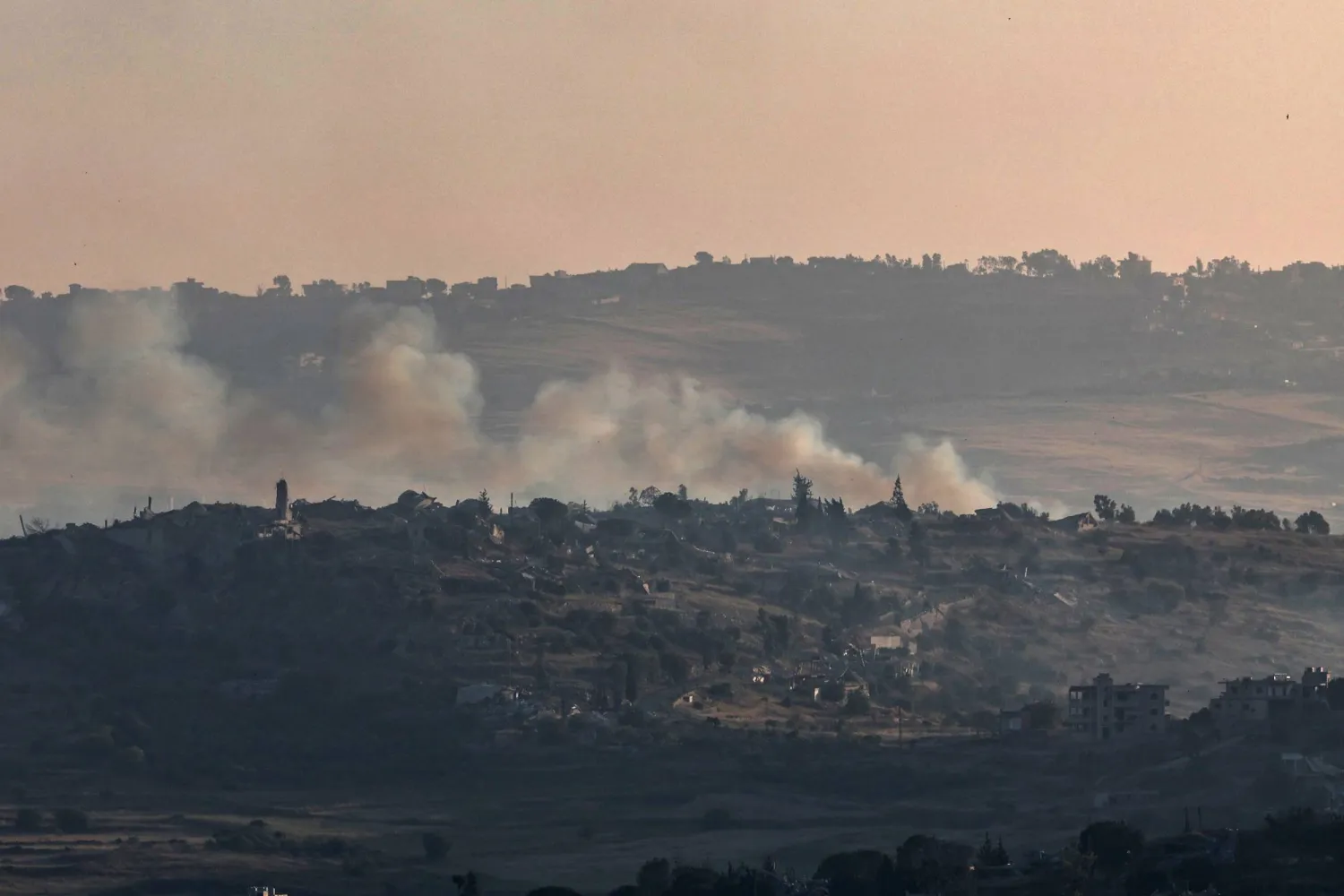
Smoke rises following an Israeli strike on southern Lebanon, as seen from the Israeli side of the border in the Upper Galilee, northern Israel, 16 June 2026, after the announcement of a US-Iran mediated preliminary framework to end regional military hostilities. EPA/ATEF SAFADI
TT

Several Israeli Strikes Hit South Lebanon

Smoke rises following an Israeli strike on southern Lebanon, as seen from the Israeli side of the border in the Upper Galilee, northern Israel, 16 June 2026, after the announcement of a US-Iran mediated preliminary framework to end regional military hostilities. EPA/ATEF SAFADI

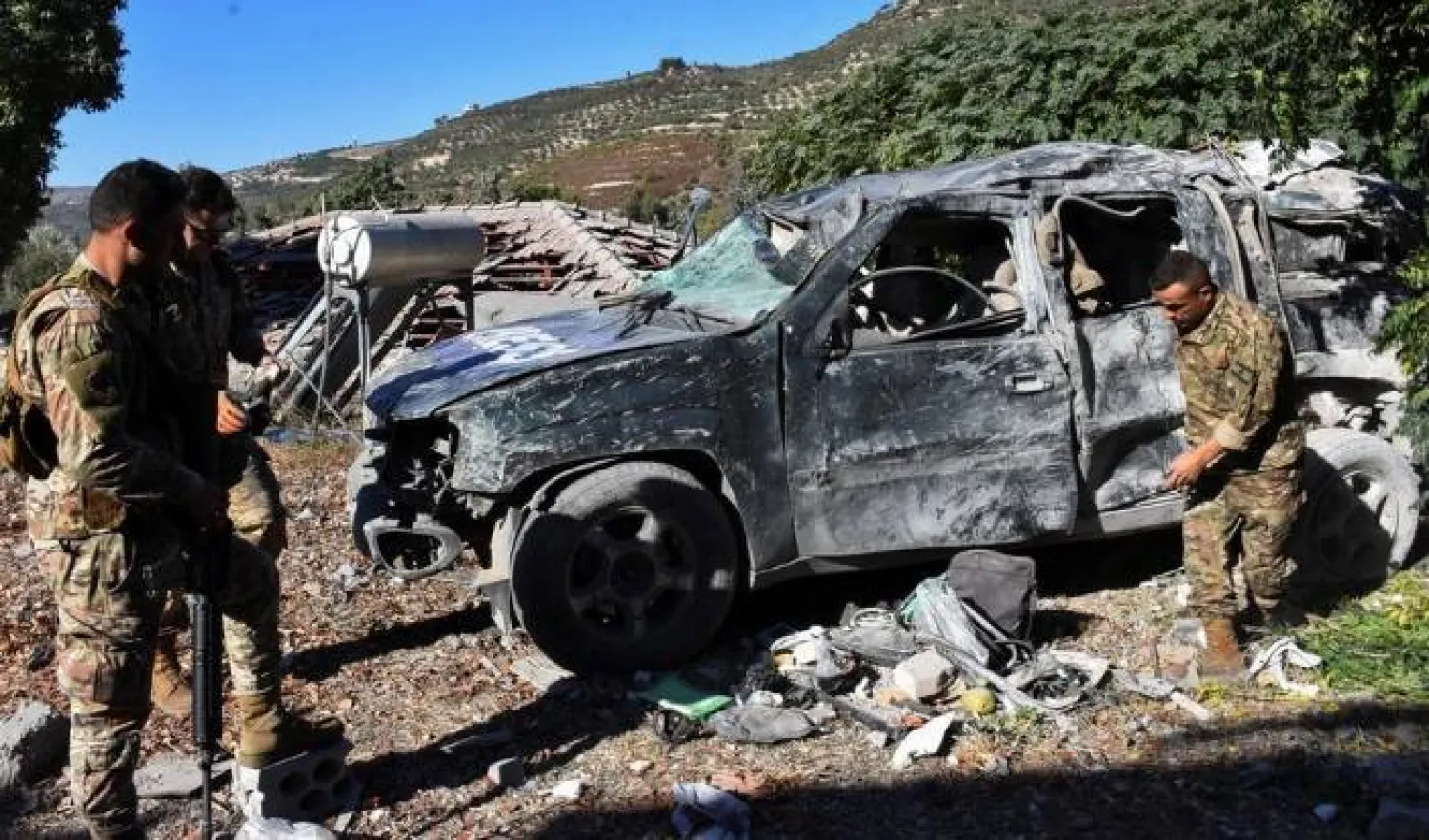
Israeli forces on Wednesday carried out airstrikes on several areas in south Lebanon, state media reported, despite a peace deal in the Middle East war that includes Lebanon.

Lebanon's National News Agency said Israeli warplanes launched raids targeting the Nabatieh al-Fawqa area and the eastern outskirts of neighboring town Kfar Tebnit.

The Israelis also launched a drone strike on the town of Ansariyeh in the Zahrani area, NNA reported.

US President Donald Trump on Tuesday issued a rare public rebuke of Israel's military tactics in Lebanon targeting Hezbollah, saying it was unnecessary to bomb entire apartment buildings to hunt militants.

Trump, who in recent days had expressed his displeasure over Israeli attacks in Beirut that he said could have endangered his peace deal with Iran, said Israel has been fighting Hezbollah for "too long.”

"Too many people have been killed. You don't have to knock down an apartment house every time you're looking for somebody, because there are a lot of people in those apartment houses, and they're not all Hezbollah," Trump said at the G7 summit ⁠in France.

His complaint comes ⁠at a moment of rising tensions with Israeli Prime Minister Benjamin Netanyahu, who has remained a key political ally despite occasional ups and downs between the two leaders over the years.


Egyptian Program to Develop Abrams Tanks Alarms Israel

The M1A1 Abrams tank. (Egyptian Ministry of Military Production)
TT

Egyptian Program to Develop Abrams Tanks Alarms Israel

The M1A1 Abrams tank. (Egyptian Ministry of Military Production)

Former military officers have confirmed that Egypt is working with the United States to boost its armored forces by introducing technological upgrades and modern combat specifications to a large number of M1A1 Abrams tanks, raising alarm in Israel.

According to Israel’s Nziv.net platform, there are major Israeli concerns about a shift in the regional balance of power after Washington recently approved a huge deal to upgrade 555 Abrams tanks out of 1,130 American tanks in the Egyptian army.

The military factory in the Abu Zaabal area north of Cairo, the only facility authorized outside the United States to produce components of this model, will oversee the development project at a cost of around $4.69 billion.

The M1A1 Abrams tank is the Egyptian army’s main battle tank, with a top speed of 20 miles, according to data from the Egyptian Ministry of Military Production.

National security expert Mohamed Abdel Wahed told Asharq Al-Awsat that this was not the first time Egypt develops these tanks. It did so in the 1980s through a joint military production agreement with the United States.

The latest agreement to develop the tanks was signed in 2024. It called for refurbishing the existing vehicles instead of replacing them with new ones that would have come at a higher cost.

“Egypt is developing this tank and capitalizing on its global reputation. The development involves incorporating modern technology to boost its capabilities,” Abdel Wahed explained.

Former Egyptian intelligence official Gen. Mohammed Rashad told Asharq Al-Awsat: “The upgrades include installing a higher-caliber gun to increase the firing range to 105 mm, upgrading the aiming and targeting systems to use lasers, reinforcing the tank’s armor against close-quarters combat and anti-tank weapons, installing a recoil suppressor on the tank’s gun to maintain stability and aiming accuracy, and fitting the tank with a high-powered engine to boost speed and maneuverability.”

“These capabilities make the Egyptian Armored Corps one of the most advanced and lethal armies in the region, with high combat capabilities in all circumstances, which is a direct cause for concern in Tel Aviv,” he explained.

Abdul Wahed added: “Egypt is manufacturing 90 percent of the components for this tank. Localizing military technology and industries in Egypt is very important.”

Israeli media has over the past two years frequently reported about Tel Aviv’s concern over what it described as “the detection of the construction of massive logistical infrastructure and fuel depots in the Sinai Peninsula.”

They alleged that these measures would allow Egyptian forces to move rapidly and extensively eastward, forcing Israel to maintain close and continuous monitoring of the deployment and movement of Egyptian forces despite the peace treaty between them.

Egypt has repeatedly denied the allegations, saying its work in Sinai has development purposes and any deployment of the military aims to protect the border and national security.

Rashad said the Israeli concerns over the Egyptian military’s upgrades and tanks program stem from its “fear that the Egyptian armored forces will become capable of matching Israel’s.”

Tel Aviv constantly boasts about its capabilities that are a result of continuous upgrades to weapons and combat equipment, he added, noting that its military ranks seventh globally in the manufacture and export of weapons and combat equipment.


Trump Criticizes Israel’s Tactics in Lebanon, Says It Is Killing Civilians

US President Donald Trump points his finger towards Israeli Prime Minister Benjamin Netanyahu as they shake hands during a press conference after meeting at Trump’s Mar-a-Lago club in Palm Beach, Florida, US, December 29, 2025. (Reuters)
TT

Trump Criticizes Israel’s Tactics in Lebanon, Says It Is Killing Civilians

US President Donald Trump points his finger towards Israeli Prime Minister Benjamin Netanyahu as they shake hands during a press conference after meeting at Trump’s Mar-a-Lago club in Palm Beach, Florida, US, December 29, 2025. (Reuters)

US President Donald Trump on Tuesday issued a rare public rebuke of Israel's military tactics in Lebanon targeting Hezbollah, saying it was unnecessary to bomb entire apartment buildings to hunt fighters.

Trump, who in recent days had expressed his displeasure over Israeli attacks in Beirut that he said could have endangered his peace deal with Iran, said Israel has been fighting Hezbollah, the Iran-aligned Lebanese group, for "too long".

"Too many people have been killed. You don't have to knock down an apartment house every time you're looking for somebody, because there are a lot of people ‌in those apartment ‌houses, and they're not all Hezbollah," Trump said at the G7 ‌summit ⁠in France.

His complaint comes ⁠at a moment of rising tensions with Israeli Prime Minister Benjamin Netanyahu, who has remained a key political ally despite occasional ups and downs between the two leaders over the years.

Recently, tensions have been more prominent. Israeli officials are quietly expressing frustration about the Iran deal that the Republican president struck while Trump is growing impatient with Netanyahu over Israeli strikes of Beirut, which triggered Iranian attacks just when he was working to finalize the peace deal.

Trump said he has ⁠a "great relationship" with Netanyahu but in the same breath added that he ‌should be "more responsible" with Lebanon.

"Without us, without the United ‌States, there would be no Israel. Without me, there would be no Israel, because no other president ‌was willing to do what I did."

The two leaders have repeatedly clashed over ‌Israel's refusal to constrain its pursuit of Hezbollah in Lebanon, where a cessation of hostilities is a key Iranian demand. Trump and other US presidents do not often criticize Israel's military tactics.

Shortly after he made his comments, an official White House social media account that typically shares clips of his public comments posted ‌a video of those specific remarks.

The White House did not say why the official account chose to post those Trump remarks ⁠but said the ⁠president has a strong relationship with Netanyahu and that the Israel Defense Forces were "incredible partners".

"There has been no greater friend to Israel and a fighter for peace than President Trump... Americans and our allies around the world are already safer for the United States and Israel’s bold actions to deny the Iranian regime the ability to develop a nuclear weapon," a White House official said.

There is no indication that Trump's comments would translate into meaningful policy that would force Israel to rethink its military tactics in a way to ensure greater protection for civilians.

Israel has faced sharp criticism from other countries, particularly during its assault on Gaza that has killed 73,000 people, most of them civilians, according to the Gaza health ministry.

Israel says it never targets non-combatants and says armed groups such as Palestinian Hamas and Hezbollah regularly use civilians as human shields.

A spokesperson for the Israeli embassy in Washington did not have any comment for this story.


Schneider to Asharq Al-Awsat: Marib Offers Ideal Model for International Cooperation in Yemen

German Ambassador to Yemen Thomas Schneider speaks during an interview at the Belqis Hotel in Marib. (Asharq Al-Awsat)
TT

Schneider to Asharq Al-Awsat: Marib Offers Ideal Model for International Cooperation in Yemen

German Ambassador to Yemen Thomas Schneider speaks during an interview at the Belqis Hotel in Marib. (Asharq Al-Awsat)

Hours before leaving Marib, German Ambassador to Yemen Thomas Schneider was still taking in the scenes from his first visit to the governorate: camps for displaced people, humanitarian project sites, meetings with officials and tribal sheikhs.

At every stop, one image seemed to follow him: the smile.

In a governorate that has taken in millions of displaced people and spent years on the front line of Yemen’s war, Schneider found a reality different from the one suggested by headlines of conflict and humanitarian crisis. Here, hardship was unmistakable, but so was optimism and a stubborn insistence on life.

Inside the Sabaean-style Belqis Hotel, built in the 1980s in central Marib, Schneider spoke to Asharq Al-Awsat shortly before leaving the governorate about a visit that appeared, at first, humanitarian and developmental. But it also revealed to him a political and social dimension he sees as important to Yemen’s future.

The German ambassador said the visit was meant to express solidarity with the people of Marib and with Yemenis more broadly as the country endures difficult conditions. The German delegation, he said, wanted to visit humanitarian projects and camps for displaced people and refugees, see residents’ needs firsthand and assess the impact of programs supported by Germany and its international partners.

Yet what struck him most, he said, was the relationship that has taken shape in Marib between local authorities, international organizations and UN agencies.

“We saw a positive model of cooperation between the Yemeni government and donor countries, and, more importantly, close cooperation between the local authorities in the governorate and UN agencies and organizations,” he said.

For Schneider, the importance of that experience lies not only in the number or scale of projects carried out, but in the partnership it has created among those working on the ground. That, he said, has made Marib a model that could be useful elsewhere.

“This partnership is an extremely important point, and we sensed that Marib’s experience represents a successful model that can be followed by all parties involved in humanitarian and development work,” he said.

Over the years of war, Marib has become Yemen’s largest hub for displaced people, absorbing successive waves of families fleeing the fighting. Schneider said the way the governorate’s people have handled that burden stands out as one of Yemen’s most important success stories during the conflict.

“Marib has received large numbers of displaced people from across Yemen, as well as refugees from other countries, and this reflects the generosity of its people and their humanitarian spirit. We saw very positive examples of how these challenges are being handled,” he said.

During the visit, the German delegation met displaced people and listened to their stories and needs. It also held meetings with UN representatives and local authorities, reinforcing Schneider’s belief that coordination and continuous communication among the various parties remain the most important factors in responding to complex humanitarian challenges.

But perhaps the most distinctive stop was the meeting with tribal sheikhs in Marib. In a country where tribes are often viewed through a security or traditional lens, Schneider came away with a different impression. He saw Yemen’s tribes as a wide social network whose role goes beyond local customs, helping preserve social cohesion, stability and the future of the country as a whole.

“Sitting with the tribal sheikhs was a very important experience. I felt that they do not only play a social role, but also have a clear political awareness of the challenges facing Yemen,” he said.

He said the discussions revealed important visions and ideas about the country’s future, stressing that tribes would be an essential party in any serious political process aimed at achieving peace.

“I believe the tribes will play a central role in any path leading to peace in Yemen. I came away from this visit with a firm conviction that they represent a real national asset and an important element that can be built upon to strengthen stability,” he said.

Between the political and humanitarian messages, Schneider’s strongest personal impression remained tied to the people of Marib themselves. Despite years of war, economic pressure and the burden of displacement, he said he found, everywhere he went, an optimistic spirit and a positive view of the future.

“I saw a smile everywhere in Marib despite the difficult conditions people are living through. This optimistic spirit and warm welcome made the visit a very important experience for me,” he said.

He said he would carry that image back to his children and family, to his ministry in Berlin, and to his partners in the European Union and international organizations. What he saw in Marib, he said, offers an important lesson in resilience and overcoming crises.

At the end of the interview, I asked the ambassador to sum up Marib in just three words. He did not hesitate long before smiling and answering: “The smile, coffee and welcome.”

The words seemed to capture a city standing on the edge of war, yet still determined to greet its guests with a smile, serve coffee and believe Yemen’s future can be better.