


Obama on Iran Deal: We’re Maybe a Little Bit Worse Off

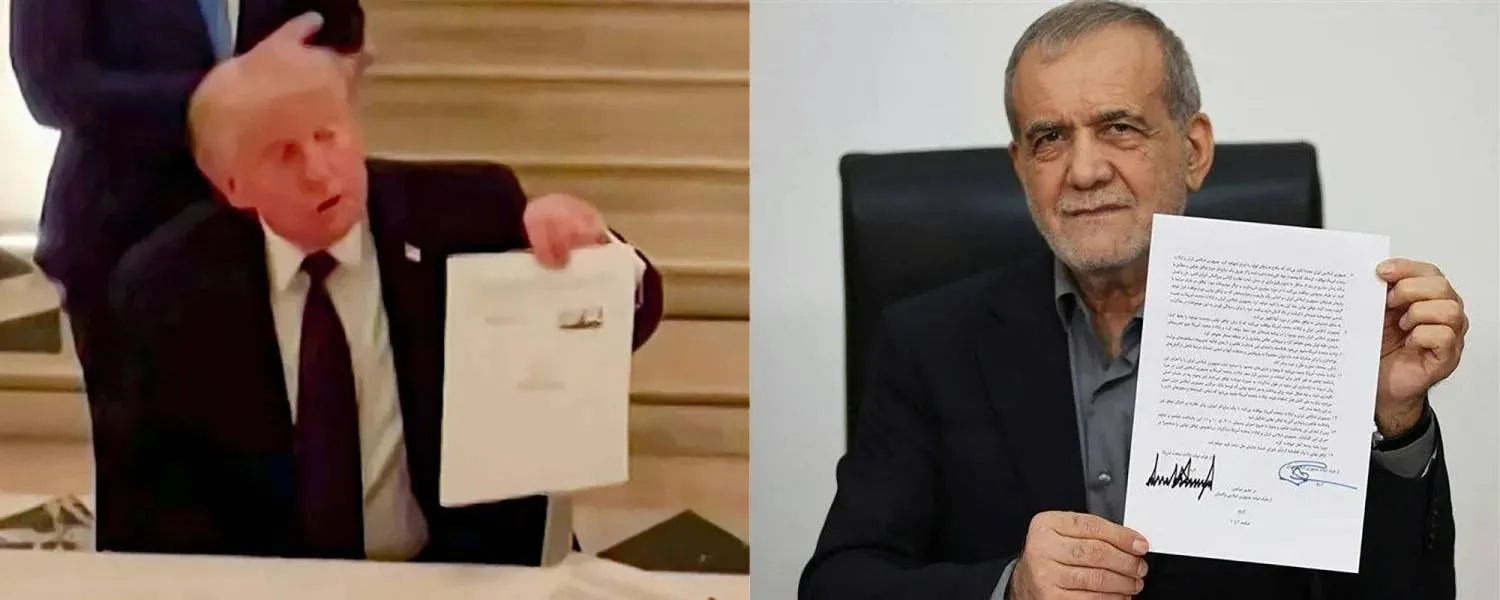
US President Donald Trump and Iranian President Masoud Pezeshkian have signed a memorandum of understanding aimed at ending the conflict that has roiled the Middle East since late February (AFP)
TT

Obama on Iran Deal: We’re Maybe a Little Bit Worse Off

US President Donald Trump and Iranian President Masoud Pezeshkian have signed a memorandum of understanding aimed at ending the conflict that has roiled the Middle East since late February (AFP)

Former US President Barack Obama said while he is happy to see a ceasefire, it seems like the United States is “worse off” now than before President Donald Trump launched the war on Iran in February.

The former president noted that under the Iran nuclear deal negotiated during his administration, “Iran had agreed not to develop nuclear weapons.”

“This administration, or a prior version of this administration, pulled out of it, which caused then Iran to develop more nuclear capacity,” Obama said in an interview with “TODAY” co-host Craig Melvin that aired Friday.

“We’ve now fought a war, spent billions and billions of dollars, you know, put enormous strain on our military. A lot of people have died. And it feels like we’re back where we were before we started the war, except maybe a little bit worse off,” Obama said.

Trump signed a memorandum of understanding during a dinner at the Palace of Versailles on Wednesday night. It sets a 60-day deadline for negotiators to reach a more permanent deal to end the conflict.

Switzerland announced on Friday that planned talks following up on the deal to end the Middle East war had been postponed, hours after US Vice President JD Vance’s departure for the Alpine country was cancelled.

“The planned talks between the US, Iran, Qatar and Pakistan have been postponed,” the Swiss foreign ministry said in a message to AFP.

“Switzerland remains ready to facilitate these talks. The relevant preparatory work at Burgenstock is continuing,” it added, without providing a new date for the talks.

Nothing on Missiles

Trump and his administration sought to defend the memorandum.

On Thursday, Vance defended the “win-win” US-Iran agreement as critics slammed its vague provisions.

Trump said on social media that those who see problems with the memorandum are “fools” and either “jealous, bad people, or stupid.”

But AFP quoted experts as saying that although Iran suffered billions in damages and heavy blows from US and Israeli airstrikes, Tehran emerged from the conflict in a stronger geopolitical position.

They said Iran was already engaged in indirect talks before the war, and has now greater influence over the Strait of Hormuz.

Also, the memorandum mentioned nothing about Iranian conventional military forces (including missiles and drones) or support for proxies such as Hamas, Hezbollah, and the Houthis.

Experts expect Iran to make no concessions on these two files in future talks.

Richard Haass, former president of the Council on Foreign Relations, wrote on Thursday: “Nothing in the MOU prejudices, one way or the other, the future status of the stock of enriched uranium in Iran, new enrichment-related activities, or inspections.”

“It's a much worse situation strategically for the US now than it was back in the 2010 to 2015 time period,” said Alan Eyre, distinguished diplomatic fellow at the Middle East Institute.

“The Iranian nuclear program is a lot more advanced now” -- though its nuclear facilities and enrichment ability were set back by US strikes last year -- and “there's a lot less bilateral trust,” said Eyre, one of the negotiators of the 2015 deal.

By attacking Iran, Washington has already played what would have been a major card: the threat of military force.

“We used it, and they're still standing. So what are we going to threaten them with?” Eyre said. “We have failed strategically, despite our military preeminence. Iran succeeded in that Iran's goal in this war was to survive.”

The memorandum of understanding -- signed by Trump and his Iranian counterpart Masoud Pezeshkian on Wednesday -- says Iran “reaffirms that it shall not procure or develop nuclear weapons,” but provides no mechanism for that to be verified or enforced.



One Dead after Freight Trains Collide in Munich

20 June 2026, Bavaria, Munich: Two freight-train cars lie on a road after falling off a bridge in Munich. Photo: Ehsan Monajati/dpa
TT

One Dead after Freight Trains Collide in Munich

20 June 2026, Bavaria, Munich: Two freight-train cars lie on a road after falling off a bridge in Munich. Photo: Ehsan Monajati/dpa

One person has died after two cargo trains collided on a bridge in Munich in the early hours of Saturday, causing two of the carriages ⁠to derail and ⁠crash onto the street below, according to local police.

The cause of the ⁠incident is under investigation, a police spokesperson in the southern German city told Reuters.

Emergency services were alerted to the collision in Munich's northern district of Milbertshofen ⁠at ⁠1:40 a.m. (2340 GMT on Friday), with around 60 first responders dispatched to the scene, a fire department spokesperson said.


Pakistan Minister Arrives in Iran after Switzerland Talks Postponed

People drive on a street in Tehran, Iran, June 18, 2026. Majid Asgaripour/WANA (West Asia News Agency) via REUTERS
TT

Pakistan Minister Arrives in Iran after Switzerland Talks Postponed

People drive on a street in Tehran, Iran, June 18, 2026. Majid Asgaripour/WANA (West Asia News Agency) via REUTERS

Pakistan's interior minister arrived in Iran on Saturday after planned talks between Iran and the United States in Switzerland were postponed, Iranian media reported.

Tehran and Washington were due to hold talks in Switzerland on Friday, after signing a memorandum of understanding ending the war in the Middle East, but the latest negotiations have been postponed with no new date announced.

Iranian media including Tasnim news agency said Pakistan's Interior Minister Mohsin Naqvi landed on Saturday in the northeastern city of Mashhad.

Foreign ministry spokesman Esmaeil Baqaei had earlier told ISNA news agency that "Pakistan's interior minister will arrive in Iran at noon today, Saturday, as part of Pakistan's efforts regarding the Iran-US negotiations."

Naqvi is expected meet his Iranian counterpart Eskandar Momeni, as well as Foreign Minister Abbas Araghchi for talks during the visit, according to Baqaei.

Pakistan has been a key mediator between Tehran and Washington, with Qatar also joining the efforts in the run-up to the deal announced this week.

Iran on Thursday announced it signed a deal with the United States to end the hostilities, with the aim of holding further negotiations on a broader deal that would include Iran's long contested nuclear program.


2 Roadside Bombs in Northwest Pakistan Kill at Least 7

Volunteers transfer the body of a victim, killed in twin roadside blasts, to a hospital in Bannu on June 20, 2026. (Photo by Karim ULLAH / AFP)
TT

2 Roadside Bombs in Northwest Pakistan Kill at Least 7

Volunteers transfer the body of a victim, killed in twin roadside blasts, to a hospital in Bannu on June 20, 2026. (Photo by Karim ULLAH / AFP)

Two roadside bombs in restive northwestern Pakistan killed at least seven people on Saturday, authorities said.

The first targeted a vehicle, while the second went off as rescuers responded to the blast in Bannu, a district in Khyber Pakhtunkhwa province bordering Afghanistan, senior police official Yasir Afridi said, adding both were controlled remotely.

Afridi said five people were killed in the first blast and two in the second, The Associated Press reported. Three people were also wounded, he said. A search operation to find those responsible is underway.

No group immediately claimed responsibility, but suspicion is likely to fall on the Pakistani Taliban, who have been blamed for similar attacks in the past.

President Asif Ali Zardari strongly condemned the bombings. In a statement, he conveyed condolences to the families of those killed and prayed for the speedy recovery of the wounded.

Without naming any group, Zardari issued a warning to “internal and external handlers of terrorism” who provide safe havens, logistical support and financial assistance to militant networks.

Pakistan has experienced a surge in militant violence in recent years, much of it claimed by the Pakistani Taliban, known as Tehrik-e-Taliban Pakistan, or TTP. The group is separate from, but allied with, Afghanistan’s Taliban, who seized power in Kabul in 2021.

Pakistani officials say many TTP leaders and fighters have found sanctuary across the border in Afghanistan.