



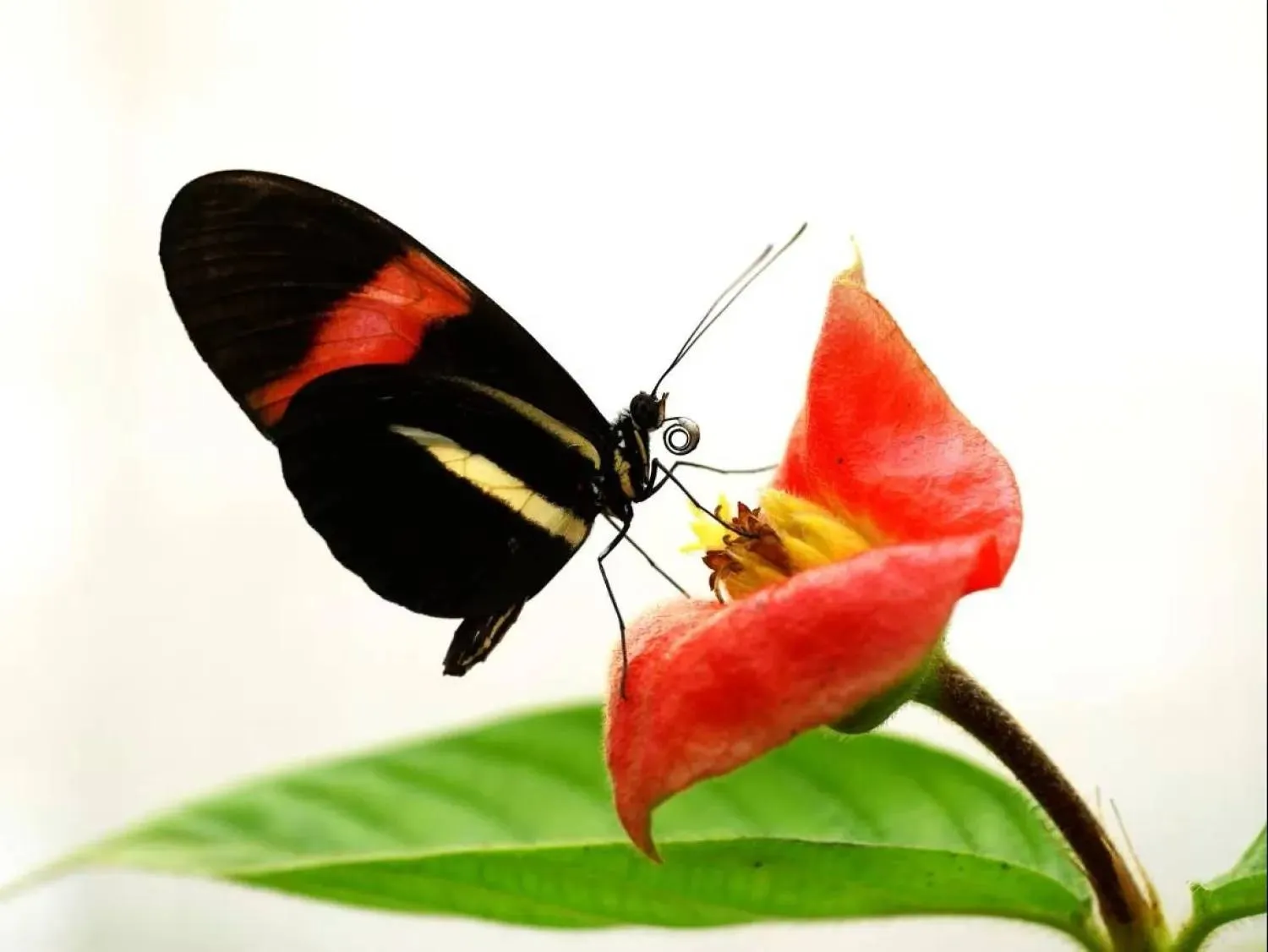

Most butterflies have short lifespans, fluttering between colorful flowers for a few weeks before dying, but a few rare exceptions have stumped scientists. Now, some long-lived tropical butterfly species are shedding light on the secrets of longevity.
Butterflies belonging to the Heliconius genus, which inhabit the tropical rainforests of South and Central America, have lifespans that vary wildly. The Dione juno butterfly lives for 14 days after reaching adulthood, while Heliconius hewitsoni lives for 348 days — nearly 25 times longer.
Other Heliconius species also have impressively lengthy lives, enduring between 106 to 277 days, according to a study on the phenomenon published Tuesday in the journal Nature Communications.
Some scientists have speculated that Heliconius’ extended adulthood is due to the insects consuming an enhanced diet, rather than relying purely on carbohydrates like other butterflies.
But the exact reasons behind this unexpected longevity have been unclear, which is what inspired Dr. Jessica Foley, the study’s lead author and a postdoctoral scholar at Tufts University’s Jean Mayer USDA Human Nutrition Research Center on Aging in Boston, to take an in-depth look at the intriguing butterfly genus.
“We see vast differences in lifespan across the animal kingdom — adult mayflies famously live only for a day, whereas some whales and sharks can live for hundreds of years,” Foley wrote in an email.
“I’m interested in the evolutionary basis of these kinds of lifespan differences because they might hold insights relevant for healthy ageing in humans,” she added.
Foley and her colleagues discovered that while nutrition has its part to play, some Heliconius have also evolved an anti-aging mechanism the researchers are still unraveling — and how it could be a model for understanding human longevity.
The new research shows that Heliconius can be a potential model insect group for studying increased longevity, including adaptations that could slow aging and have potential applicability to humans, said Dr. Jaret C Daniels, curator and interim associate director for the McGuire Center for Lepidoptera and Biodiversity at the Florida Museum of Natural History. Daniels was not involved in the study.
“This study reinforces the utility of many insect groups and important model organisms for various fields of research,” Daniels said in an email.
“Since many insects are often overlooked or underappreciated by humans, studies like this can help change that perspective,” Daniels added.


