


Geopolitics and AI in Spotlight at China’s ‘Summer Davos’

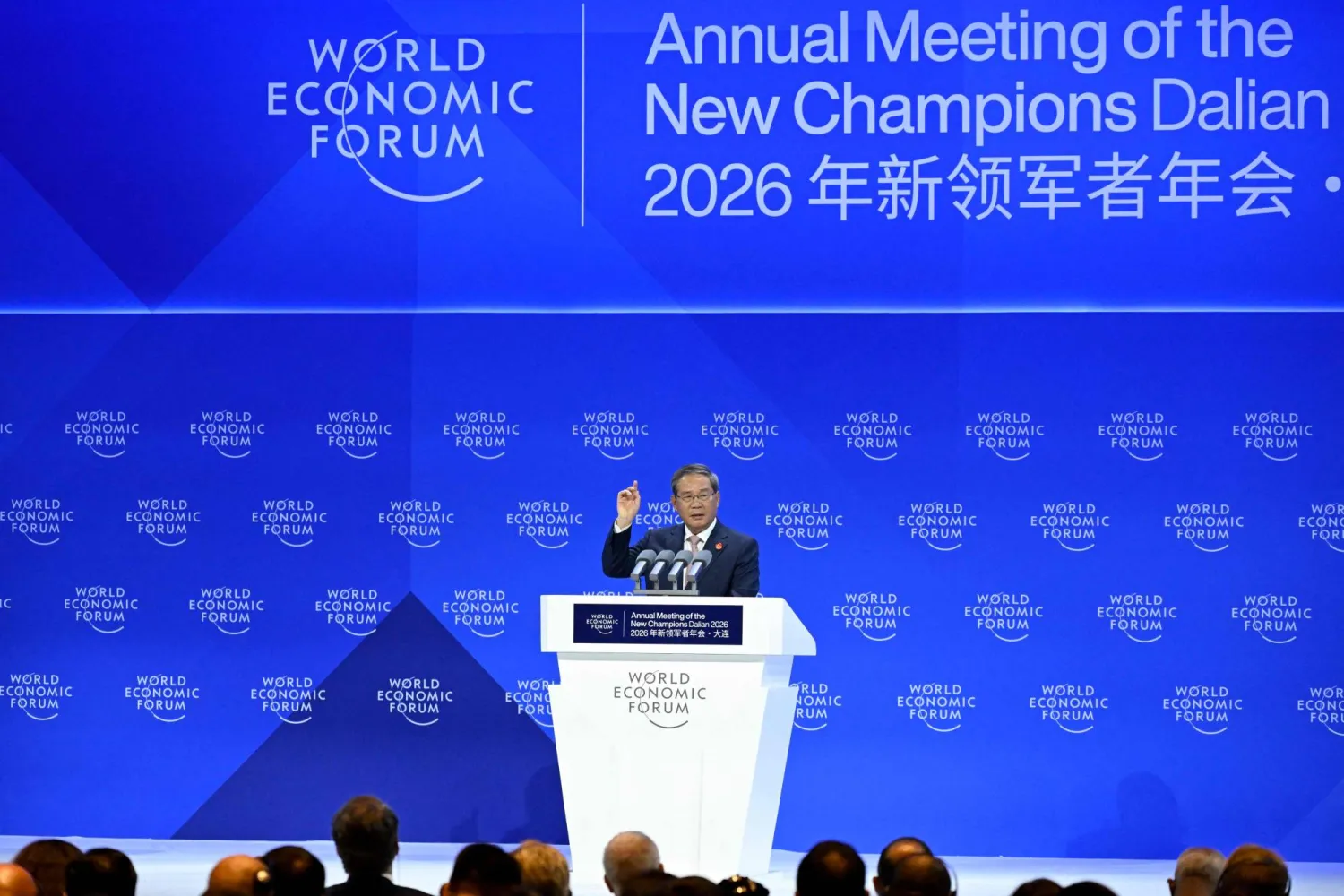
Chinese Premier Li Qiang delivers his speech at the opening ceremony of the World Economic Forum (WEF) in Dalian, China's Liaoning province on June 24, 2026. (AFP)
TT

Geopolitics and AI in Spotlight at China’s ‘Summer Davos’

Chinese Premier Li Qiang delivers his speech at the opening ceremony of the World Economic Forum (WEF) in Dalian, China's Liaoning province on June 24, 2026. (AFP)

Breakthroughs in technologies such as AI are touted as drivers of economic growth, but headwinds include concerns over job losses and geopolitical tensions, speakers told AFP at China's "Summer Davos" this week.

The annual conference organized by the Switzerland-based World Economic Forum (WEF) brings together policymakers and experts across sectors crucial to the global economy.

AI "is really changing industry and the economy", offering new opportunities in education, healthcare and other areas, Mirek Dusek, WEF's managing director, said Tuesday.

"We are blessed with a lot of technological advancements recently, but the main imperative for decision-makers around the world is really: how do you make sure this counts in the real economy?" Dusek told AFP.

There is also a "risk of a backlash against some of these technologies", he warned.

Fears are growing of AI-driven disruption to labor markets and the potential security risks it poses, from breaches of cyber defenses to its use in conflict.

Adding to pressure on the international economic system is the US-Israeli war with Iran, which has stymied shipping from the oil-rich Middle East.

- 'Tepid environment' -

These shadows have spurred the World Bank to lower its global growth forecast for this year to its lowest level since the Covid pandemic.

The world economy is currently facing "a tepid environment", Dusek said.

"We all know that there is a threat of lost opportunity in terms of global growth if we really go into a state of severe fragmentation."

Chinese Premier Li Qiang was due Wednesday morning to deliver a closely watched speech at the WEF's "Annual Meeting of the New Champions", hosted this year in the northeastern port city of Dalian.

The occasion provides an opportunity for Beijing's number-two leader to deliver a message about the Chinese economy to the influential group of tech and business leaders in attendance.

China's economy -- second in size only to that of the United States -- has struggled in recent years to keep up with the breakneck pace of development it maintained in previous decades.

Despite a striking boom in exports and AI tech, sluggish household consumption and an entrenched property sector debt crisis have weighed on growth since the pandemic.

Complicating matters is Beijing's tumultuous relationship with Washington.

Graham Allison, professor at the Harvard Kennedy School and a frequent unofficial interlocutor with Chinese and US foreign policymakers, told AFP in Dalian that a potential war between the two great powers is very much on the table.

Allison is known for coining the term "Thucydides trap" -- which he defined Tuesday as "the dangerous dynamic that occurs when a rapidly rising power, like... China over the past generation impacts a major ruling power", such as the United States.

- Avoiding woes of history -

Thucydides, an ancient Greek historian, "warns us that business as usual, diplomacy as usual (and) statecraft as usual produces war" in such a situation, Allison said.

However, recent high-level engagement between the Chinese and US presidents is reason for optimism that a war can be avoided, he added.

At a summit in Beijing last month, Xi Jinping asked Donald Trump if the countries could "transcend the so-called 'Thucydides Trap' and forge a new paradigm for major-power relations".

Allison told AFP that Xi "clearly gets it" and that his mention of the obscure historical concept "wasn't by accident".

Trump, meanwhile, is "erratic in his own way", said Allison, calling the Iran war this year a "terrible" and "unnecessary mistake".

But he "understands China is different", he said.

Xi's response last year to sky-high tariffs imposed by Washington on China -- strangling US access to critical rare-earth minerals -- made Trump realize that he is "now up against somebody that is roughly (his) peer".

"These two presidents are clearly trying to redefine the relationship or reframe it in a way that'll overcome Thucydides's trap."



Euro Zone Yields Fall after Iran Raises Prospect of Hormuz Reopening

Euro banknotes (Reuters)
TT

Euro Zone Yields Fall after Iran Raises Prospect of Hormuz Reopening

Euro banknotes (Reuters)

Euro zone bond yields fell for a second straight day on Tuesday, hitting their lowest in almost two weeks after Iran raised the prospect of reopening the Strait of Hormuz and Washington hinted it could restart talks with Tehran, pushing oil prices lower.

Germany's 10-year bond yield, the benchmark for the bloc, fell 1 basis point to 3.44% after rising as much as 4 bps earlier in the session. It fell 7 bps on Monday as energy prices retreated.

A senior Iranian official told Reuters that the strait, which carried about a fifth of global energy supplies before the war, could reopen within seven days if the US also lifts its blockade of Iranian ports.

The official added that Iran's delegation to a UN meeting in New York this week has full authority to revive diplomacy over the conflict.

US Secretary of State Marco Rubio told NBC's "Today" show that Washington was open to speaking with Tehran.

The dip in energy prices helped pull yields lower globally after a surge in recent weeks fuelled by expectations of further interest-rate hikes to combat energy-driven inflation. Traders are pricing in around 35 bps of additional European Central Bank tightening this year, down from 40 bps on Friday.

Germany's two-year bond yield, which is sensitive to interest-rate expectations, fell 1 bp to 3.19%, following a 6-bp drop on Monday.

Rabobank senior rates strategist Lyn Graham-Taylor said lower oil prices following the Iranian comments were weighing on bond yields.

Brent crude futures were last down 1% to $100 a barrel after earlier falling to $97.40, the lowest in two weeks.


Libya's NOC Says Sharara Crude Pipeline Closure Losses at 130,000 bpd

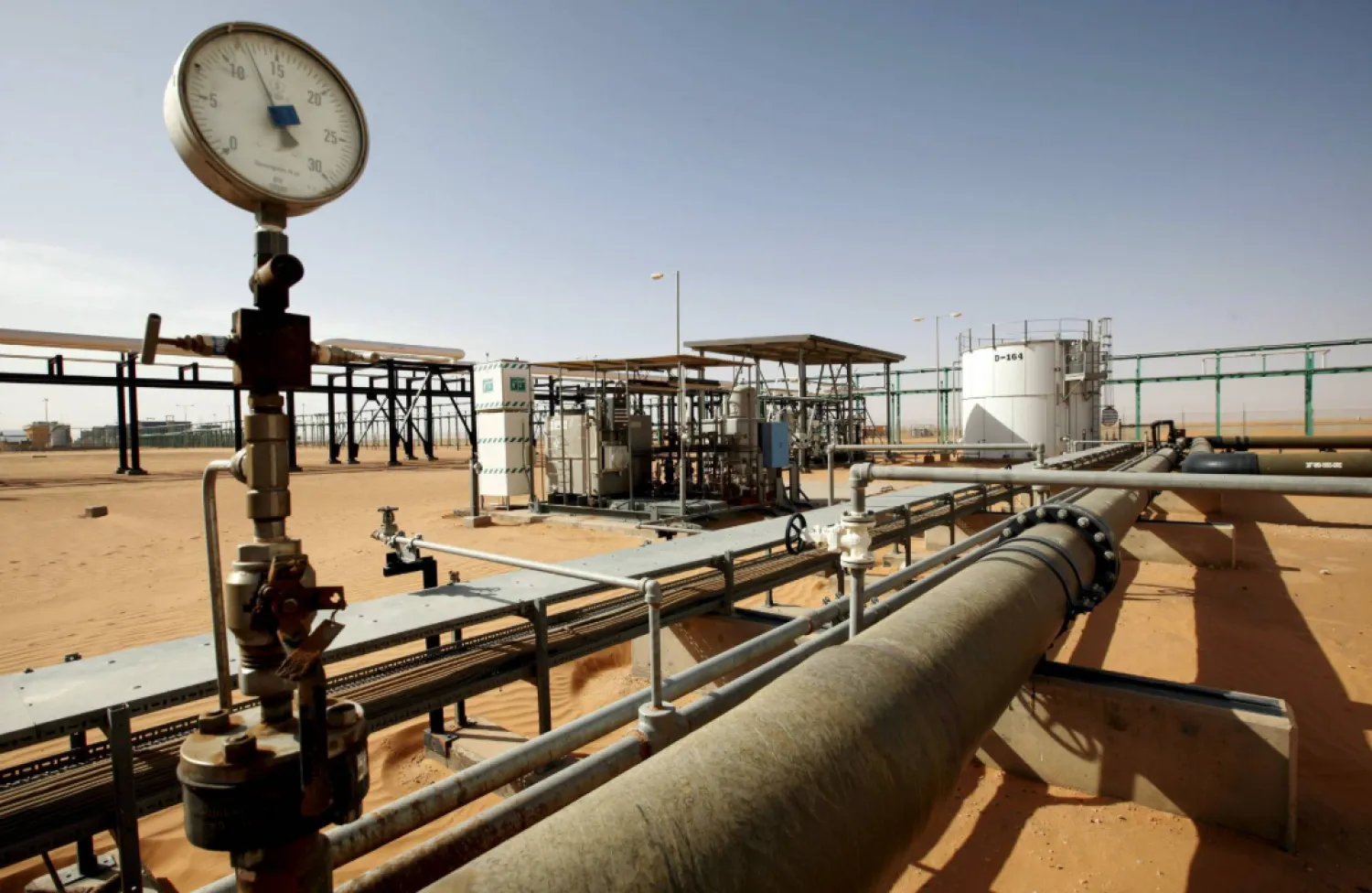
General view of the Sharara oil field in Libya (Reuters)
TT

Libya's NOC Says Sharara Crude Pipeline Closure Losses at 130,000 bpd

General view of the Sharara oil field in Libya (Reuters)

Libya's National Oil Corporation said on Tuesday that the Sharara-Zawiya crude loading pipeline closure has led to daily losses of about 130,000 barrels per day, Reuters reported.

An armed military group closed valve seven on the Sharara crude pipeline to Zawiya port on Monday, resulting in a significant decline in production at the Sharara oilfield, the National Oil Corporation said in a statement.


Sources: Saudi Arabia Restarts East-West Oil Pipeline

FILE PHOTO: A model of an oil pump is seen in front of a Saudi Arabian flag in this illustration taken January 9, 2026. REUTERS/Dado Ruvic/Illustration/File Photo
TT

Sources: Saudi Arabia Restarts East-West Oil Pipeline

FILE PHOTO: A model of an oil pump is seen in front of a Saudi Arabian flag in this illustration taken January 9, 2026. REUTERS/Dado Ruvic/Illustration/File Photo

Saudi Arabia has restarted operations at its East-West Pipeline and could resume exports from the Red Sea port of Yanbu later on Tuesday, three sources briefed on the matter said.

Drone attacks forced Saudi Arabia to shut its East-West Pipeline on September 13, halting crude loadings at the kingdom's Yanbu port.

The resumption of supplies on Tuesday helped to drive selling on global oil markets, traders said. Brent crude futures fell by more than $2 a barrel to its lowest since September 8.

Two trading sources said traders were getting ready for Saudi oil loadings by moving tankers to Egypt's Mediterranean Port Said for ship-to-ship transfers and also to Sidi Kerir.