


Hormuz Disruptions Drive Saudi Re-Exports to Historic High

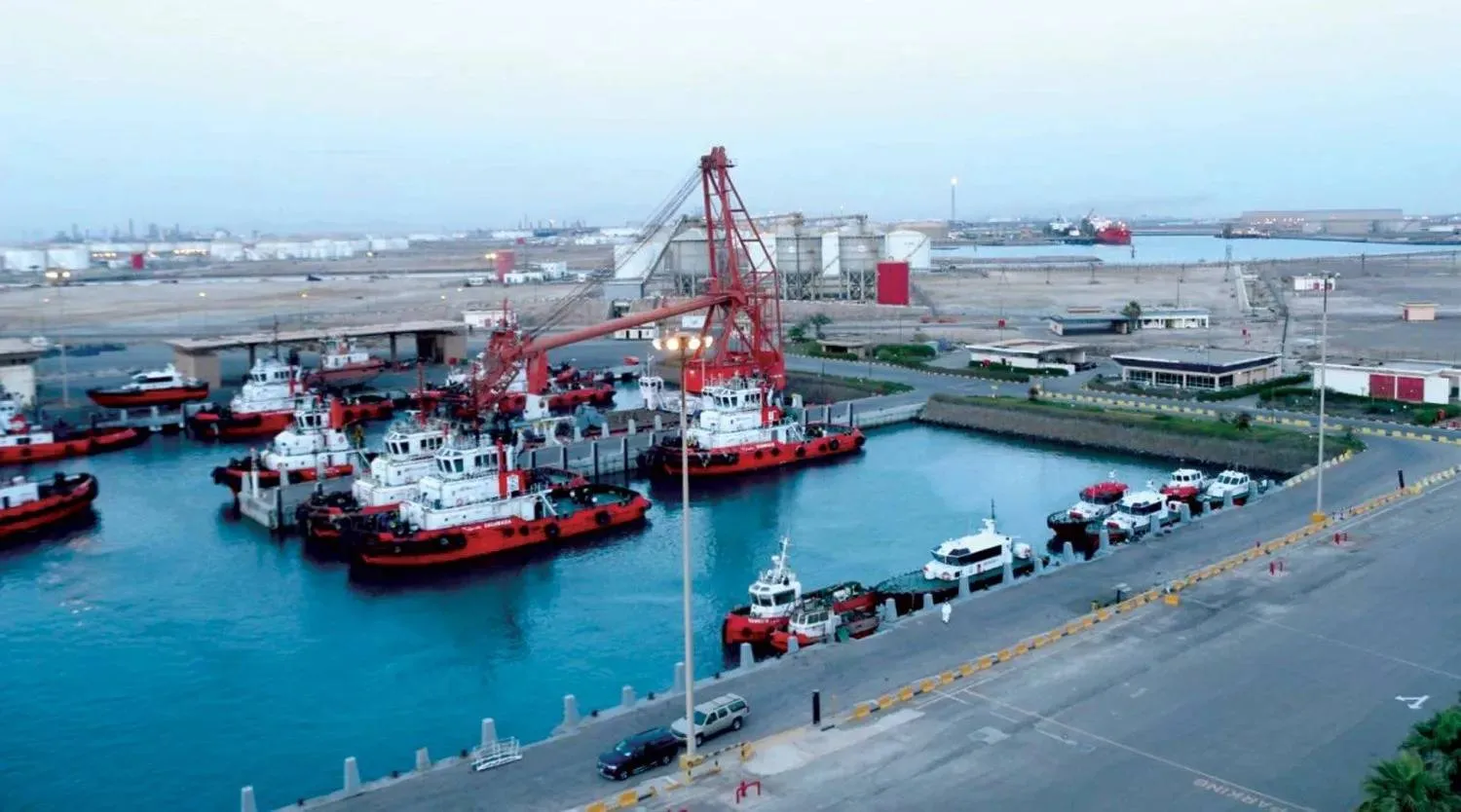
King Fahd Industrial Port in Yanbu, Saudi Arabia (SPA)
TT

Hormuz Disruptions Drive Saudi Re-Exports to Historic High

King Fahd Industrial Port in Yanbu, Saudi Arabia (SPA)

Preliminary data released by the General Authority for Statistics on Thursday revealed a remarkable positive shift in Saudi Arabia's international merchandise trade during April 2026.

The merchandise trade surplus doubled by 100.8 percent compared to the same month last year, reaching 25.4 billion riyals (approximately $6.77 billion), driven by an increase in total merchandise exports and a decrease in spending on imports.

According to the official bulletin, total merchandise exports grew by 9.3 percent to reach 101 billion riyals (approximately $26.93 billion), compared to 93 billion riyals in April 2025.

This growth was primarily driven by an 11.7 percent rise in oil exports, reaching a value of 69.6 billion riyals (approximately $18.56 billion), compared to about 62.7 billion riyals (approximately $16.72 billion) in the previous year, alongside a 4.5 percent growth in non-oil exports (including re-exports), reaching 31.4 billion riyals (approximately $8.37 billion). Among these, the "re-exports" item alone saw a historic jump of 20.4 percent, reaching 15.5 billion riyals (approximately $4.13 billion).

Conversely, a 5.2 percent decline in total merchandise imports, decreasing from 80 billion riyals (approximately $21.33 billion) to 76 billion riyals (approximately $20.26 billion), contributed to the Kingdom's trade balance gains; the merchandise trade surplus doubled by 100.8 percent, rising from approximately 13 billion riyals (approximately $3.47 billion) in April 2025 to expand to 25.4 billion riyals (approximately $6.77 billion) in April 2026.

Logistical Resilience

The re-export movement in the Kingdom recorded unprecedented historic performance; the value of re-exported goods jumped by 20.4 percent to reach a record level of 15.5 billion riyals (approximately $4.13 billion), which is the highest monthly level recorded by statistical data since 2017.

This strong performance was bolstered by a 74.0 percent increase in exports from the "machinery, electrical appliances, and equipment and their parts" sector, which alone accounted for 53.5 percent of total re-exported goods.

This intensive logistical activity occurred as the Kingdom benefited from diverting part of the regional shipping traffic to avoid navigation disruptions in the Strait of Hormuz, which accompanied the Iranian war.

Saudi Arabia enhanced the role of its ports as alternative routes by diverting shipping to Red Sea ports (Jeddah and Yanbu), while raising the readiness of eastern and western ports and activating the "East-West" pipeline to ensure the continuous flow of oil and goods. These efforts culminated in a rise in the ratio of non-oil exports (including re-exports) to imports, reaching 41.6 percent compared to 37.8 percent in April 2025.

Goods Structure and Trade Partners

Regarding non-oil trade details, "machinery, electrical appliances, and equipment" topped the list of non-oil exports with a share of 28.1 percent, followed by "plastics, rubber, and their products" at 17.1 percent. As for imports, the same group (machinery and electrical equipment) led the imported goods with a share of 33.3 percent, followed by transport equipment and parts at 10.2 percent.

In terms of international partners, China maintained its position as the Kingdom's main trading partner, accounting for 15.2 percent of total Saudi merchandise exports, followed by the UAE at 10.6 percent, and then South Korea at 9.7 percent. China also ranked first in the Kingdom's import list with 29.4 percent, followed by the UAE at 7.9 percent, and the United States of America third at 7.2 percent.

Jeddah Islamic Port played a pivotal role during this period, topping customs ports as the most important gateway through which 33.7 percent of imported goods passed, and also ranking first as the most important port for the Kingdom's non-oil exports with 23.3 percent.




Saudi Arabia Announces Entry into Classification Phase, Real Estate Advertising Is Conditional on FAL License

A panel discussion is held at the Real Estate Brokerage Forum in Riyadh. (SPA)
TT

Saudi Arabia Announces Entry into Classification Phase, Real Estate Advertising Is Conditional on FAL License

A panel discussion is held at the Real Estate Brokerage Forum in Riyadh. (SPA)

The Saudi government announced during the Real Estate Brokerage Forum, which concluded its activities Sunday in Riyadh, the entry into the real estate classification phase, and the upcoming release of two draft guides for classifying real estate brokerage and marketing establishments and real estate auction establishments through the "Istitlaa" platform.

This aims to develop standards that enhance the clarity of establishment data and raise the quality of practice with the participation of the sector and the public.

The event also witnessed the announcement that real estate advertising will be restricted exclusively to those licensed to practice real estate brokerage and marketing activity through the FAL license.

The event revealed that the number of sales and rental transactions registered since the Real Estate Brokerage Law came into effect in Saudi Arabia has reached more than 13 million transactions, with a total value exceeding 1.6 trillion riyals ($426.6 billion).

These indicators highlight the size of the market in which the system operates, as well as the importance of the licensed broker's role in regulating the relationship between parties, documenting transactions, and enhancing the clarity of practice and service quality.

These figures emerged as the Real Estate General Authority (REGA) concluded the activities of the third edition of the Real Estate Brokerage Forum, marking three years since the Real Estate Brokerage Law came into effect.

The event was held in the presence of Chief Executive Officer of the Authority Engineer Abdullah bin Saud Al-Hammad with the participation of a number of experts, specialists, real estate brokers, brokerage establishments, and individuals interested in the real estate sector.

The forum reviewed the indicators of real estate brokerage activity from the time the law came into effect until the end of last June; the total number of real estate brokerage licenses issued to individuals and establishments reached more than 117,000 licenses, and the number of brokerage contracts reached 1.1 million.

The number of real estate advertisements exceeded 1.2 million advertisements, reflecting the expanding scope of licensed practice and the growing presence of documentation and regulated advertising in the real estate market.

The main session discussed the most significant changes in the real estate market and the tools that enable brokers to keep pace with them, foremost of which are the development of rules and regulations, real estate technologies and artificial intelligence, and changing consumer behavior.

Discussions also tackled the developmental and investment transformations taking place in the Kingdom and their implications for the future of real estate brokerage.

The speakers stressed that real estate rules and regulations have contributed to building a clearer contractual environment that preserves the rights of transacting parties.

They noted that a broker's professionalism is linked to knowledge, speed of execution, compliance with regulations, and understanding the scope of work, projects, and markets in which they operate.

They also said that the advanced digital infrastructure in the Kingdom grants brokers more efficient tools to verify and analyze data and to develop the customer experience.

The forum witnessed the announcement of the real estate brokerage levels track aimed at building a gradual professional qualification journey that raises practitioner readiness and combines regulatory knowledge with applied skills.

The real estate rules and regulations diploma was announced, which is offered by the Saudi Real Estate Institute in cooperation with the Institute of Public Administration. It aims to prepare specialized legal and regulatory competencies that meet the needs of the sector.

A cooperation agreement was signed between the Saudi Real Estate Institute and King Saud University to launch the Real Estate Fellowship Program.

The forum included awareness workshops addressing anti-money laundering and the role of the Saudi Real Estate Arbitration Center in settling real estate disputes.

The forum concluded with honoring the winners of the Real Estate Awareness Award, which aims to stimulate initiatives and programs to enrich specialized real estate content.

The Real Estate Brokerage Forum is held annually in conjunction with the anniversary of the Real Estate Brokerage Law coming into effect. It brings together practitioners, establishments, platforms, and specialists to discuss the profession's updates, exchange experiences, and review tracks and enablers that support the development of practice and elevate the quality of real estate services.


Egypt Says Petrojet-ENPPI Chosen for Oman Project Portfolio Exceeding $6 Billion

The ministry said the ⁠deal was part ‌of Egypt's ‌strategy to support the expansion of ‌petroleum-sector companies abroad ‌and increase exports of engineering and technical services. (AFP)
TT

Egypt Says Petrojet-ENPPI Chosen for Oman Project Portfolio Exceeding $6 Billion

The ministry said the ⁠deal was part ‌of Egypt's ‌strategy to support the expansion of ‌petroleum-sector companies abroad ‌and increase exports of engineering and technical services. (AFP)

Egypt's petroleum ministry said on Sunday that a consortium of Petrojet and ENPPI had been selected for a six-year engineering, procurement and construction framework agreement with Petroleum Development Oman covering a portfolio of projects worth ‌more than $6 ‌billion.

The agreement ‌makes ⁠the consortium one ⁠of four global consortiums eligible to bid for projects within the portfolio, according to the ministry.

The ministry said the ⁠deal was part ‌of Egypt's ‌strategy to support the expansion of ‌petroleum-sector companies abroad ‌and increase exports of engineering and technical services.

The consortium is expected to support Oman's ‌in-country value targets through knowledge transfer, training Omani engineers, ⁠and ⁠increasing the participation of local companies and national supply chains, the ministry said.

The ministry said the agreement opened new horizons for partnership between Egypt and Oman in the energy sector.


Caspian Pipeline Consortium Oil Loadings Suspended After Drone Attacks on Tankers, CPC Says

The full moon rises in the background over the infrastructure on D Island, the main processing hub, at the Kashagan offshore oil field in the Caspian sea in western Kazakhstan August 21, 2013. (Reuters)
TT

Caspian Pipeline Consortium Oil Loadings Suspended After Drone Attacks on Tankers, CPC Says

The full moon rises in the background over the infrastructure on D Island, the main processing hub, at the Kashagan offshore oil field in the Caspian sea in western Kazakhstan August 21, 2013. (Reuters)

Two oil tankers were attacked at the Caspian Pipeline Consortium (CPC) terminal off Russia's Black Sea coast, CPC said on Sunday, adding that oil loadings are suspended.

The ASIA and NISSOS IOS ‌tankers were ‌attacked during loading operations, ‌CPC ⁠said.

The ASIA ⁠tanker caught fire, which was extinguished, it added.

"There were no injuries or fatalities amongst CPC staff or contractors. There was no oil ⁠spill," CPC said, adding ‌that ‌the tankers remained afloat.

CPC did not ‌identify any party as ‌responsible for the incident.

The past week has seen a sharp escalation in attacks by ‌both Russia and Ukraine on shipping in the Black ⁠and ⁠Azov seas.

The CPC is a 940-mile (1,510 km) oil pipeline connecting Kazakhstan's Caspian Sea oil deposits with Russia's Black Sea port of Novorossiysk. Oil loaded at Novorossiysk is then taken by tanker to world markets.

CPC accounts for about 80% of Kazakhstan’s oil exports.