Japanese Ambassador to Asharq Al-Awsat: Riyadh, Tokyo in Consultations to Strengthen Energy Supply Chains

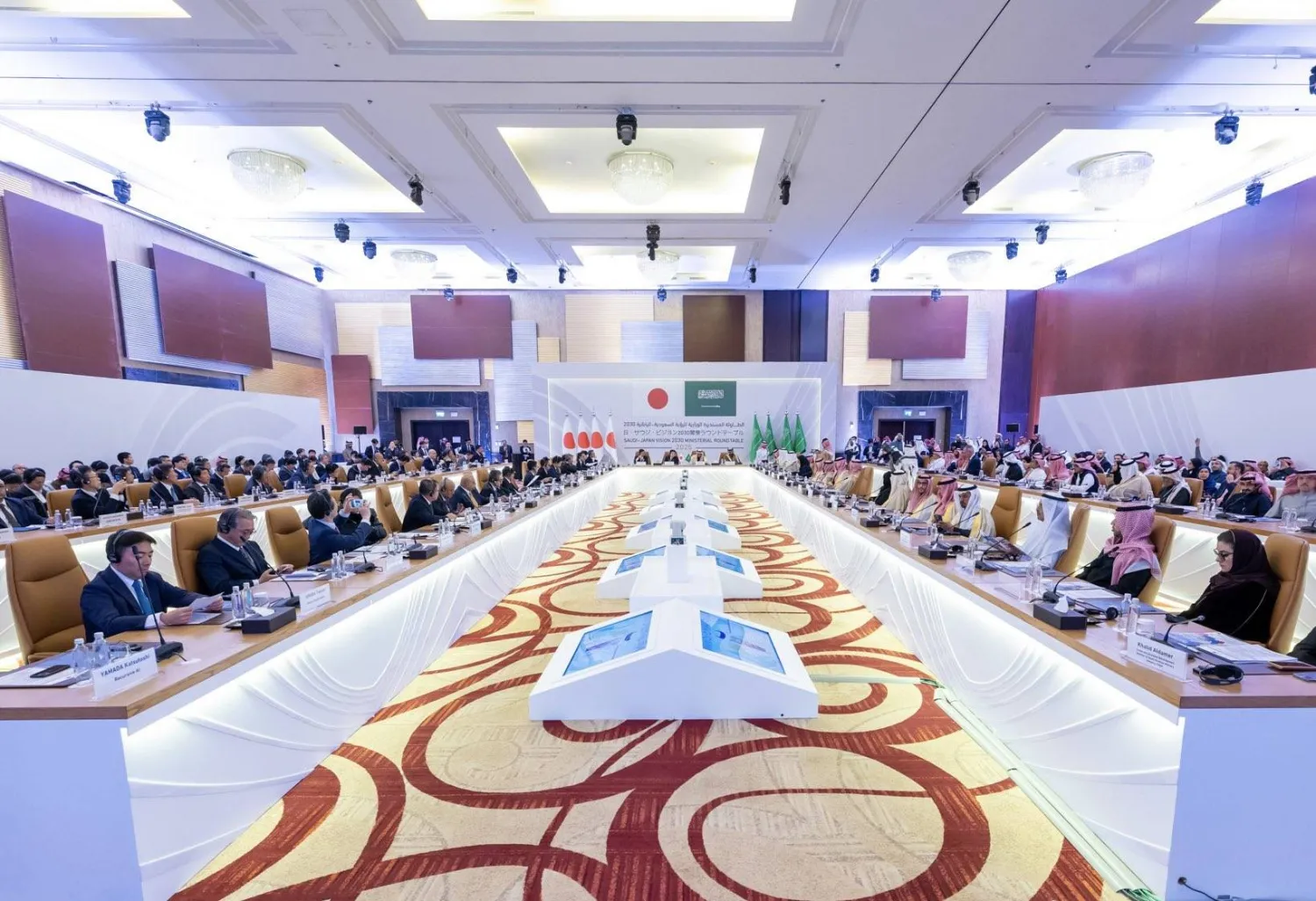
Saudi-Japanese ministerial roundtable meeting held in January last year (File photo: X)
TT

Japanese Ambassador to Asharq Al-Awsat: Riyadh, Tokyo in Consultations to Strengthen Energy Supply Chains

Saudi-Japanese ministerial roundtable meeting held in January last year (File photo: X)

As international trade faces mounting disruptions, Japan's Ambassador to Saudi Arabia, Yasunari Morino, revealed that Riyadh and Tokyo are engaged in intensive consultations aimed at strengthening the resilience of energy and critical materials supply chains against current regional tensions. He stressed that energy security is no longer merely a conventional issue, but has become a strategic priority requiring greater cooperation and closer coordination.

In an exclusive interview with Asharq Al-Awsat, Morino said Japan highly appreciates Saudi Arabia's leading role in promoting de-escalation across the region and advancing diplomatic solutions to conflicts, as well as its pivotal role in ensuring the stability of the global oil market. He reaffirmed Tokyo's commitment to expanding bilateral ties across various sectors, moving beyond the traditional scope of oil trade and petrochemicals toward broader opportunities in technology and investment.

The Saudi-Japanese Business Council held a meeting in Riyadh several days ago at the Federation of Saudi Chambers to discuss ways to enhance business cooperation between the two countries and review the current business environment.

Morino said the long-standing economic relationship between Saudi Arabia and Japan is a source of shared pride, noting that Saudi crude oil supplies are critically important to Japan, while Japanese investments in the Kingdom's petrochemical sector are substantial.

"As Saudi Arabia embarks on ambitious structural reforms to diversify its economy, Japan is exploring new opportunities to expand our economic relationship in line with the Japan-Saudi Vision 2030 launched in 2017, which complements Saudi Vision 2030," he said.

The ambassador added that bilateral cooperation holds significant promise in advanced technologies, including artificial intelligence, healthcare, entertainment, sports, and food. He noted that the strategic importance of the relationship was further strengthened after the two governments agreed in February to establish the Strategic Partnership Council, co-chaired by Saudi Crown Prince and Prime Minister Prince Mohammed bin Salman and the Prime Minister of Japan.

He also expressed Japan's strong interest in contributing to the success of Riyadh Expo 2030, particularly as Japan handed over the hosting torch of the global event to the Kingdom.
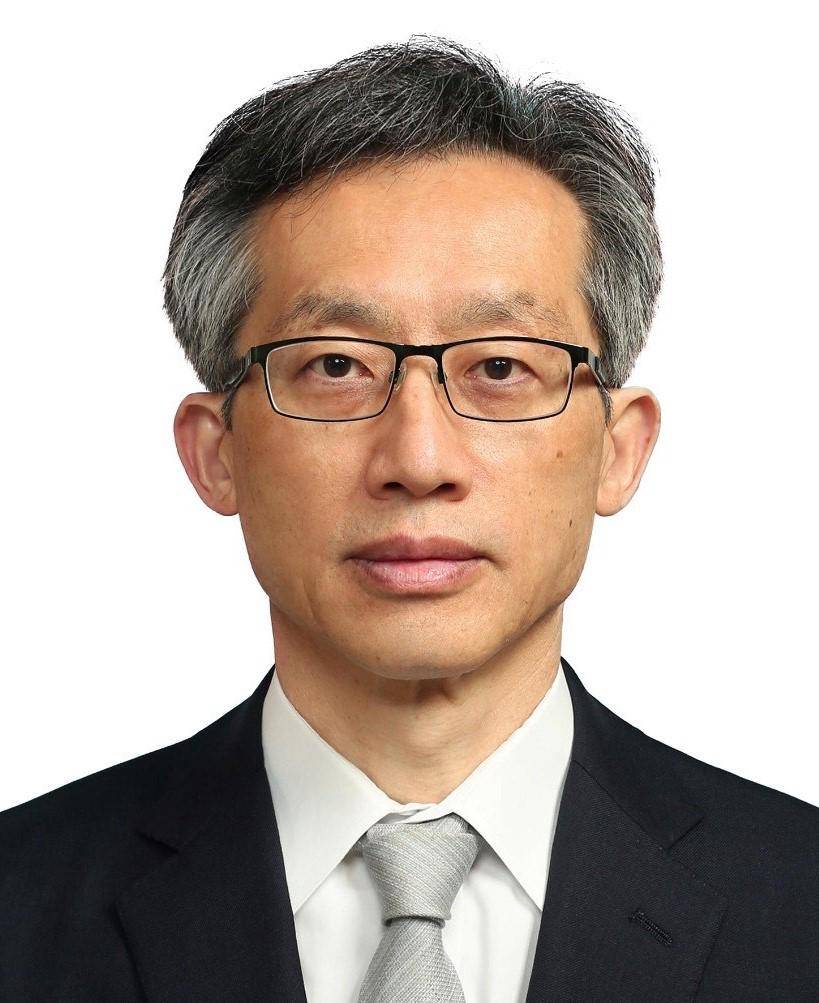
Japanese Ambassador to Saudi Arabia Yasunari Morino (Embassy)

Trade by the Data

Morino highlighted official data reflecting the depth of trade ties between the two countries.

Trade in December 2025: Saudi exports to Japan reached SAR22.7 billion ($6 billion), accounting for 11.7 percent of the Kingdom's total exports that month. The exports were mainly mineral fuels and organic chemicals. Saudi imports from Japan totaled SAR3.6 billion ($960 million), representing 4.3 percent of total imports, led by vehicles and parts, followed by machinery and mechanical equipment.

Full-year 2025 exports: Saudi exports to Japan totaled SAR133.3 billion ($35.5 billion), led by mineral fuels and oils worth SAR129.8 billion ($34.6 billion), followed by organic chemicals valued at SAR1.2 billion ($320 million), and copper and copper products worth SAR936.1 million ($249.6 million).

Annual imports from Japan: Saudi Arabia imported goods worth SAR38.2 billion ($10.1 billion) from Japan in 2025. Vehicles and parts ranked first at SAR26.6 billion ($7 billion), followed by boilers, machinery, and mechanical equipment at SAR3.9 billion ($1 billion), and electrical equipment at SAR1.8 billion.
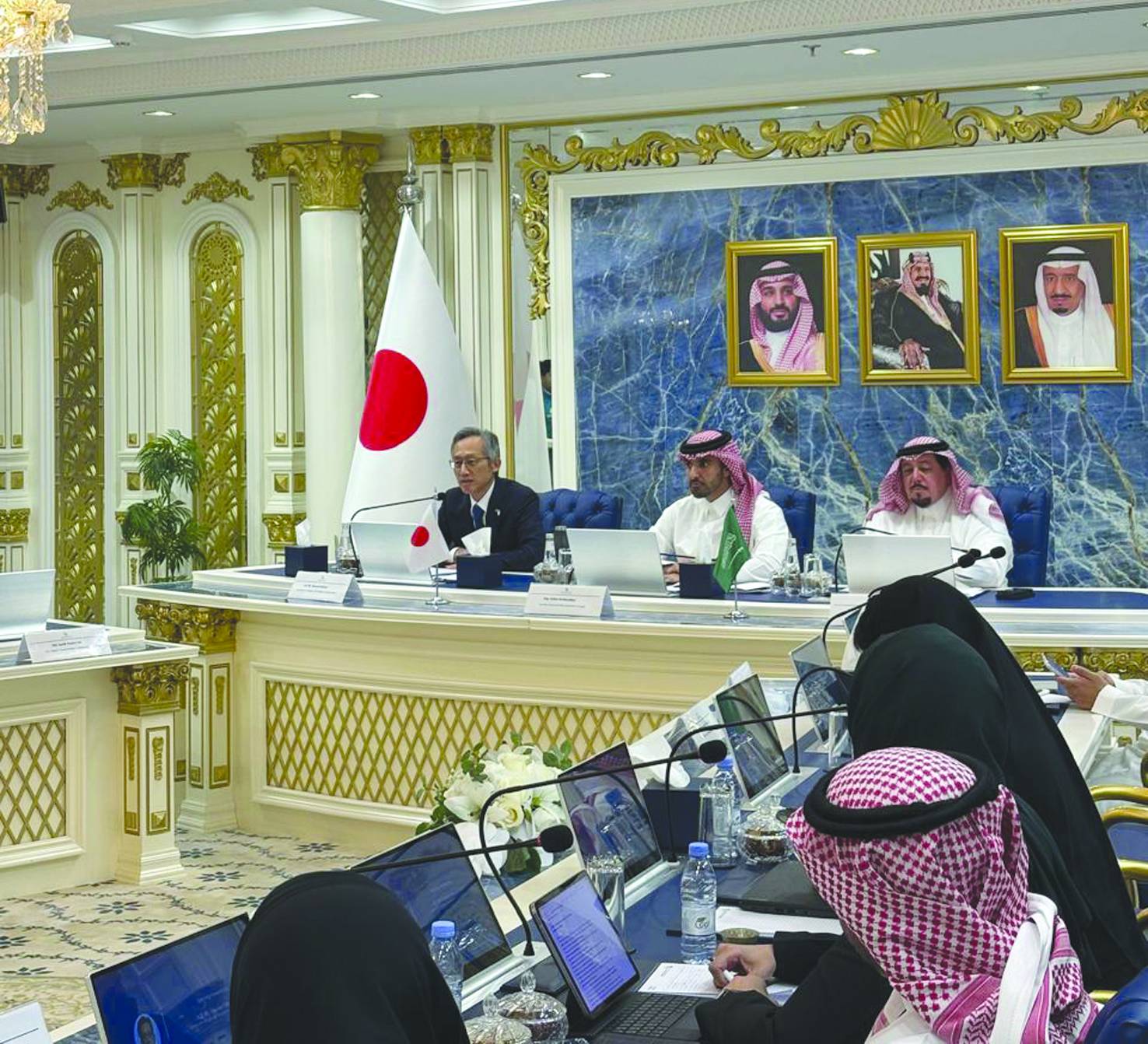
Japanese Ambassador to Saudi Arabia Yasunari Morino addresses the Saudi-Japanese Business Council meeting last Monday (Japanese Embassy in Riyadh)

Non-oil exports and foreign direct investment

On the growth of non-oil trade, Morino said Saudi non-oil exports to Japan reached SAR47.7 million ($12.7 million) in April 2026. The main exports included base metals and articles thereof worth SAR35.4 million ($9.4 million), plastics and rubber worth SAR5.8 million ($1.5 million), and chemical products worth SAR4.4 million ($1.1 million).

On investment, Morino said Japan's foreign direct investment stock in Saudi Arabia declined slightly to SAR23.1 billion ($6.1 billion) at the end of 2024, compared with SAR23.6 billion ($6.2 billion) in 2023. He said joint investments are expected to expand in the future, supported by new initiatives and agreements between the two countries.


Private Sector Fuels Saudi Arabia’s Growth Lead Among G20 Economies

A view of the Saudi capital, Riyadh. (SPA)
TT

Private Sector Fuels Saudi Arabia’s Growth Lead Among G20 Economies

A view of the Saudi capital, Riyadh. (SPA)

Fueled by a surging private sector and expanding non-oil industries, Saudi Arabia is poised to become the G20’s fastest-growing economy in 2027, overtaking India, according to International Monetary Fund (IMF) forecasts released last week.

The IMF expects the Saudi economy to grow by 7.9%, ahead of India’s projected 7%, highlighting the Kingdom’s economic transformation as regulatory and legislative reforms unlock new investment opportunities.

Saudi Arabia’s Ministry of Investment said the forecast underscores the economy’s strength and resilience while opening new avenues for investment and growth.

Momentum in the private sector and the expansion of non-oil activities are helping steer the Kingdom toward a more diversified, sustainable and investment-friendly economy, it said.

The IMF sharply raised its forecast for Saudi Arabia’s real gross domestic product (GDP) growth to 7.9%, from 5.5% in July, an upward revision of 2.4 percentage points that reflects prospects for recovery from the fallout of war and disruptions to trade and energy markets.

The outlook also highlights the structural transformation underway through Saudi Arabia’s Vision 2030, as non-oil sectors take on a greater role in driving growth and strengthening the economy against global headwinds.

The focus now shifts to whether the Kingdom can sustain that momentum and turn rapid expansion into lasting investment opportunities and jobs.

New sectors drive growth

Saudi Arabia’s projected lead among G20 economies signals a deeper structural shift away from its traditional reliance on oil revenues, according to Fahad Binjumah, an economist and former member of the Saudi Shura Council.

The private sector is emerging as a major engine of growth, bolstered by regulatory and legislative reforms, expanding investment opportunities and the rising contribution of non-oil industries.

Binjumah told Asharq Al-Awsat that the shift marks Saudi Arabia’s gradual transition from direct government stimulus toward a more diversified and productive economy capable of generating growth.

Major government investments have helped lay the groundwork, creating a stronger business environment and opening new sectors to local and foreign investors, he explained.

Strategic projects in tourism, industry, logistics and technology are also generating economic activity well beyond their immediate scope. Investment spending is rippling through supply chains and small and medium-sized businesses, widening commercial opportunities and drawing more parts of the economy into the growth cycle.

But for Binjumah, topping the G20 growth rankings is less important than sustaining that performance over the coming years.

"The main challenge is to turn economic expansion into long-term productivity gains by improving the efficiency of domestic businesses, boosting non-oil exports, developing skills and increasing private investment independent of government spending," he stressed.

Progress on those fronts would propel Saudi Arabia into a more advanced stage of economic diversification, where success is measured not simply by rapid growth but by a more resilient, competitive economy that generates added value and sustainable jobs, he added.

Reforms bolster economic resilience

Saudi Arabia’s rise in G20 growth projections is the product of years of economic reform, not a short-lived boost in any single sector, said Nasser Al-Sahli, president of the Saudi Governance Center.

Legislative changes, easier business procedures, wider investor participation and the restructuring of key sectors have made the economy more attractive to investment and better equipped to turn capital into productive activity, Al-Sahli told Asharq Al-Awsat.

The private sector’s expanding role shows that these reforms are increasingly translating into tangible economic gains, he said.

Their importance has grown amid geopolitical tensions, global trade and energy disruptions, and risks surrounding strategic maritime routes in the region. A broader non-oil economic base is helping Saudi Arabia diversify its income sources and reduce its exposure to external shocks.

"Economic diversification does not mean complete isolation from global developments, but building a productive and investment system capable of adapting to them and maintaining business continuity under different conditions," Al-Sahli said.

The next test will be whether Saudi Arabia’s private sector can move beyond capitalizing on opportunities created by government projects to driving investment expansion independently and sustainably, he went on to say.

That will require stronger productivity and competition, better access to financing, greater innovation and a larger international footprint for Saudi companies.

Al-Sahli said the real significance of Saudi Arabia’s projected G20 lead lies not in the ranking itself but in its ability to turn growth momentum into a more diversified and efficient economy, powered by a private sector that creates high-quality jobs and lasting economic value.

How G20 economies rank

India is forecast to rank second in G20 economic growth in 2027 at 7%, followed by Indonesia at 5.1%, China at 4% and Türkiye at 3.6%, according to IMF figures presented by the Saudi Ministry of Investment.

Argentina ranks sixth at 3.5%, followed by South Korea at 2.8% and the United States at 2.3%. Brazil is projected to grow by 1.9%, Mexico by 1.8%, Canada by 1.7%, Australia by 1.6%, South Africa by 1.3% and the United Kingdom by 1.2%. Germany is forecast to expand by 1.1% and Russia by 0.9%, while France and Japan are each expected to grow by 0.7%.


Saudi Arabia Leads G20 with 7.9% Growth Forecast in 2027

King Abdullah Financial District in Riyadh (Asharq Al-Awsat)
TT

Saudi Arabia Leads G20 with 7.9% Growth Forecast in 2027

King Abdullah Financial District in Riyadh (Asharq Al-Awsat)

Saudi Arabia is projected to lead the G20 countries in economic growth forecasts for 2027, according to International Monetary Fund (IMF) estimates. The IMF projects the Kingdom's real GDP to grow by 7.9 percent, the highest rate among the group's economies, as shown in data published by the Saudi Ministry of Investment.

The Fund had previously raised its projections for the Kingdom's real GDP growth to 7.9 percent, compared to 5.5 percent in its July estimates, an increase of 2.4 percentage points.

This revision comes amid expectations of economic activity regaining momentum as regional conflict-related disruptions subside, and oil production and exports gradually return to normal levels.

India ranked second among G20 countries with a projected growth rate of 7 percent, followed by Indonesia at 5.1 percent, then China at 4 percent, and Türkiye at 3.6 percent, according to IMF data reviewed by the Ministry.

Argentina came in sixth with projected growth of 3.5 percent, followed by South Korea at 2.8 percent, then the United States at 2.3 percent. Projections for Brazil stood at 1.9 percent, Mexico at 1.8 percent, Canada at 1.7 percent, Australia at 1.6 percent, South Africa at 1.3 percent, and the United Kingdom at 1.2 percent.

Germany registered projected growth of 1.1 percent, Russia 0.9 percent, while projections for France and Japan were 0.7 percent each, with Italy coming in last at 0.6 percent.

Growth Forecasts Revised

In an assessment of the recovery path, the Fund noted that the diversification of Saudi energy export routes limits the Kingdom's vulnerability to geopolitical disruptions compared to some regional economies. This is due to the the East-West Pipeline's ability to divert some oil exports to Yanbu Port on the Red Sea, away from the Strait of Hormuz.

The IMF's estimates align with the World Bank's projections, which also raised its forecast for Saudi economic growth in 2027 to 7.9 percent, compared to 4.9 percent in its April estimates, while anticipating a 2 percent contraction in GDP during 2026.

Globally, the IMF expects the world economy to grow by 3.1 percent in 2026 before rising to 3.4 percent in 2027, placing Saudi Arabia's growth forecast at more than double the projected global rate for the coming year.

The Saudi Ministry of Investment said that the Kingdom’s leading growth outlook among G20 countries reflects the strength and resilience of its economy and opens up broader prospects for investment and growth.

This is supported by strong private-sector momentum and the expansion of non-oil activities, reinforcing the Kingdom’s shift toward a more diversified, sustainable, and investment-friendly economy.


Saudi Arabia to Host Global Water Innovation Conference in Jeddah

 Participants at a previous edition of the Innovation Driven Water Sustainability Conference. (Saudi Water Authority)
Participants at a previous edition of the Innovation Driven Water Sustainability Conference. (Saudi Water Authority)
TT

Saudi Arabia to Host Global Water Innovation Conference in Jeddah

 Participants at a previous edition of the Innovation Driven Water Sustainability Conference. (Saudi Water Authority)
Participants at a previous edition of the Innovation Driven Water Sustainability Conference. (Saudi Water Authority)

Saudi Arabia will host water industry experts from more than 140 countries in Jeddah from December 14 to 16 for a conference focused on harnessing innovation to tackle growing water security challenges.

Organized by the Saudi Water Authority, the Innovation Driven Water Sustainability Conference (IDWS 2026) is expected to draw more than 10,000 participants and 250 speakers, with an exhibition featuring over 150 international brands.

Bringing together researchers, investors, technology companies and water utility operators, the event aims to bridge the gap between scientific advances and the practical needs of the industry, helping promising solutions reach commercial markets.

Tariq Al-Ghafari, the authority’s vice president for research and emerging water technologies, described the conference as an opportunity to connect new technologies with financing and operational expertise, paving the way for wider adoption.

The gathering comes as pressure on water resources intensifies, creating growing demand for investment in infrastructure and technology.

The global market for water security and infrastructure management is estimated at $303.8 billion, while planned construction and engineering projects in the water and wastewater sectors exceed $1.2 trillion.

Meeting the UN Sustainable Development Goals for clean water and sanitation will require an additional $131 billion to $140 billion annually, highlighting the scale of investment needed to expand access and modernize infrastructure.

According to the World Health Organization and UNICEF, around 1.8 billion people live in households without water supplies on the premises.

Agriculture alone accounts for approximately 72% of global freshwater withdrawals, according to the UN Food and Agriculture Organization, underscoring the importance of improving efficiency in water-intensive sectors.

Against this backdrop, the conference will explore ways to expand treated wastewater reuse, promote circular economy practices and apply artificial intelligence, digital technologies and data analytics to water management.

Discussions will also examine how regulation, financing and workforce development can speed up the adoption of new technologies, while improving efficiency across the water cycle, from production and treatment to resource recovery.

The program includes the MiyahThon innovation competition, startup showcases and the fourth edition of the Global Prize for Innovation in Water.

These initiatives are designed to bring innovators together with investors and water operators, giving emerging technologies a clearer path from development to commercial deployment.

By connecting research with investment and industry needs, the conference aims to help turn promising ideas into practical solutions as countries seek more efficient, resilient and sustainable water infrastructure.