
Aoun Optimistic on ‘Best Possible’ Deal for Lebanon, Banks on US Role

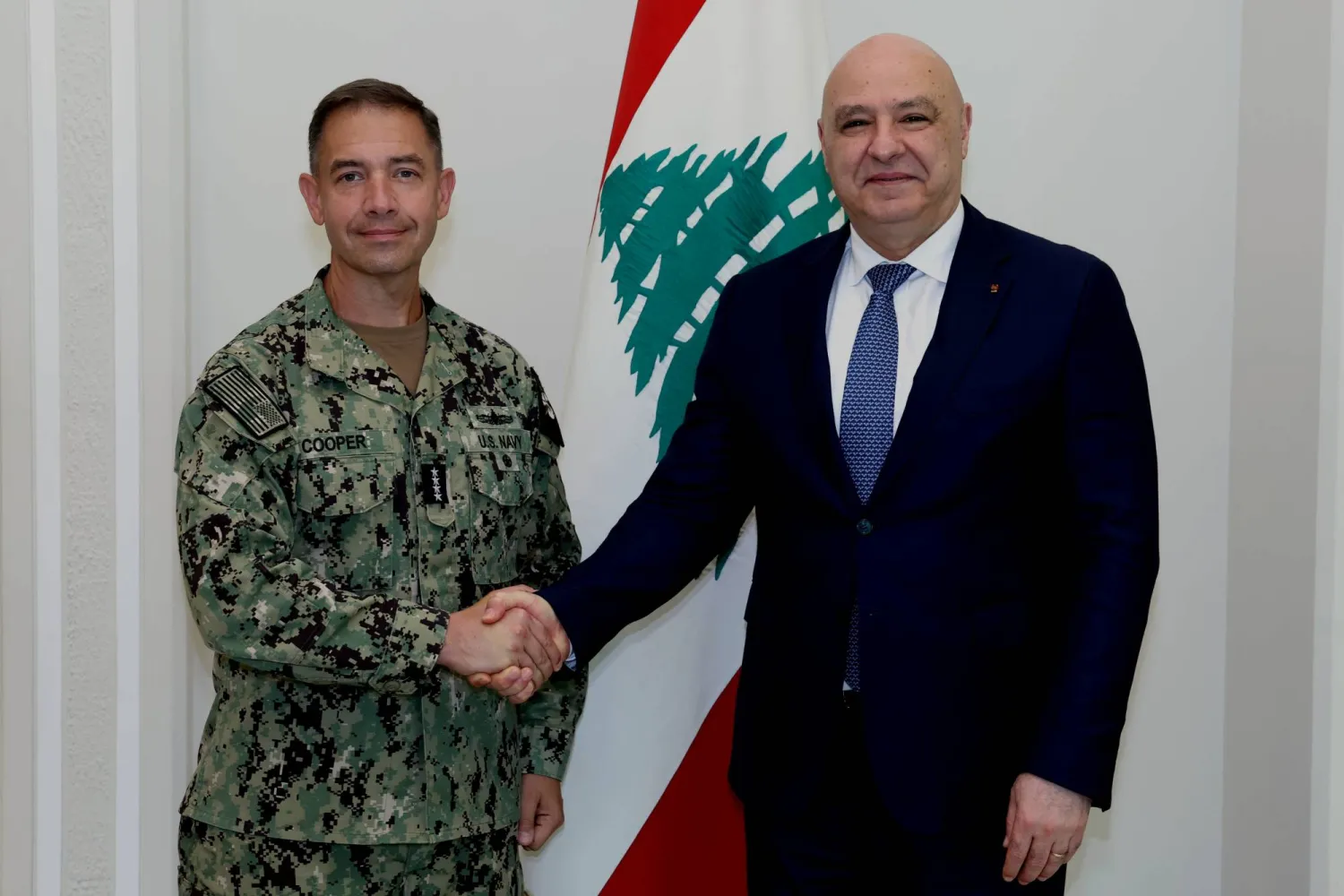
In this photo, released by the Lebanese Presidency press office, Lebanese President Joseph Aoun, right, shakes hands with Adm. Brad Cooper, the top US military commander in the Middle East, at the presidential place in Baabda, east of Beirut, Lebanon, Monday, June 29, 2026. (Lebanese Presidency press office via AP)
TT

Aoun Optimistic on ‘Best Possible’ Deal for Lebanon, Banks on US Role

In this photo, released by the Lebanese Presidency press office, Lebanese President Joseph Aoun, right, shakes hands with Adm. Brad Cooper, the top US military commander in the Middle East, at the presidential place in Baabda, east of Beirut, Lebanon, Monday, June 29, 2026. (Lebanese Presidency press office via AP)

In one phrase, Lebanese President Joseph Aoun answers critics of the framework agreement Lebanon and Israel signed late last week, an agreement he admits is “not ideal”, “Give me the alternative.”

For more than three years, Lebanon has been reeling from the fallout of Hezbollah’s successive “support” wars, first for Gaza in late 2023 and then for Iran on March 2 in wake of the war with the United States and Israel. Still, visitors to Aoun come away with a clear impression that the president is optimistic about the path opened by the agreement.

A senior Lebanese source said the reality created by those wars has added to Lebanon’s burden. Beirut had been negotiating over Israel’s withdrawal from five hills it occupied in the first round.

It then found itself negotiating under fire and occupation, as Israel’s presence expanded to the outskirts of Nabatieh in the east and Tyre on the coast, seizing Bint Jbeil in between.

The source placed direct responsibility for the war on Hezbollah. “Had it not been for its six rockets, which it fired last March, we would not be in this position today,” the source said.

The agreement is the result of facts imposed by the battlefield and by Lebanon’s condition as it buckles under rising human and material losses, with no clear path to a solution, it added.

A framework, not yet an agreement

Still, the source insisted the agreement “is not bad. More precisely, it has not become an agreement yet. It is a framework agreement that sets broad guidelines, pending the fine details that will be negotiated gradually.”

Lebanon is betting on the new US momentum to press Israel into making concessions on those details, it continued.

The clearest sign that the agreement is not bad, according to the source, “was Israel’s fierce rejection of it at first. That rejection would not have turned into approval without the major US pressure applied in the final hours before signing.”

The second sign was how quickly Israeli leaders moved to craft their own version of the agreement, “which has nothing to do with the truth,” the source said.

“Ninety percent of what Israeli Prime Minister Benjamin Netanyahu said is not true,” it stressed.
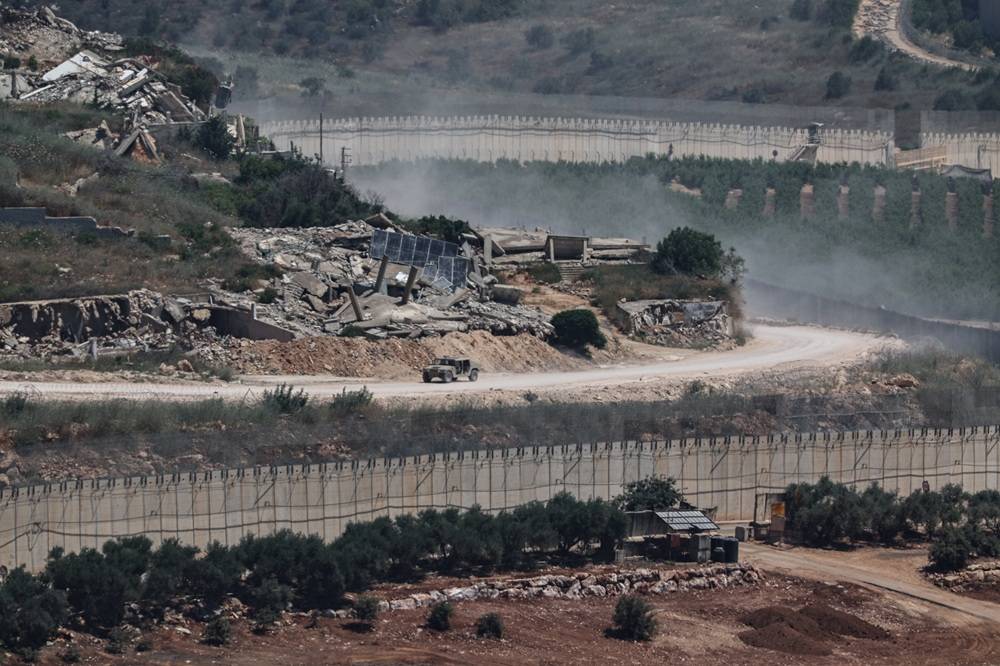
An Israeli military vehicle maneuvers on the Lebanese side of the Israel-Lebanon border, as seen from the Upper Galilee, 28 June 2026, amid an Israel-Lebanon ceasefire. (EPA)

US support

Lebanon sees clear US support as its best weapon against Israel’s lack of interest in a solution and its tilt toward constant escalation.

The strongest proof, Lebanese officials believe, is that US President Donald Trump has called Aoun twice so far. Both calls were highly positive, as were calls from other US officials who contacted Aoun more than once, including Vice President JD Vance and Secretary of State Marco Rubio, who remained in continuous contact with him.

The source asked: Can Lebanon afford to risk losing US support when everyone knows the Americans are the only party able to exert real pressure on Israel?

The source said Trump, in his latest call with Aoun, was very clear in adopting Lebanon’s demands for a full Israeli withdrawal “despite the disruptions.”

Trump also expressed readiness to help revive Lebanon and put it back on track. That track includes the return of displaced people, reconstruction, and extending state authority through its own forces across all Lebanese territory, a Lebanese demand above anyone else’s.

The Doha cell and a Hezbollah representative

The Americans are closely tracking developments in Lebanon.

Although Washington is separating what is being agreed on in the Pakistan with Iran track from the Lebanese-Israeli track, it is working in parallel on the Lebanese file. That includes setting up the cell provided for in the US-Iranian understanding to monitor the ceasefire in Lebanon.

The source said the committee would operate from a liaison point in the Qatari capital, Doha. It would include representatives of the United States, Lebanon, Qatar and Iran, as well as Hezbollah, likely the group’s representative in Tehran.
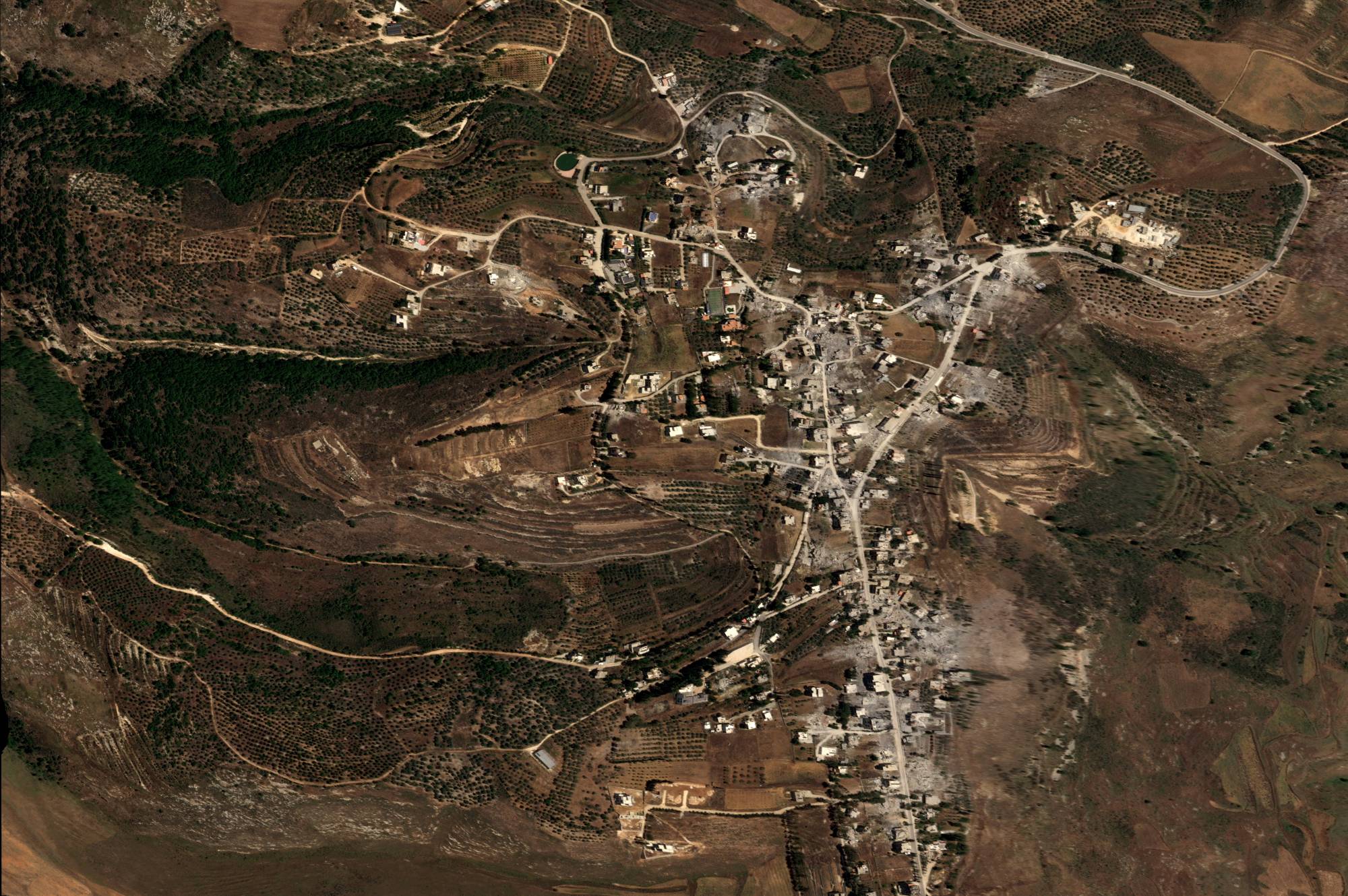
A satellite image shows the village of Froun in Lebanon, June 24, 2026. (Pléiades Neo © Airbus DS 2026/Handout via Reuters)

Ali al-Taher

When practical negotiations over the withdrawal began, Aoun proposed starting with an Israeli pullback from Kfar Tibnit and the historic Beaufort Castle, the last point reached by Israeli forces in their advance. The aim was to push Israeli forces away from Nabatieh after they had reached the city’s outskirts.

But the proposal collided with Israel’s determination to reach the Ali al-Taher heights, believed to contain a massive underground Hezbollah military facility.

Aoun called Rubio and proposed that the Lebanese army enter the area, while the Israeli army would withdraw beyond the Litani River. Rubio contacted the Israelis. Aoun, through intermediaries, contacted Hezbollah.

Israel approved the proposal. Hezbollah gave two contradictory answers. The first allowed the army to deploy without entering the facility. The second rejected the idea completely.

Later, Hezbollah settled on one answer: the matter was absolutely unacceptable. The proposal collapsed.

The area’s importance goes beyond Hezbollah’s facility. If Israeli forces position themselves there, they would directly overlook Nabatieh. From the other side, the heights overlook Israeli settlements, especially Metula, just a few kilometers from Nabatieh.

The idea of a withdrawal from that area was shelved. Instead, the focus shifted to another pullback from Zawtar al-Gharbieh and to the launch of a “pilot zone” there and the towns of Froun and Ghandourieh in the central sector.

That was the middle-ground solution. A withdrawal from the coastal line falls under the same equation because of its proximity to the southern border and, therefore, its high sensitivity for Israel.


Hezbollah Chief Slams Lebanon-Israel Talks

Hezbollah Secretary-General Naim Qassem (Reuters)
TT

Hezbollah Chief Slams Lebanon-Israel Talks

Hezbollah Secretary-General Naim Qassem (Reuters)

Hezbollah Secretary-General Naim Qassem on Friday stepped up his criticism of the Lebanese-Israeli negotiation process, arguing that the seven rounds of talks held so far have produced no results.

He announced the party's rejection of both direct negotiations and the substance of the framework agreement, while reaffirming its commitment to the 2024 agreement.

In a speech marking the anniversary of the July 2006 War, Qassem criticized the Lebanese authorities, saying: "Give us a single achievement from the seven rounds of negotiations."

He also asserted that the Lebanese authorities must “acknowledge their failure."

Qassem accused the authorities of subjecting the country's armed forces to undue pressure by implementing the framework deal agreed with Israel to end hostilities.

The June trilateral framework, to which the United States is also a party, involves Hezbollah’s disarmament and a gradual withdrawal of Israeli forces from Lebanon's south, where it has occupied several areas.

It also includes the deployment of the Lebanese army to areas where Israel's military has pulled out, starting in test areas known as "pilot zones.”

"How can you accept this ongoing humiliation of the Lebanese army, exposing it to bombardment and Israeli pressures, instead of acting as its protectors?" Qassem said in a speech.

"Israel is attempting to bind Lebanon to an inquiry committee that oversees the army's deployment, operations, and internal details. Where is the patriotism? Where is the dignity of the army that ought to be preserved?" he said.

Hezbollah has repeatedly rejected the direct talks and refuses to surrender its weapons.


US Engaged in Shuttle Diplomacy between Lebanon, Israel to Salvage the Negotiations

Lebanese Parliament Speaker Nabih Berri receives Issa and Clearfield (National News Agency)
TT

US Engaged in Shuttle Diplomacy between Lebanon, Israel to Salvage the Negotiations

Lebanese Parliament Speaker Nabih Berri receives Issa and Clearfield (National News Agency)

Head of the Military Coordination Group for Lebanon (MCG4L) US General Joseph Clearfield met on Friday with top officials in Beirut as part of follow up efforts with Lebanon and Israel on the military aspect of the framework agreement signed between the two countries in June.

The United States has been trying to broker an end to fighting between Israel and Hezbollah, which has raged since March in parallel with the wider US-Israeli war against Iran.

The June agreement says the Lebanese army will gradually restore control over all of Lebanon, disarming Hezbollah.

The first phase ⁠began in two pilot zones. The talks did not, however, produce an agreement on the next area from which Israeli troops would withdraw so that Lebanese troops could take control.

Clearfield, US Ambassador to Lebanon Michel Issa and the accompanying military delegation, visited on Friday Speaker Nabih Berri in Ain el-Tineh.

The discussions, which were attended by Berri’s Media Advisor Ali Hamdan, touched on the situation in southern Lebanon, as well as the Group’s work in light of the start of identifying the pilot areas and establishing a mechanism to verify the Israeli withdrawal and the deployment of the Lebanese Army.

Berri stressed that "Israel has not ceased its violations and attacks against Lebanon and the south since November 2024,'' adding that the attacks have continued systematically, involving the destruction of villages, bulldozing of fields and agricultural areas, and the burning of forested areas, "not to mention targeting heritage sites and cultural heritage."

Berri said that "the key to stability remains compelling Israel to halt its war and withdraw to the international borders."

Asked about the talks between Lebanon and Israel and the date of the next round, Ambasssador Issa said: "The negotiations will continue, but no date has been set yet."

The US delegation also visited Prime Minister Nawaf Salam at the Grand Serail to discuss the military aspect of the negotiation framework and developments in southern Lebanon.

Salam stressed the need for Israel to halt its destruction operations, expand the scope of the pilot zones, and establish a clear timetable for Israeli withdrawal from Lebanese territory.

Lebanese Prime Minister Nawaf Salam receives Issa and Clearfield (National News Agency)

Previous rounds of talks had focused on the sequence of the Israeli withdrawal, the deployment of the Lebanese Army, and the verification mechanism, without reaching a decision on moving to a new area. Issa reiterated this point on Friday, stating that defining the status of the current areas must precede discussions about other areas.

Shuttle Diplomacy Between Beirut and Tel Aviv

Friday's meetings were part of a shuttle diplomacy conducted by Clearfield between Beirut and Tel Aviv to follow up on the implementation of military arrangements.

Clearfield arrived in Beirut on Wednesday from Tel Aviv, where he had held talks with Israeli officials.

In the Lebanese capital, he met with President Joseph Aoun and Army Commander General Rodolphe Haykal before departing again for Tel Aviv later that afternoon. He returned to Beirut on Friday.

During that stop in Beirut, Clearfield discussed measures related to implementing the framework agreement and developments in southern Lebanon, at a time when the implementation process continues to face issues related to the Israeli withdrawal, the deployment of the Lebanese Army, the verification mechanism, and the transition to additional pilot areas.


Iraq Steps Up Anti-Corruption Campaign, Detains Electricity Ministry Official

PM Ali al-Zaidi Visits the Border Ports Authority. Photo: Iraqi Prime Minister Media Office
TT

Iraq Steps Up Anti-Corruption Campaign, Detains Electricity Ministry Official

PM Ali al-Zaidi Visits the Border Ports Authority. Photo: Iraqi Prime Minister Media Office

An Iraqi Commission of Integrity (COI) force arrested on Friday a deputy minister at the Ministry of Electricity on suspicion of involvement in financial violations, as Prime Minister Ali al-Zaidi ordered tighter oversight of border crossings and stronger efforts to combat corruption and smuggling.

The official Iraqi News Agency reported on Friday, citing a security source in Salahuddin province, that a COI force arrested Khalid Ghazai Attiya, Deputy Minister of Electricity for Transmission and Distribution Affairs, over alleged violations that are currently under investigation.

The source did not disclose the nature of the violations or details of the case, saying legal procedures against the detained official are being conducted in line with the law.

Neither the Commission nor the Ministry of Electricity issued an official statement regarding the arrest or the charges against Attiya.

The arrest comes as the Iraqi government continues its anti-corruption drive and efforts to recover public funds. The first phase of the campaign, launched on June 28 under the name "Operation Dawn Strike," targeted politicians, members of parliament, and business figures.

Government sources had previously stated that legal procedures for the campaign's second phase had been completed. The new phase is expected to focus on corruption cases in the health, oil, and electricity ministries, while also tracking funds and properties inside and outside Iraq and compiling new lists of suspects.

Border Crossings

In a related development, al-Zaidi instructed the Border Ports Authority during a visit to its headquarters in Baghdad on Friday to operate under a self-financing system through tax and customs revenues, with fees deducted before transfers are processed.

He also directed that all border crossings be linked to a unified electronic system, that daily reports on operations and revenues be submitted, and that the automation project for border crossings be accelerated to reduce fraud, corruption, and manipulation.

Al-Zaidi said that fighting corruption at Iraq’s border crossings will be a top priority, with the government planning tougher measures.

Drug and medicine smuggling, attempts to evade regulatory authorities, and other forms of trafficking pose serious threats to Iraqi society, he said, warning that those involved would face government action.

The government is also reviewing a draft law aimed at scrutinizing the sources of wealth of public officials.

Meanwhile, COI said that arrest warrants are being executed under judicial supervision as part of efforts to pursue those involved in corruption and recover public funds.