
Saudi PIF Operating Profit Doubles, Assets Hit $1.21 Trillion

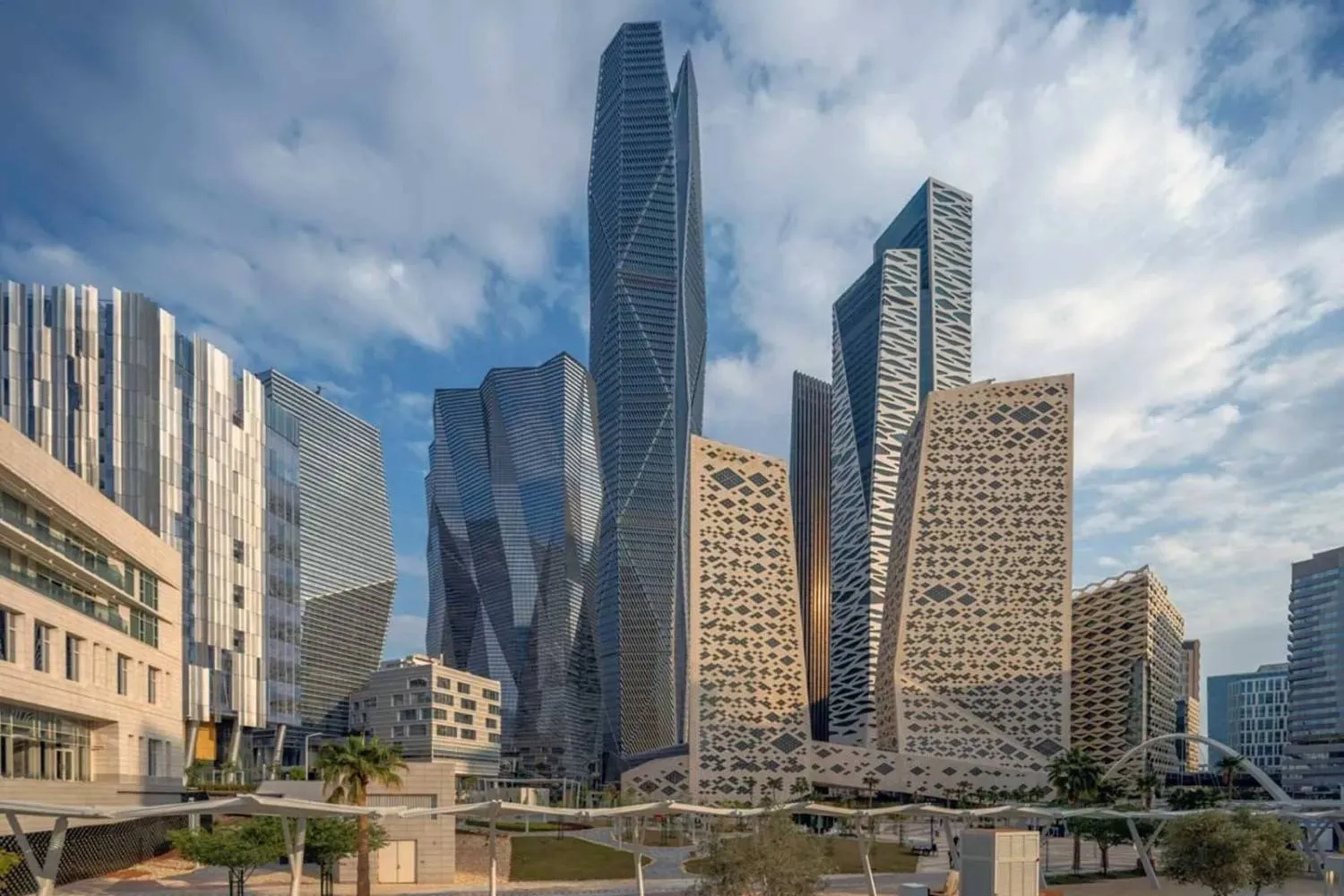
The Public Investment Fund Tower at King Abdullah Financial District. (PIF)
TT

Saudi PIF Operating Profit Doubles, Assets Hit $1.21 Trillion

The Public Investment Fund Tower at King Abdullah Financial District. (PIF)

Saudi Arabia’s Public Investment Fund has put its 2025 financial performance under the spotlight of global markets, publishing its audited consolidated financial statements on the London Stock Exchange in a move that reinforces its role as a driver of economic transformation and a global investor across continents.

The figures revealed an exceptional year for the fund. Net profit surged 152% to $17.36 billion, or 65.1 billion riyals, while total assets rose 5% to nearly $1.21 trillion, or 4.54 trillion riyals.

The jump was not simply the result of market swings. It reflected a flexible expansion strategy that balanced investment in future sectors, such as artificial intelligence through the launch of HUMAIN, with major domestic development projects, including Riyadh Expo 2030.

It also came alongside innovative green financing tools that strengthened foreign investor confidence in the fund’s financial position and long-term sustainability.

Operational efficiency drives record profit

The consolidated financial statements showed a sharp year-on-year improvement in profitability, mainly driven by stronger earnings from associates and a 9% drop in the fund’s administrative expenses. The decline pointed to higher operating efficiency and tight spending discipline.

Operating profit climbed to $20.8 billion, or 77.9 billion riyals, from $9.2 billion, or 34.6 billion riyals, in 2024, marking growth of more than 120%.

The gains were supported by a 9% increase in total revenue to $119.73 billion, or 449 billion riyals, from 413 billion riyals a year earlier, reflecting continued portfolio growth and stronger returns.

That performance fed directly into net profit for 2025, which jumped 152% to $17.36 billion, or 65.1 billion riyals, from 25.8 billion riyals in 2024. The result was more than double the previous year’s level.

The fund also maintained a high level of cash and cash equivalents, exceeding $93.33 billion, or more than 350 billion riyals, underscoring its ability to keep executing its investment strategy.

Asset growth and 2030 ambitions

The strong results come as the fund continues to expand its asset and investment base at speed. Assets have risen from about 720 billion riyals in 2017 to 4.54 trillion riyals, or $1.21 trillion, by the end of last year. The fund is targeting 10 trillion riyals by 2030, according to the Saudi Vision 2030 annual report.

The growth aligns with the fund’s new 2026-2030 strategy, announced at the start of this year. The strategy aims to shift from building strategic sectors to integrating economic ecosystems and accelerating growth. It places the private sector as a partner in creating value, not merely an implementer of projects, in line with the third phase of Vision 2030 and the push for deeper long-term investment partnerships.

PIF Governor Yasir Al-Rumayyan said the new strategy marked “a natural progression” from a phase of growth and expansion to a new phase focused on sustainable value, greater impact and higher investment efficiency.

He said the fund would transform the 13 strategic sectors in earlier plans into six integrated economic ecosystems built around companies with clear objectives. The focus would be on strengthening financial returns, maintaining investment efficiency, and continuously assessing the performance of investments and projects.

Under this vision, the fund’s investments are spread across three main portfolios: the Vision Portfolio, the Strategic Investments Portfolio and the Financial Investments Portfolio.

Backing future sectors

In future sectors, the fund moved in 2025 to accelerate artificial intelligence and advanced technologies through the launch of HUMAIN. The company invests across the AI value chain, including infrastructure, data centers, cloud capabilities, advanced models and applications.

To deepen that push, the fund signed a non-binding term sheet with Saudi Aramco under which Aramco would acquire a significant minority stake in HUMAIN, while PIF would retain the majority stake. The aim is to combine key assets and expand the company’s technical capabilities.

In future mobility and sustainability, Lucid Group, majority-owned by the fund, reported a 55% year-on-year rise in vehicle deliveries to 15,841 vehicles in 2025. The increase coincided with the launch of the Driving Force program in partnership with Formula E to expand science, technology, engineering and mathematics education, with a target of reaching more than 50,000 students in Saudi Arabia, the United States and the United Kingdom by the end of 2025.

Tourism and entertainment gain pace

On the domestic development front, the fund accelerated support for major local development and tourism projects while strengthening the wider economic ecosystem.

It launched Riyadh Expo 2030 Company to develop and operate the facilities of the first World Expo to be hosted by Saudi Arabia and to invest in those facilities over the long term. The project is expected to support sustainable tourism, create new opportunities for the private sector and boost its contribution to gross domestic product during construction, operation and beyond.

The year also brought major milestones in entertainment and luxury tourism. Qiddiya City announced the opening of the first Six Flags theme park outside North America, creating a distinctive destination in the kingdom. Red Sea Global also announced the official opening of AMAALA, its luxury coastal destination.

Alongside these major construction and development projects, the financial statements showed that the fund’s investment properties rose to $21.46 billion from $17.46 billion in 2024.

Green financing enters a new phase

The fund’s investment securities, valued at $576.4 billion, show a disciplined approach to diversifying risk by geography and currency to secure sustainable returns.

The Middle East and North Africa remained the largest exposure at $344.2 billion, followed by North American markets at $145.9 billion, European markets at $44.7 billion and Asian markets at $41.6 billion.

To support capital markets, the fund signed memorandums of understanding with global financial institutions, including Goldman Sachs Asset Management and Franklin Templeton, to develop innovative investment strategies focused on the region.

In financing, the fund marked a new milestone with its first euro-denominated green bond issue, worth 1.65 billion euros. Demand was strong, with orders exceeding the amount offered by more than six times. The fund also launched its first commercial paper program as a short-term financing channel.

Private sector and local content

As part of its commitment to the domestic economy, the fund held the third edition of the PIF Private Sector Forum, bringing together portfolio companies and government entities to review opportunities in major projects.

The fund’s initiatives also continued to support localization, develop local suppliers and increase the private sector’s share in emerging projects. The aim is to ensure that the fund’s historic financial growth feeds directly into the structure of Saudi Arabia’s broader, more sustainable economy in the years ahead.


Labor Market Reforms Drive Saudi Unemployment to Historic Lows

Saudi women employed by the Ministry of Health perform their duties during the Hajj season (SPA). 
TT

Labor Market Reforms Drive Saudi Unemployment to Historic Lows

Saudi women employed by the Ministry of Health perform their duties during the Hajj season (SPA). 

Reducing unemployment in Saudi Arabia has evolved from a Vision 2030 target into one of the clearest indicators of the Kingdom’s economic transformation.

Having surpassed its original goal of reducing Saudi unemployment to 7 percent years ahead of schedule, the Kingdom continues to set new records, with the unemployment rate among Saudi nationals falling to 6.4 percent in the first quarter of 2026, bringing it within striking distance of the revised target of 5 percent.

The latest figures reflect the impact of broad labor market reforms that have reshaped employment, strengthened the recruitment of Saudi talent, and boosted women’s participation in the workforce. Policymakers are now shifting their focus from job creation to improving the quality and sustainability of employment.

The first-quarter improvement was driven by a decline in unemployment among Saudi women to a record low of 9 percent, while the rate for Saudi men held steady at 4.9 percent, highlighting the labor market’s growing capacity to absorb national talent and sustain employment gains.

Labor market specialists attribute the progress to structural reforms and government policies that have encouraged private-sector companies to recruit qualified Saudis into skilled positions.

Badr Al-Anzi, Human Resources and Administrative Manager, told Asharq Al-Awsat that the record-low unemployment rate underscores the success of the Kingdom’s economic reforms and the labor market’s rapid alignment with the objectives of Vision 2030.

“The next challenge is sustaining this momentum by translating employment growth into high-quality, long-term jobs that create added value across the economy,” he said.

Al-Anzi added that nearing the 5 percent unemployment target is about more than increasing the number of people employed; it reflects the development of a more competitive and efficient labor market capable of supporting Saudi Arabia’s rapidly expanding and increasingly diversified economy.

He cited the acceleration of targeted Saudization initiatives led by the Ministry of Human Resources and Social Development, which aim to place Saudi professionals in specialized occupations while improving the quality of employment opportunities.

He also said the continued rise in women’s labor force participation reflects the success of the ministry’s reforms and has played a key role in bringing Saudi unemployment to historic lows. The next phase, he added, should focus on enhancing job quality — particularly in the private sector — to strengthen job stability, increase national workforce participation, and preserve recent gains.

Bandar Al-Safeer, a human resources specialist and writer, said the drop in Saudi unemployment to 6.4 percent demonstrates that years of labor market reforms are yielding tangible results, particularly through the private sector’s growing demand for Saudi talent and the continued expansion of women’s participation in the economy.

“The real achievement is not simply the lower unemployment rate,” he said. “It is the structural shift from tackling unemployment to improving job quality and productivity in line with Vision 2030.”

Data released by the General Authority for Statistics showed the unemployment rate among Saudis aged 15 and above declined by 0.8 percentage points from the previous quarter to 6.4 percent.

Across the entire population, including both Saudi nationals and expatriates, the overall unemployment rate fell to 3.1 percent in the first quarter, down 0.4 percentage points from the previous quarter. Male unemployment stood at 2.2 percent and female unemployment at 7.2 percent.

Saudi labor force participation reached 49 percent, while the overall participation rate remained stable at 67.2 percent.

The improvement coincides with the expansion of Saudization measures, including the second phase of a 55 percent localization requirement for dentistry professions and higher localization quotas in marketing, sales, procurement, and engineering.


Riyadh Air Adds Malaga, Kuala Lumpur to International Network

Riyadh Air Adds Malaga, Kuala Lumpur to International Network
TT

Riyadh Air Adds Malaga, Kuala Lumpur to International Network

Riyadh Air Adds Malaga, Kuala Lumpur to International Network

Riyadh Air, Saudi Arabia's new national carrier and a subsidiary of the Public Investment Fund, announced on Tuesday the addition of two new destinations to its growing network, launching ticket sales for flights linking Riyadh with Malaga and Kuala Lumpur.

With the addition of the two destinations, the new national carrier is preparing to operate flights to eight destinations from Riyadh by August. The network will include London, Cairo, Dubai, Jeddah, Madrid, Manchester, Malaga, and Kuala Lumpur, as the airline prepares to receive its sixth aircraft.

Riyadh Air offers passengers a range of options combining seasonal tourism and year-round services. The airline will launch seasonal nonstop flights to Malaga, Spain, from July 14 through September 8.

Three days later, on July 17, it will inaugurate its nonstop route between Riyadh and Madrid.

The Madrid route holds strategic importance for both business and tourism sectors, in addition to its sporting significance, as it links the two capitals and enhances the partnership with Atletico Madrid and its Riyadh Air Metropolitano Stadium.

Meanwhile, passengers heading to Asia will benefit from year-round scheduled flights to Kuala Lumpur, Malaysia, beginning July 30.

Passengers can book tickets through the Riyadh Air mobile application, the airline's official website, or authorized travel partners.


Cyprus, Energy Giants Declare Gas Fields Commercially Viable

Representatives of ExxonMobil and QatarEnergy sign an agreement with Cyprus declaring gas in two offshore fields marketable, paving the way for further development of offshore gas reserves in the eastern Mediterranean, at the Presidential Palace in Nicosia, Cyprus June 30, 2026. (Reuters)
TT

Cyprus, Energy Giants Declare Gas Fields Commercially Viable

Representatives of ExxonMobil and QatarEnergy sign an agreement with Cyprus declaring gas in two offshore fields marketable, paving the way for further development of offshore gas reserves in the eastern Mediterranean, at the Presidential Palace in Nicosia, Cyprus June 30, 2026. (Reuters)

Cyprus, ExxonMobil and QatarEnergy on Tuesday declared natural gas fields discovered off the Mediterranean island nation to be commercially viable, with a 2033 target for production to commence.

The declaration of commercial discovery, signed in Nicosia, moves the Glaucus and Pegasus gas discoveries from the exploration phase to project development, strengthening Cyprus's ambitions to become an eastern Mediterranean energy hub.

"This has been the culmination of eight years of work since we were awarded the blocks in 2017, discovery in 2019, second discovery last year," John Ardill, ExxonMobil's vice president for exploration and new ventures, said.

"This declaration of commerciality takes us from looking for energy to developing energy," Ardill said. "It is a very historic point."

Cypriot President Nikos Christodoulides described the agreement as "a milestone of strategic importance".

Ardill said the company expected to take a final investment decision in 2029, with production starting in 2033.

He added that ExxonMobil would resume drilling later this year as part of the Pegasus appraisal program, while expanding exploration into Blocks 4 and 10A of the Cypriot exclusive economic zone (EEZ).

"The concept of a European energy hub is realized when the molecules start flowing, and that's what we are here to initiate today," Ardill said.

Ardill said the leading development option is a subsea pipeline linking the Cypriot fields to existing liquefied natural gas infrastructure in Egypt, pointing to established bilateral agreements and infrastructure.

An onshore LNG terminal in Cyprus would require substantially larger gas reserves than those identified so far.

Tuesday's declaration follows years of appraisal drilling and technical studies confirming the fields are commercially exploitable.

Energy Minister Michael Damianos said Cyprus expected to launch a new offshore licensing round within the next two years.

The island nation has sought to position its offshore gas as a strategic source of energy security for Europe following Russia's invasion of Ukraine.

It has been 15 years since Nicosia's first commercial natural gas find, dubbed the Aphrodite field.

Cyprus has delineated its EEZ into 13 offshore exploration blocks licensed to international energy companies, including ExxonMobil, QatarEnergy, Eni, TotalEnergies and Chevron.