
Syria’s Ministry of Justice has completed a draft law aimed at protecting the rights of victims of the Assad era, preserving the historical record, safeguarding the collective memory of future generations, and preventing the recurrence of abuses.
Justice Minister Mazhar al-Wais said Tuesday that the bill will be submitted to parliament as soon as it convenes to complete the constitutional process and secure final approval.
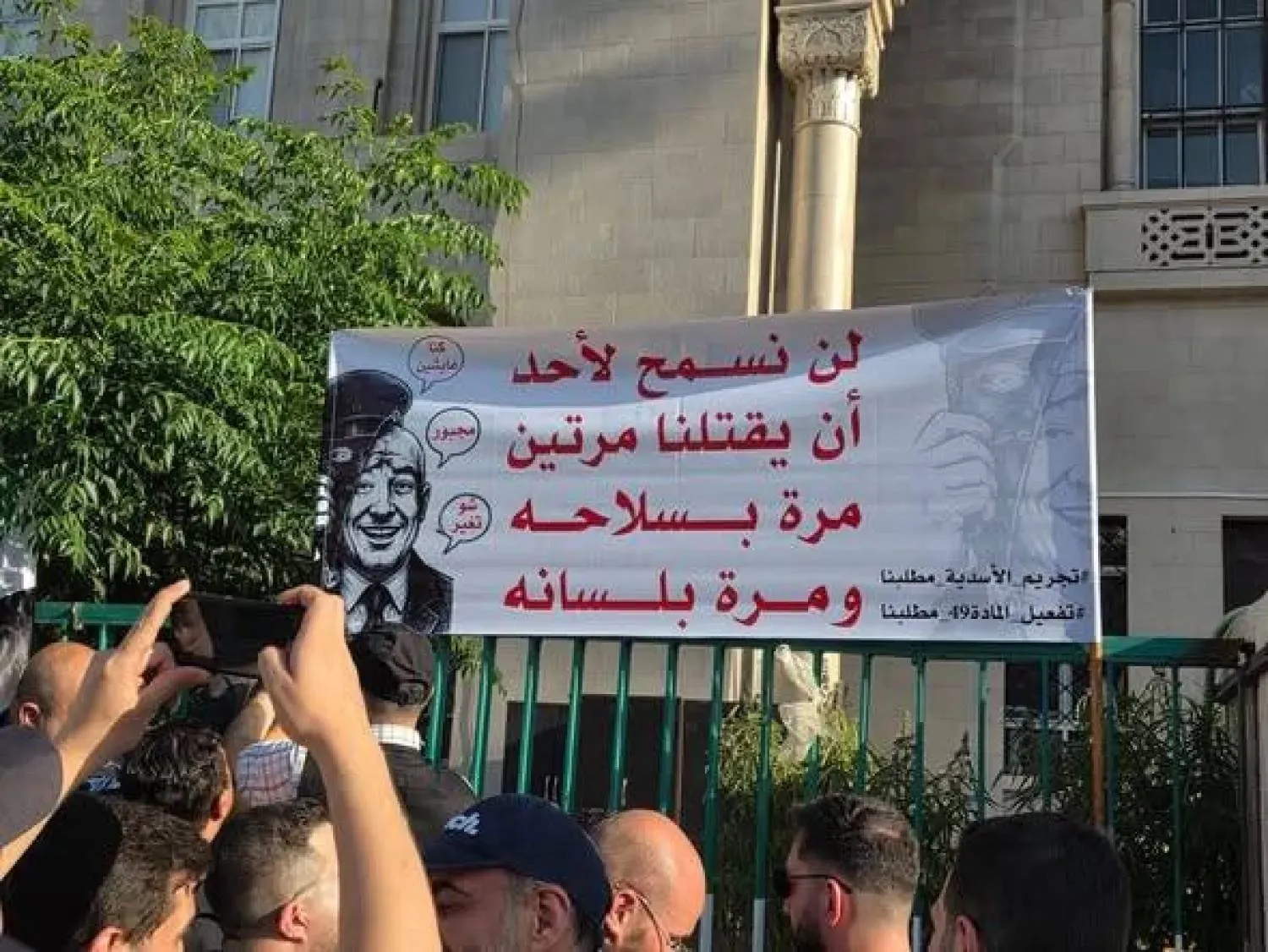
His remarks came a day after demonstrators gathered outside the Palace of Justice in central Damascus, calling for enforcement of Article 49 of Syria’s constitutional declaration. The provision criminalizes glorifying the former Assad regime and its symbols, as well as denying, praising, justifying, or minimizing its crimes.
Recent weeks have also seen protests in several parts of the country accompanied by violence and vandalism targeting supporters of the former regime and remnants of its security and military apparatus, raising concerns about social stability.
Al-Wais stressed that denying or justifying crimes committed by the former regime, or glorifying those responsible, violates the constitutional declaration because it undermines victims’ rights and Syria’s national memory. He said these principles form part of the country’s transitional justice framework.
He added that the Public Prosecution is pursuing such violations under existing law and urged the public to report acts or statements that breach the constitutional declaration so legal action can be taken.
According to legal sources, launching transitional justice proceedings before enacting a dedicated transitional justice law has created a gap between Syrians’ expectations for comprehensive accountability and current prosecutions conducted under the penal code.
Mohammed Suleiman Dahla, head of the Damascus Bar Association, told Asharq Al-Awsat that ongoing cases classify abuses as war crimes and crimes against humanity under international criminal and humanitarian law while simultaneously prosecuting them under the Syrian Penal Code.
He said the forthcoming transitional justice law — expected before the current trials conclude — would become the governing legislation, particularly regarding sentencing. Specialized judicial chambers handling such crimes have already begun operating in Damascus within the regular court system, from the Public Prosecution through investigative bodies to the criminal court, with plans to expand them to other provinces.
Dahla stressed that transitional justice legislation is essential for social recovery, institutional reform, closing the chapter on the past, preventing future abuses, and preserving historical memory. He also called for reviewing laws that helped the former regime consolidate control over the state, society, and the economy.