Thousands Evacuated from Homes in Southwest France as Wildfire Burnshttps://english.aawsat.com/varieties/5292682-thousands-evacuated-homes-southwest-france-wildfire-burns
Thousands Evacuated from Homes in Southwest France as Wildfire Burns
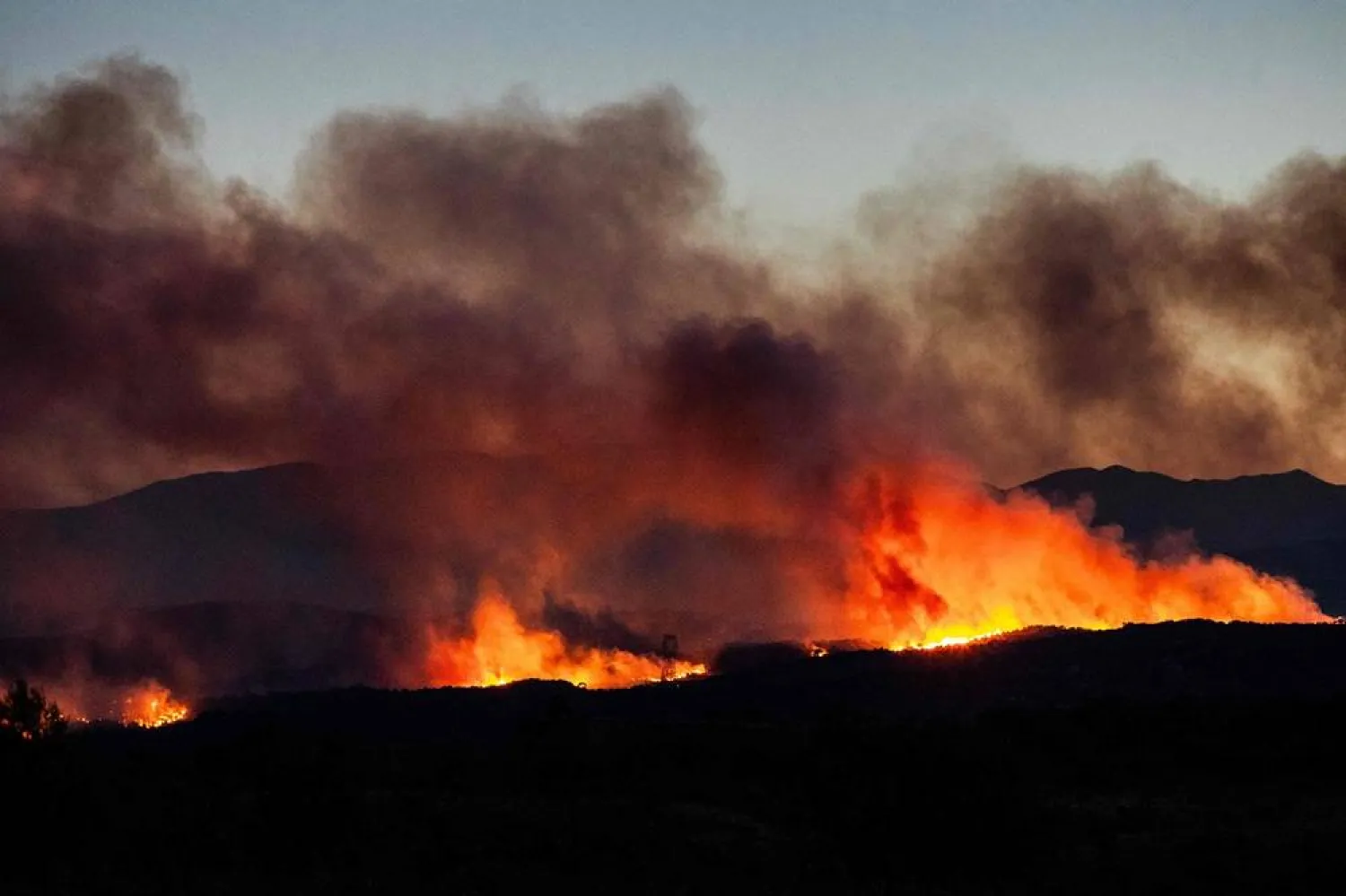
This photograph shows a wildfire burning in the Aspres region seen from Millas, in the Pyrenees-Orientales department, southern France on July 5, 2026. (AFP)
TT
TT
Thousands Evacuated from Homes in Southwest France as Wildfire Burns
This photograph shows a wildfire burning in the Aspres region seen from Millas, in the Pyrenees-Orientales department, southern France on July 5, 2026. (AFP)
A wildfire burning out of control in southwestern France has forced the evacuation of 10,000 people from two dozen small towns and villages near the Spanish border and officials said strong winds on Monday would further fan the blaze.
The fire has scorched some 4,600 hectares in the foothills of the French Pyrenees, local prefect Pierre Regnault de la Mothe said in a post on X.
"This morning conditions are deteriorating again," Interior Minister Laurent Nunez warned on French TV station TF1. "Today the battle resumes."
Early summer heatwaves in France and across western Europe in May and June have scorched vast areas of land, making them particularly vulnerable to wildfires this year.
The Trevillach blaze is burning in the vicinity of the third stage of the Tour de France. Local authorities have closed the leg to the public to allow emergency services easy access to the area. Although the race will proceed, the motorcade of team vehicles that follows will now be kept to a minimum.
On the Spanish side of the border, the fire ravaged 2,200 hectares — 97% of them in the protected natural area of Les Gavarres — but Catalan authorities said late on Saturday that it was stable and would be completely extinguished during the week.
Police have arrested an employee of a company contracted by Catalonia's regional government who is suspected of having sparked the wildfire by using an angle grinder at the side of a road.
South of Catalonia, in the eastern Castellon province, 500 people were evacuated after a wildfire entered the Sierra de Espadan national park, home to a significant cork oak forest.
Saudi Arabia Strengthens Role in International Water Efforts Ahead of Riyadh World Water Forum 2027https://english.aawsat.com/varieties/5324365-saudi-arabia-strengthens-role-international-water-efforts-ahead-riyadh-world
Saudi Arabia affirms that hosting the 11th World Water Forum in Riyadh in 2027 represents an important milestone in strengthening joint international action - SPA
Saudi Arabia Strengthens Role in International Water Efforts Ahead of Riyadh World Water Forum 2027
Saudi Arabia affirms that hosting the 11th World Water Forum in Riyadh in 2027 represents an important milestone in strengthening joint international action - SPA
Saudi Arabia affirmed that hosting the 11th World Water Forum in Riyadh in 2027 represents an important milestone in strengthening joint international action and accelerating the transition from commitments and initiatives to practical solutions that contribute to water security and sustainability.
This came during the participation of Deputy Minister for Water at the Ministry of Environment, Water and Agriculture Dr. Abdulaziz Al-Shaibani in a dialogue session held today as part of the Euro-Mediterranean Water Forum in Rome, with the participation of several ministers, senior officials, and international experts in the water sector, SPA reported.
Al-Shaibani said that the Kingdom of Saudi Arabia is preparing to host the 11th World Water Forum from March 21 to 25, 2027, noting that the forum aims to enhance international partnerships, support actionable solutions, and link global commitments to clear programs whose impact can be measured and results monitored.
He highlighted that the World Water Forum in Riyadh will address six main themes and more than 30 topics, including water security, water finance, water for humans and nature, water governance and diplomacy, innovation for water, and the value of water. More than 20,000 participants from over 150 countries are expected to attend.
Al-Shaibani stressed that the Kingdom is working to ensure an inclusive preparatory process involving various stakeholders and reflecting the needs of different regions and countries, while enhancing the participation of youth, academic institutions, the private sector, international organizations, and river basin organizations.
He also called on the international community to actively contribute to preparations for the forum and provide initiatives, expertise, and partnerships that support practical and sustainable outcomes. He reiterated that the Kingdom looks forward to the forum serving as a platform that brings the world together for joint action toward a more water-secure and sustainable future.
10 AlUla Hotels and Restaurants Featured in 2026 MICHELIN Guidehttps://english.aawsat.com/varieties/5324331-10-alula-hotels-and-restaurants-featured-2026-michelin-guide
10 AlUla Hotels and Restaurants Featured in 2026 MICHELIN Guide
These recognitions underline the destination’s growth as a global hub for luxury and culinary discovery - SPA
AlUla’s standing as a world-class center for luxury hospitality and culinary excellence received renewed acclaim, with 10 hotels and restaurants featured in the 2026 MICHELIN Guide for Saudi Arabia.
This latest MICHELIN Guide recognition celebrates the exceptional quality, distinctiveness, and authenticity of AlUla’s hospitality offerings, with each reflecting the destination’s sense of place and deep cultural roots.
The renowned Dar Tantora The House Hotel was awarded One MICHELIN Key, a testament to its opulent offering rooted in heritage. Situated in AlUla Old Town and built from carefully restored historic mudbrick dwellings, the eco-boutique hotel provides guests with an authentic sanctuary in the heart of the historic area.
The Chedi Hegra was also awarded One MICHELIN Key, recognized for its location within Saudi Arabia’s first UNESCO World Heritage Site. The property preserves historic structures, ancient fort walls and the former AlUla railway station, weaving centuries of heritage into a modern luxury experience.
Banyan Tree AlUla maintained its coveted One MICHELIN Key, a prestigious mark of distinction recognizing remarkable hotel experiences. Set within the sandstone canyons of Ashar Valley, the resort pairs minimalist luxury with sustainable design, offering a secluded retreat rooted in nature.
Also featured in the hotel selection are Our Habitas AlUla, recognized for its wellness-led, environmentally conscious approach to desert hospitality, and Caravan by Habitas AlUla, which offers a vibrant, adventure-inspired stay under the stars.
In the dining selection, new addition Tofareya earned a Bib Gourmand for its outstanding Saudi cuisine. Situated in a traditional village house in AlUla Old Town, Tofareya highlights local ingredients, including AlUla oranges and dates harvested from the ancient oasis. It joins returning Bib Gourmand awardee Joontos at Dar Tantora The House Hotel, which is praised for its contemporary and inventive spin on traditional Saudi dishes.
Entering the guide for the first time was Somewhere, set within the AlUla Oasis and serving Middle Eastern dishes with creative contemporary twists amidst lush palm groves.
The 2026 selection also includes returning MICHELIN-selected destinations such as Harrat at Banyan Tree AlUla, recognized for its pan-Arabic cuisine, and Tama at Our Habitas AlUla, celebrated for its farm-to-table approach and locally sourced, seasonal menus.
With 10 venues featured in the MICHELIN Guide, AlUla has a high concentration of MICHELIN-recognized hospitality venues in the region, reinforcing its position as a leading hospitality and culinary destination in the Kingdom.
Together, these recognitions underline the destination’s growth as a global hub for luxury and culinary discovery, where visitors can enjoy world-class hospitality amid ancient landscapes.
AlUla Skies 2026 Returns with Exceptional Celestial Experienceshttps://english.aawsat.com/varieties/5324136-alula-skies-2026-returns-exceptional-celestial-experiences
The AlUla Skies Festival will take place from November 6-15. (SPA)
TT
TT
AlUla Skies 2026 Returns with Exceptional Celestial Experiences
The AlUla Skies Festival will take place from November 6-15. (SPA)
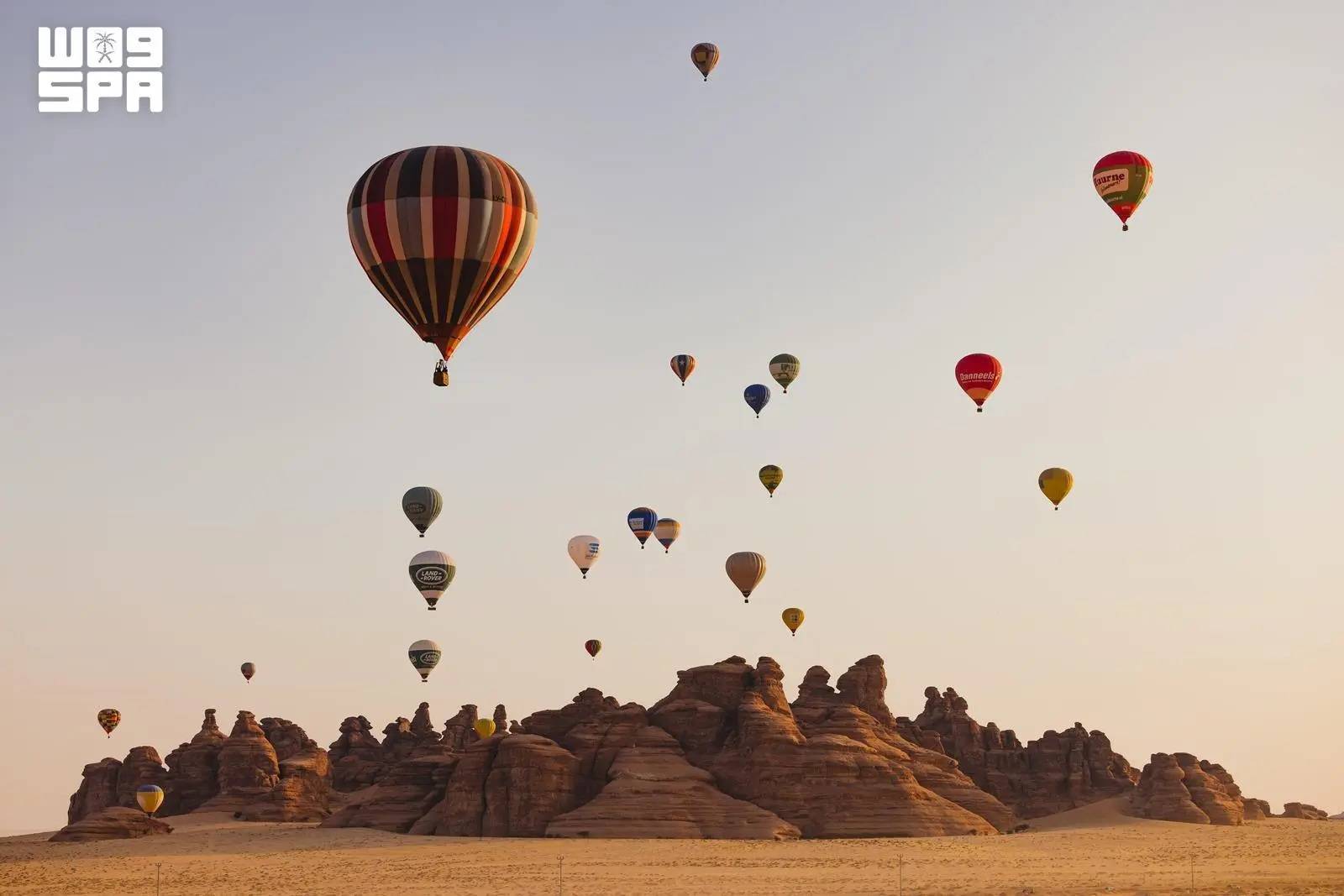
Saudi Arabia’s AlUla Moments announced the return of AlUla Skies Festival, taking place from November 6-15, bringing 10 days of extraordinary experiences that celebrate the wonder of the skies. From hot-air balloons floating above the landscape at sunrise to immersive evenings beneath a canopy of stars, the festival offers visitors a spectacular new way to experience AlUla.
Designed as a celebration of nature, adventure, and astronomy, the event transforms AlUla’s dramatic desert landscapes into a destination for sky-inspired experiences, combining aerial adventures with cultural and entertainment programming, reported the Saudi Press Agency on Tuesday.
By day, guests can experience sunrise hot air balloon flights and aerial views over AlUla’s landscapes, while evenings will feature balloon glow shows, stargazing experiences, moonlight cinema, and wellness sessions, creating a unique blend of nature, culture, and immersive entertainment.
Timed to coincide with a period of moonless skies from November 7-12, with the New Moon on November 9, the 2026 edition offers ideal conditions for observing faint celestial objects. The festival will also coincide with the Leonid Meteor Shower on November 15, when visitors could see up to 20 meteors per hour with minimal moonlight interference.
As AlUla continues to grow as a leading destination for nature-based and experiential tourism, the festival offers visitors a chance to reconnect with the night sky and experience the landscapes from entirely new perspectives.
Among the headline moments of this year’s program is AlUla Skyrise, where guests can join a shared sunrise hot air balloon flight, rising above the landscapes of AlUla. The experience operates daily throughout the festival, with flights taking place from approximately 6:00-7:00 am, following early-morning transfers, briefing and boarding. Guests will also be served Saudi coffee and dates before take-off, with refreshments provided following the flight.
Visitors can also enjoy the Hot Air Balloon Glow Show, taking place at Hegra on November 6 and 7 and at Elephant Rock on November 13 and 14. The evening spectacle combines illuminated hot air balloons with music, lighting, projection, fire performers, and aerial trapeze artists, culminating in a choreographed grand finale.
Guests can join a shared sunrise hot air balloon flight, rising above the landscapes of AlUla. (SPA)
For those seeking a more accessible option, the Tethered Hot Air Balloon Experience offers gentle ascents with panoramic views of AlUla’s landscapes, making it ideal for families, first-time visitors, and photography enthusiasts. Payment is available on-site, with no advance booking required.
The festival will also feature VOX Moonlight Cinema at Our Habitas AlUla, across the 10-day program, with screenings scheduled throughout the festival.
For astronomy enthusiasts, the Stargazing at AlUla Fort experience will operate on November 6, 7, 10-12 and 13-15 from 19:00-23:00. The experience will feature five telescopes focused on planets and constellations, alongside guided observations led by a trained astronomer and a Rawi, who will provide cultural and storytelling context.
The 2026 program will also introduce Sunset Stillness wellness experiences at Our Habitas AlUla, featuring Guided Meditation, Sound Immersion and Conscious Connected Breathwork, taking place on November 13 and 14 from 17:00-18:00.
AlUla Skies Festival will bring stargazing experiences and hikes under the stars with Husaak, all set against AlUla’s sandstone mountains, canyons and heritage sites. With the festival taking place during a period of moonless skies, visitors can experience a range of daytime and night-time activities against AlUla’s dark desert skies.
The festival also highlights AlUla’s designation as the region’s First Dark Sky Park destination, with four areas officially designated as International Dark Sky Parks by DarkSky International, including AlGharameel Nature Reserve, Sharaan National Park and Wadi Nakhlah Nature Reserve. Together, these protected areas reinforce AlUla’s commitment to preserving its natural environments, reducing light pollution, while promoting sustainable tourism and offering visitors some of the region’s best stargazing conditions.
AlUla Skies Festival forms part of the AlUla Moments calendar, a year-round program celebrating art, culture, heritage, nature and adventure, and reinforces AlUla as a leading global destination for experiential travel.
لم تشترك بعد
انشئ حساباً خاصاً بك لتحصل على أخبار مخصصة لك ولتتمتع بخاصية حفظ المقالات وتتلقى نشراتنا البريدية المتنوعة