
Since the fall of President Bashar al-Assad‘s regime and the assumption of power by interim President Ahmed al-Sharaa, Paris has led Western efforts to engage with Syria’s new leadership.
That policy has been reflected in three key steps. The first was France’s push within the European Union to lift sanctions imposed on the former Syrian regime, a process that has since been carried out gradually.
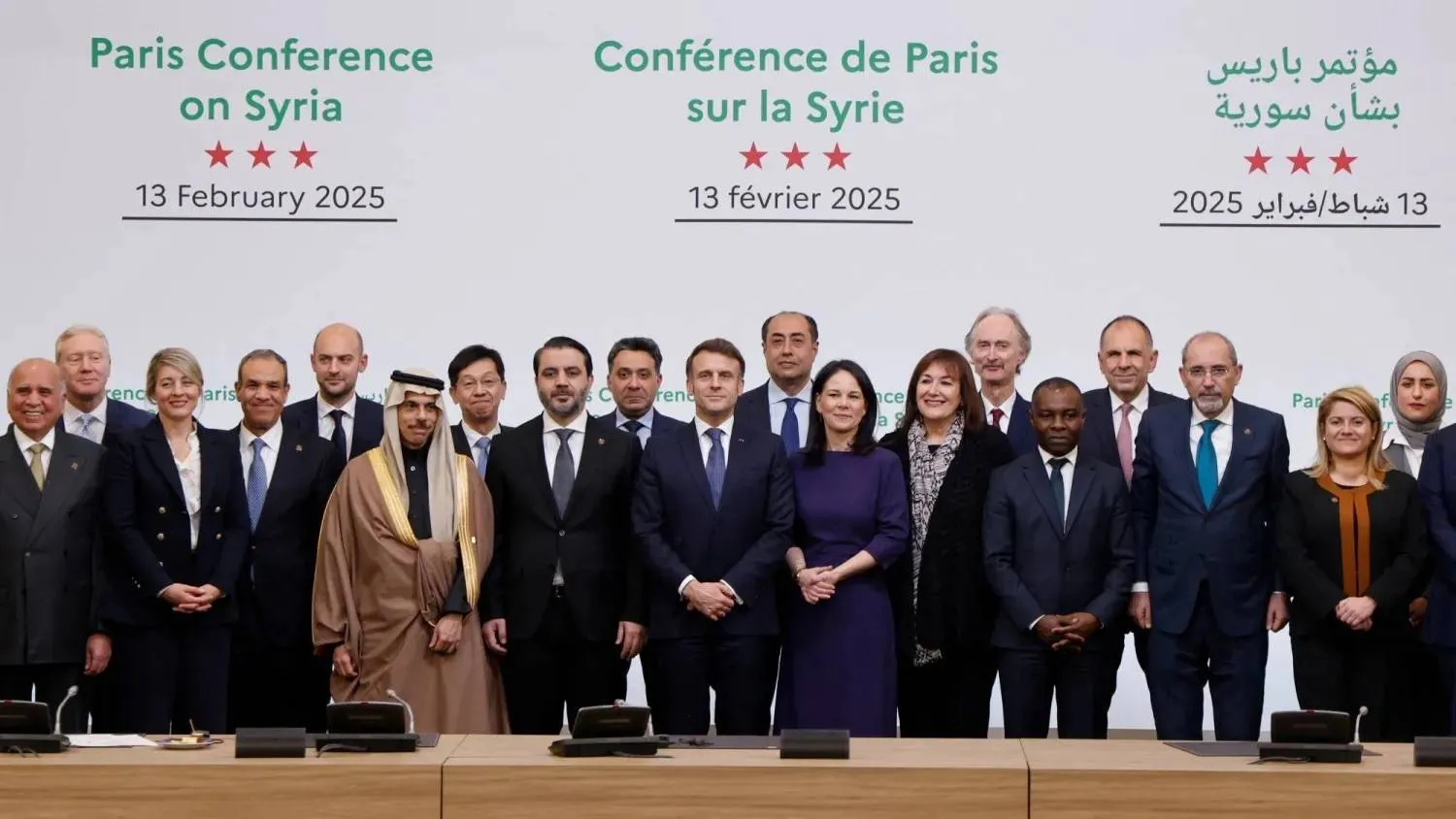
The second was its call for an economic conference, hosted in Paris on February 13, 2025, just weeks after Assad’s ouster, to support Syria. The conference produced a political, economic, and social roadmap, along with recommendations on good governance, minority protection, and the establishment of an inclusive political system.
The third step was inviting al-Sharaa to visit Paris. That visit took place on May 7, making Paris the first Western capital to receive the interim Syrian president. It also encouraged other European capitals to follow suit.
Earlier, French Foreign Minister Jean-Noël Barrot became the first Western foreign minister to visit Damascus, alongside his German counterpart Annalena Baerbock, on January 3 last year. On that occasion, the French Embassy in Damascus was “theoretically” reopened, although its staff continue to operate from Beirut while restoration work on the embassy building is completed.
These moves reflect President Emmanuel Macron‘s determination to take the lead in engaging Syria’s new authorities. As one former French ambassador to the region put it, Paris aims “to influence and engage the new leadership while preparing for the country’s reconstruction.”
France is also motivated by its longstanding ties with the Kurds, particularly the Syrian Democratic Forces (SDF), as well as its interest in Syrian-Lebanese relations. Paris believes it can help facilitate dialogue between Damascus and Beirut and encourage both sides to resolve their longstanding border issues.
The former ambassador added that France has sought to support “a peaceful and inclusive political transition.” At the same time, it has not hesitated to condemn the serious security incidents that have occurred across Syria, from the Mediterranean coast to the northeast and south, while calling for those responsible to be prosecuted. Nevertheless, French officials have generally maintained that “overall, developments are moving in the right direction.”
For weeks, diplomatic and media circles have been discussing Macron’s planned visit to Syria, which would mark the first visit by a Western head of state to Damascus since Assad’s fall. The last French president to visit Syria was Nicolas Sarkozy, who made an official trip to Damascus on September 3–4, 2009, as part of efforts to relaunch French-Syrian relations following Assad’s visit to Paris in July of that year.
Among the notable visits to Damascus was that of Ursula von der Leyen, President of the European Commission, in January this year, followed three months later by a visit from Ukrainian President Volodymyr Zelenskyy.
Given the political backing Paris has extended to Syria’s new leadership — reminiscent of the role former President Jacques Chirac sought to play with Bashar al-Assad shortly after he came to power — France is betting on its ability to strengthen its diplomatic, political, and economic position in Syria.
This week’s NATO summit, held Tuesday and Wednesday, provided Macron with an opportunity to make a brief visit to Syria. The trip is expected primarily to advance bilateral relations, deepen consultations on regional issues, continue cooperation in combating terrorism, and explore opportunities for collaboration across a wide range of sectors, as Paris seeks to maintain the close engagement with Syria’s new authorities that it has pursued since they assumed power.