


HRW: Ethiopia's Tigray Forcibly Recruiting Children for War

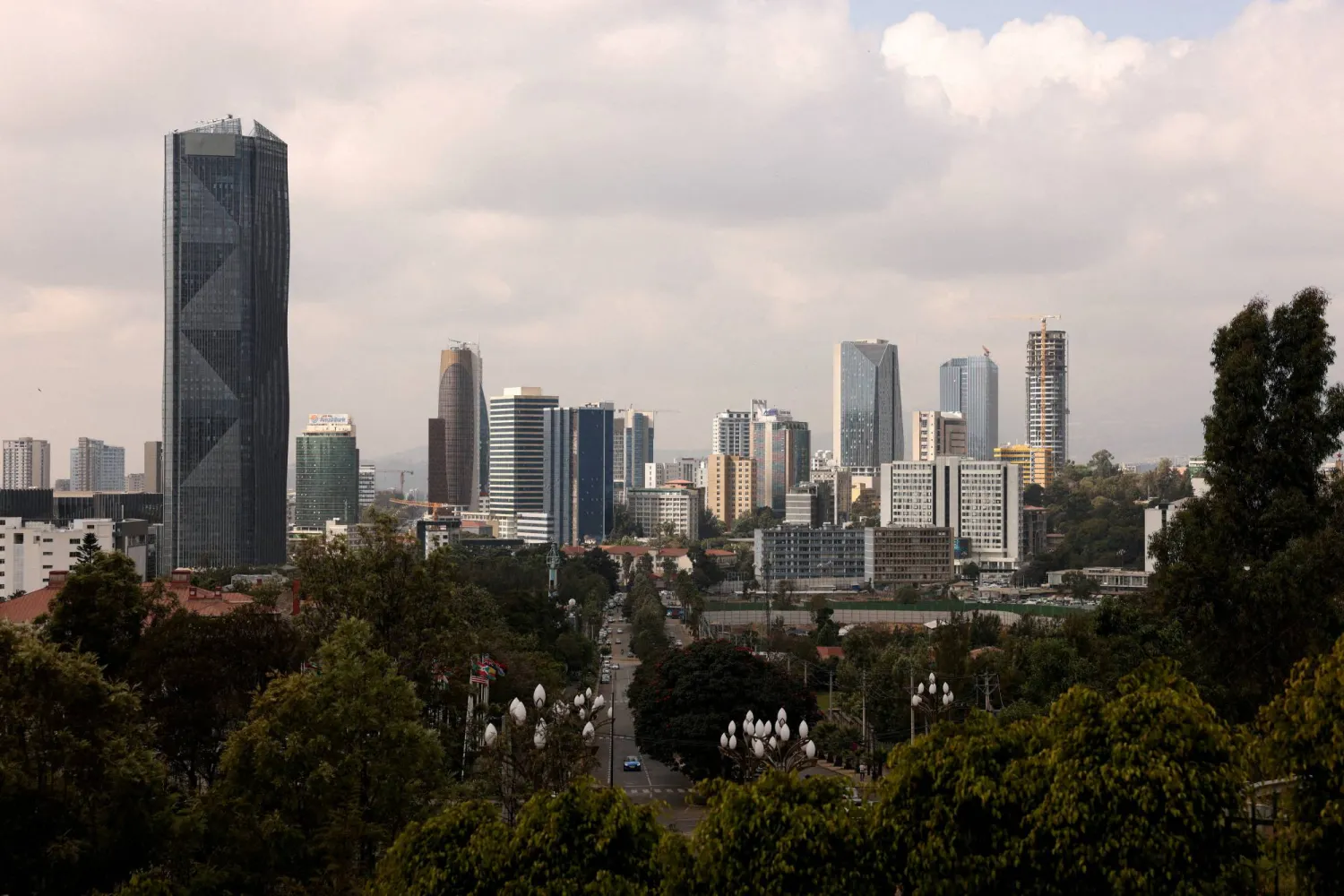
FILE PHOTO: A general view of the cityscape of Addis Ababa, Ethiopia, December 19, 2025. REUTERS/Tiksa Negeri/File Photo
TT

HRW: Ethiopia's Tigray Forcibly Recruiting Children for War

FILE PHOTO: A general view of the cityscape of Addis Ababa, Ethiopia, December 19, 2025. REUTERS/Tiksa Negeri/File Photo

Authorities in Ethiopia's Tigray region have been abducting and forcibly recruiting children as young as 15 as it prepares for renewed conflict with the federal government, Human Rights Watch (HRW) said Monday.

Officials have been grabbing men and boys in nighttime house-to-house searches, from offices and other workplaces such as gold-mining sites, the rights group said.

AFP has previously reported on the forced recruitment in the northern state, which fought a brutal civil war against the central government in 2020-2022 and again looks on the verge of conflict.

"The Tigrayan authorities' campaign to forcibly recruit men and boys into their forces is creating a climate of fear throughout the region," said Laetitia Bader, deputy Africa director at HRW.

Human Rights First-Ethiopia previously told AFP that "forced military recruitment is taking place across most areas of Tigray".

Local officials have been calling for veterans to re-enlist, and in June issued a proclamation compelling military service.

The Tigray People's Liberation Front, which dominates the region, has denied using forced recruitment.

But HRW says the campaign intensified in late April with "mass roundups in streets, markets, and gold-mining sites... and used neighborhood informants to identify potential recruits".

"Three armed men came to my house... wearing TDF (Tigray Defense Forces) uniforms," one former fighter who escaped recruitment in April told HRW.

"I was not the only one: about 17 others were taken with me to the town's police station. There were four or five youth around 16 or 17 with us."

A witness in Adi Gudem town told HRW that police and soldiers abducted workers and farmers one morning in late June.

"One cart owner tried to escape, but the militias began beating him so hard, he fell unconscious," the witness said.

Potential recruits told HRW they were sleeping outside, or fleeing Tigray entirely, to escape recruitment.

"We have to change locations every night," said one 30-year-old.

"But you can't feel secure while running and hiding... If they can't find you, they take your younger relatives."



Jolted by Ebola, Countries Try Again to Finish Pandemic Treaty

Posters for Ebola prevention are displayed at the hospital in Mongbwalu, Ituri, Democratic Republic of Congo, 26 June 2026. (EPA)
TT

Jolted by Ebola, Countries Try Again to Finish Pandemic Treaty

Posters for Ebola prevention are displayed at the hospital in Mongbwalu, Ituri, Democratic Republic of Congo, 26 June 2026. (EPA)

WHO member states kicked off one more attempt at finalizing the missing piece of the pandemic treaty on Monday, with the Ebola outbreak injecting a fresh sense of urgency.

Wealthy countries and developing nations are at loggerheads in talks at the World Health Organization's headquarters over how the pandemic agreement, adopted last year, will work in practice.

Though the treaty was agreed in May 2025, how its key mechanism would operate was left out to get the deal over the line.

The agreement's Pathogen Access and Benefit-Sharing (PABS) system deals with sharing access to pathogens with pandemic potential, then sharing benefits derived from them such as vaccines, tests and treatments.

It was meant to be finalized long before May 2026, but progress has been agonizingly slow.

Negotiations have often gone late into the night, producing miniscule advances and leaving diplomats drained -- especially those from small countries with only a handful of staff in Geneva covering every branch of the UN.

This two-week session until July 17 is the seventh such round of talks.

WHO chief Tedros Adhanom Ghebreyesus urged countries to grasp the nettle.

"You could have given up," saying "that we will never agree", Tedros told countries as the talks opened.

However, "you said we don't agree yet, but we believe we can."

"Please keep the destination in sight," urged the UN health agency's director-general.

"A future in which pathogen samples and information move quickly, without needless delay; and in which the benefits that come from them reach the people who need them most, fairly and in time."

- 'Danger can emerge from anywhere' -

The Ebola outbreak in the Democratic Republic of Congo, declared in mid-May, is a reminder that the next pandemic threat could spring up from anywhere, Tedros said.

There have been 1,528 confirmed cases, including 492 confirmed deaths, in DR Congo, and the outbreak has spilled over into neighboring Uganda.

"Ebola may not be the next pandemic. But it is a reminder, a painful one, that the threat never truly goes away," said Tedros.

The deadly hantavirus outbreak on a cruise ship, declared over on Thursday, also shows "danger can emerge from anywhere, at any time, in ways we don't always expect".

The outbreak on the MV Hondius, sailing the Atlantic Ocean, led to a global health alert affecting 33 countries and territories.

"Every month that this annex remains unfinished is a month the world stays less prepared than it could be. It is people -- real people, real families -- left less safe than they deserve to be," said Tedros.

The pandemic agreement was struck after more than three years of negotiations sparked by the shock of Covid-19.

The accord aims to prevent a repeat of the disjointed international response that surrounded the coronavirus crisis, by improving global coordination, surveillance and access to vaccines.

Only once the PABS annex is complete will countries be able to start ratifying the treaty.


Fleet of 10 Japan-related Ships Exit Hormuz, Data Shows

Children wade in the water with cargo ships at anchor in the background and a fisherman nearby, in the Strait of Hormuz off Bandar Abbas, Iran, Tuesday, June 30, 2026. (Amirhosein Khorgooi/ISNA via AP)
TT

Fleet of 10 Japan-related Ships Exit Hormuz, Data Shows

Children wade in the water with cargo ships at anchor in the background and a fisherman nearby, in the Strait of Hormuz off Bandar Abbas, Iran, Tuesday, June 30, 2026. (Amirhosein Khorgooi/ISNA via AP)

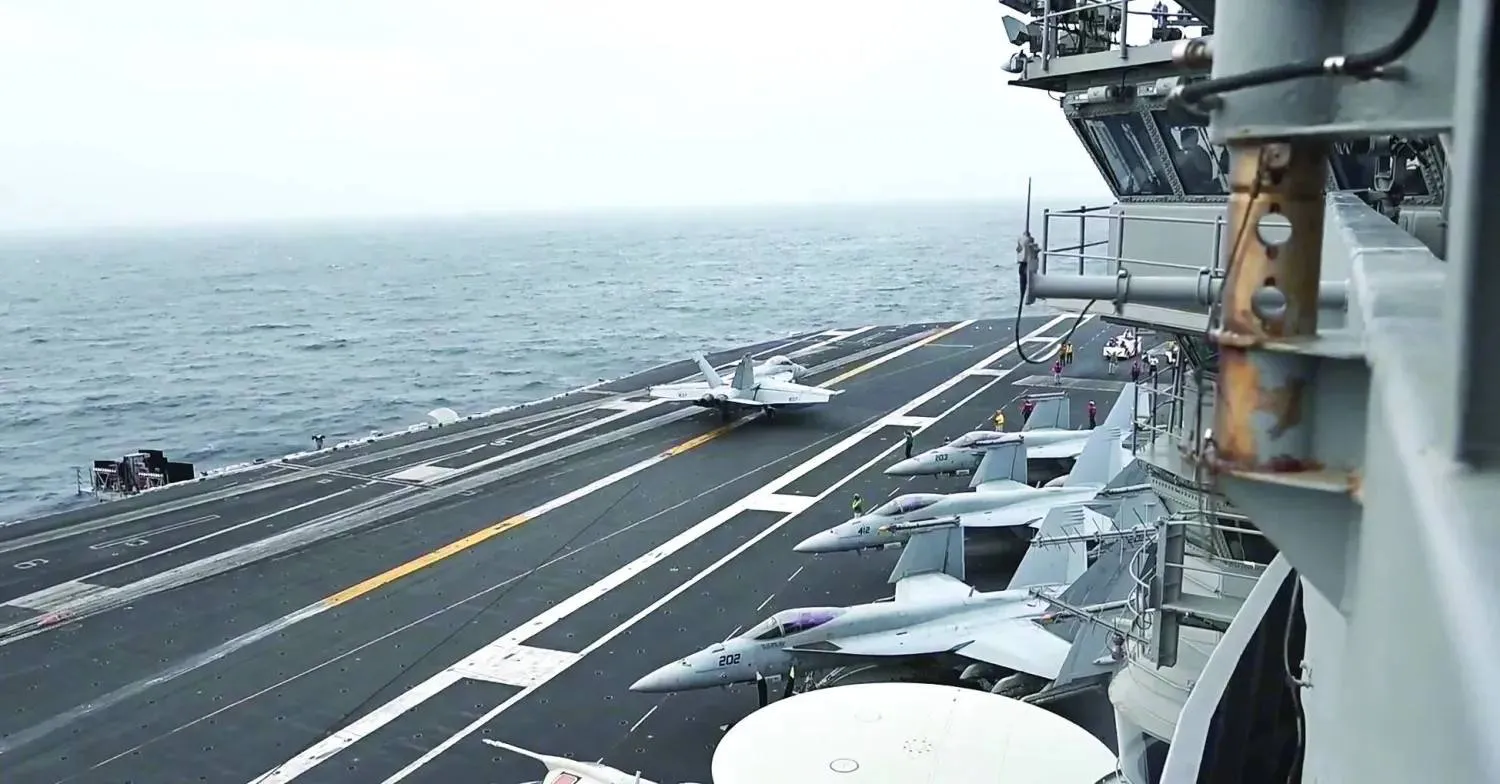
A fleet of 10 Japan-linked vessels was exiting the Strait of Hormuz on Monday, shipping data on LSEG showed, after the ships were stranded in the Gulf for months because ‌of the ‌Iran war, Reuters reported.

The Japan-linked ships ‌include ⁠six very large crude ⁠carriers loaded with 12 million barrels of Middle Eastern crude, two chemical tankers, a vehicle carrier and a container ship, the data showed.

Most ‌of the vessels are managed by ‌Japanese shipper Mitsui O.S.K. Lines (MOL) which had said it would prioritize the safety of its seafarers, cargo and vessels when traversing the ‌strait.

Mitsui OSK declined to comment.


As Venezuela Quake Deaths Pass 3,000, Attention Turns to Mourning, Burials

At La Esperanza cemetery in La Guaira, gravediggers buried more than 150 bodies still unidentified since the earthquakes. Miguel MEDINA / AFP
TT

As Venezuela Quake Deaths Pass 3,000, Attention Turns to Mourning, Burials

At La Esperanza cemetery in La Guaira, gravediggers buried more than 150 bodies still unidentified since the earthquakes. Miguel MEDINA / AFP

Deaths from Venezuela's devastating twin earthquakes rose to at least 3,342 on Sunday as officials began to bury dozens of bodies left unidentified 11 days after the disaster.

The June 24 double shocks, one of Latin America's worst quake disasters, toppled scores of buildings in the La Guaira coastal area north of Caracas and left thousands of people missing, AFP said.

As international rescue teams packed up and ended attempts to find survivors, attention shifted to mourning those lost and burying the remains that families have recovered from the ruins.

In a secluded area of La Esperanza cemetery in La Guaira, gravediggers buried more than 150 bodies still unidentified since the earthquakes, AFP journalists saw.

A line of simple white crosses with small bouquets at their foot marked a long row of individual graves. Each one had the same date of death: June 24, 2026.

Two excavators were working to dig more graves in the light brown earth.

"We are first and foremost overcome with grief," said local resident Eli Zavala, who was helping with the burials.

"We started here on July 25th, the very next day, to do all the work...so that all those people could have dignified burials."

According to updated official figures on Sunday, at least 3,342 people died and another 16,700 were injured.

With nearly 200 buildings totally collapsed, most of them in La Guaira, more than 17,000 people have been left homeless and are sleeping in shelters and temporary camps.

The government has not given any figure for those still missing, but the UN estimates that as many as 50,000 people may still be unaccounted for after the shocks.

Many families are still trying to search for relatives in the rubble.

"I've lost track of the days. You lose your mind, but I'm not leaving here because I know he's there," said Zuly, looking for her son in Catia la Mar district.

She now sleeps in a plaza near where he worked.

"I found his motorcycle; I found his helmet. He's there, God willing, alive. If not, at least I can find him, see him...I'm not leaving here without my son."

'No social unrest'

Even before the quakes, Venezuela had been struggling with economic crisis and political upheaval that left infrastructure and health services depleted.

The UN estimates the quakes caused $6.7 billion in damage - equivalent to six percent of Venezuela's GDP.

The damaged international airport serving Caracas is still closed to commercial flights.

Soon after the quakes, many Venezuelans complained they were left alone to dig for families in the ruins and criticized the government's response until international teams arrived.

Interim President Delcy Rodriguez has defended the government reaction, saying thousands of public officials and rescue teams were dispatched.

On Sunday, she dismissed concerns about upheaval over the quakes.

"There will be no social unrest here, what we have here is deep social solidarity," Rodriguez said during a military ceremony marking the country's independence day.

Across Caracas and La Guaira, many were focused instead on Sunday services in churches to remember those lost and still missing.

On the campus of Venezuela Central University in Caracas, dozens of people gathered around a large Venezuela flag surrounded by candles for a vigil.

"I've met with couples who have lost both their children, or two of their three. It's very painful," Father Rafael Troconis told AFP in La Guaira.

"You try to offer support as much as you can. You want to be close to those who are suffering. You notice a lot of sadness and despair."