

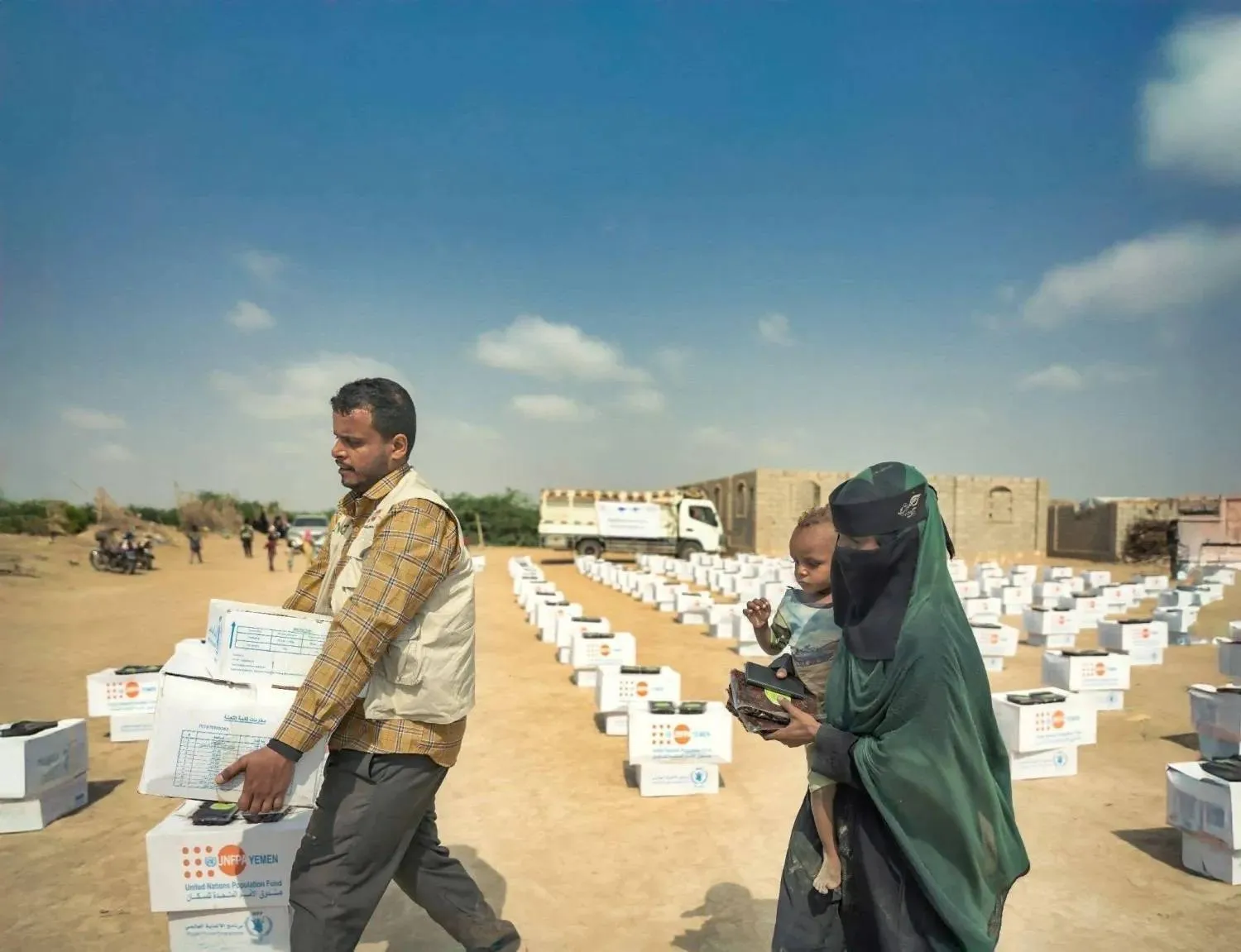

Hunger Worsens in Yemen’s Houthi-Controlled Areas, Ports Lose $1.4 Billion

According to the latest WFP-FAO Hunger Hotspots report, rates of severe food deprivation increased for the second consecutive month (UN)
TT

Hunger Worsens in Yemen’s Houthi-Controlled Areas, Ports Lose $1.4 Billion

According to the latest WFP-FAO Hunger Hotspots report, rates of severe food deprivation increased for the second consecutive month (UN)

A recent report by the World Food Programme and the Food and Agriculture Organization has said that household food consumption in Yemen continued to deteriorate for the second consecutive month, with 62 percent struggling to meet their minimum food needs in May 2026, including 36 percent facing severe food deprivation.

According to the latest WFP-FAO Hunger Hotspots report, rates of severe food deprivation increased for the second consecutive month, rising from 31 percent in April to 36 percent in May 2026, reflecting a gradually worsening trajectory.

Approximately 10 percent of households in Houthi-controlled (SBA) areas and eight percent in government (IRG) areas reported having at least one member going entire day and night without eating due to lack of food.

In Houthi areas, June data showed up to 13 percent increase in the prices of key food items in Sanaa City since February 2026, mainly reflecting global food price trends and higher shipping costs. This comes at a time when 70 percent of the population in SBA areas report reduced monthly income, highlighting a severe erosion of purchasing power.

The report said that in SBA areas, the economy continues to face severe challenges, including depleting foreign currency reserves, liquidity constraints, sanctions, the relocation of banks from Sanaa to Aden, and a slowdown in economic activity.

The degradation of Red Sea ports has further compounded revenue shortages, resulting in an estimated $ 1.4 billion in losses. Meanwhile, the Houthis have intensified taxation and seized assets, further undermining livelihoods.

Against a backdrop of economic hardship and reduced Red Sea port capacity, the closure of the Strait of Hormuz has amplified Yemen’s fuel supply challenges.

The latest Integrated Food Security Phase Classification (IPC) analysis for IRG-controlled areas projects further deterioration of food security situation toward the end of 2026, with an estimated 5.4 million people expected to face severe levels of acute food insecurity. Key drivers include the combined effects of the lean season, floods, and a curtailed humanitarian response.

The deterioration in food consumption gaps in Yemen has accelerated after humanitarian assistance was curtailed during 2024-2026, compared to 2021-2023 when large-scale food assistance was provided.

SBA areas exhibited a relatively sharper deterioration of inadequate food consumption following the loss of humanitarian operational space. The deterioration rate was 36 percent in SBA areas versus 27 percent in IRG areas, with severe food deprivation nearly doubling in SBA areas during the same periods.

The report added that while the market exchange rate in IRG areas has remained stable since August 2025, the customs dollar rate was notable increased from YER 750 to $1,550 in May 2026, raising concerns over the potential impact on imported commodity prices and household living costs.

Between January and May 2026, fuel imports via Houthi controlled ports dropped by 73 percent compared to the same period in 2025, and by 60 percent via government-controlled ports. Consequently, SBA areas are reporting increasing instances of low-quality fuel at fuel stations, adversely affecting vehicles, water pumps, power plants, and livelihoods.

Due to severe funding shortages, WFP started the implementation of its new TEFA program in IRG-controlled areas in mid-February 2026, reducing the caseload from 3.4 million in December 2025 to a prioritized 1.7 million people. As of mid-June 2026, WFP had completed two TEFA cycles, with the third cycle underway.

The post-distribution monitoring data in April–May 2026 demonstrate a significant improvement in the prevalence of severe food deprivation among TEFA beneficiaries (from 46 percent in February to an average of 25 percent in April-May 2026). Inadequate food consumption showed a similar trend, improving by 23 percentage points during the same period (from 75 to 52 percent).

Dietary diversity and quality have also improved, alongside better access to nutritious foods. The proportion of TEFA beneficiaries reporting low dietary diversity (consuming four or fewer food groups in the past week) decreased from 72 percent to 56 percent.

The consumption of protein-reach food items has improved by 18 percentage points, primarily driven by the inclusion of pulses in the TEFA ration.

The report added that to consolidate these gains and maximize impact, TEFA should be complemented by large-scale recovery interventions, including nutrition, livelihood, water, sanitation and hygiene (WASH), and multi-purpose cash programs.


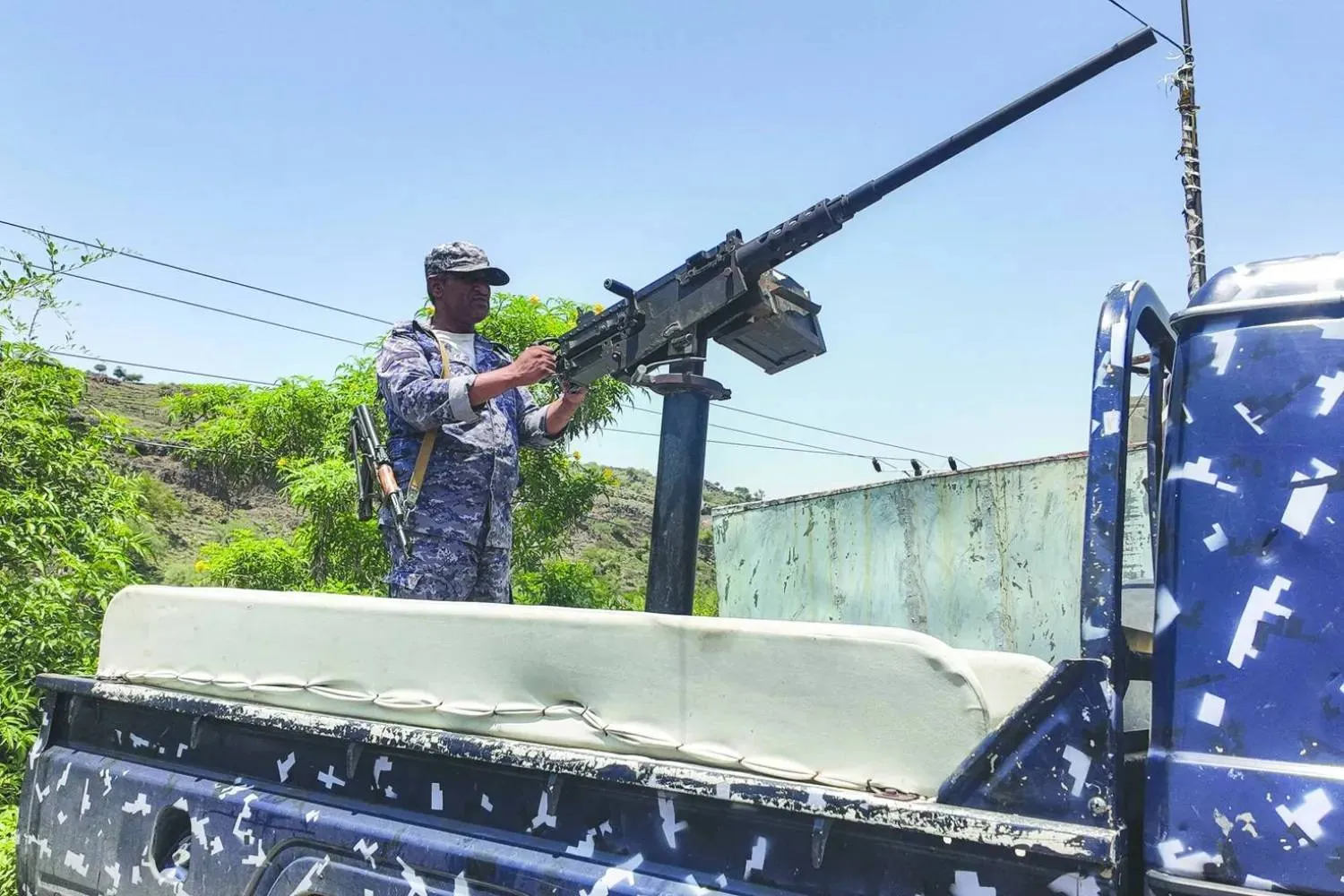
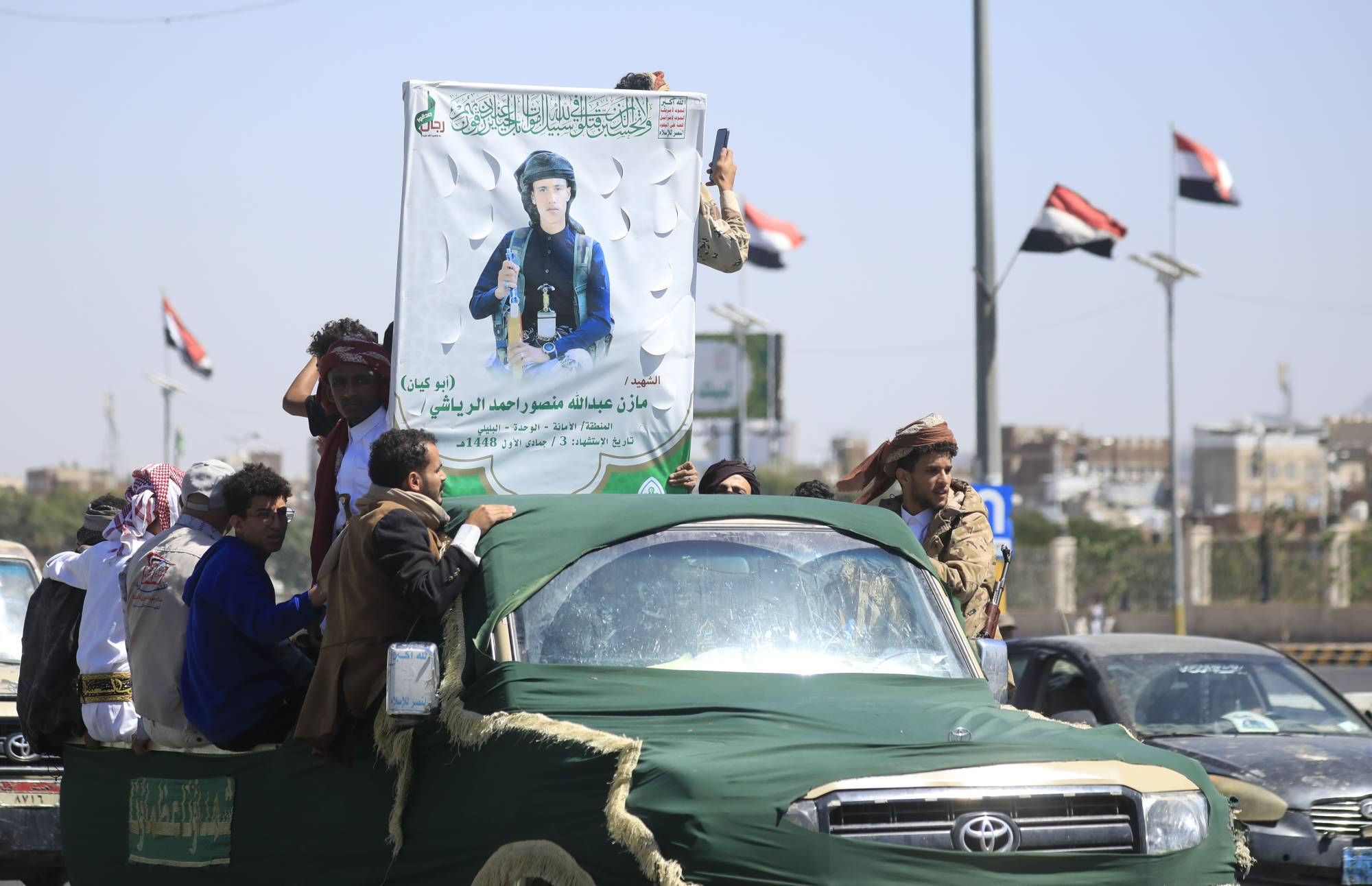
Amnesty Urges Investigating Israeli Attacks on Lebanon as ‘War Crimes’

This picture taken from a position in the Upper Galilee in northern Israel shows Israeli military vehicles driving past houses destroyed in Israeli strikes in the southern Lebanese village near the Israel-Lebanon border, on July 1, 2026. (AFP)
TT

Amnesty Urges Investigating Israeli Attacks on Lebanon as ‘War Crimes’

This picture taken from a position in the Upper Galilee in northern Israel shows Israeli military vehicles driving past houses destroyed in Israeli strikes in the southern Lebanese village near the Israel-Lebanon border, on July 1, 2026. (AFP)

Amnesty International on Thursday accused Israel of wiping out families in its strikes on Lebanon during its war with Hezbollah, calling for these attacks to be investigated as war crimes.

Hezbollah drew Lebanon into the Middle East war on March 2 by launching rockets at Israel in support of its backer Iran.

Israel responded with major airstrikes and a ground invasion, killing more than 4,300 people according to Lebanese authorities, including more than 250 children.

Amnesty analyzed three strikes on civilian homes between March 6 and 13, in which 24 civilians were killed, 12 of them children.

The London-based rights group accused Israel of "wiping out families" in those strikes and called for them to be treated as "war crimes".

The group said it reached out to Israeli authorities, who said that some of the attacks "were carried out against Hezbollah military objectives", while others were "referred for examination".

The authorities told Amnesty they were "committed to mitigating harm to civilians during operational activity".

"Despite follow up, the Israeli military did not provide specific information regarding the three attacks... including what the targets may have been," Amnesty added.

Its findings in the investigation were based on interviews with 15 people, including survivors, relatives, paramedics, journalists who visited attack sites and local officials.

"Based on the evidence gathered, in each of these air strikes, Amnesty International has reasonable basis to conclude that Israeli forces violated international humanitarian law, including by failing to distinguish between civilians and military objectives, by carrying out attacks directed against civilians or civilian objects, or by failing to take all feasible precautions to minimize harm to civilians," the report read.

Kristine Beckerle, Amnesty's deputy regional director for the Middle East and North Africa, said that "within the space of just a week -- the Israeli military obliterated entire families, including a dozen children, in Lebanon, demonstrating a callous disregard for civilian lives".

"States must impose an immediate comprehensive arms embargo on Israel and use universal and extraterritorial jurisdiction to investigate and prosecute those responsible," she added.

Israel's Defense Minister Israel Katz said, in a statement on Thursday, that the military's operations in Lebanon were a response to attacks by Hezbollah.

"The terrorist organization Hezbollah has attacked Israel twice on its own initiative," Katz said, without specifying whether he was responding to Amnesty's report.

"Israel responded with force and, over the past two and half years, has crushed most of Hezbollah's capabilities and its leadership," adding that Israeli forces would remain in their self-declared "security zone" inside occupied Lebanese territory "as long as necessary" to protect Israel's northern communities.

Last month, Lebanon and Israel concluded a US-backed framework agreement aiming to pave the way for a permanent end to hostilities.

It was preceded by a memorandum of understanding between Iran and the United States to end the broader Middle East conflict, which included a ceasefire in Lebanon.

Despite this, Israel still carries out intermittent strikes on southern Lebanon, some of them deadly.


How a Palestinian Town Is Defending Itself from Israeli Settler Attacks

 Jawaher Foqahaa walks past the tall metal fencing installed by the Israeli military that closed off four of the five entrances to their town and runs directly past the family home, in Sinjil, near Ramallah, in the Israeli-occupied West Bank, June 26, 2026. (Reuters)
Jawaher Foqahaa walks past the tall metal fencing installed by the Israeli military that closed off four of the five entrances to their town and runs directly past the family home, in Sinjil, near Ramallah, in the Israeli-occupied West Bank, June 26, 2026. (Reuters)
TT

How a Palestinian Town Is Defending Itself from Israeli Settler Attacks

 Jawaher Foqahaa walks past the tall metal fencing installed by the Israeli military that closed off four of the five entrances to their town and runs directly past the family home, in Sinjil, near Ramallah, in the Israeli-occupied West Bank, June 26, 2026. (Reuters)
Jawaher Foqahaa walks past the tall metal fencing installed by the Israeli military that closed off four of the five entrances to their town and runs directly past the family home, in Sinjil, near Ramallah, in the Israeli-occupied West Bank, June 26, 2026. (Reuters)

On a cool night in June, some 15 Palestinians from the town of Sinjil in the occupied West Bank gathered on a hilltop to watch the shadowed valleys below for any sign of movement that might signal an impending Israeli settler attack.

They are part of a grassroots volunteer group — similar to others in the West Bank — that has stepped in to defend the town from rising settler violence that Palestinians say the Israeli military and their own government have proved unable or unwilling to prevent.

"We have been left on our own. You are facing settlers supported by their government," said Fadi Alwan, one of the volunteers.

"We have nobody. So we are forced to stay here and protect this town."

Prime Minister Benjamin Netanyahu's far-right government has approved hundreds of new settlements and settler outposts across the West Bank, the smaller outposts often serving as staging grounds for violence that has displaced thousands of Palestinians.

The Israeli government has said that through the strategic placement of settlements it plans to thwart a Palestinian state with the West Bank at its heart — a Palestinian objective key to the two-state solution long backed by world powers.

Most ‌of the world ‌considers all Israel's settlement activity in the West Bank, where the Palestinian Authority exercises limited self-rule and the ‌Israeli ⁠military operates freely, ⁠as illegal under international law. Israel disputes this view.

Palestinians say that when they call the Israeli police or the military they are either late to respond, or come to the aid of the settlers perpetrating the violence. The military denies this.

"The army protects them and doesn't stop them. We call the army. We call the police. It's useless," said Alwan.

Asked for comment on Sinjil and what residents describe as an escalating campaign of attacks, Israel's military said troops deploy to disperse confrontation but that responsibility for Israeli civilian actions in the West Bank lies with the Israeli police.

Israeli police did not respond to a Reuters request for comment.

A man uses a flashlight as other Palestinian volunteers sit around a bonfire as they guard their town against Israeli settler attacks, in Sinjil, near Ramallah, in the Israeli-occupied West Bank, June 26, 2026. (Reuters)

SEARCHLIGHTS, WHATSAPP GROUPS TO FEND OFF ATTACKS

On June 26, as the men gathered around a fire on a Sinjil hilltop, one of them used a searchlight to scan ⁠the hills for settlers. Others drove on patrols around the town, all of them tuned into community WhatsApp groups ‌where residents can alert one another to potential attacks.

Towns elsewhere in the West Bank also ‌have groups, though the patrols around Sinjil appear unusually organized.

"If they get close to the houses, we go confront them, we send (messages out) on the WhatsApp groups," Alwan ‌said.

Just a few days earlier, Alwan said he was beaten by a settler wielding a spiked club in a daytime attack as he attempted ‌to harvest wheat. He lifted his shirt to show his wound, still fresh.

He said settlers last year shot live bullets at a tent erected by the volunteers, only missing the young men inside by luck. He said the next day troops came and dismantled the tent.

Israel's military did not immediately provide comment on allegations that they dismantled the watch tent.

Alwan and other residents said they believed most of the settlers perpetrating violence against their town came from the six settler outposts perched on ‌the hills around them.

The Yesha Council, an organization that represents settlers, did not immediately respond to a request for comment on events in Sinjil and what local regional councils are doing to curb violence.

Palestinians cross a blocked gate at the main entrance of the West Bank village of Sinjil after the Israeli army imposed a closure of all entrances to the village, 01 July 2026. (EPA)

GRASSROOTS SOLUTION

Sinjil sits ⁠along the main road between ⁠the Palestinian urban centers of Ramallah and Nablus, and the hills north of the village are dotted with settlements and outposts.

Deepening the town's isolation, local officials say Israel's military closed off four of its five entrances, and has built a metal wall around the town cutting it off from 2,000 acres of private land.

Moataz Tawafsha, the head of Sinjil's municipality, said that after the war in Gaza began in October 2023, settler attacks escalated and the town needed to find a way to protect itself.

"We really feel as if we are living in a collective prison," Tawafsha said. "As a result, the municipality has taken primary responsibility for providing protection."

Since October 2023, settler attacks have killed two people and displaced more than 100 from the Bedouin Palestinian community living on town land, according to Tawafsha.

The violence has displaced a further 20 families from their homes in the town's core during the same period, he said.

CALL FOR HELP

Some Sinjil residents credit community protection for their survival.

Abed Foqahaa installed metal bars over the windows of his house and built a tall metal fence around his garden after settlers threw a Molotov cocktail through his window while he and his family were inside around two years ago.

"The fire broke out and we couldn't control it. We tried to save the house, but all of us suffered from the smoke," said Foqahaa.

Foqahaa used the town WhatsApp group to call for help. Young men from the town, initially stopped by the Israeli military, arrived and helped carry out Foqahaa's wheelchair-using father, he said.

"God bless them, they really helped us," Foqahaa said.


Drill Boosts Military Ties between Egypt and Türkiye

 Egyptian and Turkish forces participating in the "Golden Eagle" exercise on Wednesday. (Egyptian Military Spokesperson on Facebook)
Egyptian and Turkish forces participating in the "Golden Eagle" exercise on Wednesday. (Egyptian Military Spokesperson on Facebook)
TT

Drill Boosts Military Ties between Egypt and Türkiye

 Egyptian and Turkish forces participating in the "Golden Eagle" exercise on Wednesday. (Egyptian Military Spokesperson on Facebook)
Egyptian and Turkish forces participating in the "Golden Eagle" exercise on Wednesday. (Egyptian Military Spokesperson on Facebook)

The joint Egyptian-Turkish military drill "Golden Eagle" kicked off on Wednesday with the participation of the Egyptian Airborne Forces, Egyptian Thunderbolt Forces and the Turkish Special Forces.

The drill is part of the growing military cooperation between Cairo and Ankara and is in line with the military framework agreement signed during Turkish President Recep Tayyib Erdogan’s visit to Egypt in February.

The first phase of the drill included a series of theoretical lectures on various subjects aimed at unifying operational concepts and boosting integration and interoperability among the participating forces. An exhibition of the weapons and equipment used during the exercise was also organized.

Military and strategic expert and president of the Arab Foundation for Development and Strategic Studies Samir Ragheb said the drill reflects the extent of the development of military relations between Egypt and Türkiye, which, in turn, is a reflection of their political rapprochement.

He told Asharq Al-Awsat that the two countries are increasing the number of drills between them.

Egypt also recently joined Türkiye’s program to develop the KAAN stealth fighter jet, he noted.

Last month, Egypt’s Chief of Staff Ahmed Khalifa met with his Turkish counterpart Selcuk Bayraktaroglu in Cairo, underlining the importance of coordinating efforts and supporting military cooperation with Türkiye to achieve common interests.

Egypt and Türkiye signed a military cooperation agreement during Erdogan's visit to Cairo in February. (Egyptian Presidency)

Adel Al-Omda, military adviser at the Military Academy for Postgraduate and Strategic Studies, noted that Egypt is facing “grave international challenges from all directions, which demands ongoing tactical and information cooperation.”

He told Asharq Al-Awsat that cooperation means that these challenges can be confronted, offering a reassuring message to the people.

Military cooperation with a major regional power such as Türkiye will yield positive results and counter some challenges, he remarked.

So long as there is military cooperation, political and economic agreement can be ensured, he added.

Ragheb noted that the military drill sends a positive message that relations are strong and stable.

It also sends a message that the countries are prepared to stop wars as neither of them want to be embroiled in the regional conflict. They have both played mediator roles in Gaza, Iran, Yemen and Syria.
