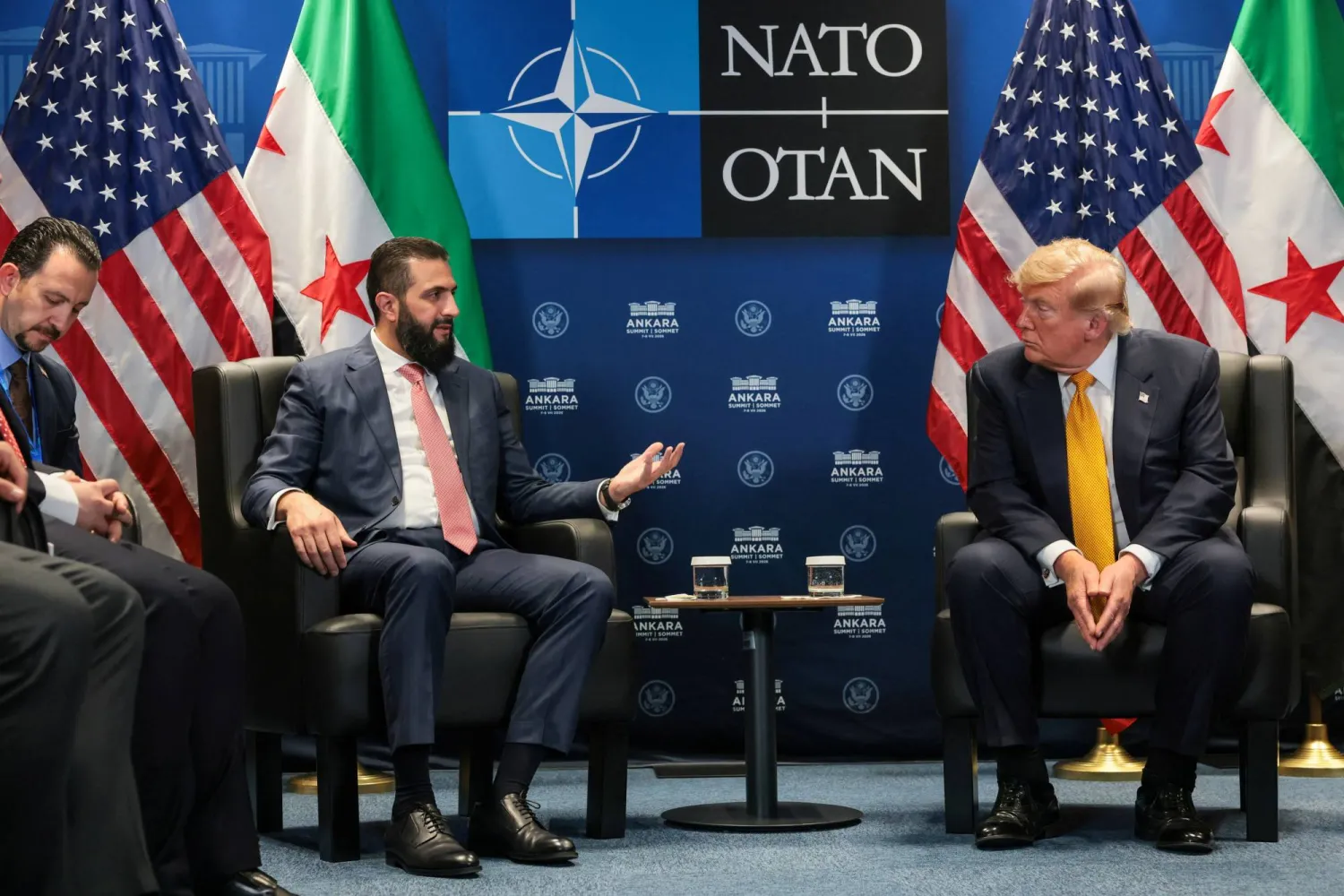

The US administration’s decision to begin the process of removing Syria from its list of State Sponsors of Terrorism (SST) - where it has remained since 1979 - marks the country’s most significant political and economic shift in decades.
The designation was more than a political label; it served as the legal cornerstone of the extensive US sanctions architecture imposed on Syria. Its removal could reopen the door to trade, investment, and large-scale reconstruction.
The announcement followed what Washington described as “positive changes” by the Syrian government and formal assurances from Syrian President Ahmed al-Sharaa that Syria would not support acts of international terrorism in the future.
Secretary of State Marco Rubio subsequently notified Congress of President Donald Trump’s intention to rescind the designation after the required 45-day congressional notification period, describing the move as “historic” and saying it offers Syria a genuine opportunity to rebuild and open a new chapter for its people.
Syrian officials welcomed the decision. Finance Minister Mohammad Yosr Barnieh called it “a historic moment” heralding a new era of prosperity, investment, and economic recovery. He said the move would open a new chapter for the Syrian economy, accelerate recovery, encourage investment, and facilitate Syria’s reintegration into the global economy.
Central Bank Governor Safwat Raslan likewise described the decision as “a positive turning point” that would strengthen confidence, attract investment, and help reintegrate Syria into the global financial system. He reaffirmed the central bank’s commitment to reforms, monetary stability, and long-term economic recovery.
Reconnecting to the Global Financial System
In practical terms, the decision paves the way for Syrian banks to gradually reconnect with the global financial system, correspondent banking networks, and the SWIFT international payments system. The terrorism designation had effectively prevented foreign correspondent banks from dealing with Syrian financial institutions for fear of US legal penalties.
Reintegration could improve access to trade finance and sharply reduce the cost of remittances from Syrians abroad. For years, expatriates have relied on costly informal channels to circumvent sanctions. Easier remittance flows would provide a direct boost to household incomes and financial stability.
Removing Barriers to Investment
For years, US secondary sanctions linked to the terrorism designation discouraged foreign companies from participating in reconstruction projects, fearing hefty fines or exclusion from the US market.
Highlighting the policy shift, the US administration quoted Trump as telling Al-Sharaa: “I promised to remove all the barriers preventing you from rebuilding your country, and very soon you will finally be able to do so.” Trump also said US companies are already interested in investing in Syria.
Removing the designation significantly reduces reputational risk and gives multinational companies greater legal and procedural certainty to invest in infrastructure, real estate, telecommunications, and other sectors.
Reviving Trade and the Energy Sector
Foreign trade is also expected to benefit. Previous restrictions limited imports of advanced industrial equipment and technology classified as “dual-use” goods with potential civilian and military applications. Easing those restrictions would allow Syrian manufacturers to import production lines, agricultural equipment, and medical supplies with far fewer regulatory hurdles.
The energy sector, which has suffered years of severe deterioration, could also benefit. International companies would be able to provide spare parts, technical expertise, and technology needed to rehabilitate damaged oil and gas fields and repair aging power plants, helping ease chronic electricity shortages and support industrial production.
Restoring Access to International Financing
Syria’s designation as a State Sponsor of Terrorism also triggered an effective US veto on loans, grants, technical assistance, and other support from international financial institutions, particularly the World Bank and the International Monetary Fund.
With the designation removed, Damascus could theoretically begin negotiations with these institutions to secure development financing, support economic restructuring, and implement monetary and fiscal reforms.
From Blanket Prohibition to Risk-Based Assessment
Legal experts say the decision fundamentally changes how international companies and financial institutions assess Syria.
Previously, US law effectively imposed a blanket prohibition on doing business with Syria, leaving banks and corporations with virtually no room for discretion. Now, the automatic legal barrier is removed. Banks and companies can independently assess the remaining legal and commercial risks and proceed with transactions that comply with other applicable sanctions. This represents a fundamental shift, giving investors and financial institutions flexibility that has not existed since Syria was added to the terrorism list in 1979.
Why the Economic Crisis Will Not End Overnight
Despite the significance of Rubio’s announcement and the June 30, 2025 executive order easing certain restrictions, the economic impact is unlikely to be immediate.
The biggest constraint is that removing Syria from the terrorism list does not dismantle the broader sanctions regime. Numerous US laws and executive orders targeting key economic sectors, entities, and individuals remain in force.
In addition, Syria is likely to face prolonged caution from international banks — a phenomenon known as “over-compliance.” Many financial institutions are expected to spend months, if not years, conducting extensive legal reviews before reopening accounts or facilitating trade with Syria, seeking to avoid penalties under the sanctions that remain in place.
Ultimately, Syria’s economic recovery will depend not only on the easing of US restrictions but also on its ability to implement deep structural and institutional reforms, improve the business environment, and maintain monetary stability.
Removing Syria from the State Sponsors of Terrorism list is a major step toward reducing reputational risk and reopening international markets. But a full recovery remains a long-term process that will require the gradual dismantling of the remaining sanctions, which continue to pose the greatest obstacle to Syria’s reintegration into the global economy.