


Can ISIS Breach Syrian Security at Will?

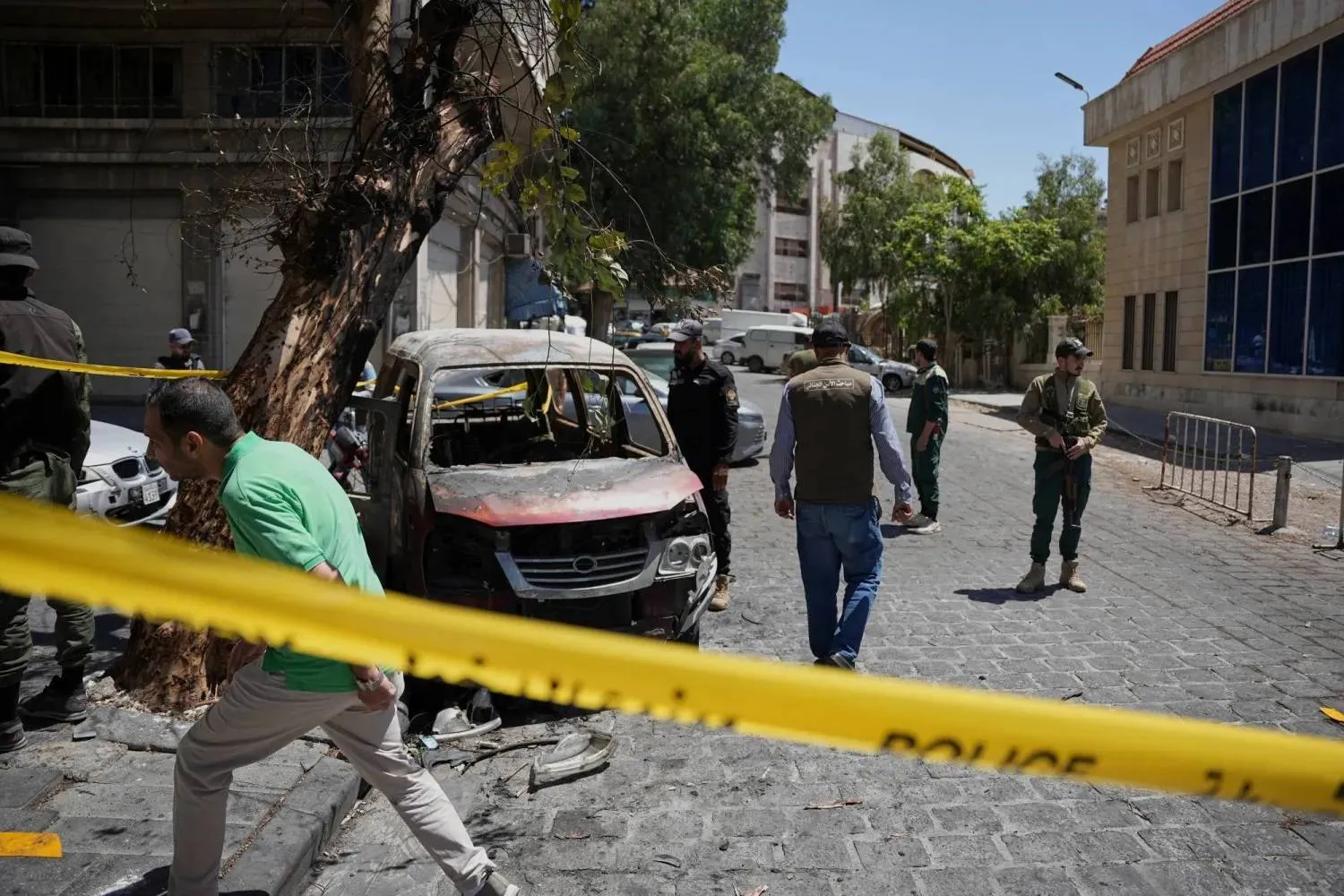
Syrian security personnel inspect a burned-out car near the Four Seasons Hotel in Damascus, where French President Emmanuel Macron stayed. (AP)
TT

Can ISIS Breach Syrian Security at Will?

Syrian security personnel inspect a burned-out car near the Four Seasons Hotel in Damascus, where French President Emmanuel Macron stayed. (AP)

Two days after two bombs exploded in Damascus during French President Emmanuel Macron’s visit, Syrian security forces said on Thursday they had arrested the cell behind the attacks. Initial investigations found that it was affiliated with ISIS.

The blasts were especially sensitive because they struck near the luxury Four Seasons Hotel in central Damascus, where Macron was staying.

His visit was the first by the leader of a major Western power since President Ahmed al-Sharaa took office in late 2024.

The attacks have fueled unease among Damascus residents and raised a pressing question: Does the cell’s link to ISIS mean the group can breach security at will?

Ismat al-Absi, a strategic security and military expert close to the Defense Ministry, rejected that conclusion.

“The two explosions cannot in any way be seen as a sign of weakness or incapacity,” he said. “Rather, they confirm the nature of the asymmetric war Syrian security and military authorities are fighting against ISIS, which relies on suicide attacks and indiscriminate violence to spread fear.”

Speaking to Asharq Al-Awsat, Absi said the incident was “not a security breach in the technical sense, but a failed terrorist attempt that was uncovered and dealt with in record time.”

The bombs exploded several hundred meters from the hotel, minutes after Macron’s convoy left for the presidential palace.

He was heading to an expanded meeting with Sharaa, attended by delegations from both countries.

The twin blasts were caused by two improvised explosive devices. They killed one person and wounded 36 others, according to the Health Ministry.

The French presidency said Macron was safe and would continue his visit.

Macron later wrote on X that the trip “will continue.”

Absi said the visit had been protected by tight and complex security measures.

“The fact that the devices were detonated away from the official guest’s route, followed by the immediate arrest of those responsible, proves that the red line of national security was not breached,” he said.

“It also shows that the state can separate the enemy’s noise from the performance of its sovereign duties.”

The attacks came days after an explosion inside a cafe near the Palace of Justice in Damascus killed 10 people last Friday.

Absi drew a distinction between infiltration and the establishment of a foothold.

“The organization has no popular base and no real civilian presence,” he said. “It depends on scattered sleeper cells trying to exploit the temporary security vacuum left by years of war.”

The appearance of such cells around Damascus reflects desperate attempts by ISIS to restore its presence before the state eliminates it completely, he said.

It does not, he added, point to broad infiltration.

Absi said security agencies were now working through pre-emption and close surveillance.

That approach, he said, had allowed them to turn each case of infiltration into an arrest-and-prosecution operation, rather than letting it grow into a lasting threat.

Asked whether ISIS had a large number of cells in and around Damascus, Absi said numbers alone did not define the danger.

“One well-organized cell can be more harmful than dozens of scattered operatives,” he said.

“We are dealing with the remnants of an organization that was defeated militarily but has not yet been fully eliminated through judicial and security measures.”

Some remaining members, he said, were still looking for opportunities to take revenge or destabilize the new political order.

But their capabilities were now far more limited than before.

“Our task is to cut off the sources of this activity through community cooperation and intelligent monitoring,” he said. “We are seeing the results of this approach every day, as this operation showed.”

The bombings came as the Interior Ministry stepped up counterterrorism operations with the General Intelligence Service and the Counterterrorism Directorate.

On June 9, the ministry said it had dismantled seven ISIS cells and arrested 235 members of the group over the previous three months.

Absi said the latest attack would accelerate structural security reforms already underway.

“We will see stronger cooperation between the Internal Security Forces and the General Intelligence Service to build a unified and rapidly responsive information network,” he said.

Preventive operations would also be intensified in rural areas and towns surrounding the capital to stop cells from re-forming.

“The goal is not only a rapid response,” Absi said. “It is to build an integrated security system that makes the environment unsuitable for any terrorist activity.”

That, he added, would send a clear message to international partners that Syria was safe and stable for investment and political engagement.

On Thursday, the Interior Ministry also said that, working with the General Intelligence Service, it had dismantled several ISIS cells in southern Syria.

It announced the arrest of senior ISIS figure Firas al-Dagher and several prominent figures responsible for assassinations and financing.

Political researcher Diaa Qaddour, who specializes in security affairs, said ISIS was now waging a low-intensity escalation campaign against the Syrian state.

The group, he said, remained a persistent threat, continuing to exploit security gaps and vulnerable areas.

“The two recent explosions were painful and shocking,” Qaddour told Asharq Al-Awsat. “But the large security operations carried out by the security forces have also revealed their growing ability to fight the organization.”

He said the simultaneous arrest of so many cells showed the Interior Ministry had built a precise intelligence database and developed strong logistical capabilities to track its targets.

Qaddour said the main aim of the bombings was not necessarily to cause casualties.

Rather, he said, they were intended to disrupt Macron’s visit, portray the Syrian state as weak and undermine the current political phase.

He said the cell was linked to ISIS, but added that major intelligence agencies that did not want Syria to become calm and stable could also be behind it.

Despite talk of the group’s growing capabilities, Qaddour said the attacks did not mark a full return by ISIS.

The group was not trying to seize territory or rebuild the “ISIS,” he said.

Instead, it was trying to obstruct those rebuilding the state.

“This is ISIS’s strategy today: attrition and raising the cost,” he said.

As the security forces improve their technological capabilities and sanctions are lifted, it will become harder for the group to strike city centers, Qaddour said.

That could push it towards the suburbs and open areas.

“The security threat remains,” he said. “The state and its security agencies need a comprehensive and integrated response to the continuing ISIS threat.”

Statistics for 2026, he said, showed that ISIS operations had declined compared with the previous two years.

But the group could still exploit security gaps and carry out painful, shocking attacks.

The Syrian state, he said, needed to address the threat through a broader security formula.

That response should not rely only on stronger military, technological and security tools.

It should also tackle economic conditions and social and economic grievances.

“Security is an integrated equation,” Qaddour said.

“We are facing a long-term phase, and the battle is difficult. We may face setbacks and obstacles.”

“But with stronger expertise and capabilities, and greater intelligence cooperation with countries in the region, I believe we will reach an important result.”



Syrian Authorities Say Killed Assad-Era Officer After Clash

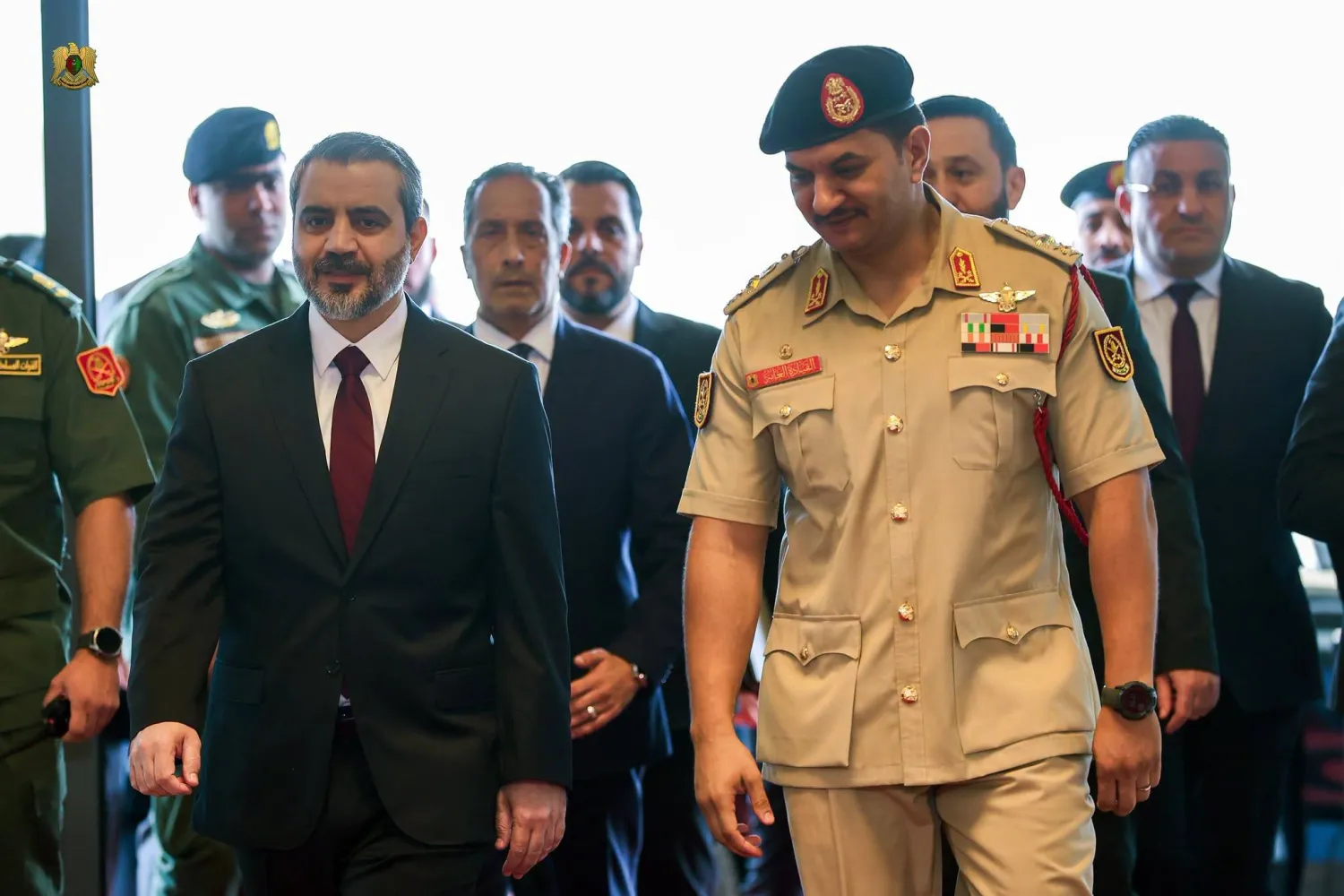
A member of Syria's internal security forces in Tartus city. (SANA)
TT

Syrian Authorities Say Killed Assad-Era Officer After Clash

A member of Syria's internal security forces in Tartus city. (SANA)

Syrian security forces said on Sunday that they killed an army commander who served under ousted ruler Bashar al-Assad, after he opened fire on them as they tried to arrest him.

In a statement, the forces accused Firas Abdul Karim Hammoud of having taken part in anti-government insurrections that killed security personnel.

Since Assad's fall in December 2024, Syria's new authorities have arrested dozens of security officials from his rule, and trials began in April.

The security forces said they "neutralized Firas Abdul Karim Hammoud... following an armed clash and a raid on his hideout in the town of Safita" in Tartus province in the coastal Alawite heartland.

Hammoud had previously "opened fire on security personnel during an attempt to arrest him", they added.

"During the recent operation, he again opened fire and initiated a firefight with the security forces... necessitating their response."

They said Hammoud served as a commander of the special forces in the so-called "25th Division" under Assad's rule.

They accused him of working under Assad-era general Ghiath Dalla in leading pro-Assad groups on the coast after the former president's fall.

They added that he was involved in "armed insurrection operations" against state institutions that killed security personnel.

Dalla, a former officer in the much-feared Fourth Brigade, had announced on social media last year the formation of a "military council for the liberation of Syria".

The announcement came shortly before deadly violence targeting the Alawite minority, to which Assad's family belongs, erupted on the Syrian coast in March 2025.

Authorities accused armed Assad supporters of sparking the violence by attacking security forces in an ambush.


Iraq Sentences US-Sanctioned Oil Official to Prison

The sun sets behind apartment buildings in Baghdad, Iraq, Friday, Aug. 28, 2026. (AP)
TT

Iraq Sentences US-Sanctioned Oil Official to Prison

The sun sets behind apartment buildings in Baghdad, Iraq, Friday, Aug. 28, 2026. (AP)

Iraq sentenced a US-sanctioned oil official to seven years in prison after he was arrested as part of a government-led anti-corruption campaign, the country's anti-graft body said on Sunday.

Deputy oil minister for distribution affairs Ali al-Bahadli is among dozens of officials who were detained in June during anti-graft raids that took place in several areas, mostly in Baghdad's fortified Green Zone.

The Commission of Integrity said in a statement that an anti-corruption court sentenced Bahadli to seven years in prison for "illicit gains".

The ruling requires Bahadli to return to the state an amount equivalent to more than $20 million in ill-gotten gains, in addition to paying a fine of the same amount.

The United States imposed sanctions on Bahadli in May, accusing him of fraudulently mixing Iraqi and Iranian oil as part of a scheme to help Iran avoid sanctions.

At the time, Iraq's oil ministry denied the accusations against Bahadli, who was then arrested during the anti-graft raids.

Iraqi authorities said that the raids were part of new Prime Minister Ali al-Zaidi's campaign to fight the corruption that has plagued Iraq for decades.

But several Iraqi officials told AFP that the raids were also part of al-Zaidi's campaign against funding for pro-Iran armed groups and the smuggling of Iranian oil.

Iraq has been under mounting pressure from the United States to curb Tehran's influence and rein in Iran-backed armed factions, which Washington designates as terrorist groups.

Al-Zaidi, who took office this year with the blessing of the United States, has pledged to ensure the armed factions that emerged after the US-led invasion hand over their weapons to the state.

In Iraq, corruption is especially rampant across public institutions, but convictions typically target mid-level officials or minor players and rarely those at the top of the power hierarchy.


US News Agency Says Crew Attacked by Israeli Settlers in West Bank

 Israeli settlers look out through a metal fence, as an Israeli flag flutters nearby, on the day of their weekly tour in Hebron, in the Israeli-occupied West Bank, August 29, 2026. (Reuters)
Israeli settlers look out through a metal fence, as an Israeli flag flutters nearby, on the day of their weekly tour in Hebron, in the Israeli-occupied West Bank, August 29, 2026. (Reuters)
TT

US News Agency Says Crew Attacked by Israeli Settlers in West Bank

 Israeli settlers look out through a metal fence, as an Israeli flag flutters nearby, on the day of their weekly tour in Hebron, in the Israeli-occupied West Bank, August 29, 2026. (Reuters)
Israeli settlers look out through a metal fence, as an Israeli flag flutters nearby, on the day of their weekly tour in Hebron, in the Israeli-occupied West Bank, August 29, 2026. (Reuters)

Israeli settlers attacked an NBC crew in the central West Bank Saturday, as they were interviewing a Palestinian woman who said she’d been driven out of her house by settlers, the network said.

NBC’s American correspondent Matt Bradley, two other crew members and the woman they were interviewing were all treated for injuries sustained during the attack, NBC said. There were no further details on their injuries.

The assault was caught on video and shared by NBC, with footage showing masked settlers approaching the crew with sticks and beating the crew’s vehicles.

Israel’s military said it was “aware of reports of Palestinian injuries, including a Palestinian woman who sustained non-life-threatening injuries and was evacuated by the Red Crescent for medical treatment.” It did not comment on the attack on the NBC crew.

It was the latest in a growing wave of violence by West Bank settlers. Prime Minister Benjamin Netanyahu issued a rare condemnation of the violence on Saturday. The Israeli leader has come under heavy US criticism for the settler attacks.

Settlers seized British activist and held him locked in shed

Israeli settlers seized a British activist from a Palestinian village in the West Bank and locked him in a shed before turning him over to police, his lawyer said Sunday.

The lawyer, Inbar Shaked Vardi, said settlers held her client, Finn Joughin, for half an hour Saturday before turning him over to Israeli police. Joughin was set to appear before a Jerusalem court later Sunday, she said.

Video showed two settlers, one armed, restraining Joughin and marching him away from the village.

It was not immediately clear what led to his capture. Settlers say he assaulted a child, accusations Vardi vehemently denied.

Settlers point to a video where the activist uses his body in an apparent attempt to block a settler boy from passing through a fence. Vardi said the video shows he was trying to protect the village.

Police said they were investigating and holding Joughin in custody on suspicion of committing an indecent act against a minor.