


Music Industry Launches AI-Generated Content Labels

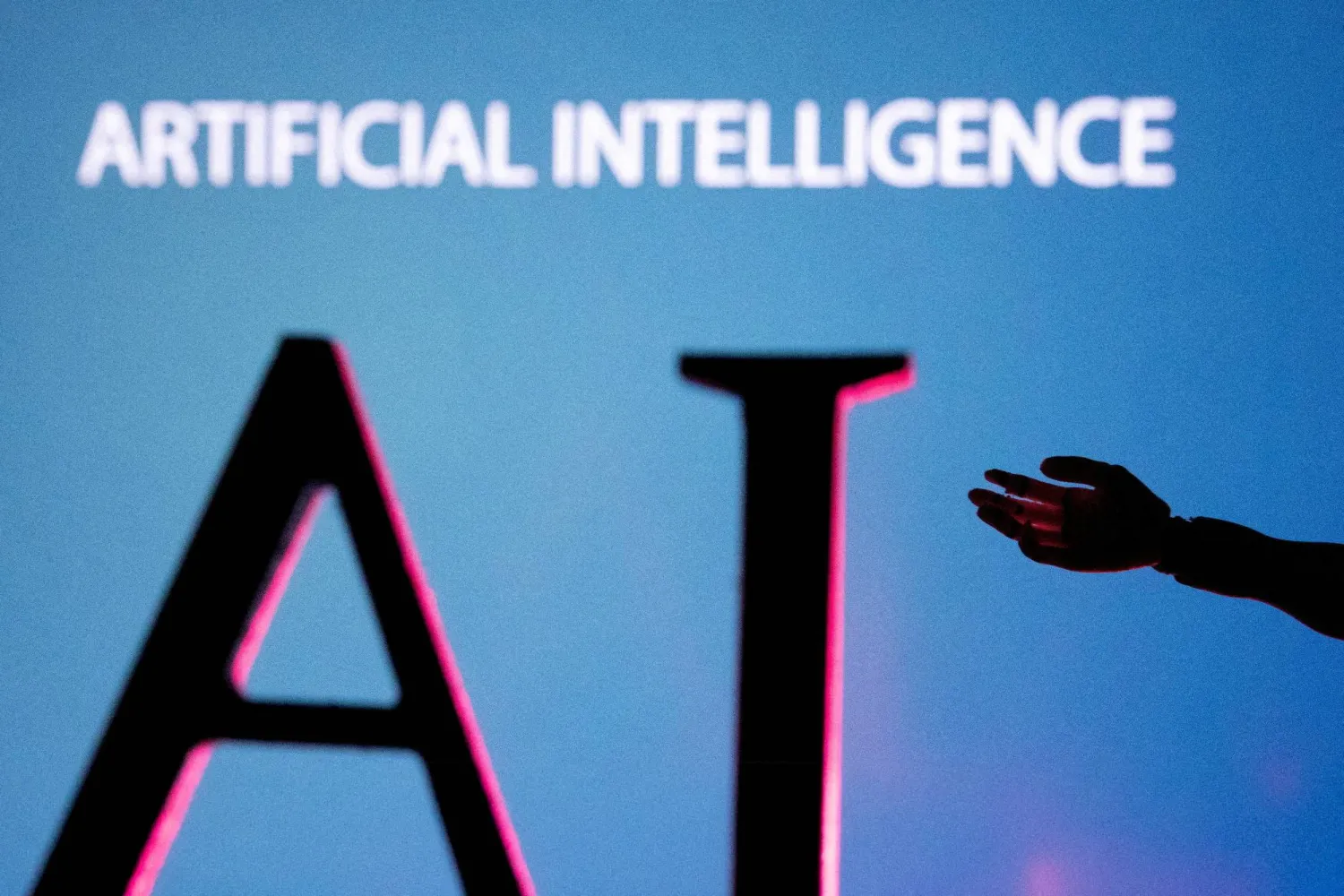
AI (Artificial Intelligence) letters and robot hand miniature in this illustration taken, June 23, 2023. (Reuters)
TT

Music Industry Launches AI-Generated Content Labels

AI (Artificial Intelligence) letters and robot hand miniature in this illustration taken, June 23, 2023. (Reuters)

Several major music industry organizations on Friday unveiled a labeling system for content created with generative artificial intelligence that they would like to see widely adopted.

The International Federation of the Phonographic Industry (IFPI) and the Recording Industry Association of America (RIAA) announced the voluntary labels alongside six other groups including the Grammys.

"Fans want to know whether and how generative AI has been used," the chief executives of IFPI and RIAA said in a prepared statement.

"These labels will provide an immediately understandable and easily scalable approach to transparency."

They unveiled two labels. The first would indicate music that is primarily "AI-generated" -- cases where artificial intelligence "was used to generate the entirety or the primary portion of the creative elements of the recording."

This includes tracks generated "entirely" from AI prompts, as well as lead vocals and "key" instrumental tracks that are AI-generated, according to the statement.

The second label applies to "AI-assisted" music recording which are still "created substantially by humans and expresses human creativity" but contain "some expressive elements" that were generated with AI.

However, humans must perform the lead vocals and primary instrumental tracks.

This voluntary labeling system is designed for "broad, global adoption," including on streaming services.

Music streaming site Deezer systematically flags tracks generated with AI, which the company recently said appear in close to half of new uploads. In June, it launched an "AI music detector" which it said is 99.8% accurate.

Earlier this year, an Apple Music executive told Billboard that more than one third of new uploads were entirely created with AI.

The Digital Media Association, a trade group representing streaming companies including Apple Music, Amazon and Spotify, said it was following the labeling announcement closely and looks forward to receiving more detailed and accurate AI metadata as a way to "strengthen our ability to give fans the transparency they deserve."

"DIMA has long advocated for the creators, owners, and distributors of music to provide accurate and timely metadata on all music released and distributed to streaming services," the association's CEO Graham Davies said in a statement.

In April, Spotify launched a "Verified by Spotify" label to signal that users can "trust the authenticity" of an artist, and last year the company announced new efforts to support AI disclosure and combat impersonation.

Spotify declined to comment on Friday. Apple Music and the Digital Media Association did not respond to requests for comment.


Qiddiya Investment Company, Paris Sign MoU to Explore Development of Entertainment Destination in France

Qiddiya Investment Company, Paris Sign MoU to Explore Development of Entertainment Destination in France
TT

Qiddiya Investment Company, Paris Sign MoU to Explore Development of Entertainment Destination in France

Qiddiya Investment Company, Paris Sign MoU to Explore Development of Entertainment Destination in France

Qiddiya Investment Company signed on Monday a Memorandum of Understanding with the French government to explore the development of a new entertainment-led, mixed-use destination in France.

The MoU was among several agreements and memoranda signed on the sidelines of the official visit of Prince Mohammed bin Salman bin Abdulaziz Al Saud, Crown Prince and Prime Minister, to France.

The MoU marks the beginning of a phase of joint work to define the project’s scope, development model and contractual framework, in accordance with the applicable procedures and approvals in France.

The project will build on the capabilities, experience and partnerships that Qiddiya Investment Company is developing from Saudi Arabia. It reflects the Company’s evolution as a Saudi national brand contributing to the creation and development of entertainment experiences while expanding its global presence.

Qiddiya City remains the Company’s flagship project and the principal reference point for its model. The international project will provide a platform to introduce Qiddiya’s Power of Play philosophy, broaden the Company’s experience and partnerships, and strengthen the presence of the Saudi model in global markets.


Dutch Say Won’t Participate in ‘No Longer’ Neutral Eurovision

A logo of the Eurovision Song Contest is seen in front of the St. Jakobshalle in Basel, Switzerland, May 1, 2025. (Reuters)
TT

Dutch Say Won’t Participate in ‘No Longer’ Neutral Eurovision

A logo of the Eurovision Song Contest is seen in front of the St. Jakobshalle in Basel, Switzerland, May 1, 2025. (Reuters)

The Netherlands will not participate in next year's Eurovision Song Contest, its broadcaster said Monday, saying the event can "no longer be considered neutral" given divisions over the Gaza war. 

"It is undeniable that international conflicts are increasingly affecting the Contest, undermining its neutral character. The Eurovision Song Contest has therefore become a platform for division," said Taco Zimmerman, Director-General of AVROTROS in a statement from the broadcaster. 

The contest has recently been hit by a wave of boycotts over Israel's participation. 

Earlier this month, organizers announced they were excluding any country involved in an armed conflict from hosting the competition. 

"However, the recently announced changes... do not provide sufficient confidence that the independent and neutral character of the Eurovision Song Contest has been restored," said the AVROTROS statement. 

Israel came close to winning the competition in both 2025 and 2026, ultimately finishing second on each occasion. 

Next year's event, the world's biggest live televised music event, will take place on May 15 in Bulgaria's Black Sea city of Burgas. 

It will be the first time that the Balkan nation hosts the contest, coming after Bulgarian singer Darina Yotova, known as Dara, won this year's contest in the Austrian capital Vienna with the catchy floor-filler "Bangaranga". 

Since its launch in 1955, Eurovision has become the ultimate pop platform, catapulting Swedish icons ABBA to worldwide fame, as well as boosting the likes of Celine Dion, Cliff Richard and Olivia Newton-John. 

The 2026 competition was watched by 131 million viewers, down 35 million on the year before after five countries boycotted it over Israel's participation. 

The Netherlands, Iceland, Spain, Ireland and Slovenia all pulled out of the contest -- with the latter three refusing to broadcast the show at all. 

The Dutch took part in the very first Eurovision Song Contest back in 1956 and have won on five occasions. 

The most recent winner was Duncan Laurence whose song Arcade won the contest in 2019, going on to top charts globally. 

It became the first Eurovision entry to reach one billion streams on Spotify, according to the Eurovision website. 

The withdrawal is "painful as we would have very much liked to be part of the Contest again next year," said Zimmerman. 

"As a public broadcaster, we remain committed to our values. They guide us in everything we do, even when that means stepping away from an event that is very close to our hearts," he added. 


California Reportedly Cancels Talks with Paramount over Warner Bros Merger

FILE PHOTO: The Paramount logo is shown on a structure at the Paramount studio lot in Hollywood, Los Angeles, California, US, February 26, 2026. REUTERS/Mike Blake/File Photo
TT

California Reportedly Cancels Talks with Paramount over Warner Bros Merger

FILE PHOTO: The Paramount logo is shown on a structure at the Paramount studio lot in Hollywood, Los Angeles, California, US, February 26, 2026. REUTERS/Mike Blake/File Photo

California's Attorney General Rob Bonta canceled a meeting with Paramount Skydance representatives scheduled for Monday to begin settlement talks over the state's lawsuit seeking to block Paramount's proposed acquisition of Warner Bros. Discovery, the New York Times reported.

Citing a statement from Bonta's office, the newspaper said he accused Paramount of leaking details of a meeting held on Friday ⁠and acting in ⁠bad faith.

Here are some details:

“Not only did Paramount leak the alleged substance of settlement discussions, but they misrepresented these discussions, demonstrating a lack of good faith,” the report said, citing ⁠the statement.

Paramount and the California Attorney General's office did not respond to Reuters requests for comment outside regular business hours.

The New York Times reported on Saturday talks between the two parties were preliminary, and there was no assurance that they will lead to meaningful negotiations toward a settlement.

Last month, ⁠California ⁠and 11 states sued to block Paramount's $110 billion acquisition of Warner Bros. Discovery, alleging the deal would lessen competition in film distribution and cable television, harming theaters and pay TV distributors.

States including New York, Arizona and Minnesota argued the deal would harm theaters and television distributors, raise prices for consumers and make wages less competitive for workers.