


US Proposes 90-Day Sudan Truce Followed by talks

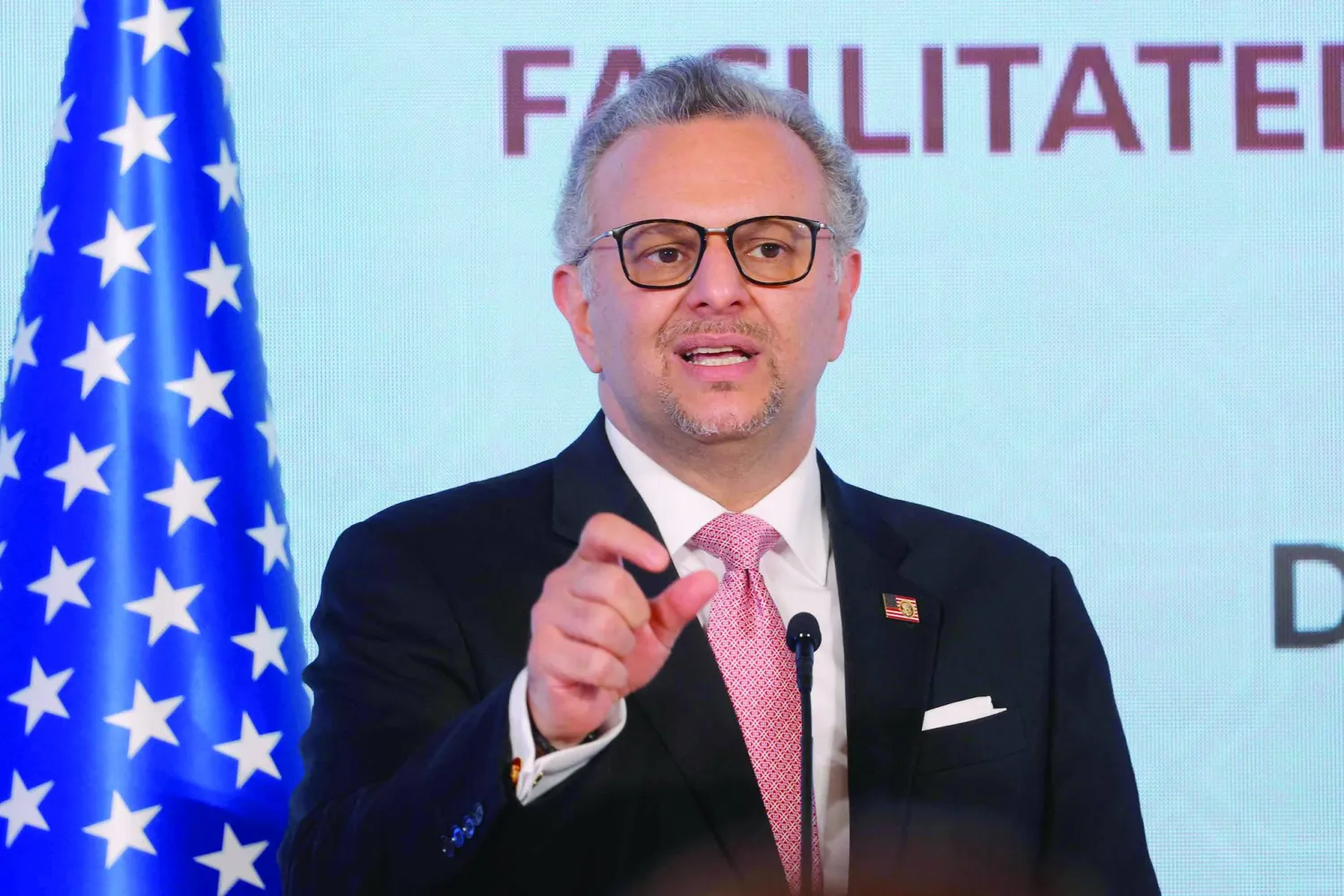
Massad Boulos expresses concern over conditions in El Obeid (File photo: AFP)
TT

US Proposes 90-Day Sudan Truce Followed by talks

Massad Boulos expresses concern over conditions in El Obeid (File photo: AFP)

The leak of documents exchanged between the US administration and Sudan’s government has revived hopes of a humanitarian truce while raising questions over whether the country is closer to ending the war or facing another failed peace initiative.

Reuters quoted senior Sudanese officials as confirming the contents of the leaked documents, which showed broad agreement on the proposal’s general principles but a fundamental dispute over the future of the Rapid Support Forces deployed in cities.

The Sudanese government conditionally accepted the idea of a truce, while US statements initially suggested Khartoum had rejected the proposal before later describing it as having accepted it. A final agreement, however, remains out of reach.

According to Reuters, the United States proposed an immediate 90-day humanitarian truce to allow aid deliveries, strengthen civilian protection and pave the way for negotiations on a permanent ceasefire, followed by a civilian-led political transition and elections.

The army-led Sudanese government made its approval conditional on the RSF’s withdrawal from all cities it has controlled since May 11, 2023, rather than carrying out the limited withdrawals stipulated in the US proposal.

A document attributed to the Sudanese government and dated June 25 showed agreement with several key principles, including recognition that there was no military solution to the conflict, a nationwide truce and the formation of a US-led coordination committee including the United Nations, the African Union and the Arab League.

It also proposed a UN mechanism to oversee and monitor implementation, guarantee humanitarian access and protect civilians.

The Sudanese response, however, demanded that the RSF withdraw from all cities under its control. Subsequent security arrangements would include the withdrawal, demobilization, disarmament and reintegration of RSF personnel under UN supervision.

The Sudanese Armed Forces would remain the country’s unified national army, with other military formations incorporated into it.

The dispute may appear limited to one provision, but it goes to the core of the initiative.

The US proposal calls for an immediate ceasefire followed by limited withdrawals and troop redeployments to facilitate aid access, particularly in North Darfur and North Kordofan. Broader military arrangements would be negotiated later as part of a permanent ceasefire.

The Sudanese response instead makes a complete RSF withdrawal from cities and a change in the military control map a precondition for the truce.

The two sides also differ over the future army. The US initiative calls for a unified national military accountable to an independent, elected civilian government, while the Sudanese response links the armed forces to the Sudanese government.

Reuters also said the US proposal called for excluding the Muslim Brotherhood and militia members accused of serious abuses. The Sudanese document used the broader term “violent extremist groups” without naming specific organizations.

At a UN Security Council meeting on June 26, Massad Boulos, senior adviser to the US president on Arab and African affairs, said Sudan’s Sovereignty Council had rejected the latest version of the proposal.

After Sudan’s representative said Sovereignty Council Chairman Lieutenant General Abdel Fattah al-Burhan had submitted a response including a withdrawal timetable and a peace plan, Boulos welcomed what he described as Burhan’s acceptance of the initiative.

“I am pleased to hear that Burhan has apparently accepted the latest peace proposal rather than rejected it,” Boulos said.

He added that the initiative had been prepared in consultation with Sudan’s foreign minister and members of the Sovereignty Council, coordinated with Egypt and welcomed by Saudi Arabia.

The difference appears to reflect conflicting interpretations of acceptance rather than an outright rejection.

Khartoum regards its approval of the general framework, subject to an RSF withdrawal, as conditional acceptance. Washington views that condition as altering the substance of its proposal, which is based on an immediate ceasefire without preconditions.

The two sides, therefore, remain far from agreeing on a final formula.

In a public appearance in Omdurman on Friday, Burhan did not say whether he accepted or rejected the initiative and did not disclose the substance of his government’s response.

Addressing worshippers, he said the armed forces would not accept arrangements imposed upon them or any arrangement that failed to achieve security and peace for the Sudanese people. He said military operations would continue until those he described as “aggressors and rebels” were defeated.

The leak coincided with controversy over an undisclosed meeting reportedly held in Cairo between Sovereignty Council member Shams al-Din Kabbashi and Boulos.

One account said Kabbashi met Boulos without Burhan’s knowledge and did not brief him on the discussions. Al Arabiya cited sources close to Kabbashi as saying the meeting took place at Boulos’ request, with Burhan’s knowledge, and that Burhan was informed of what was discussed.

Neither the Sudanese nor the US side has officially confirmed either account.

Khalid Omar Youssef, a senior figure in the Civil Democratic Alliance of Revolutionary Forces, known as Somoud, told Asharq Al-Awsat that the quartet’s roadmap was “the most important, comprehensive and well-structured initiative.”

He ruled out an imminent breakthrough unless pressure increased on the party obstructing the truce.

RSF position

The RSF has not issued an official statement on the US initiative or the response attributed to the army.

A senior RSF official, who requested anonymity, told Reuters that the force had received the proposal, welcomed it and submitted a written response, without disclosing its contents or its position on withdrawal.

Another senior RSF source told Asharq Al-Awsat that withdrawal from cities under the force’s control was “not open for discussion.”

Any truce should freeze both sides’ positions, the source said, while redeployment and disarmament should be addressed in negotiations on a permanent ceasefire.

Political analyst Mohammed Latif said US and regional pressure, the worsening humanitarian crisis, growing doubts among the sides’ regional backers over the possibility of a military victory, rising civilian demands and fears of Sudan’s division and institutional collapse could improve the prospects for a truce.

He warned, however, that fighting in strategically important areas, disputes over monitoring and concerns that a truce could be used for recruitment, rearmament or military repositioning could undermine the initiative.

Latif also said the widespread deployment of forces made it difficult for both leaderships to control all fighting formations, meaning that a limited violation by a small group could bring an agreement down.

Domestic and foreign actors benefiting from the war could also derail a truce that conflicted with their interests, he said.

The available information suggests Sudan has entered a more substantive negotiating phase involving written proposals, official responses, continuing contacts and growing international pressure.

But an end to the war does not appear imminent.

The army insists that an RSF withdrawal from cities must be a condition for a truce, while the RSF has not formally stated its position, although unofficial indications suggest it rejects the demand.

Sudan, therefore, appears closer to a more serious round of negotiations than to a final ceasefire agreement.

Success will depend on whether mediators can reach a phased formula for withdrawals, establish enforceable monitoring mechanisms and persuade both sides to accept a truce that gives neither an advanced military or political advantage.



Syria Rejects Sovereignty Violations, Netanyahu’s Entry into Its Territory

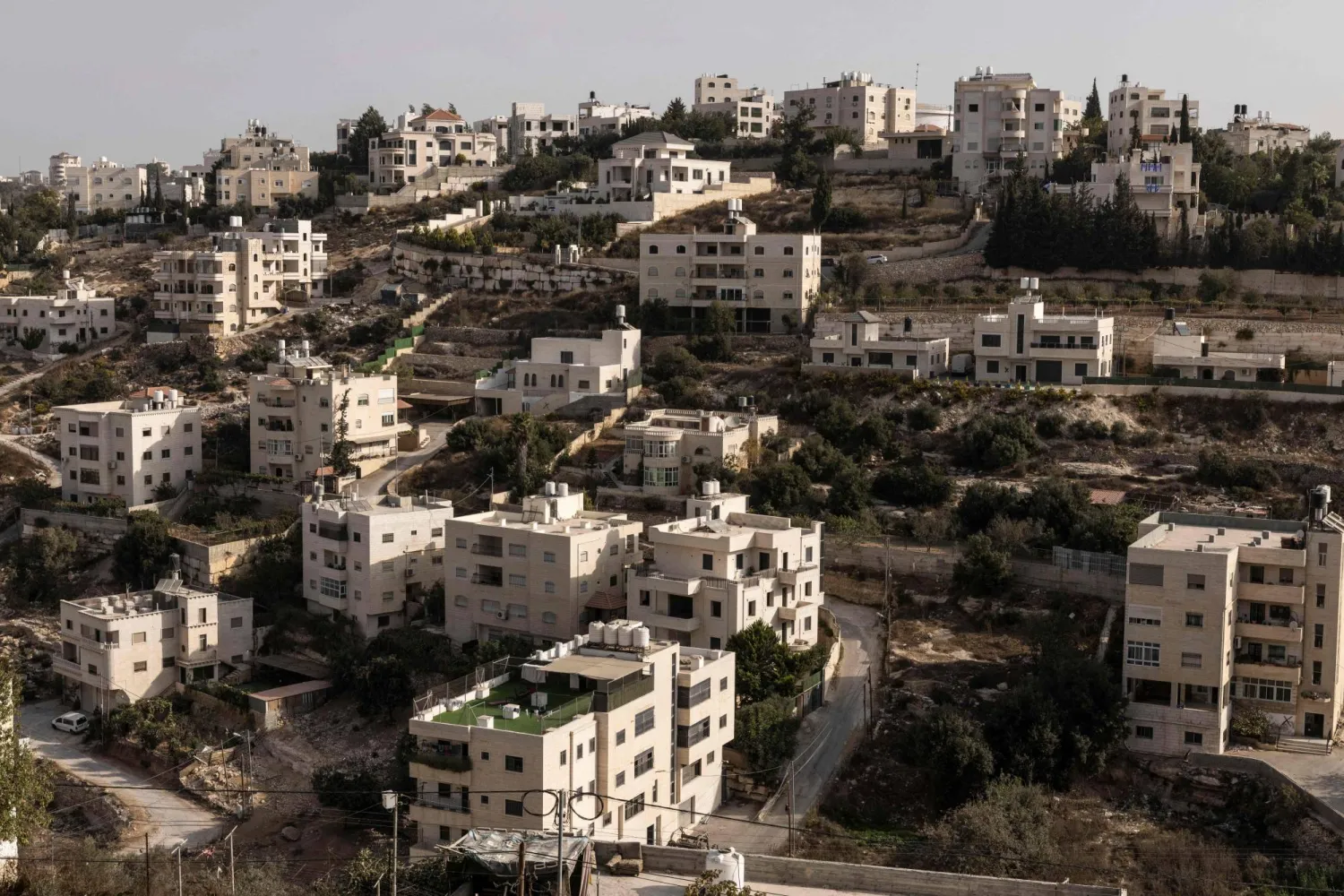
An Israeli observation post overlooking the village of Beit Jinn in southern Syria (AFP) 
TT

Syria Rejects Sovereignty Violations, Netanyahu’s Entry into Its Territory

An Israeli observation post overlooking the village of Beit Jinn in southern Syria (AFP) 

Syria on Saturday renewed its rejection of violations of its sovereignty and Israeli Prime Minister Benjamin Netanyahu’s entry into its territory, as Israeli forces continued a weeklong escalation of artillery fire and incursions around Beit Jinn, on the slopes of Mount Hermon in western rural Damascus.

Residents fear an Israeli incursion into the town could lead to a repeat of events in late 2025, when dozens were killed or wounded in clashes between residents and an Israeli patrol that entered Beit Jinn.

Syrian Foreign Minister Asaad al-Shaibani said Syria had clearly reaffirmed before the UN Security Council, with the support of more than 40 countries, its rejection of violations of its sovereignty and Netanyahu’s entry into Syrian territory.

In a post on X, al-Shaibani stressed that Damascus remained committed to the country’s unity, independent decision-making and territorial integrity. He welcomed the international response supporting Syria in the face of continuing Israeli violations and said Damascus would continue to defend its national rights through legitimate political and diplomatic means under international law and the UN Charter.

Representatives of several UN member states, joined by Syria’s Permanent Representative to the UN Ibrahim Olabi, gathered outside the Security Council in New York on Friday to denounce Netanyahu’s entry into Syrian territory and reaffirm Syria’s sovereignty, unity and territorial integrity.

Netanyahu, accompanied by Israeli Defense Minister Israel Katz, entered the Syrian side of Mount Hermon on Sept. 9, where Israeli forces are deployed.

Damascus strongly condemned what it called Netanyahu’s “illegal entry” into Syrian territory and his tour of Mount Hermon, describing it as a flagrant violation of Syria’s sovereignty, territorial integrity and international law.

Syria held Israel fully responsible for the consequences of the violations and called on the UN, international organizations and influential countries to act to halt the attacks and ensure a return to the Disengagement Agreement.

Meanwhile, local sources in Beit Jinn told Asharq Al-Awsat that more than 10 Israeli military vehicles and two tanks had entered farmland belonging to the village of Mazraat Beit Jinn, east of the town.

The incursion came hours after Israeli artillery fire struck the Ain al-Shaara area north of Beit Jinn, with the shell landing on agricultural land.

Israeli forces had repeatedly shelled areas around Mazraat Beit Jinn and Bat al-Warda hill since Sept. 3, without reported casualties or material damage. An Israeli drone had also struck a civilian vehicle on the road to the town, wounding several civilians.

Local sources voiced fears of a repeat of Nov. 28, 2025, when an Israeli military patrol entered Beit Jinn, triggering fierce clashes with residents that killed 13 people from the town and wounded 24 others.

The escalation in western rural Damascus comes as Israeli forces continue incursions and attacks on towns and villages in rural Daraa and Quneitra near the ceasefire line. The operations have continued since the first day following the fall of former President Bashar al-Assad’s government on Dec. 8, 2024.


Fatah Demands Apology for Oct. 7 ‘Catastrophe’ as Hamas Hits Back

A meeting of Fatah’s Revolutionary Council in Ramallah (WAFA) 
TT

Fatah Demands Apology for Oct. 7 ‘Catastrophe’ as Hamas Hits Back

A meeting of Fatah’s Revolutionary Council in Ramallah (WAFA) 

A heated Palestinian debate erupted after Fatah Central Committee member Majed Faraj called on Hamas to apologize to the Palestinian people for what he described as the “catastrophe” that followed Oct. 7, 2023.

Speaking to Fatah activists at a public gathering ahead of legislative elections, Faraj said Hamas should apologize before returning to political life as a Palestinian faction like any other.

“This is a personal opinion and not an official position,” he added.

Fatah supporters and several of its leaders applauded, including Zakaria Zubeidi, who was recently released from an Israeli prison under a Hamas-Israel prisoner exchange deal. His reaction drew criticism from Hamas activists and freed prisoners.

Bassem Naim, a member of Hamas’ political bureau, hit back at Faraj, Fatah and the Palestinian Authority, arguing that the Oct. 7 attack had strategic consequences not only for Palestine but for the region and the world.

In a Telegram post, Naim said that if Hamas were required to apologize, Faraj should also demand apologies from Fatah and the late Yasser Arafat for what, by Faraj’s own standard, were “catastrophes” inflicted on Palestinians over decades. He cited the Al-Aqsa Intifada, which was followed by Israel’s Operation Defensive Shield and the reoccupation of the West Bank, as well as earlier events in Jordan, Lebanon and the first Gulf War.

Naim said Palestinians had the right to assess every stage of their national struggle and demand accountability, but argued that such scrutiny should not be selective or serve foreign agendas. He described the Oslo process as a “major mistake” that had proved a catastrophic failure.

He added that Hamas had repeatedly called for comprehensive national dialogue to review all paths, including the “Al-Aqsa Flood,” but accused Fatah of rejecting such efforts, most recently at meetings in Ankara and El Alamein.

Fatah Revolutionary Council member Monzer al-Hayek defended his movement, saying the only thing Fatah could apologize for was failing so far to achieve an independent Palestinian state.

He noted that Fatah had built a national authority, given Palestinians an entity, identity and passport, and advanced the statehood project until Palestine achieved UN non-member observer state status.

Al-Hayek accused Hamas of obstructing the national liberation process, weakening the political track and helping create conditions that brought Israel’s far right to power.

The dispute comes amid mutual accusations that each movement is seeking to obstruct or postpone the elections. Hamas has sought to form a broad electoral coalition of several factions, while Fatah has worked to block the effort and persuaded PLO factions, including the Popular Front for the Liberation of Palestine, not to join.

Fatah’s Revolutionary Council said the movement would contest legislative elections scheduled for Nov. 28 on an official national list in consultation with PLO factions. It called for comprehensive national dialogue, Palestinian unity within the PLO framework and a fully sovereign Palestinian state on the June 4, 1967 borders.

President Mahmoud Abbas reaffirmed his commitment to holding legislative elections on Nov. 28, 2026, and urged the international community to pressure Israel not to obstruct voting in Jerusalem and the Gaza Strip.


Iraq Seizes Drones, Projectiles in Western Desert

Police officers in Iraq’s Anbar province inspect projectiles and drones seized in the governorate (Security Media) 
TT

Iraq Seizes Drones, Projectiles in Western Desert

Police officers in Iraq’s Anbar province inspect projectiles and drones seized in the governorate (Security Media) 

Iraq’s Interior Ministry announced Saturday that authorities had seized 47 drones and 46 projectiles at an abandoned site in western Anbar province, believed to belong to an armed faction with a significant military presence in the area.

The security development in Anbar coincides with attacks carried out by armed factions against Saudi Arabia, prompting cautious optimism among observers that Iraqi authorities are serious about putting an end to such attacks.

Acting on precise intelligence, Anbar Police Command units discovered an abandoned site in Area 35 that had previously been used as a tire repair shop, the Interior Ministry said in a statement.

A search uncovered 47 drones and 46 projectiles prepared for use with the aircraft, along with control devices, batteries and other related equipment.

Authorities secured the site and seized all the equipment, while investigators began technical and legal procedures to determine the origin of the materials and identify those connected to them.

Security sources in Anbar believe the cache belonged to an Iran-aligned armed faction operating under the umbrella of the Popular Mobilization Forces (PMF).

The sources said security commanders were seeking to prevent Anbar from becoming a launchpad for missile attacks against neighboring countries.

Anbar’s vast territory borders Jordan, Syria and Saudi Arabia, making the province strategically important to armed factions and Iran. The sources said it had served as a key route for transporting weapons to the former Syrian government of Bashar al-Assad and Lebanon’s Hezbollah.

Alongside the Iraqi Army and police, several armed groups operate in the province. Kataib Hezbollah, which has three brigades within the PMF, is considered the most influential in western Anbar.

Harakat al-Nujaba and Kataib Sayyid al-Shuhada are also active near the Iraqi-Syrian border in coordination with other security formations. Fighters affiliated with Asaib Ahl al-Haq and the Badr Organization are present elsewhere in the province, but relatively farther from the Syrian border, according to the sources.

Anbar’s sprawling deserts, rugged valleys and abandoned military sites provide armed factions with locations to store weapons, drones and projectiles away from direct central government oversight.

During the Iran-US war in March, local reports said PMF forces and armed factions left some positions and redeployed away from border areas.

On Aug. 31, Qasim Muslih, commander of the PMF’s Anbar Operations Sector, denied that PMF headquarters in Anbar had been evacuated. He said its units continued to carry out their duties across their areas of responsibility with high levels of readiness under approved security plans.