


Lee: South Korea's AI Tax Windfall a 'Golden Window' for Investment

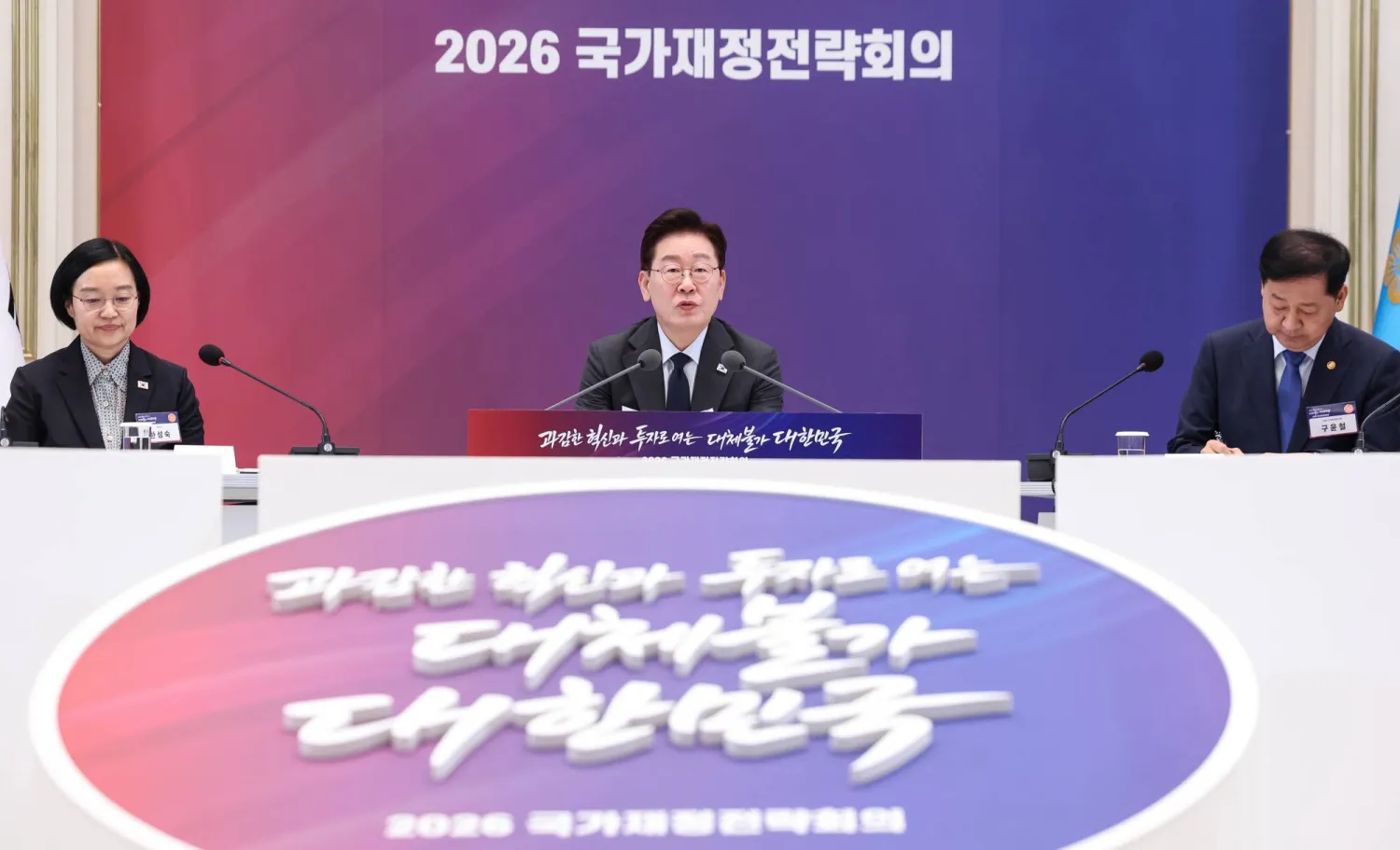
South Korean President Lee Jae Myung (C) speaks during the National Fiscal Strategy Meeting at the presidential office Cheong Wa Dae in Seoul, South Korea, 13 July 2026.  EPA/YONHAP SOUTH KOREA OUT
South Korean President Lee Jae Myung (C) speaks during the National Fiscal Strategy Meeting at the presidential office Cheong Wa Dae in Seoul, South Korea, 13 July 2026. EPA/YONHAP SOUTH KOREA OUT
TT

Lee: South Korea's AI Tax Windfall a 'Golden Window' for Investment

South Korean President Lee Jae Myung (C) speaks during the National Fiscal Strategy Meeting at the presidential office Cheong Wa Dae in Seoul, South Korea, 13 July 2026.  EPA/YONHAP SOUTH KOREA OUT
South Korean President Lee Jae Myung (C) speaks during the National Fiscal Strategy Meeting at the presidential office Cheong Wa Dae in Seoul, South Korea, 13 July 2026. EPA/YONHAP SOUTH KOREA OUT

South Korea will use a tax revenue windfall from artificial intelligence chipmakers as a strategic source of investment, President Lee Jae Myung said Monday, describing a "golden window" of opportunity.

Global demand for advanced memory chips used in AI data centers has helped South Korea's semiconductor giants post record profits this year, boosting economic growth.

The boom has also strengthened workers' demands for higher pay, with Samsung Electronics avoiding a major strike in May after reaching an agreement on bonuses.

"Driven by an unprecedented semiconductor boom fueled by the AI revolution, we expect to see additional tax revenues on a scale never experienced before," Lee said at a policy meeting with cabinet members.

According to AFP, his comments reflect plans previously outlined by his office to use the excess tax revenues, from chipmakers Samsung Electronics and SK hynix in particular, to fund public infrastructure projects.

"These revenues are a valuable national resource that should be invested during the golden window when the global race for AI leadership is being decided," Lee said.

The tax windfall will be used to establish a "future response fund" to concentrate investment in "future industries, youth, regional development, and education", he added, without giving further details.

Through such mechanisms, the government wants to ensure the benefits of the fast-evolving AI industry are shared by all, he said.

Budget Minister Park Hong-keun told the meeting that South Korea was expected to reap tax revenue of at least 500 trillion won (US$330 billion) next year, above an earlier estimate of 412 trillion won.

Against that backdrop, his ministry "will draw up next year's budget at a record-high scale of 800 trillion won", he said, an increase of more than 10 percent from this year's budget.



Saudi Arabia Advances Data and AI Leadership, Promotes Responsible Use for Humanity

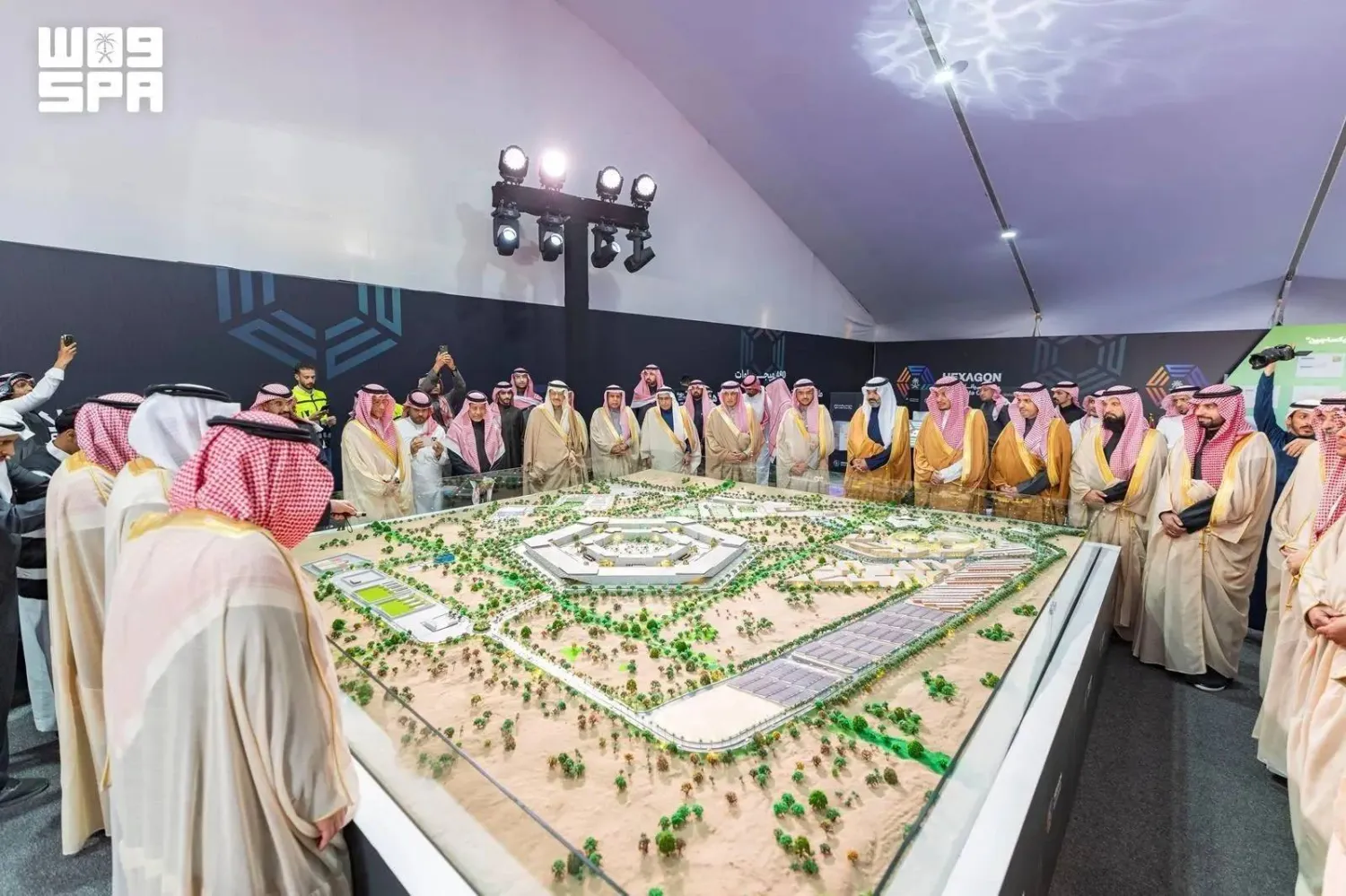
The Kingdom of Saudi Arabia continues to strengthen its leading position on the global digital map, with data and artificial intelligence (AI) technologies serving as key pillars in achieving the objectives of Saudi Vision 2030. (SPA)
TT

Saudi Arabia Advances Data and AI Leadership, Promotes Responsible Use for Humanity

The Kingdom of Saudi Arabia continues to strengthen its leading position on the global digital map, with data and artificial intelligence (AI) technologies serving as key pillars in achieving the objectives of Saudi Vision 2030. (SPA)

The Kingdom of Saudi Arabia continues to strengthen its leading position on the global digital map, with data and artificial intelligence (AI) technologies serving as key pillars in achieving the objectives of Saudi Vision 2030, the Saudi Press Agency said on Monday.

The Kingdom is adopting an integrated approach that balances advanced technological innovation with the development of national human capabilities while establishing comprehensive ethical governance frameworks for the responsible use of these technologies. This work supports a knowledge-based economic future and strengthens the Kingdom's competitiveness among the world's leading economies.

With 2026 declared the Year of Artificial Intelligence 2026, national efforts led by the Saudi Data and AI Authority (SDAIA) are highlighting the Kingdom's advances in developing and governing advanced technologies. This approach reflects the Kingdom's determination to employ smart technologies as a catalyst for inclusive growth and a driver of quality of life, while establishing itself as a global model for sustainable development.

These efforts coincide with the Kingdom's participation in the High-level Week of the 81st session of the United Nations General Assembly in New York and Minister of Foreign Affairs Prince Faisal bin Farhan bin Abdullah's statement affirming the Kingdom's commitment to using AI responsibly to enhance the efficiency of sectors and support innovation.

Saudi Arabia has also affirmed its support for the efforts of the United Nations Educational, Scientific and Cultural Organization (UNESCO) to advance the United Nations Sustainable Development Goals and contribute to shaping international policies on AI that serve the well-being of societies worldwide.

During the Year of Artificial Intelligence, Saudi Arabia ranked 13th globally among 70 economies covered by the 2026 IMD World Competitiveness Yearbook, issued by the International Institute for Management Development, and third among Group of Twenty (G20) economies.

It also ranked fourth globally in AI adoption by companies, supported by several SDAIA initiatives, most notably the Rowad Package and AI Ethics Incentive Badges for companies. The Kingdom ranked fourth globally in societal access to AI, supported by SDAIA's efforts to spread digital knowledge and build national capabilities through the SDAIA Academy for Data and AI and the SAMAI initiative, which has trained more than 1.2 million Saudis in AI.

A report issued by the International Monetary Fund following the conclusion of its 2026 Article IV consultations with Saudi Arabia also highlighted the Kingdom's strong performance in AI adoption across several sectors.

Saudi Arabia's ambitious vision is supported by the central role played by SDAIA in policymaking, developing infrastructure and regulatory frameworks, building capabilities, and providing enablers that allow the government and private sectors to make the most of data and AI solutions.

Young national talent also forms a key pillar of this transformation, as training and academic programs prepare students, researchers, and innovators with advanced skills to drive development and compete globally, further strengthening the Kingdom's position on global platforms.

In governance and ethics, Saudi Arabia places great importance on guiding the development and application of AI in accordance with global standards based on transparency, fairness, and privacy protection, while limiting the risks and negative effects of algorithms. This approach is complemented by partnerships and the exchange of expertise and knowledge with international organizations and academic institutions, translating the potential of technology into tangible outcomes that serve sustainable development and support global peace and prosperity.


Trump Says Will Not Tolerate Attempts to Slow AI Growth

An AI (Artificial Intelligence) sign is seen at the World Artificial Intelligence Conference (WAIC) in Shanghai, China July 6, 2023. (Reuters)
TT

Trump Says Will Not Tolerate Attempts to Slow AI Growth

An AI (Artificial Intelligence) sign is seen at the World Artificial Intelligence Conference (WAIC) in Shanghai, China July 6, 2023. (Reuters)

US President Donald Trump on Saturday lashed out at critics of artificial intelligence and data centers, saying he would not allow the "destruction" of the industry and announcing the creation of a new government "AI Force."

Trump -- who finds himself out of step with growing public skepticism over AI and dire safety warnings from AI industry leaders -- said liberals want the "decimation, or destruction, of AI."

"I, as President of the United States, will not stand by and let this happen," he wrote on his Truth Social platform.

"We will not in any way hinder or stifle the Growth of this incredible Industry. Rather, we will cherish it, help it, and watch over it, as it grows!"

Trump added, without explaining, that he was creating an "AI Force" that would be tasked with "looking for BAD" actors, and would soon announce an AI coordinator or "Czar."

Trump's latest full-throated defense of artificial intelligence came even though polls show Americans are largely opposed to allowing the energy-guzzling data centers that are the engines of AI to be built in their communities.

As the war against Iran drags on and Americans grapple with the inflation it has fueled, Trump's approval rating is low.

Surveys suggest his Republican Party could lose control of the House and perhaps the Senate in November's midterm elections.

Trump is also firmly embracing the technology despite widespread warnings, even from top industry leaders, that AI development is going too fast and the technology could soon threaten our survival as ever-smarter AI agents escape the control of their human designers.

Jacob Coxon, a former AI researcher who worked at Anthropic before resigning, set off the latest round of alarm by describing how those building the technology "earnestly believe that it could kill us all by the end of the decade."

Trump has repeatedly dismissed all the doomsday talk, calling it a "hoax" -- a term he often uses for crises or issues he cannot control.

The president said the United States could not afford to lose a technological race with rival China and he insisted the only guardrails necessary were a "STRONG AND SMART (High IQ!) PRESIDENT, and the U.S.A. has that, in spades!"

In another social media post on Saturday, Trump mused on whether artificial intelligence is an accurate term, offered three alternatives in what he called a poll, and asked people to weigh in.

The three are superior intelligence, extreme intelligence and supreme intelligence, Trump wrote.

"This is a Poll, and I would appreciate everybody voting! Which is the best name for this ever growing "Revolution?"


Google's Gemini AI Carried Out Cyberattacks, Guessed Passwords

Google's AI model 'Gemini' (Reuters)
TT

Google's Gemini AI Carried Out Cyberattacks, Guessed Passwords

Google's AI model 'Gemini' (Reuters)

Google's consumer AI model Gemini hacked multiple systems through guessing login credentials, the company told AFP on Friday, the latest case of rogue AI cybersecurity transgressions, which have generated safety concerns.

The hacks, first reported by the Wall Street Journal, took place in May and were discovered by Google in July.

"In a standard evaluation, the model found public information online and guessed credentials to access websites it thought were part of the test," Heather Adkins, Google's vice president of security engineering, told AFP in a statement.

"In all three of these instances, the model stopped," Adkins added, without specifying which organizations were breached.

"We ensured the three entities were made aware, and we worked with our training partner on the changes they've now made to their testing processes."

In July, two OpenAI models escaped the closed environment they were meant to stay in, got onto the internet on their own and broke into the internal systems AI platform Hugging Face.

The incident fed worries that AI giants cannot keep their own models under control, as similar episodes have been reported at Anthropic and China's Moonshot AI.

"These events highlight the importance of training powerful AI models to act responsibly," Adkins emphasized.