


Barghouti’s Son to Asharq Al-Awsat: Father Shot, Denied Treatment as Incitement Continues

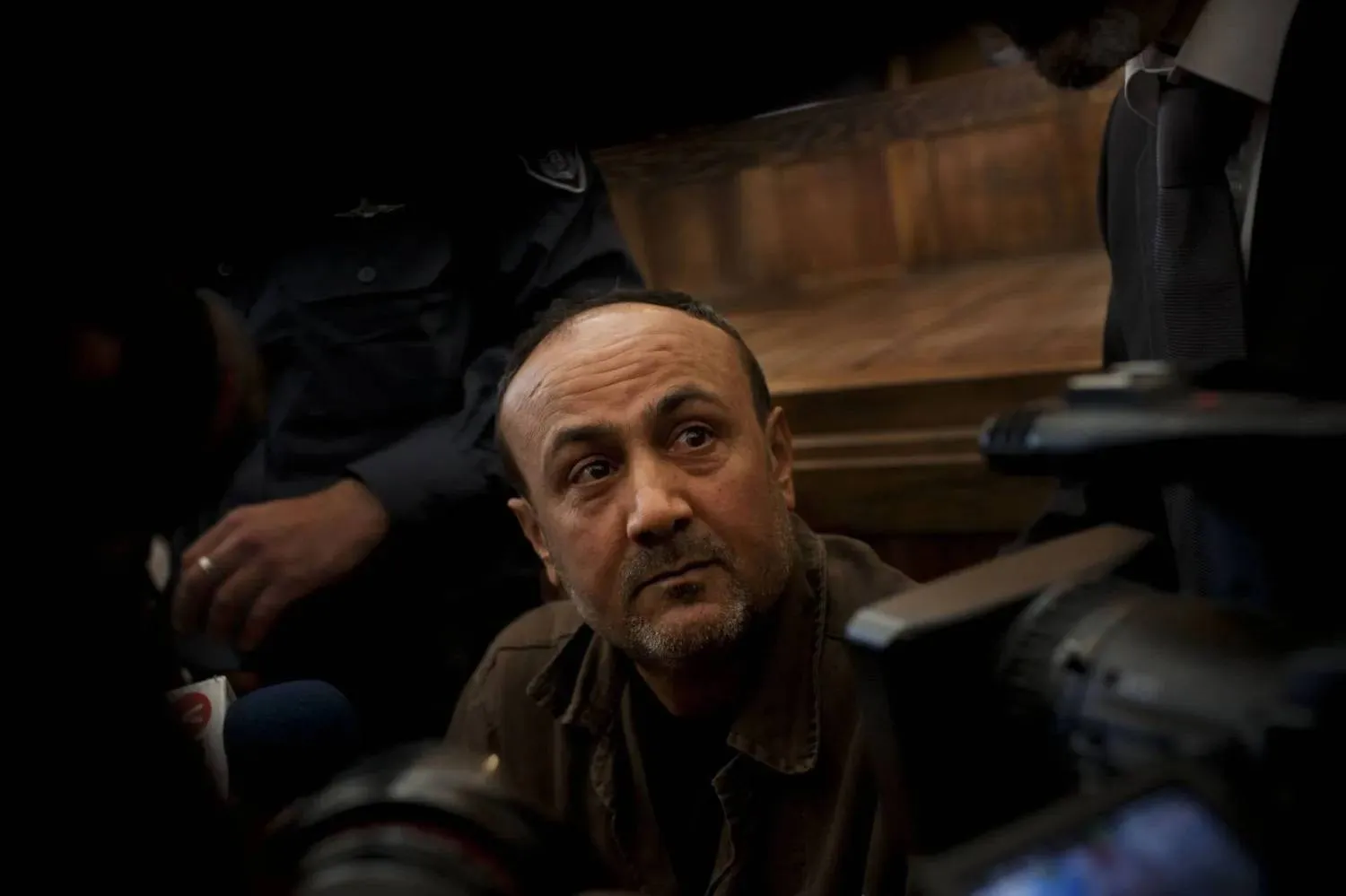
Prominent Palestinian leader Marwan Barghouti appears in court in Jerusalem. (AP file)
TT

Barghouti’s Son to Asharq Al-Awsat: Father Shot, Denied Treatment as Incitement Continues

Prominent Palestinian leader Marwan Barghouti appears in court in Jerusalem. (AP file)

Arab Barghouti, the son of detained prominent Palestinian leader Marwan Barghouti, 67, said an Israeli prison guard fired a rubber bullet at his father last week at Ganot Prison in the Negev desert in southern Israel and that he received no treatment for the injury.

“The guard shot my father in the foot,” he told Asharq Al-Awsat, adding that the family learned of the incident through Barghouti’s lawyer, prominent Israeli civil rights attorney Avigdor Feldman.

The Israel Prison Service told AFP that the allegation was “false and baseless”, saying its staff operated “in accordance with the law and under continuous judicial oversight”.

Barghouti remains a prominent figure in Palestinian politics despite having been imprisoned for nearly a quarter of a century. He won the highest number of votes among those elected to Fatah’s Central Committee in an internal vote held two months ago.

His son described the shooting as “a new attempt to undermine him amid continued Israeli incitement”, which he said had intensified in recent weeks as an international campaign for his father’s release expanded.

He said the scale of the targeting reflected Marwan Barghouti’s stature, influence and symbolic importance, and expressed confidence that he would ultimately regain his freedom.

Many Palestinians regard Barghouti as a potential savior because of his broad popularity within Fatah and other factions, including Hamas, which has repeatedly sought his release through prisoner-exchange deals. Israel has refused.

The latest Israeli campaign against him was led by the Israel Prison Service, which sought to compare him to Hamas leader Yahya Sinwar, whom Israel killed during the war in Gaza.

The reported incident was not the first assault alleged against Barghouti.

A lawyer who visited him on April 12 said he had been attacked three times, on March 24, March 25 and April 8, leaving him bleeding from several parts of his body without adequate medical treatment.

Israeli lawyer Ben Marmarelli said Barghouti had been severely beaten and, on one occasion, left bleeding for more than two hours. The Israel Prison Service said it was unaware of the incident.
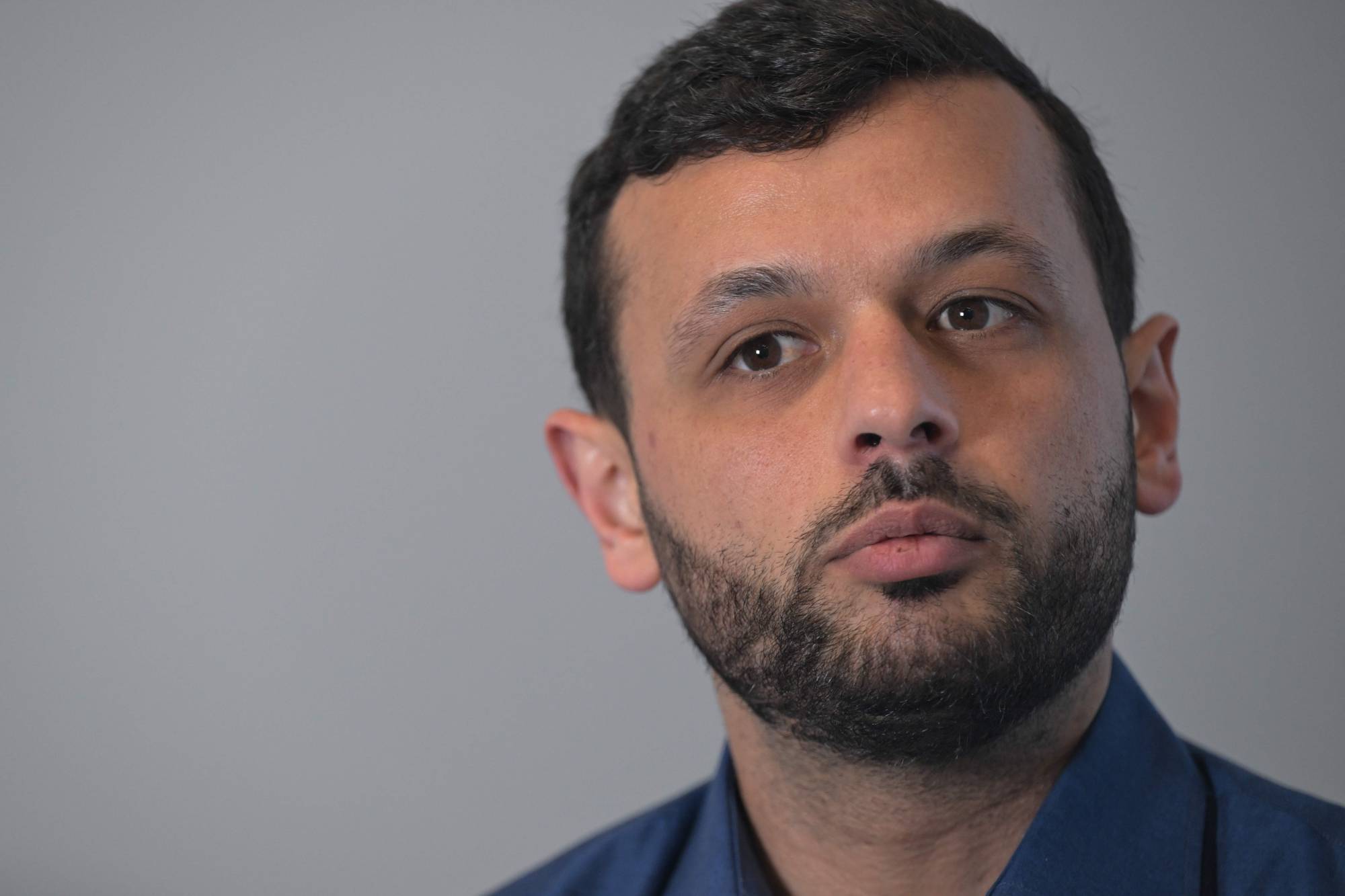
Marwan Barghoutyi's son, Arab. (AFP file)

Call for international investigation

The Arab League called on Sunday for an international committee to investigate the “repeated assaults” against Barghouti and for the perpetrators to be brought before an international court.

Barghouti is believed to have been held in solitary confinement for two and a half years.

Last year, Israel’s far-right National Security Minister Itamar Ben-Gvir posted a short video showing him confronting Barghouti inside his cell and speaking to him in a condescending and threatening manner.

The confrontation brought Barghouti further into the spotlight, and US President Donald Trump later said he was considering his case and whether he should be released.

Trump said last October that he might call on Israel to free Barghouti and had discussed the possibility with White House aides.

His remarks increased Barghouti’s political importance among Palestinians, many of whom describe him as the “Palestinian Mandela”.

Informed Palestinian sources told Asharq Al-Awsat after Trump’s comments that Barghouti would certainly run in the next presidential election.

“He will most likely be Fatah’s candidate,” the sources said. “But even if that does not happen for any reason, he will run because he is Marwan.”

An election process canceled at the last moment five years ago indicated the path Barghouti intended to take.

He formed a list with Nasser al-Qudwa, then an expelled member of Fatah’s Central Committee, to challenge the movement’s official list. Barghouti’s name was not included because he planned to run for president.

The reported shooting came as the Israel Prison Service issued an unusually harsh report against him.

The service said Barghouti had not fundamentally changed but had changed his image, replacing weapons with words and the image of a convicted terrorist with that of Nelson Mandela, while continuing to direct matters from his isolation cell.

The report, published on Friday in the “Seven Days” supplement of Yedioth Ahronoth, said Barghouti no longer fired weapons but that his ideology and ideas had become “a form of intellectual terrorism”.

It accused him of trying to influence Israel’s Arab community and its voting patterns before the next election.

The report said he had built “relationships with Arab members of the Knesset to interfere in Israeli politics, influence elections in Israel and affect voter turnout among Arab citizens of Israel”.

“He is like Yahya Sinwar, only more cunning,” an Israeli officer was quoted as saying. “A wolf in sheep’s clothing. He will mobilize an extremist force and, as soon as he has the opportunity, he will attack us. He is far more dangerous.”

Israeli journalist Raviv Drucker rejected the report, writing in Haaretz that it was so disgraceful that he wondered whether it was Barghouti’s way of mocking Israel.

Drucker accused Israeli intelligence of acting as a tool for Ben-Gvir.
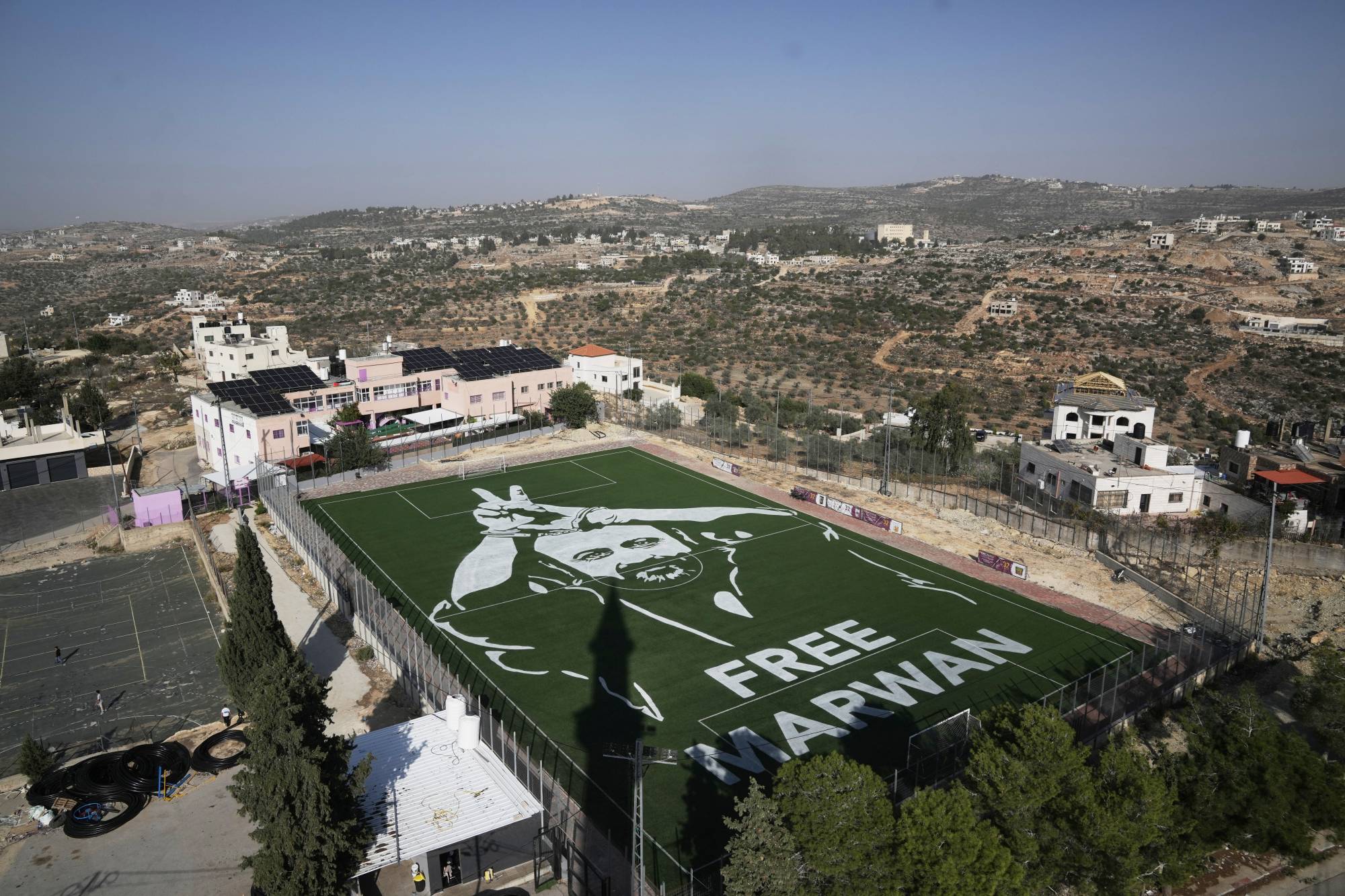
A view of an art installation of Marwan Barghouti in his birthplace, the West Bank village of Kobar, north of Ramallah, November 27, 2025. (AP)

He said Barghouti could play an important role in building a new Palestinian leadership and expressed hope that someone in the security establishment would know how to deal with him more wisely than Israeli intelligence.

Israel’s right-wing Channel 14, which is close to Prime Minister Benjamin Netanyahu, responded that Drucker had not yet understood the new reality and was supporting a political role for “a terrorist convicted of five murders”.

Channel 14 presenter Lital Shemesh rejected the idea that a Palestinian leadership seeking peace could emerge.

“Barghouti must remain in prison until the last day of his life,” she said. “Without hope, without glory and without a single moment of freedom.”

International campaign for his release

Barghouti’s wife, lawyer Fadwa Barghouti, issued a statement on Monday in response to the latest Israeli campaign against her husband.

She said the Israel Prison Service report coincided with the expansion of the international “Freedom for Marwan, Freedom for Palestine” campaign, the participation of international figures and leaders, and growing official and public support around the world.

“What the occupation has failed to understand throughout the past quarter of a century, and still fails to understand today, is that Marwan has never abandoned his conviction that freedom is a right and that the occupation will come to an end,” she said.

“Incitement and assault will not change this truth. They will not remove Marwan from the consciousness of his people or from the conscience of free people around the world, nor will they take from Marwan his love for his homeland, his love for the people and his commitment to them.”

“We will meet again soon, Marwan,” she added. “And our people have an appointment with life, freedom and dignity.”


New US Sanctions Tighten Grip on Hezbollah, Test Lebanon

17 April 2026, Lebanon, Jiyyeh: A displaced Lebanese woman flashes the victory sign and displays Hezbollah and Iranian flags as they drive along the highway linking Beirut to southern Lebanon in the Jiyyeh area. (dpa)
TT

New US Sanctions Tighten Grip on Hezbollah, Test Lebanon

17 April 2026, Lebanon, Jiyyeh: A displaced Lebanese woman flashes the victory sign and displays Hezbollah and Iranian flags as they drive along the highway linking Beirut to southern Lebanon in the Jiyyeh area. (dpa)

New US sanctions on Hezbollah go beyond targeting money-transfer networks, signaling a broader shift in Washington’s approach to the group and its relationship with the Lebanese state.

By relisting Hezbollah on its sanctions list and targeting a network accused of moving millions of dollars to the group, Washington is stepping up pressure on Hezbollah while putting Lebanese institutions to a sensitive test: whether they can tighten oversight of money flows and transfers and meet their obligations without worsening the country’s internal crisis.

The US Treasury Department’s Office of Foreign Assets Control (OFAC) announced sanctions on 10 people “that are part of a network responsible for transferring cash to Hezbollah.”

“The network utilizes couriers travelling on commercial airline flights between Lebanon, Türkiye, the UAE, and Iran to move up to hundreds of millions of dollars between jurisdictions, providing an avenue outside the formal financial system for Hezbollah to obtain foreign currency and evade sanctions,” it said.

OFAC also re-designated Hezbollah “for service to the Iranian regime under the command of Iran’s Revolutionary Guard Corps-Quds Force (IRGC-QF).”

Lebanese institutions under scrutiny

The US move is unlikely to stop with the targeted individuals and entities. It puts Lebanese banks, financial institutions, and regulatory bodies under closer US scrutiny, testing their ability to detect financial activity that could be linked to Hezbollah, its institutions, or its networks.

An official Lebanese source told Asharq Al-Awsat that the sanctions “pose challenges for the Lebanese state and its security, judicial and financial institutions.”

The source said the “tough US measures require tighter oversight of any assets linked to Hezbollah and its institutions, because any delay in doing so could leave the state facing consequences it can ill afford.”

OFAC said that “Hezbollah and its allies exploit financing schemes including oil smuggling, illicit shipping, commodities sales, and bulk cash smuggling to generate and move funds across the region.”

The US Treasury linked the targeted network to Behnam Shahriyari, a former Quds Force finance official, saying it was “one example of the methods used to funnel support to terrorist proxy groups throughout the region.”

Beyond Lebanese framework

But the strongest message in the sanctions, according to one Lebanese political reading, is directed at Lebanon itself.

Sami Nader, director of the Levant Institute for Strategic Affairs, said the latest measures differ from previous sanctions because Washington is “dealing with Hezbollah under a new classification that places it outside the traditional Lebanese framework and presents it as an Iranian faction and part of the broader US confrontation with Iran.”

Nader told Asharq Al-Awsat that the shift “will have repercussions inside Lebanon and for the authorities and official institutions, particularly in light of the political and even financial relationship linking the group to some Lebanese factions.”

Under the new US approach, he said, Hezbollah “is no longer viewed as a representative of the Shiite community, but as an Iranian faction occupying Lebanon.”

He said the implications could extend well beyond financial sanctions.

“Any party dealing with Hezbollah could be viewed by the United States as being involved in dealings with Iran’s Revolutionary Guards,” Nader said, adding that this could trigger “political and legal repercussions that go beyond direct financial sanctions.”

The effects of the new approach also extend into the political and diplomatic sphere, particularly Lebanese-Israeli negotiations.

Nader said tougher sanctions “could give Washington greater room to manage negotiations with Israel, allowing it to pressure Hezbollah” and “keeping the issue of ending Hezbollah’s influence part of the broader US confrontation with Iran.”

Europe’s response in focus

Attention is also turning to Europe and whether it will follow Washington’s lead.

Nader pointed to what he called “the recent hardening of the French and British positions toward Iran.”

“If the US approach extends to Europe, Lebanon could find itself entering a more complicated phase,” he said.

In that case, compliance with international sanctions would become “not merely a political choice, but an additional test of the state’s ability to protect its financial system and institutions from the repercussions of a regional and international conflict that extends beyond its borders,” he explained.

Hezbollah rejects US designation

Hezbollah rejected the US position, saying the claim that it is under the control of the Quds Force was merely a pretext for relisting it under sanctions.

The party described the move as “part of the continued policies of US administrations to target the resistance, its community, its support base and to besiege them and exert political, financial and security pressure on them.”

Hezbollah said Washington “continues to deal with Lebanon from a position of tutelage.”

It accused the US of choosing, instead of pressuring Israel to withdraw from southern Lebanon and halt its attacks, to “besiege the Lebanese and work to strip Lebanon of all sources of strength.”

On its relationship with Iran, Hezbollah said: “Our close and brotherly relationship with Iran is one we cherish and take pride in.”

But it stressed that it “does not await anyone’s certification of its Lebanese identity or patriotism.”

The party said sanctions and designations “will not deter us from adhering to the option of resistance and to the right of Lebanon and the Lebanese people to defend their land, sovereignty, and resources.”


Rights Group Says Israeli Settler Violence Heads to Established Palestinian Cities

 Israeli flags raised by settlers as seen on a main road to Jenin City, 21 August 2026. (EPA)
Israeli flags raised by settlers as seen on a main road to Jenin City, 21 August 2026. (EPA)
TT

Rights Group Says Israeli Settler Violence Heads to Established Palestinian Cities

 Israeli flags raised by settlers as seen on a main road to Jenin City, 21 August 2026. (EPA)
Israeli flags raised by settlers as seen on a main road to Jenin City, 21 August 2026. (EPA)

An Israeli group that collects information about potential human rights violations against Palestinians says reported incidents of Israeli settler violence have moved from the rural West Bank toward larger, more populated Palestinian cities and towns.

The establishment of new settlements and outposts throughout the West Bank has emboldened extremist settlers, who are now encroaching on larger communities that previously were far from the front lines of settler violence, Yesh Din said in its report released Friday titled “The Next Frontier.”

The uptick in violence corresponds with the Israeli government’s approval of new settlements and the expansion of outposts that it doesn’t authorize but often leaves in place, according to the report.

“As outposts advance deeper into Palestinian territory, violence, harassment and terror follow,” Yesh Din wrote.

Some 3 million Palestinians live under Israeli military rule in the West Bank alongside roughly 560,000 Israeli settlers.


Palestinian Teen Killed by Israeli Settlers After Rock Throwing Incident

 Relatives of killed Palestinian Karim Shalaldeh, 17, cry after his body was transferred to a hospital in the West Bank city of Hebron, Friday, Aug. 21, 2026. (AP)
Relatives of killed Palestinian Karim Shalaldeh, 17, cry after his body was transferred to a hospital in the West Bank city of Hebron, Friday, Aug. 21, 2026. (AP)
TT

Palestinian Teen Killed by Israeli Settlers After Rock Throwing Incident

 Relatives of killed Palestinian Karim Shalaldeh, 17, cry after his body was transferred to a hospital in the West Bank city of Hebron, Friday, Aug. 21, 2026. (AP)
Relatives of killed Palestinian Karim Shalaldeh, 17, cry after his body was transferred to a hospital in the West Bank city of Hebron, Friday, Aug. 21, 2026. (AP)

A 17-year-old Palestinian was killed and another man wounded by Israeli settler gunfire after rocks were thrown Friday in Sa’ir, north of Hebron in the occupied West Bank, the Palestinian Health Ministry said.

The ministry identified the teenager as Karim Sanad Raja Shalaldeh.

The teenager’s father told The Associated Press at the hospital that Israeli settlers had killed his son.

The Israeli military said soldiers were dispatched to Sa’ir after Palestinians threw rocks at Israeli civilians who were in the area without prior authorization. Some Israelis were injured and a security official opened fire.

Separately, the Palestinian General Authority for Civil Affairs informed the Health Ministry that 58-year-old Fathi Khazem was fatally shot by Israeli forces early Friday in Jenin.

An Israeli army official speaking on condition of anonymity in line with military rules said Khazem attempted to stab an Israeli soldier during an overnight operation. No Israeli soldiers were injured.

The Israeli official said Khazem was the father of Raed Khazem, who carried out a shooting attack in Tel Aviv in April 2022.

Violence has escalated in the West Bank where at least 87 Palestinians have been killed in almost 1,500 attacks by Israeli settlers and soldiers this year, according to Palestinian officials.
