


AI-Powered Cultural Programs to Transform Saudi Arabia’s Creative Sector

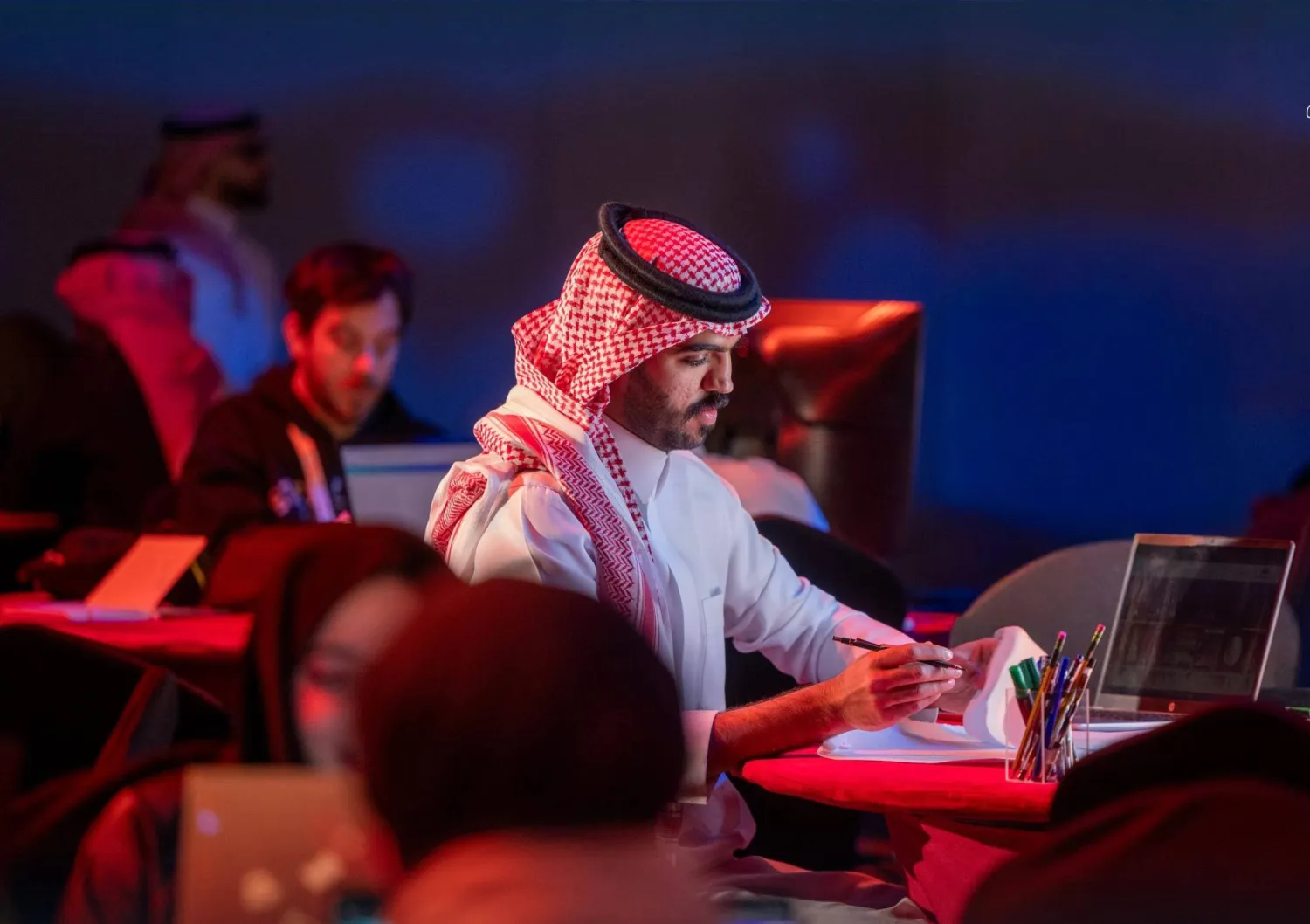
The Ministry of Culture and the Cultural Development Fund signed a memorandum of understanding with SDAIA to explore joint AI programs serving the cultural sector. Photo: Ministry of Culture
TT

AI-Powered Cultural Programs to Transform Saudi Arabia’s Creative Sector

The Ministry of Culture and the Cultural Development Fund signed a memorandum of understanding with SDAIA to explore joint AI programs serving the cultural sector. Photo: Ministry of Culture

Saudi Arabia is preparing to launch a new generation of AI-powered cultural initiatives aimed at reshaping innovation, boosting the efficiency of creative institutions, and helping Saudi artists expand their presence at home and abroad.

On Monday, the Ministry of Culture and the Cultural Development Fund signed a trilateral memorandum of understanding with the Saudi Data and AI Authority (SDAIA) to explore joint AI programs serving the cultural sector, creators, and cultural enterprises.

The move reflects a broader national drive to accelerate the adoption of advanced technologies across the cultural economy as the Kingdom prepares to designate 2026 the Year of Artificial Intelligence.

Building an Enabling Ecosystem

Raed bin Khalil Al Eid, a cultural innovation adviser and founder of the Cultural Management Platform, said the agreement reflects growing recognition of AI’s role in the future of culture.

Although the initiative comes some time after the launch of the Year of AI, he said the delay should not prevent institutions and practitioners from benefiting from the programs expected to emerge.

What matters most, he added, is effective implementation that translates the memorandum into projects with tangible impact.

Al Eid cited a specialized study by the Cultural Management Platform that documented AI applications across all 16 cultural sectors officially recognized in Saudi Arabia, including heritage, museums, libraries, literature, publishing, translation, music, theater, film, architecture, fashion, and culinary arts.

The findings showed that AI has become an enabling technology applicable across the entire cultural ecosystem rather than a tool limited to a single discipline, broadening investment opportunities and making its adoption in Saudi Arabia increasingly practical.

He argued that the Ministry of Culture’s primary role at this stage is to create an enabling environment for AI by establishing policies, regulations, professional standards, and governance frameworks covering intellectual property, data, and ethics.

This, he said, would allow private companies, nonprofit organizations, and community initiatives to develop AI solutions with confidence.

Culture in the Year of AI

Al Eid said cultural innovation is no longer optional but essential as audiences, cultural consumption habits, generational interests, and regional priorities continue to evolve.

He emphasized that coupled with AI, cultural innovation can do more than improve efficiency: it can broaden culture’s reach, engage new audiences, and create more diverse, interactive, and sustainable cultural experiences.

Saudi Arabia’s cultural sector is already undergoing a rapid digital transformation, with further momentum expected as the Kingdom marks 2026 as the Year of Artificial Intelligence. The Ministry of Culture and its affiliated commissions have launched competitions and hackathons to attract innovators and encourage the development of AI applications across the cultural sector.

For Saudi artists and cultural professionals, the initiative is expected to open new opportunities to combine human creativity with advanced AI capabilities across a wide range of creative fields.


Misk Art Institute Launches Summer Art Exhibition in Riyadh

Riyadh is hosting the Prince Faisal bin Fahd Arts Hall Exhibition: Summer 2026, organized by the Misk Art Institute. (SPA)
TT

Misk Art Institute Launches Summer Art Exhibition in Riyadh

Riyadh is hosting the Prince Faisal bin Fahd Arts Hall Exhibition: Summer 2026, organized by the Misk Art Institute. (SPA)

Riyadh is hosting the Prince Faisal bin Fahd Arts Hall Exhibition: Summer 2026, organized by the Misk Art Institute—an affiliate of the Mohammed bin Salman Foundation (Misk)—as part of the Saudi Summer program. The exhibition welcomes visitors through August 1, The Saudi Press Agency said on Tuesday.

Featuring over 40 artworks by more than 30 Saudi and resident artists, the exhibition features visual arts, photography, video, multimedia, and installations. The works explore the intersection of creative practice with diverse fields of knowledge and forms of social engagement.

An accompanying public program of panel discussions and interactive activities complements the exhibition, offering visitors the opportunity to engage directly with participating artists and gain deeper insight into the ideas and creative processes behind their work.


Mayan Astronomer’s Name Deciphered from Ancient Ruins

Guatemala's Minister of Culture and Sports Luis Mendez speaks during a press conference on new findings in the decipherment of hieroglyphs on Maya murals at the Xultun archaeological site, at the National Palace of Culture in Guatemala City on July 13, 2026. (AFP)
TT

Mayan Astronomer’s Name Deciphered from Ancient Ruins

Guatemala's Minister of Culture and Sports Luis Mendez speaks during a press conference on new findings in the decipherment of hieroglyphs on Maya murals at the Xultun archaeological site, at the National Palace of Culture in Guatemala City on July 13, 2026. (AFP)

Archaeologists have transcribed mural symbols from Mayan ruins to learn the name of an astronomer and mathematician from the ancient civilization for the first time, Guatemala's Ministry of Culture said Monday.

The name "White-chested Fox" was found in drawings dating from 400 BC to 900 AD at the San Bartolo-Xultun archaeological site on the Mexican border.

Culture minister Luis Mendez told reporters researchers at Xultun unearthed a "complete mathematical and astronomical formula" authored by Sak Tahn Waax, which translates to White-chested Fox.

Mendez said it's the only work of its kind attributed to a mathematician from the Maya Classic period, considered the peak of the Mesoamerican civilization.

The discovery was "made possible by the epigraphic analysis of more than 50 mathematical and astronomical microtexts written on the wall," the ministry said in a statement.

The glyphs appeared in "a context where art was intertwined with science, mathematics, astronomy and everyday life," Mendez said.

The Maya civilization went into decline around 900 AD, until its collapse with the arrival of Spanish conquistadors at the turn of the 16th century.


Jazan Cultural House Launches Summer Ceramics Camp to Nurture Artistic Talent

Running for six weeks, the program includes specialized workshops - SPA
TT

Jazan Cultural House Launches Summer Ceramics Camp to Nurture Artistic Talent

Running for six weeks, the program includes specialized workshops - SPA

The Cultural House in Jazan Region is running a summer ceramics camp as part of its seasonal programs aimed at developing artistic skills and discovering talent through a training program that combines theoretical and practical instruction in a stimulating creative environment, SPA reported.

Running for six weeks, the program includes specialized workshops that guide participants from concept development to the creation of ceramic sculptures. It also features dedicated workshops for children with age-appropriate activities.

The camp aims to make productive use of the summer vacation by developing artistic capabilities, supporting talent, and enhancing cultural activity in the region.
