


Libya’s Zawiya Pays Growing Price for Stray Gunfire

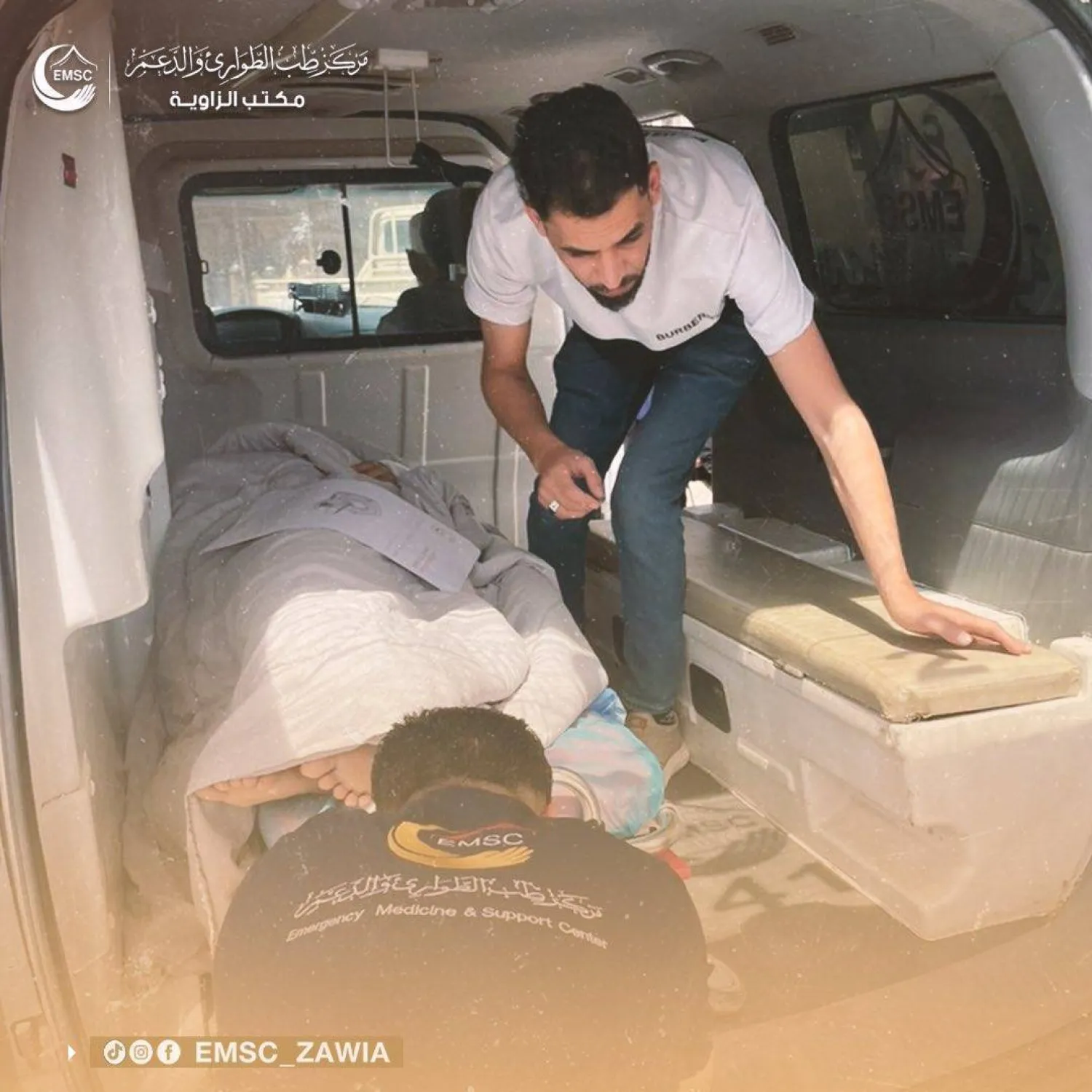
A victim of clashes in Libya’s Zawiya in early May (Emergency Medicine and Support Center)
TT

Libya’s Zawiya Pays Growing Price for Stray Gunfire

A victim of clashes in Libya’s Zawiya in early May (Emergency Medicine and Support Center)

Gunfire tore through a neighborhood near Jazirat al-Muaskar in Libya’s western city of Zawiya after an intoxicated militiaman opened fire on the headquarters of a rival armed group, adding to the blood toll in a city already weighed down by militia violence.

Zawiya, long under the grip of armed factions, has grown used to burying residents killed by stray bullets. The city barely emerges from one round of fighting before another begins, leaving more dead and wounded.

Amjad al-Kilani, known as “al-Zir” and affiliated with the Zawiya-based 103rd Battalion, also known as al-Salla, was seen staggering with a machine gun over his shoulder as he fired indiscriminately toward a base of the al-Far militia, led by Mohammed Bahrun, and at nearby shops.

Witnesses in Zawiya said the clash stemmed from a dispute involving Kilani, who was previously affiliated with the Rabi al-Fanouta militia and runs a business on the coastal road.

After he recently joined al-Far, members of al-Salla, led by Othman al-Lahab, attacked him and forced him out of the market, the witnesses said.
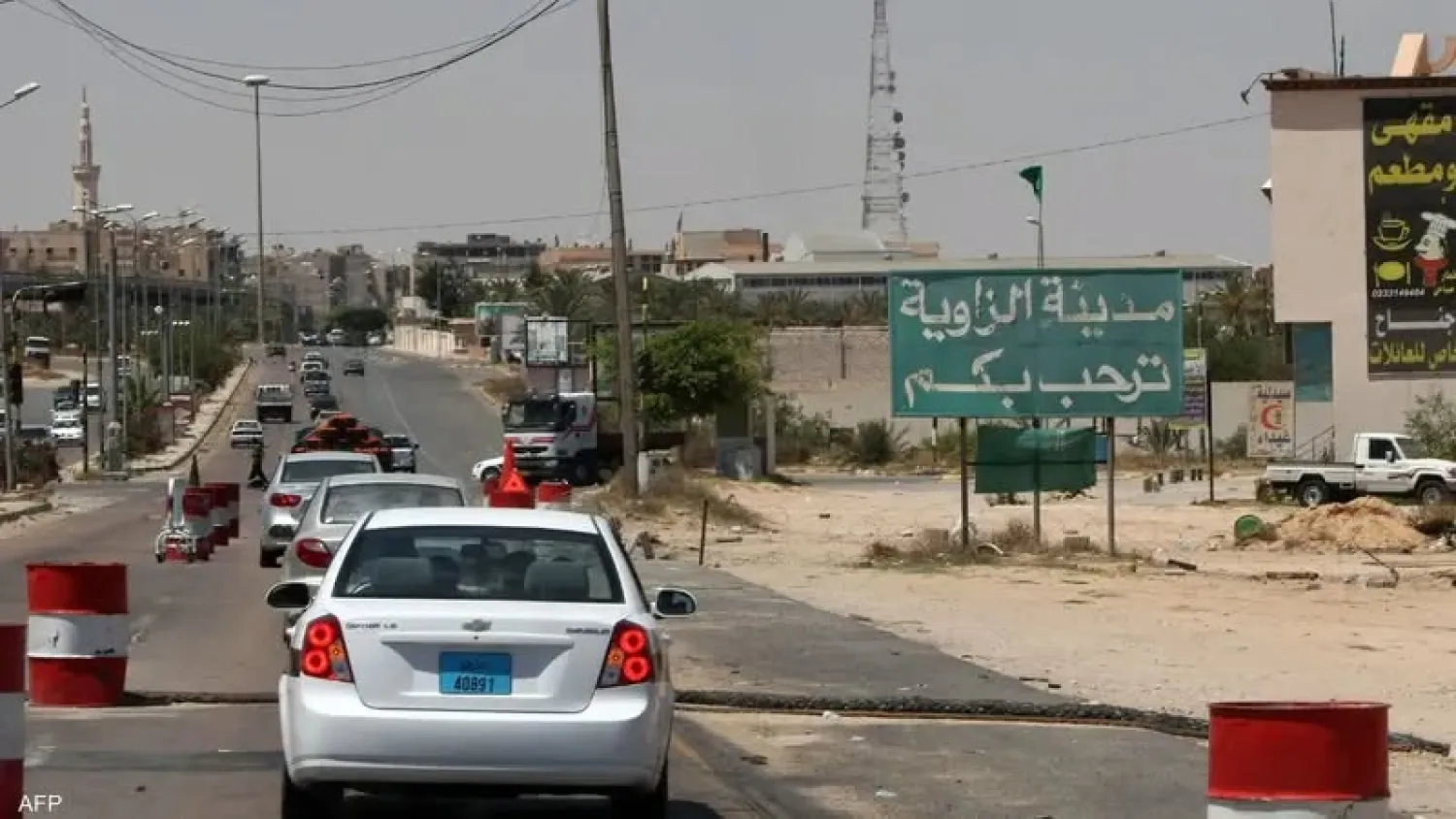
Entrance to the city of Zawiya (from Zawiya-related social media pages)

Libyan businessman Ismail al-Shtaiwi condemned the footage of the intoxicated gunman firing wildly, posting a video of the incident on Facebook.

“No country in the world, no matter how wealthy, can take a single step toward success and stability while drowning in a militia swamp,” Shtaiwi wrote on Friday.

“Stability cannot be achieved, nor can development and economic reform move forward, while the country remains at the mercy of illegal guns and militias that dictate decisions,” he said.

“It is painful and shameful that this criminal and absurd scene continues to be exported to the world, reducing Libya to a state held hostage by chaos, uncontrolled weapons and outlaw gangs, instead of one known for its enormous capabilities, opportunities and resources.”

Shtaiwi said ordinary Libyans were paying the price through restrictions on travel and movement, damage to their image and the erosion of their country’s standing abroad.

“What is also painful and regrettable is that billions are spent every year under the headings of security and defense, while the results are there for everyone to see,” he said.

Violence in Zawiya often flares and then subsides, but only after leaving behind dead and wounded. One question continues to haunt the city: When will the threat from armed groups that endanger lives and drain the country’s resources finally end?

Several young men from Zawiya were killed in armed skirmishes in late May, prompting UN envoy Hanna Tetteh to warn against escalation and call for restraint.

Nasser Ammar, commander of the Support Force within the Tripoli authorities’ Operation Volcano of Rage, said Kilani’s random gunfire and intimidation of civilians while intoxicated was “an insult to the city and its history.”

“Zawiya has never lacked, and will never lack, free men who will not allow a reckless man to violate the sanctity of their homes and property,” Ammar said. “Protecting our people and uprooting this corruption is a duty for every honorable person.”
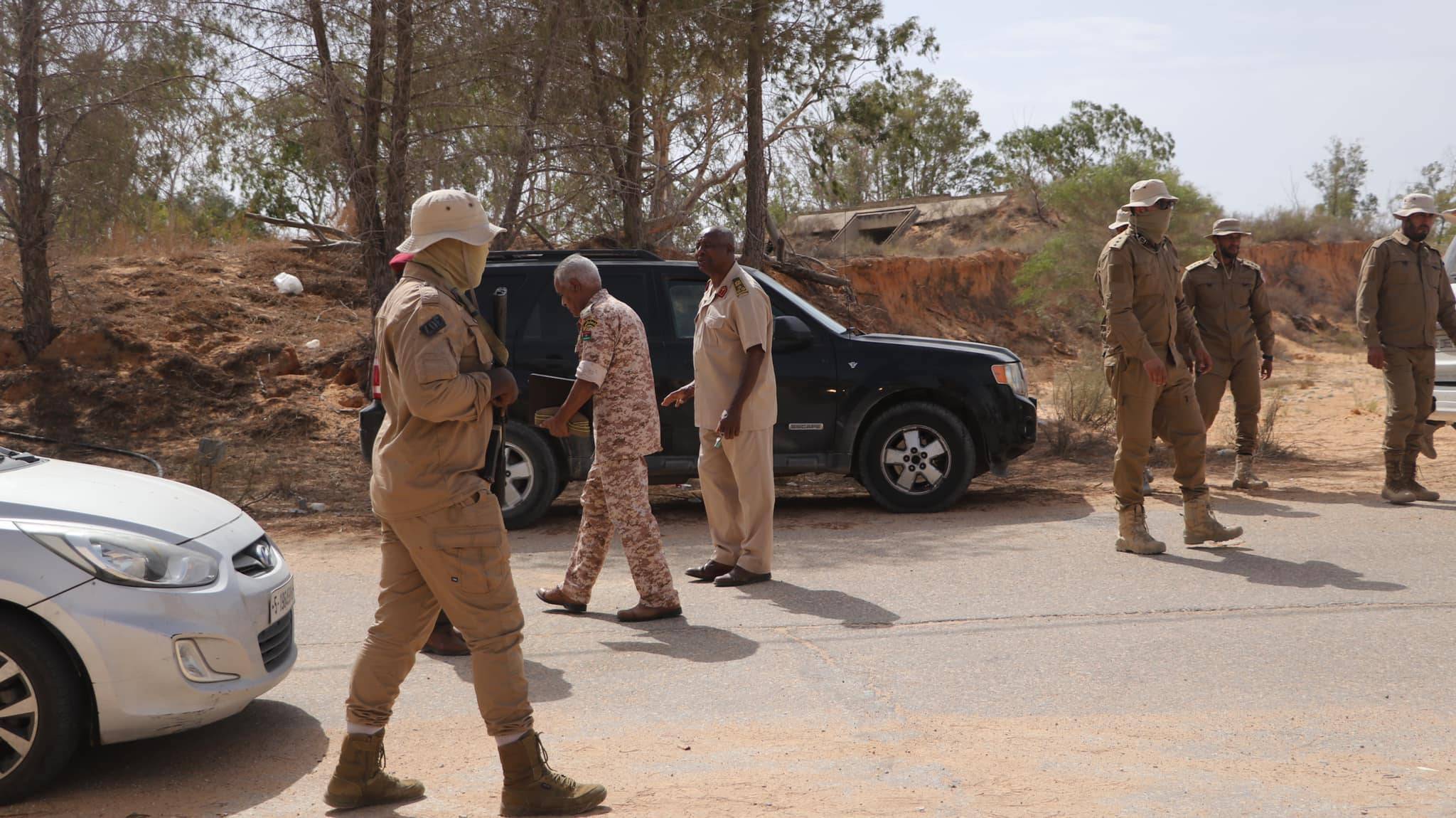
Security forces near Tripoli following clashes between armed militias (file photo from pages affiliated with security agencies)

Since the overthrow of late leader Muammar Gaddafi in 2011, Libya has seen a pattern of random or unexplained assassinations, often driven by armed rivalries, militia struggles for influence and revenge for earlier killings.

Local media tracking the violence in Zawiya have counted 62 deaths since the start of this year.

A security source at the Zawiya Security Directorate told Asharq Al-Awsat, however, that the true toll was higher because no official count existed.

Moatasem Ambiya was killed early on Thursday after being shot in the Jodayem area east of Zawiya by people described as “outlaw gunmen,” according to human rights groups.

The National Institution for Human Rights called on the Interior Ministry, the Zawiya Security Directorate, the Criminal Investigation Department and the prosecutor’s office at the Zawiya Court of Appeal to open a full investigation into Ambiya’s killing.

The group expressed “deep concern over the rising rates and indicators of kidnapping, arbitrary detention and extrajudicial killings in numerous cities, regions and municipalities.”

It blamed what it called “security chaos” caused by the absence of the relevant security authorities.

Like embers beneath the ashes, Zawiya remains on edge, bracing for violence that could erupt at any moment.

The widely shared video of the intoxicated gunman has come to reflect the growing reach of militias, fueling anger among Libyans over the security situation.

With armed groups tightening their grip, bloggers and activists in Zawiya have found little recourse beyond social media hashtags such as “Zawiya Is Bleeding,” “Stop the Killing” and “Enough Silence.”

They hope to make their voices heard by the authorities in Tripoli, whom they accuse of appeasing the city’s armed groups, supporting their presence and inviting their leaders to official gatherings.



Syria Says Arrested Hezbollah-Affiliated Cell Planning Attacks

Syrian Internal Security Forces during the security operation against the Hezbollah cell. (Syrian Internal Security Forces on X)
TT

Syria Says Arrested Hezbollah-Affiliated Cell Planning Attacks

Syrian Internal Security Forces during the security operation against the Hezbollah cell. (Syrian Internal Security Forces on X)

Syrian authorities said on Tuesday that they had arrested a Hezbollah-affiliated cell in the country's south near the Israeli-occupied Golan Heights, accusing it of planning attacks on unspecified targets.

The new authorities in Damascus, who ousted longtime ruler Bashar al-Assad in 2024, are hostile to the Lebanese group, which is a sworn enemy of Israel and fought on Assad's side during the Syrian civil war.

Tuesday's announcement came hours after Israeli Prime Minister Benjamin Netanyahu said there were "indications" that Israel's enemies could try to attack ahead of elections scheduled for late October.

Syrian intelligence services and security forces "thwarted a sabotage plot in the Yarmuk basin in Daraa (province) and arrested a Hezbollah-affiliated cell composed of three individuals", Syrian state television reported, quoting a statement from the internal security forces.

A suspect detained in the security operation. (Syrian Internal Security Forces on X)

The Yarmuk basin area, where state media has previously reported Israeli incursions and shelling, borders the Israeli-annexed Syrian Golan Heights, as well as Jordan.

"The operation followed careful monitoring of an attempt by the cell to prepare rocket launch platforms with the aim of carrying out attacks to destabilize security and stability," the statement said.

It did not specify the target of the alleged planned attacks and said investigations were ongoing.

Syrian authorities have previously said they dismantled several Hezbollah-linked cells preparing attacks in Syria, accusations the group has denied.

Authorities have also previously announced several seizures of weapons they said were bound for Hezbollah, which lost a key supply route from its backer Iran when Assad was toppled.

In recent weeks, Netanyahu and Israeli Defense Minister Israel Katz have issued repeated warnings to Iran and Hezbollah promising retaliation in case of any attack.

Hezbollah drew Lebanon into the Middle East war in March with rocket fire at Israel, which responded with airstrikes and a ground invasion.

Suspects detained in the security operation. (Syrian Internal Security Forces on X)

The latest war and a previous round of hostilities with Israel in 2023-2024 have weakened the group.

Israel has carried out hundreds of strikes in Syria since Assad's ouster and sent troops into a UN-patrolled buffer zone that had separated Israeli and Syrian forces in the Golan since 1974.

It has also carried out repeated incursions deeper into Syrian territory and has vowed to keep troops in a so-called "security zone" in southern Syria, where it seeks a broader demilitarized area.

Israel captured most of the Golan Heights from Syria in the 1967 Arab-Israeli War and later annexed the areas under its control, a move only recognized by the United States and Colombia.


Settler Attack on West Bank Village Injures Israeli Forces, Drawing Rare Rebuke

A burned-out car stands outside a damaged building in the West Bank village of Jalud, south of Nablus, 29 September 2026. (EPA)
TT

Settler Attack on West Bank Village Injures Israeli Forces, Drawing Rare Rebuke

A burned-out car stands outside a damaged building in the West Bank village of Jalud, south of Nablus, 29 September 2026. (EPA)

More than 100 Israeli settlers attacked a Palestinian village in the occupied West Bank early Tuesday, drawing condemnation from the US and from the Israeli government after they injured three members of the security forces.

The raid, and attacks on other West Bank villages on Tuesday, came amid mounting international criticism of settler violence, which Israeli Prime Minister Benjamin Netanyahu downplayed last week.

Settlers stormed the village of Jalud in the northern West Bank as the military attempted to accompany a Palestinian family back to their home after they had been displaced by settler attacks two months earlier.

The Israeli military said "more than 100 Israeli rioters" were in the area overnight and soldiers and border police tried to disperse them.

"As a result of the clashes, three Israel Border Police officers were lightly injured," it said in a statement.

One person was arrested and two minors were taken in for questioning, police said.

The military said the settlers had blocked roads, set tires on fire and thrown rocks at security forces, also setting fire to Palestinian buildings and vehicles in the village.

It added that the attack had prevented the return of the family, who had been displaced "following several incidents of (Israeli) nationalist crime against them".

- 'No justification' -

Israel has occupied the West Bank since 1967 and has been accelerating settlement expansion there. Some 500,000 Israeli settlers live among three million Palestinians.

Netanyahu condemned the attack, which he blamed on "a small group of rioters".

Their actions "cause great harm to that community and interfere with our forces as they carry out their mission", he said.

President Isaac Herzog, who holds a largely ceremonial role, called the attack "a moral stain, an assault on the rule of law and our most fundamental values". Such criticism from Israeli official is rare for attacks in which the victims are Palestinian.

The US State Department told AFP that "we condemn criminal violence by any party in the West Bank and support appropriate investigations, legal accountability, and judicial processes for those responsible".

Settler attacks against Palestinians including beatings, vandalism and arson averaged six a day in the first half of the year, according to the United Nations.

Recent weeks have also seen high-profile attacks against Israelis in the West Bank, including the shooting dead of a settler by a Palestinian.

Israel has voiced outrage and imposed diplomatic repercussions on several Western countries that imposed sanctions against products from Israeli settlements in the West Bank, which are illegal under international law.

- Rising settler ambitions -

Mahmoud al-Toubasi, a member of the family seeking to return to Jalud, told AFP that he and his relatives had left the house more than two months ago, and that it had been occupied by settlers until the attack on Tuesday.

"My wife, my son and I went to the house in the car, accompanied by an army vehicle in front of us and another behind us," he said.

Settlers attacked the group upon their arrival at the house and were pushed back by soldiers with pepper spray, he added.

"We were not physically injured, but we suffered some choking from the pepper spray," Toubasi said.

In a separate attack on Tuesday, dozens of settlers from hilltop outposts raided the Palestinian village of Al-Mughayyir, northeast of Ramallah, residents told AFP.

An AFP journalist saw at least five burnt-out cars as a result.

In a separate incident in the town of Beitunia near Ramallah, dozens of settlers came to hold a prayer for the Jewish holiday of Sukkot using loudspeakers, Mayor Ribhi Dawla told AFP.

"This gathering is a dangerous precedent," he said. "There are ambitions for settlements in the area, they placed a caravan in the western part of the town and installed an iron gate."

In another incident on Tuesday evening, the Palestinian Red Crescent reported that its crews were "treating three people who were assaulted and beaten by settlers in the Jamala area near Ramallah" and taking them to hospital.

Violence has increased in the West Bank since the start of the Gaza war in October 2023, with Israeli soldiers or settlers killing at least 1,111 Palestinians in that period, including both gunmen and civilians, per an AFP tally based on data from the Palestinian health ministry.

Israeli figures show at least 49 Israelis, including civilians and security personnel, have been killed in Palestinian attacks or during Israeli military operations during the same period.


Morocco’s King Names El Mansouri First Woman Head of Gov’t

Fatima Ezzahra El Mansouri, Morocco’s newly appointed head of government. (AFP)
TT

Morocco’s King Names El Mansouri First Woman Head of Gov’t

Fatima Ezzahra El Mansouri, Morocco’s newly appointed head of government. (AFP)

King Mohammed VI has appointed Fatima Ezzahra El Mansouri, a leader of the Authenticity and Modernity Party (PAM), as Morocco’s head of government, making her the first woman named to the post. She has been tasked with forming a government.

The appointment places El Mansouri at the center of a demanding political period. Her government will face expectations over social policy and regional inequality as Morocco prepares to co-host the 2030 World Cup.

Early life and political background

El Mansouri was born in Marrakech on Jan. 3, 1976, and is 50. Her family comes from the Rehamna region near the city.

Her late father, Abderrahmane El Mansouri, served as pasha of Marrakech for three decades and was Morocco’s ambassador to the United Arab Emirates.

Growing up close to public administration, politics and diplomacy shaped her early interest in law and public service.

Education

El Mansouri attended French schools in Marrakech and earned her baccalaureate at Lycée Victor Hugo. She later studied law in France, obtaining a postgraduate diploma in business contract law from the University of Montpellier.

She also earned a diploma in Anglo-American business law from New York University and a degree in private law from Mohammed V University in Rabat, according to the supplied account.

From law to politics

After completing her studies, El Mansouri established a law practice in Marrakech specializing in property and commercial transactions.

She joined PAM when it was founded in 2008. A year later, at 33, she was elected mayor of Marrakech, becoming the first woman to lead the city’s municipal council. The supplied account describes her as the second woman to become a mayor in Morocco.

Government and party leadership

El Mansouri went on to serve in parliament. She returned to the Marrakech mayoralty in September 2021 and was appointed minister of national territory planning, urban planning, housing and city policy the following month.

In February 2024, she became coordinator of PAM’s collective leadership, strengthening her position within the party before her appointment to form a government.

The challenges ahead

El Mansouri’s appointment is a milestone for women in Moroccan politics.

Her government will also be judged on its response to demands for improved living standards, efforts to narrow the gap between cities and less-developed areas, and preparations for the 2030 World Cup.