


IMF Backs Yemeni Reforms to Restore Economic Stability

An international program aims to reduce Yemen's budget deficit by increasing domestic revenues. (Government media)
TT

IMF Backs Yemeni Reforms to Restore Economic Stability

An international program aims to reduce Yemen's budget deficit by increasing domestic revenues. (Government media)

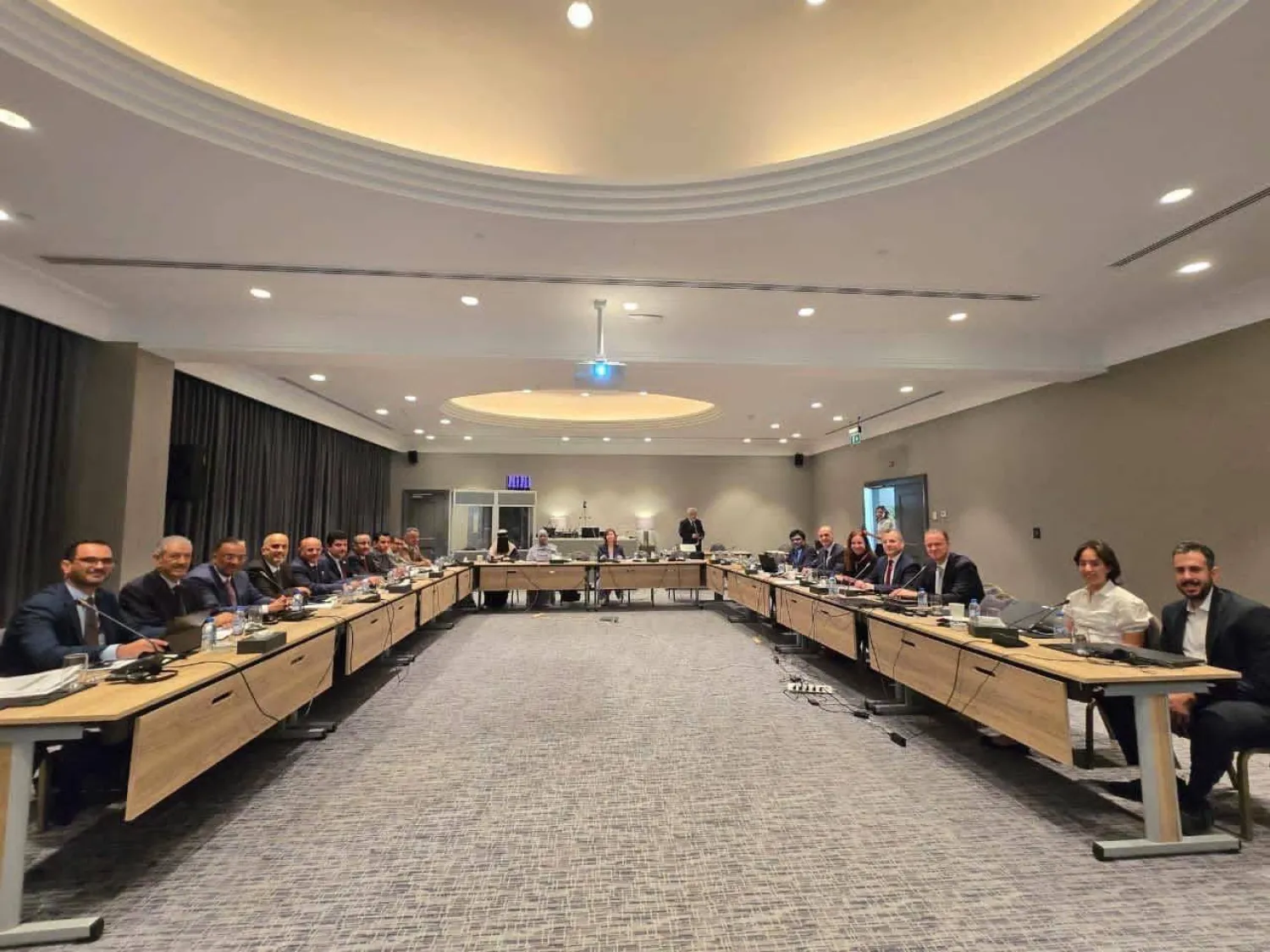
The Yemeni government and the International Monetary Fund (IMF) have reached a staff-level agreement on an 18-month economic reform program aimed at supporting economic stability, advancing fiscal and monetary reforms, and improving the management of public resources. The program is intended to help Yemen establish a credible reform track record that strengthens confidence among donors and international financial institutions.

The agreement followed talks between an IMF mission and Yemeni officials in Amman, Jordan, from July 5 to 16. The IMF stressed that the proposed program still requires approval by the Fund's management, noting that it is designed to preserve macroeconomic stability amid the continuing impact of the regional conflict while advancing economic and institutional reforms.

The IMF projects that Yemen's economy will contract by 1.5 percent in 2026, marking a fifth consecutive year of economic decline. The downturn is attributed to deteriorating terms of trade caused by the regional conflict, the ongoing energy crisis, and weak domestic demand. However, the Fund expects the economy to begin regaining stability in 2027 as regional conditions improve and economic activity gradually recovers.

The IMF also noted that Yemen will continue to rely heavily on remittances from expatriate workers and donor support to finance imports, particularly humanitarian assistance, given the country's weak public finances and declining traditional sources of revenue. It forecasts that the current account deficit will remain at around 3.4 percent of gross domestic product, while foreign exchange reserves are expected to stay at inadequate levels.

The reform program seeks to reduce the budget deficit during 2026 and 2027 by increasing domestic revenue, following a sharp decline in government spending after oil exports were suspended in 2022.

Fiscal and Monetary Reforms

The IMF said the Yemeni government has already implemented a number of measures, including the liberalization of the customs exchange rate in May, a step expected to increase customs duties and goods and services tax revenues. The authorities have also moved to strengthen tax compliance, particularly among large taxpayers and state-owned enterprises.

The program further includes measures to improve fiscal transparency by bringing previously off-budget revenues and expenditures into the official public accounts, strengthening oversight of government spending, and establishing a Treasury Single Account to improve the management of public resources.

Monetary Policy

On the monetary front, the program focuses on maintaining price stability and gradually rebuilding foreign exchange reserves. It also calls for greater exchange rate flexibility to help absorb external shocks, while reducing reliance on monetary financing of the budget deficit and improving the efficiency of the foreign exchange market.

The program also includes reforms to the financial and banking sector, including the adoption of new bank risk management frameworks, expanded supervision to cover all deposit-taking institutions, publication of audited financial statements for banks, and stronger measures to combat money laundering and terrorist financing.

The IMF said these measures will strengthen Yemen's ability to improve its fiscal position, meet its financial obligations, and create the conditions for broader discussions with international partners on debt restructuring, helping to support more sustainable economic growth in the years ahead.
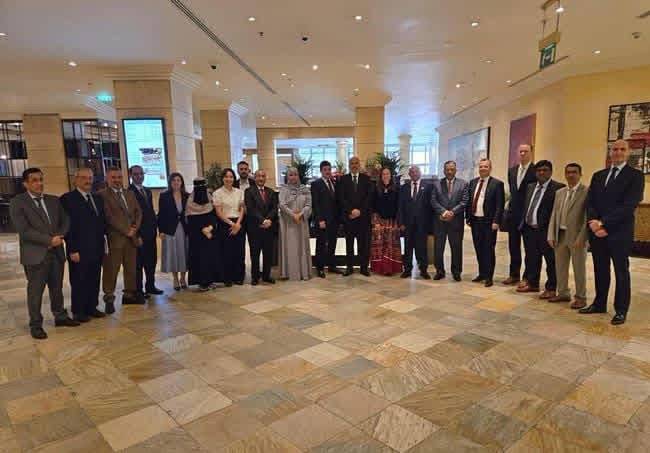
Yemen and the IMF have agreed on an 18-month economic reform program. (Government media)

Electricity Sector

In the electricity sector, the IMF called for the gradual implementation of a cost recovery plan to improve the financial position of electricity utilities and reduce their reliance on government budget support. It also encouraged efforts to attract new investment to expand power generation capacity and improve the reliability of electricity supplies.

The Fund emphasized that sustained implementation of the agreed reforms will be critical to strengthening Yemen's economic recovery. It said the program represents an important step toward building a track record that would help strengthen confidence among international financial institutions and donors.

At the conclusion of the talks, the IMF mission praised what it described as constructive dialogue and close cooperation with the Yemeni authorities, reaffirming its commitment to continue working with them throughout the implementation of the reform program.



UK to Unveil ‘Comprehensive’ Response to Israeli West Bank Settlement Plans in Coming Weeks

The new Israeli settlement “Dotan Valley”, as seen from Arraba whilst Israeli bulldozers uproots olive trees from Palestinian farms in Araba village near the west bank city of Jenin, 01 September 2026. (EPA)
TT

UK to Unveil ‘Comprehensive’ Response to Israeli West Bank Settlement Plans in Coming Weeks

The new Israeli settlement “Dotan Valley”, as seen from Arraba whilst Israeli bulldozers uproots olive trees from Palestinian farms in Araba village near the west bank city of Jenin, 01 September 2026. (EPA)

Britain will set out a "comprehensive" package of measures on Israeli settlements in the occupied West Bank in the coming weeks, Foreign Secretary Ed Miliband said on ‌Tuesday.

Miliband told ‌lawmakers that Israel's ‌E1 ⁠settlement project would cut ⁠across land which the Palestinians seek for a state and "risks making a Palestinian state unviable".

"This government will not acquiesce ⁠in the destruction of the ‌two-state ‌solution," he said. "We will act ‌and I will set out ‌a comprehensive set of measures in the coming weeks."

Britain and other European nations ‌have criticized Israel's plans, while Prime Minister Andy ⁠Burnham ⁠said before taking office that he was "looking at measures to ban trade in goods with illegal settlements".

The Times reported on Monday that US President Donald Trump's administration is "closely" tracking any plans to introduce a trade ban.


More Than 10 EU Countries Eager to Contribute to Lebanon Mission, EU Foreign Policy Chief Says

(COMBO) This combination of handout satellite images taken by Planet Labs PBC shows views of the village of Yaroun in southern Lebanon close to the border with Israel on (top L to R followed by bottom L to R) October 5, 2024; January 10, 2025; January 30, 2025; and on May 2, 2026.  (Photo by 2026 Planet Labs PBC / AFP)
(COMBO) This combination of handout satellite images taken by Planet Labs PBC shows views of the village of Yaroun in southern Lebanon close to the border with Israel on (top L to R followed by bottom L to R) October 5, 2024; January 10, 2025; January 30, 2025; and on May 2, 2026. (Photo by 2026 Planet Labs PBC / AFP)
TT

More Than 10 EU Countries Eager to Contribute to Lebanon Mission, EU Foreign Policy Chief Says

(COMBO) This combination of handout satellite images taken by Planet Labs PBC shows views of the village of Yaroun in southern Lebanon close to the border with Israel on (top L to R followed by bottom L to R) October 5, 2024; January 10, 2025; January 30, 2025; and on May 2, 2026.  (Photo by 2026 Planet Labs PBC / AFP)
(COMBO) This combination of handout satellite images taken by Planet Labs PBC shows views of the village of Yaroun in southern Lebanon close to the border with Israel on (top L to R followed by bottom L to R) October 5, 2024; January 10, 2025; January 30, 2025; and on May 2, 2026. (Photo by 2026 Planet Labs PBC / AFP)

More than 10 European Union members are willing to contribute resources and people to a planned mission to advise and train Lebanon's armed forces, EU foreign policy chief Kaja Kallas said on Tuesday. 

The proposed mission stems from the EU studying ways to strengthen Lebanese forces to help free up the Lebanese army to focus on disarming the armed group Hezbollah. 

Western countries have long called for Lebanon to disarm the Iran-backed group, and doing ‌so is a ‌central component of a ceasefire between Lebanon ‌and ⁠Israel aimed at ⁠ending a war that has run in parallel with the US-Israeli war against Iran. 

The mandate of a UN force in Lebanon, UNIFIL, is set to expire at the end of 2026, and it is expected to begin a year-long drawdown and withdrawal. 

"The EU is not seeking ⁠to replace UNIFIL," Kallas told reporters in Ireland ‌following a gathering of ‌European defense ministers. 

"Our objective is to strengthen the Lebanese armed forces and ‌the ability of the Lebanese state to provide ‌security across its territory," she said, adding that planning is progressing well. 

An EU official told Reuters that the bloc's aim is to establish the mission in mid-October and then deploy personnel in late ‌2026 or early 2027. 

Kallas did not provide detail on which EU countries would ⁠be involved. 

France has ⁠been trying for several months to organize an international conference that would aim to strengthen the Lebanese armed forces, and also proposed creating an international force as part of efforts to replace UNIFIL. 

A senior Western diplomat told Reuters on Tuesday there was limited prospect for major decisions on Lebanon's future before Israel's election in late October. The diplomat also said there was little chance of progress without any clear strengthening of the Lebanese armed forces that would enable them to move into areas previously controlled by Hezbollah. 


Lebanese Presidents and Hezbollah: From Containment to Confrontation

FILED - 16 February 2026, Lebanon, Beirut: FILE PHOTO - Lebanese President Joseph Aoun speaks during a press conference. Photo: Markus Lenhardt/dpa
TT

Lebanese Presidents and Hezbollah: From Containment to Confrontation

FILED - 16 February 2026, Lebanon, Beirut: FILE PHOTO - Lebanese President Joseph Aoun speaks during a press conference. Photo: Markus Lenhardt/dpa

Over more than three decades, the approaches taken by Lebanon’s presidents toward Hezbollah and its weapons have shifted in response to changes in the domestic balance of power and regional and international circumstances. The decision to exempt Hezbollah’s weapons from disarmament on the grounds that they constituted “resistance” against the Israeli occupation in southern Lebanon was the first clear breach of the Taif Agreement, which called for the dissolution and disarmament of all militias that had fought during the civil war.

The presidency of the late Lebanese President Elias Hrawi was not in a position to treat Hezbollah on an equal footing with the militias that were dissolved and disarmed. Syrian tutelage, which controlled Lebanon’s political decision-making in coordination with the Iranian regime, had instructed that Hezbollah be elevated from a “militia” to a “resistance” force. This arrangement remained in place until Israel withdrew from southern Lebanon on May 25, 2000. Lebanon then entered a new phase in which Hezbollah remained a political and military actor whose capabilities surpassed those of the state institutions.

From “Militia” to “Resistance”

When Army Commander Emile Lahoud was elected president in October 1998 with the endorsement of the Syrian regime, Hezbollah’s influence within the state grew stronger, particularly after the Israeli withdrawal. The formula of “army, people and resistance” was subsequently entrenched in the ministerial statements of successive governments, particularly after Israel’s war on Lebanon in July 2006.

The same approach continued through most of Michel Suleiman’s presidency, as he dealt with Hezbollah as a resistance force despite major domestic and external changes, most notably the withdrawal of Syrian forces from Lebanon on April 25, 2005, under American pressure, and the assassination of former Lebanese Prime Minister Rafic Hariri.

In his assessment of this trajectory, former MP Fares Saeed, head of the Saydet al-Jabal Gathering, argues that “the Israeli occupation of part of southern Lebanon and Syria’s control over the internal political game imposed a distinction between Hezbollah and the other Lebanese militias that existed during the civil war.” He says these circumstances “led to Hezbollah being elevated from the status of a militia to that of a resistance force, while the other militias were dissolved and disarmed.”

The Shift Following the Historic Bishops’ Call

Fares Saeed recalls the events of 2000, when Israel withdrew from southern Lebanon, coinciding with the death of Syrian President Hafez al-Assad in June of that year. He says these developments encouraged the Maronite Council of Bishops, headed by the late Maronite Patriarch Nasrallah Boutros Sfeir, to take a stronger position and call for the withdrawal of Syrian forces from Lebanon.

“This historic and courageous position was based on a clear logic,” Saeed says. “Since Israel had withdrawn from southern Lebanon, why should Syria not withdraw as well? There was no longer any reason for it to remain in Lebanon.”

The historic call marked a key moment in reopening the debate over the Syrian presence and the future of Lebanese political life. Along with other factors, it paved the way for the formation of the Qornet Shehwan Gathering, which played a prominent role in the political opposition to the Syrian presence.

Saeed says the Qornet Shehwan Gathering began at that stage by advising Hezbollah to join the call for the Syrian regime to withdraw from Lebanon. This came during Emile Lahoud’s presidency, when Lebanon was closely aligned with Syria and the Iranian axis. He considers that the political and security circumstances at the time did not allow the existing equation to be changed, and therefore Hezbollah’s weapons remained outside the substantive debate over the state’s exclusive control of arms.

The “Wooden Equation”

The presidential terms that followed the Taif Agreement, up until Lebanon was drawn into the war in support of Gaza, were not able to move beyond Hezbollah, even on the most sensitive domestic issues. Michel Suleiman himself was elected president as an initial outcome of the Doha Agreement, which followed Hezbollah’s takeover of Beirut on May 7, 2008.

Former MP Fares Saeed stresses that Suleiman’s arrival at Baabda Palace “did not lead to any fundamental change in the approach to Hezbollah’s weapons, as they continued to be treated as resistance.” He notes that Suleiman “did not engage in a direct confrontation with Hezbollah during most of his presidency, except in its final phase, when he described the ‘army, people and resistance’ formula as a ‘wooden equation.’” This, he says, represented a significant shift in the Lebanese debate over the legitimacy of Hezbollah’s weapons.

The Failed Bet on President Michel Aoun

When President Suleiman’s term ended on May 25, 2014, Lebanon entered a presidential vacuum after the Lebanese Parliament was effectively prevented from electing a successor under pressure from Hezbollah, which imposed the equation: “Either Michel Aoun is president, or there will be no president.”

Aoun was eventually elected on October 31, 2016, prompting Hezbollah to declare victory in the battle, viewing it as “the culmination of the victory of the Iranian axis in Syria and Iraq and the Houthi coup against the legitimate government in Yemen.”

Fares Saeed does not hide his view that “the bet by some on Michel Aoun’s ability to Lebanese Hezbollah failed miserably.” After his election, he says, Aoun secured gains in power, appointments, and deals with Hezbollah’s assistance, and “handed the country over to Hezbollah and Iran.”

President Joseph Aoun’s Positions: A Break With Previous Presidencies

The rhetoric of current President Joseph Aoun represents a break with all previous presidencies that had yielded to the will of Hezbollah and Iran. His speech two days ago marking the 81st anniversary of General Security was perhaps the strongest attack yet on Hezbollah.

“In addition to the conflict with Israel, we are living through an internal war with a faction that stands in opposition to the state and its institutions,” he said. “We tell them: whatever you do, we will continue for the sake of the nation.”

Assessing the speech, Fares Saeed, head of the Saydet al-Jabal Gathering, says the fundamental difference today “lies in the circumstances surrounding Joseph Aoun’s presidency.”

He stresses that “the boldness President Joseph Aoun is showing in addressing Hezbollah’s weapons stems, in part, from his knowledge of the nature of Hezbollah and its intentions toward the Lebanese state, as well as his awareness of its previous attempts to dominate the state’s decision-making.”

He also emphasizes “the importance of the major changes that have taken place, beginning with Hezbollah’s military defeat in its confrontation with Israel, followed by the fall of Bashar al-Assad’s regime and the collapse of a key part of the Iranian axis in the region.”