
Lebanon’s judiciary is studying legal and procedural steps that would allow the army to search private property without obstruction, after troops entered the first pilot area in the southern village of Zawtar al-Gharbiyeh.
Prime Minister Nawaf Salam visited the village on Wednesday and raised the Lebanese flag there.
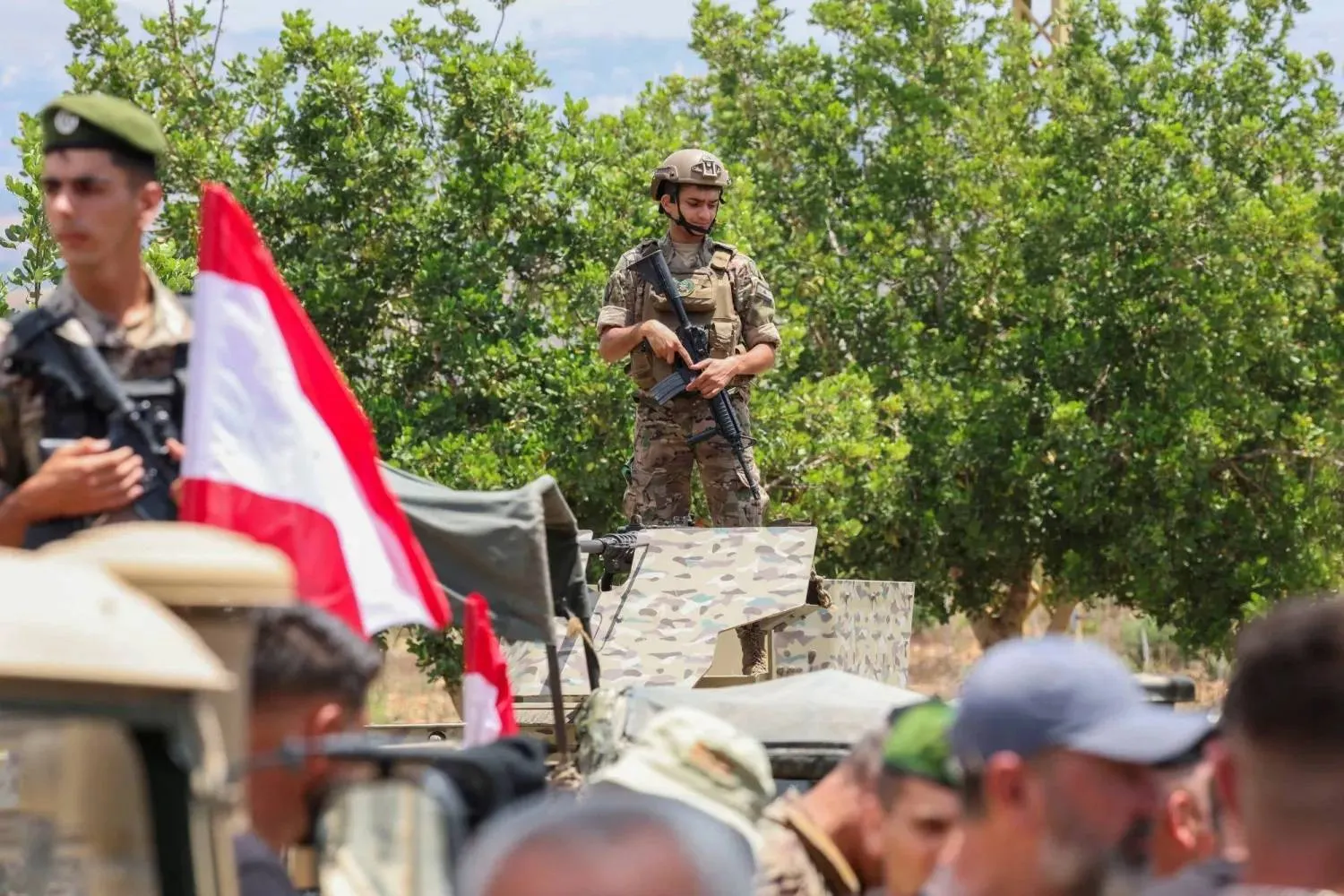
The army entered Zawtar al-Gharbiyeh on Tuesday and continued surveying it on Wednesday to remove weapons and ammunition left from the war, secure the area and allow residents to return safely.
A security source told Asharq Al-Awsat that residents could not return until army engineering units had fully secured the area, to protect civilians from threats to their lives. That had delayed their return, the source said.
The source denied local media reports that Army Commander Gen. Rodolphe Haykal had visited the village after Israeli forces withdrew.
Salam entered along a designated route that engineering units had secured after two days of work starting on Tuesday, the source said.
The army is operating on several fronts as it carries out its security mission in the pilot area under the US-backed framework agreement between Lebanon and Israel.
Troops have deployed in areas vacated by Israeli forces and tightened security by checking identities and searching vehicles, machinery and public property.
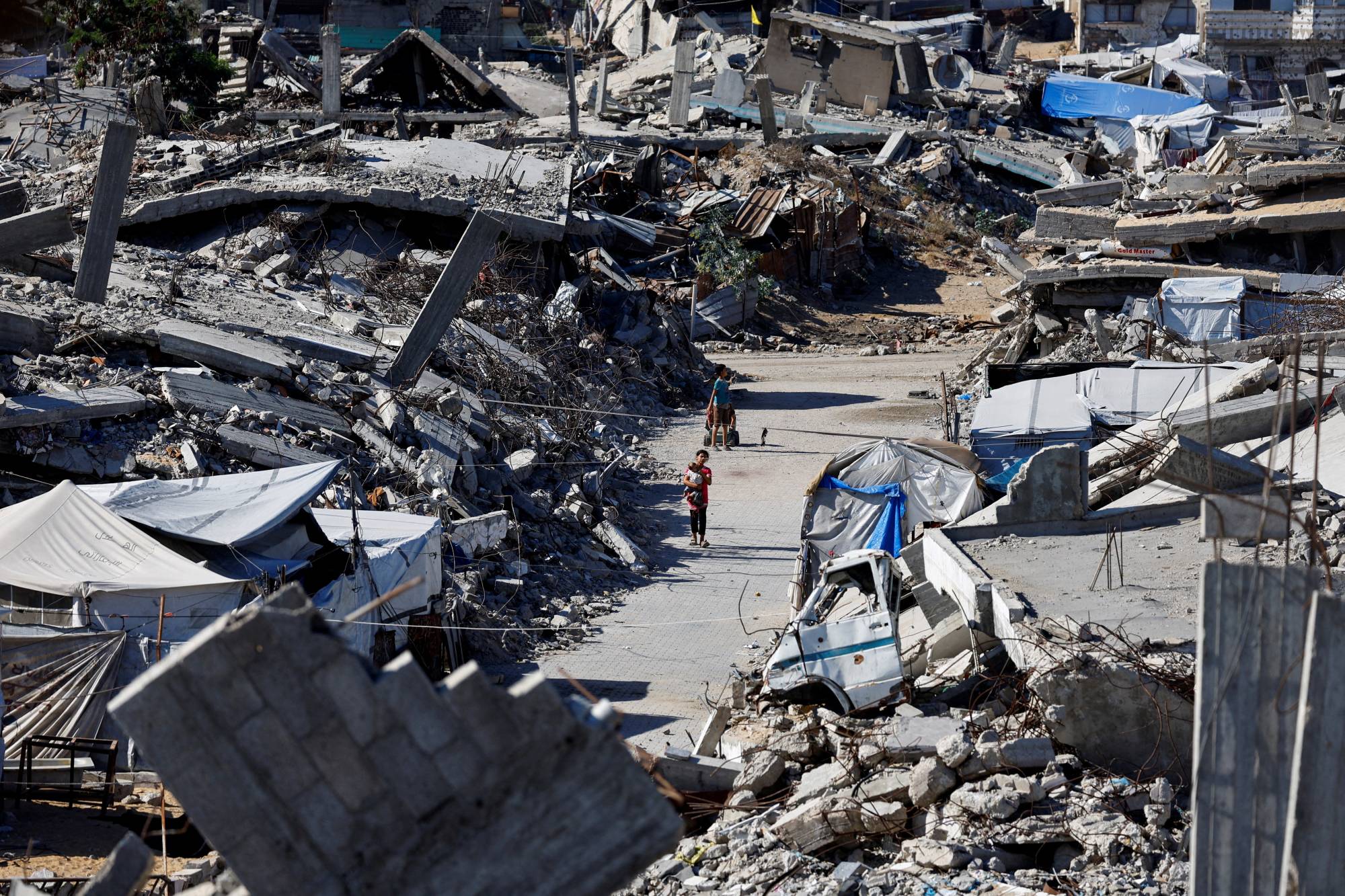
The issue of searching private property, including homes and privately owned land, remains unresolved. No homes remain standing in Zawtar al-Gharbiyeh, which was almost entirely destroyed by Israel.
Private property searches
A judicial source told Asharq Al-Awsat that three proposals were under review to address the need for judicial authorization and remove legal and procedural obstacles.
The judiciary is considering which option to adopt and discuss with army command, the source said.
The first would grant the army open-ended authority to search private property. The source said that would be difficult to apply because it could allow arbitrary decisions.
The second would require the army to seek judicial approval each time it entered a private property. The source also called that option complicated because it would require constant, real-time coordination with the military judiciary.
The source said the third option was therefore the most likely. It would grant search permits area by area, covering an entire village, neighborhoods or designated sections.
All three options remain proposals, the source said.
Lebanese law requires judicial authorization to enter private property, but not public property such as communal land.
Under the framework agreement, the Lebanese army is to deploy in southern Lebanon and dismantle non-state military infrastructure in return for a gradual Israeli withdrawal, in coordination with the Military Coordination Group for Lebanon, or MCG4L, a U.S. military unit.
The agreement, signed in Washington on June 26, tasks the army with taking control of land and villages as Israeli forces withdraw, removing non-state weapons and military infrastructure, reopening roads and facilitating the return of displaced civilians to pilot areas.
Israeli movements deeper into Lebanon
Meanwhile, the Israeli army continued military movements inside Lebanon and violations of the ceasefire agreement.
An Israeli force advanced into the village of Shaqra, Lebanon’s state-run National News Agency reported.
The force moved towards the Dubay area on the village’s southern outskirts and reached the vicinity of the historic Dubay Castle and Wadi al-Salouqi, the agency said.
The advance meant Israeli troops had crossed the yellow line they had drawn in Wadi al-Salouqi and moved deeper into Lebanese territory.
Israeli forces also advanced to the outskirts of Burj al-Mulouk, near the main road between Tall al-Nahhas and Burj al-Mulouk, where they entered and searched a resident’s home.
They searched his mobile phone, questioned him and confiscated his passport before withdrawing towards Tall al-Nahhas.
An Israeli force also entered Srebbine as heavy machine-gun fire was reported in the area.
Repeated artillery fire hit the Ali al-Taher heights on the outskirts of Nabatieh al-Fawqa, while similar shelling struck Houla. A drone strike also targeted Nabatieh al-Fawqa.
At night, Israeli forces carried out explosions in Baraashit and Hadatha, as well as in Kounine and Beit Yahoun in the Bint Jbeil district.
Further explosions were reported in Majdal Zoun in the western district and Kfar Tebnit in the Nabatieh district.