


Six Ancient Comoros Medinas Join UNESCO's Heritage List

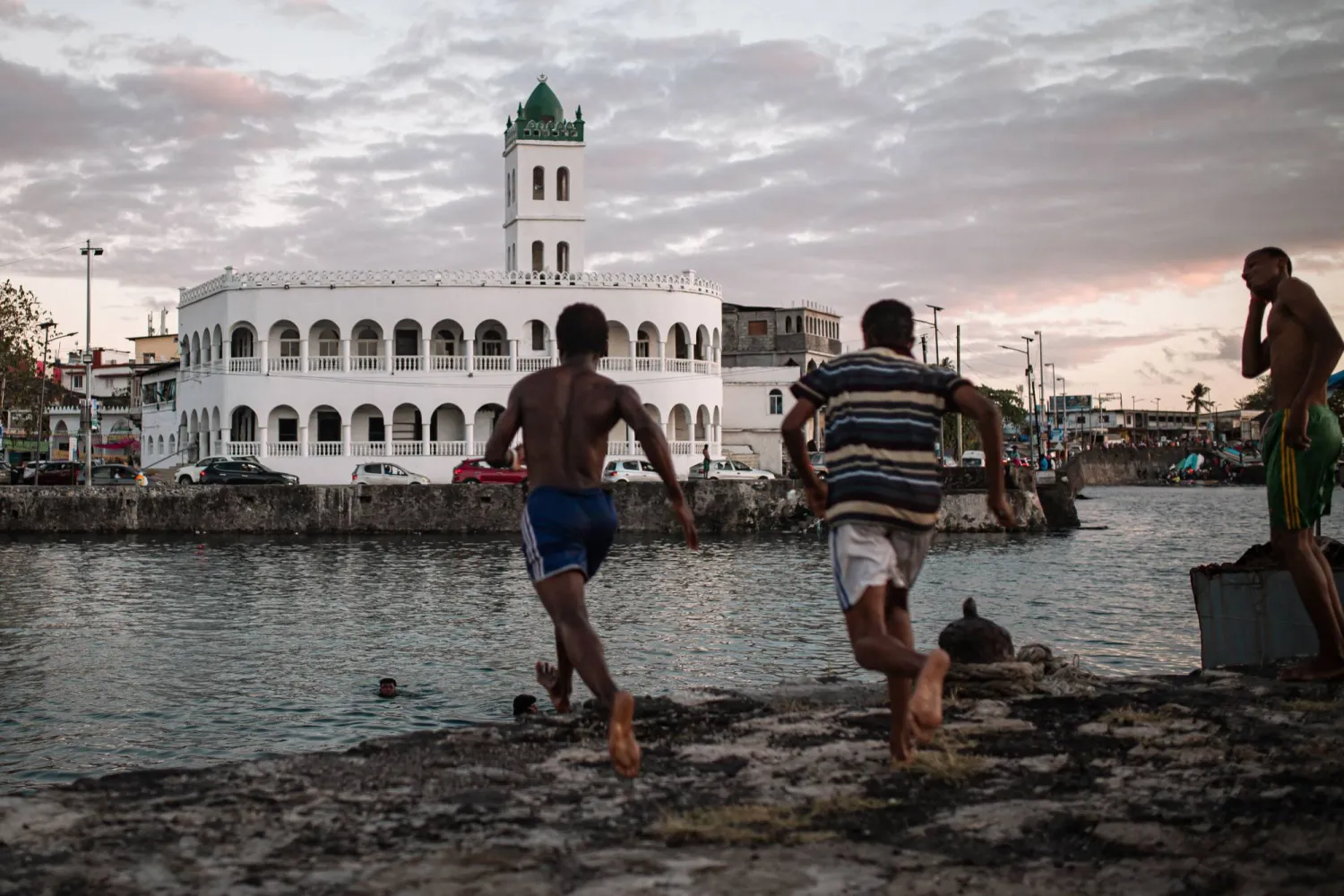
 Children jump in the ocean in the former dhow port of Kalaweni, opposite the Grand Mosque, in Moroni's historic Medina on July 17, 2026. (AFP)
Children jump in the ocean in the former dhow port of Kalaweni, opposite the Grand Mosque, in Moroni's historic Medina on July 17, 2026. (AFP)
TT

Six Ancient Comoros Medinas Join UNESCO's Heritage List

 Children jump in the ocean in the former dhow port of Kalaweni, opposite the Grand Mosque, in Moroni's historic Medina on July 17, 2026. (AFP)
Children jump in the ocean in the former dhow port of Kalaweni, opposite the Grand Mosque, in Moroni's historic Medina on July 17, 2026. (AFP)

UNESCO on Saturday added six centuries-old medinas in the Comoros -- once historic sultanates along Indian Ocean trading routes -- to its World Heritage List, raising hopes for their preservation.

The ancient cities of palaces, mosques, public squares and narrow streets, some dating back to the 12th century, are still occupied today, even though many structures are in serious disrepair.

"This listing is not a finish line but a starting point," said Comoros culture minister Said Mohamed Ali Said, part of a government delegation that travelled to UNESCO's meeting in Busan, South Korea, for the announcement.

It was a moment of "immense national pride", he told AFP.

The medinas are the first sites from the Comoros archipelago to join the UNESCO list, which counts more than 1,200 properties around the world considered to have "outstanding universal value" worth protection.

They "are not just historical sites for us: they are living towns, where people still pray, trade, and celebrate life's great moments exactly as our ancestors did", the minister said.

"This heritage is fragile and, in places, in real danger," he said. "The listing changes things: it places obligations on us, but it also opens doors for us."

The Islamic country, about 300 kilometers (200 miles) off the coast of Africa and home today to around 870,000 people, was for centuries a crossroads of maritime trade between east Africa, the Middle East and Madagascar.

Four of the inscribed medinas are on the main island of Grande Comore and two on the smaller island of Anjouan.
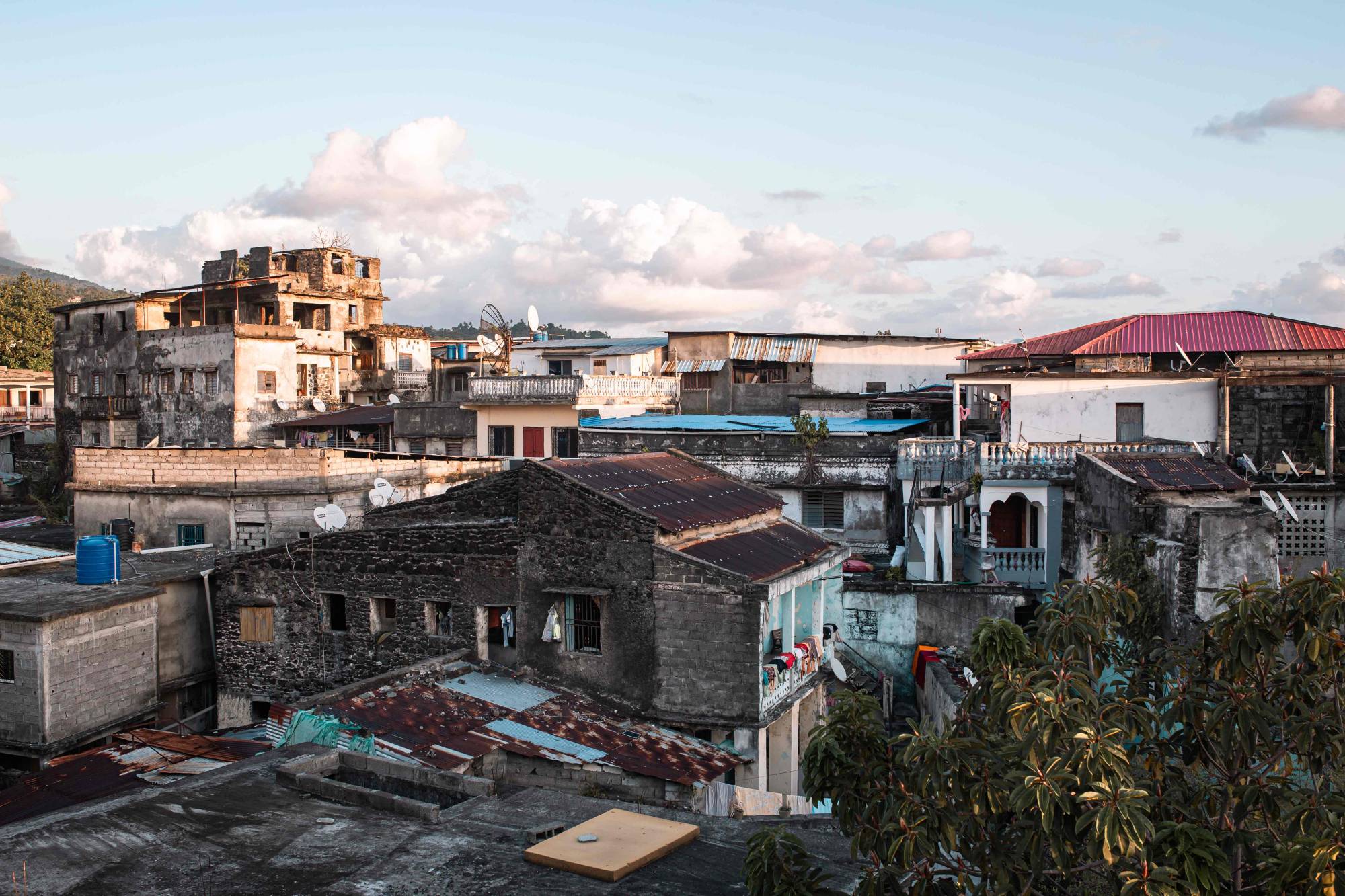
A general view of Moroni's historic Medina on July 18, 2026. (AFP)

- 'Uncontrolled urbanization' -

The 14th-century medina in the capital Moroni includes the emblematic Friday Mosque with its green minaret across from the dhow port. It is surrounded by paved alleyways and multi-storey houses, some with heavy, carved doors.

The small maritime Itsandra medina nearby is considered a cradle of Swahili civilization. Further south, the 12th-century Iconi medina houses the tomb of Prince Said Ibrahim, son of the last Sultan of Grande Comore, Said Ali.

"The Comorian medinas were once home to historic sultanates; unfortunately, uncontrolled urbanization and 'modernization' have altered them," said the heritage promotion office director general, Ania Mohamed Issa.

After the UNESCO inscription, "there will be the development of cultural, historical and architectural tourism, and the preservation of heritage," said Faniya Abbas, of the Medina Wiratha cultural association.

The medinas have preserved their old urban shape, structures and traditions, according to UNESCO's nomination, but the oldest structures "are highly vulnerable, with several cases in serious disrepair".



Tyre’s Ruins Survived the Strikes. Now Divers are Finding their Way Back Underwater

A diver passes above Roman-era columns at an archaeological site near the coast in the southern port city of Tyre, Lebanon, Thursday, Sept. 17, 2026. (AP Photo/Bilal Hussein)
TT

Tyre’s Ruins Survived the Strikes. Now Divers are Finding their Way Back Underwater

A diver passes above Roman-era columns at an archaeological site near the coast in the southern port city of Tyre, Lebanon, Thursday, Sept. 17, 2026. (AP Photo/Bilal Hussein)

Beneath the Mediterranean waters off the southern Lebanese city of Tyre, divers swim past stone walls, ancient structures and a submerged road — remnants of parts of a city that once stood above the water.

With a shaky ceasefire in place after the latest Israel-Hezbollah war, visitors are returning to Tyre, a city known for its Roman ruins and its much older Phoenician history. Diving operators say interest in the underwater archaeological sites is increasing, though the number of visitors remains below prewar levels, The Associated Press said.

“The diving season is not like it used to be before, but the number of people coming to dive to see the ruins is increasing day by day,” said Yousef al-Jundi, manager of the Lebanon Diving Center.

The remains underwater are part of Tyre’s wider archaeological landscape. UNESCO says substantial archaeological remains of the ancient city are submerged, while underwater archaeological research has documented walls, harbor structures and other remains along the former island and coastline.

“This is the identity of this city, which tells us how old this city is and what its history is,” al-Jundi said. He said the underwater sites attract divers from around the world who want to see what is commonly described as Tyre’s “sunken city.”

Tyre was one of the major Phoenician maritime cities of antiquity, with trading networks that extended across the Mediterranean. The city was also famous for its purple dye and later became an important Greek and Roman center. Its archaeological remains were added to UNESCO’s World Heritage List in 1984.

The war raised concerns over the preservation of those remains, both on land and underwater.

“We were worried about the archaeological sites on land, which were affected by the war and the strikes, but at the same time we were also worried about the archaeological sites underwater, but thank God they were not affected,” al-Jundi said.

Before the ceasefire in late June, Tyre came under intense Israeli airstrikes, with neighborhoods in the coastal city heavily damaged during the fighting. UNESCO’s World Heritage Committee placed Tyre on its List of World Heritage in Danger in July 2026, citing the threat and damage caused by the ongoing hostilities.

Ali Badawi of Lebanon’s Directorate General of Antiquities said protecting the underwater sites remains a challenge.

“They’re not very well protected," Badawi said, adding that “encroachments” sometimes happen. “But we are trying very hard through surveys and research that we’re conducting, and we’re trying to develop laws to ensure their safety in the future.”

Badawi said the authorities also want to expand research and investment in underwater tourism, including the creation of underwater archaeological parks that would allow more visitors to see the sites.

The effort comes as Tyre seeks to rebuild its tourism sector after the war, while preserving archaeological remains that reflect thousands of years of the city’s history.


Historic Linah Marks Saudi National Day with Heritage Events, International Performances

Linah is one of the most prominent historical sites in northern Saudi Arabia - SPA
TT

Historic Linah Marks Saudi National Day with Heritage Events, International Performances

Linah is one of the most prominent historical sites in northern Saudi Arabia - SPA

Historic Linah, located south of Rafha in Northern Borders Region, will celebrate Saudi National Day with a series of national and heritage events at the Historic Linah Market.

The program features performances by local and international artistic groups, along with a variety of artistic segments, solo musical performances, and equestrian and camel-riding displays, SPA reported.

The festivities will also include puppet shows, children’s competitions, and a musical evening showcasing traditional songs.

The Historic Linah Municipality has completed preparations across sites, parks, and roads, decorating streets with national flags and festive lighting to welcome visitors and create a celebratory atmosphere that reflects national pride.

Linah is one of the most prominent historical sites in northern Saudi Arabia.

Once a key stop along ancient caravan routes, the town’s historic palaces and market continue to stand as enduring witnesses to the region’s collective memory.


Germans Arrested for Louvre Stunt in Mona Lisa Hall

 A person photographs Leonardo da Vinci's painting Mona Lisa at the Louvre museum, Aug. 31, 2025, in Paris. (AP)
A person photographs Leonardo da Vinci's painting Mona Lisa at the Louvre museum, Aug. 31, 2025, in Paris. (AP)
TT

Germans Arrested for Louvre Stunt in Mona Lisa Hall

 A person photographs Leonardo da Vinci's painting Mona Lisa at the Louvre museum, Aug. 31, 2025, in Paris. (AP)
A person photographs Leonardo da Vinci's painting Mona Lisa at the Louvre museum, Aug. 31, 2025, in Paris. (AP)

Two Germans were arrested Saturday after they stuck two paintings on a wall of the hall that hosts the Mona Lisa in Paris's Louvre museum, police sources said.

The two men used sticky tape to stick the two paintings -- measuring 30 by 40 cm -- in the hall where visitors flock to see Leonardo Da Vinci's masterpiece.

One showed one of the two men wearing armor, while the other was a portrait of the two men accompanied by a woman.

Security officers at the museum detained the two men and called the police, who arrested them for minor damage to the wall. Interviewed by police, they said they had done it for fun.

The two men will be summoned to appear in court once the museum files a formal complaint for the damage, said the police sources.

The Mona Lisa itself, now behind a thick layer of protective glass, suffered no damage in the incident.

Museum officials are more than usually alert these days after a spate of heists at French museums and galleries, which have highlighted inadequate security in some cases and led to questions about whether criminal gangs see them as soft targets.

The Louvre itself was targeted last October when eight items of jewelry worth millions of dollars were stolen during a daylight heist.

Even though four suspects have been arrested, the stolen items have still not been found despite extensive searches by French investigators.

The burglary stunned the world, embarrassed France and revealed a series of security lapses, including the museum's old-fashioned CCTV system.

Many of the museum's security flaws had already been highlighted in a 2019 audit ordered by the museum, the findings of which were never acted on.

The Louvre welcomed around nine million visitors last year, far above its intended capacity, which has led to overcrowding problems.

In May, French President Emmanuel Macron announced a major overhaul of the museum, which will include a new space for the Mona Lisa and a new museum entrance.