
Hezbollah Cash Crunch Stalls Lebanon War Compensation

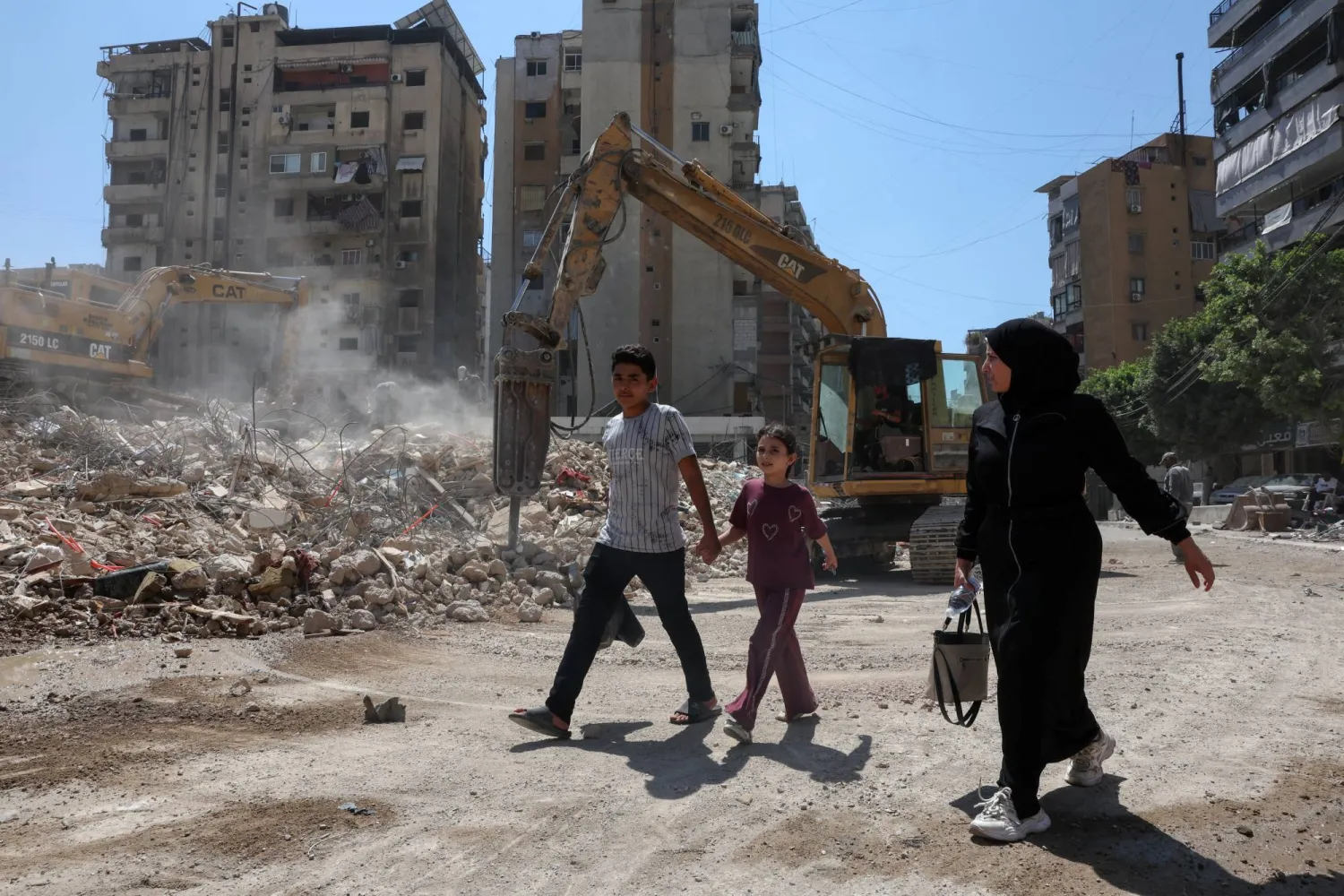
People walk past the rubble of buildings damaged in Israeli strikes in Beirut’s southern suburbs, following a ceasefire agreement between Lebanon and Israel, in Beirut, Lebanon, July 6, 2026. REUTERS/Mohamed Azakir
TT

Hezbollah Cash Crunch Stalls Lebanon War Compensation

People walk past the rubble of buildings damaged in Israeli strikes in Beirut’s southern suburbs, following a ceasefire agreement between Lebanon and Israel, in Beirut, Lebanon, July 6, 2026. REUTERS/Mohamed Azakir

Compensation for victims of the latest war with Israel has stalled, with neither the Lebanese state nor Hezbollah putting forward a mechanism to begin payments.

Damage surveys are continuing in several areas, but thousands of residents are still waiting for an official announcement on when compensation will start and how it will be paid.

Informed sources said Hezbollah was still conducting internal reviews and had yet to begin surveying the damage itself. The Lebanese state, meanwhile, says it lacks the money to launch a compensation program.

Sources in Beirut’s southern suburbs told Asharq Al-Awsat that Hezbollah had not paid any compensation to those affected by the war.

The compensation mechanism remains under review by the relevant bodies within the group, the sources said. Claims are being examined and verified, but no decision has been made to start payments.

Victims receive neither compensation nor housing aid

Residents say there is little on the ground to suggest payments will begin soon.

A local source from Beirut’s southern suburbs, who asked not to be named, said compensation remained “effectively frozen.”

He said he had received neither compensation nor housing assistance, although his home in Haret Hreik was partially destroyed during the latest war.

Another home he owns in a town in the Nabatieh district of southern Lebanon was also damaged, but he has received no compensation or financial aid for that property either.

“Some municipalities carried out preliminary inspections to document the damage and prepare for a later stage,” he said. “But there has been no compensation mechanism and no survey by Hezbollah, unlike after the 2024 war.”

Many residents believe the war has not truly ended and that compensation will therefore remain on hold, he added. They have received no clear information on when payments might begin or how they will be distributed.
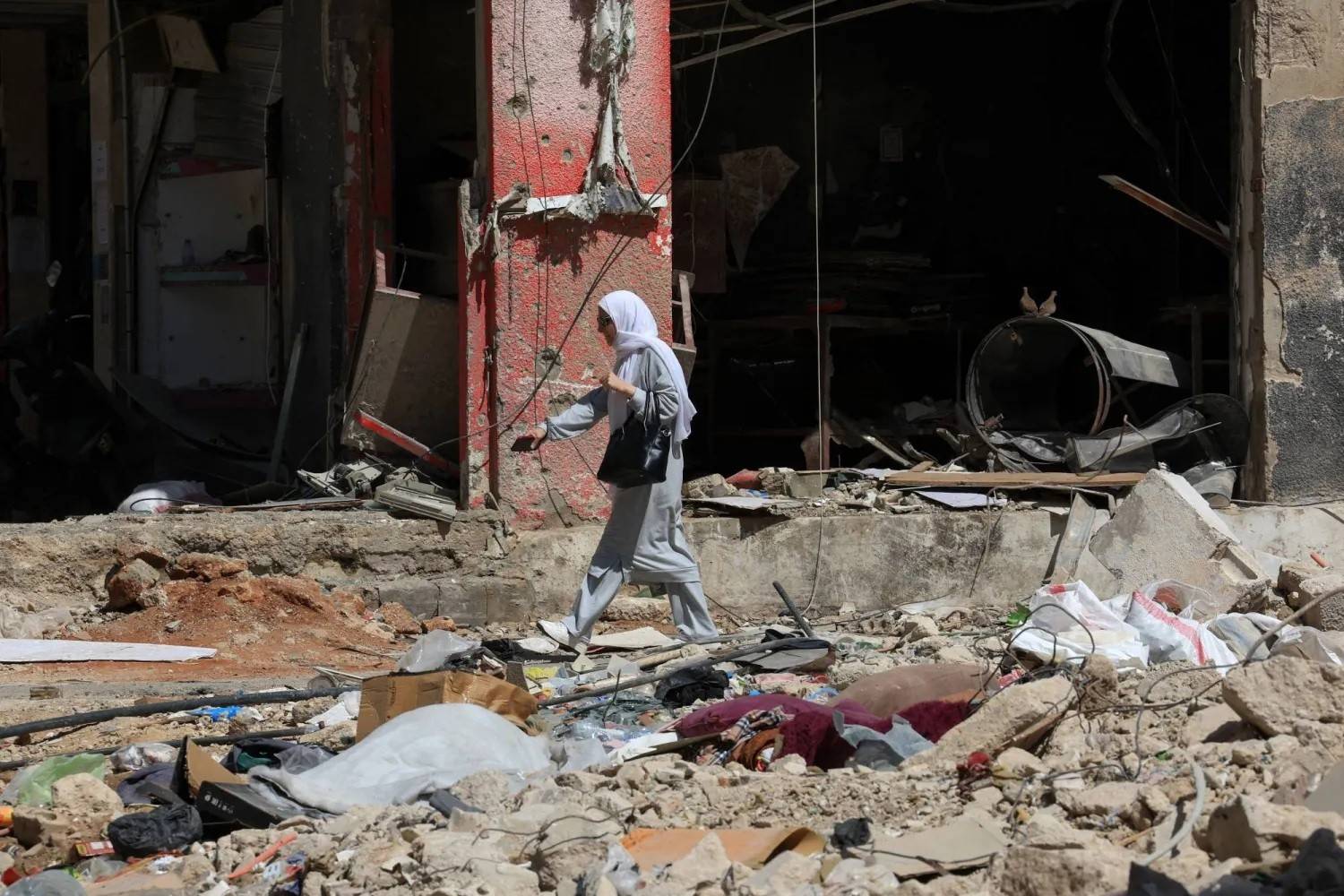
A woman walks through rubble past buildings damaged by Israeli strikes in Beirut’s southern suburbs (Reuters)

Financial strain forces Hezbollah to reset priorities

Psychology professor Mona Fayad said Hezbollah’s failure to pay compensation pointed to a deeper financial crisis, not merely an administrative delay.

“Hezbollah’s delay in compensating those affected is not due to organizational or administrative considerations,” Fayad told Asharq Al-Awsat.

“It reflects growing financial pressure caused by regional shifts and the pressures facing the group.”

She said Hezbollah had been forced to reorder its financial priorities as its sources of support declined.

“The group continues to pay salaries and provide some limited assistance, but it has not begun paying actual compensation,” she said. “This shows that its resources no longer allow it to meet its previous commitments.”

“Basic expenses now come first, while files requiring substantial liquidity, above all compensation, have been postponed.”

Fayad said declining Iranian influence in several regional arenas, particularly Syria and Iraq, had directly weakened Hezbollah’s financial capacity.

Restrictions on supply routes and mounting pressure on the group’s financial infrastructure had forced it to draw on its core resources, she said. Financial institutions linked to Hezbollah were also operating under greater scrutiny and pressure than before.

“The financial crisis is now clearly visible in the failure to compensate those affected,” she said.

But discontent within Hezbollah’s support base remains limited because the state is also unable to offer an alternative, she added. Many residents are still waiting for assistance from the group despite the delay.

Surveys begin, but the state has no money to pay

Hashem Haidar, head of Lebanon’s Council for the South, said damage surveys began as soon as the ceasefire took hold, but compensation payments had not started because funding was unavailable.

“We began surveying damage immediately after the ceasefire in every area that had become safe and was no longer being targeted,” Haidar told Asharq Al-Awsat.

“We could not enter dangerous areas or those where the occupation remains present.”

Survey teams began with homes that had been completely destroyed, he said, allowing the relevant authorities to remove rubble while inspections continued.

But the state has not paid any compensation.

“There has been no compensation at all so far,” Haidar said. “Those affected have received no money because the state lacks the financial means.”

He said preliminary estimates of the damage were available, but accurate figures would not be possible until the full survey was completed.

Inspection teams have still not entered some areas, particularly those within what is known as the “yellow zone,” because access remains impossible.

Until those areas can be reached, Haidar said, the full scale of the losses cannot be determined.


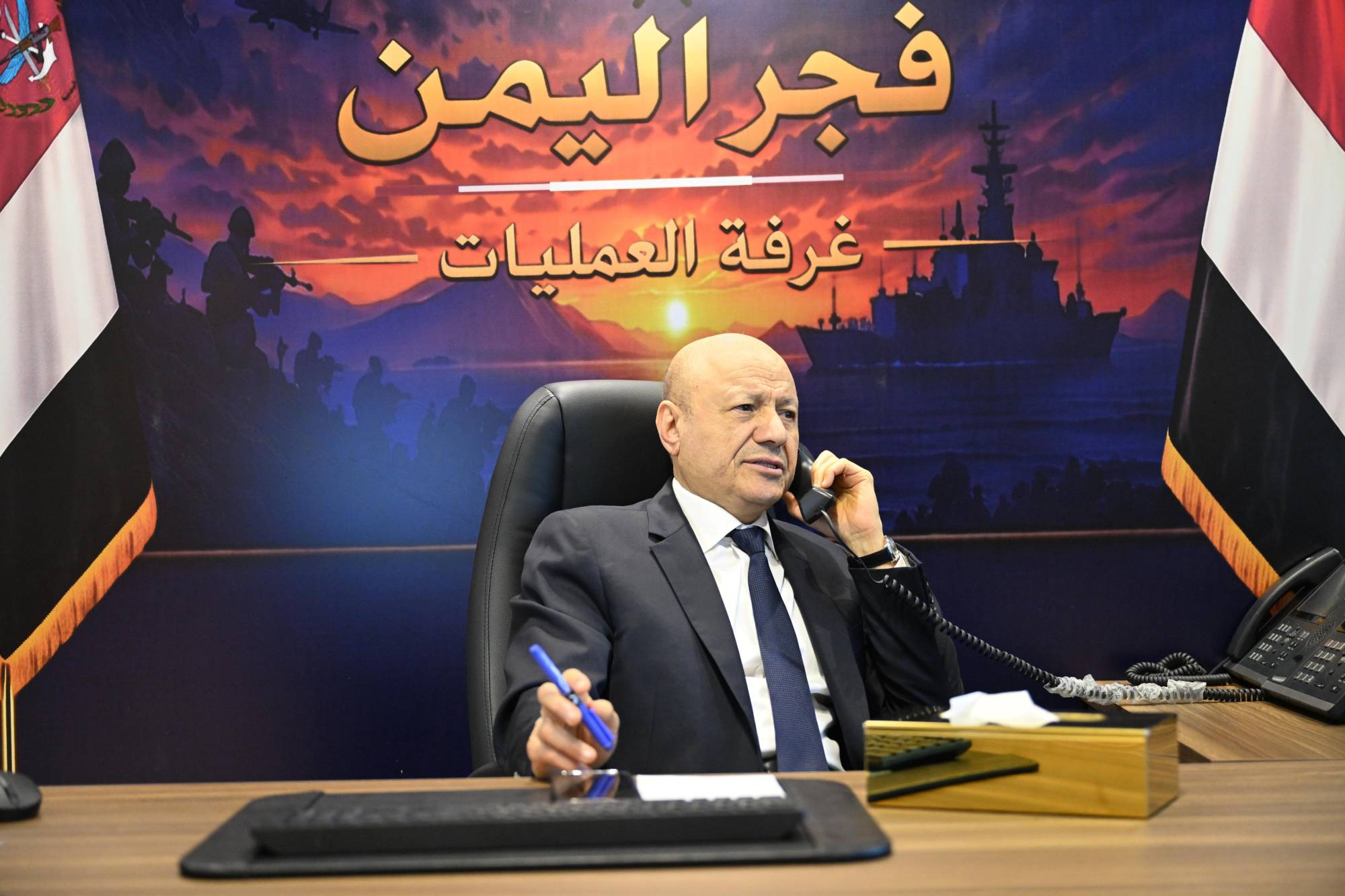
Al-Maqtari to Asharq Al-Awsat: We Are Documenting Houthi Attacks...No Immunity for Perpetrators of Grave Crimes

Yemen needs a comprehensive legislative review to address the effects of war, the coup and division, according to Al-Maqtari (Saba).
TT

Al-Maqtari to Asharq Al-Awsat: We Are Documenting Houthi Attacks...No Immunity for Perpetrators of Grave Crimes

Yemen needs a comprehensive legislative review to address the effects of war, the coup and division, according to Al-Maqtari (Saba).

Yemen's Minister of Legal Affairs, Judge Ishraq Al-Maqtari, said that any future political settlement will not grant immunity to perpetrators of grave crimes, stressing that legal responsibility will not be limited to those who directly carried out the crimes, but will extend to the leaders who planned, issued orders, financed, and facilitated their execution.

In an interview with Asharq Al-Awsat, Al-Maqtari said that the relevant national authorities are working to document violations committed by the Iran-backed Houthi group and gather evidence related to its crimes against cities, ports, economic facilities, and infrastructure across the country.

She explained that Yemen needs a comprehensive legislative review to address the effects of war, the coup, and division, and to keep pace with economic, technological, and social changes. She said the legislative reform roadmap rests on three tracks: updating sovereign and institutional legislation, developing the economic and investment environment, and keeping pace with digital transformation and protecting rights.

Distortions Caused by the Coup

Al-Maqtari said the coup by the Houthi terrorist militias and their war against the state had caused deep distortions in the constitutional and institutional structure. These included the disruption of state institutions, undermining judicial independence, imposing parallel bodies, plundering public resources, issuing decisions outside the framework of the constitution and law, and the proliferation of weapons outside state institutions.

She added that restoring the rule of law begins with ending the coup, restoring state institutions, placing weapons exclusively in the state's hands, unifying the judiciary and law enforcement agencies, and enabling the legitimate government to exercise its powers throughout the national territory.

She continued: "A state governed by the rule of law cannot be established in the presence of armed sectarian militias that impose their will by force and treat state institutions and resources as tools to serve their project."

Responsibility Extends to Leaders

The minister described Houthi militia attacks on cities, ports, economic facilities, and infrastructure as crimes punishable under Yemeni law and grave violations of international humanitarian law, particularly when they target civilians and civilian objects or are carried out indiscriminately or inappropriately.

She stressed that responsibility "is not limited to those who directly carried out the crimes, but extends to the leaders who planned, issued orders, financed, and facilitated their execution."

She affirmed that any future political settlement will not grant immunity to perpetrators of grave crimes, nor erase victims' rights or prevent those responsible from being pursued and held accountable.

Documenting Houthi Crimes

Regarding the documentation of violations, Al-Maqtari said the relevant national authorities are gathering evidence related to crimes committed by the Houthi militias. She explained that the National Commission to Investigate Alleged Violations of Human Rights, as an independent and specialized national body accredited by the Human Rights Council, plays a central role in investigating and documenting violations in accordance with international legal standards.

She added that the Ministry of Legal Affairs, within the limits of its jurisdiction and in coordination with the relevant authorities, is working to strengthen the legal basis for these efforts, preserving the right of the state and victims to accountability and allowing the documented files to be used in the future before national courts and relevant international bodies and mechanisms.

Legislation in Need of Comprehensive Review

According to the minister, Yemen needs a comprehensive legislative review to address the effects of war, the coup, and division, and to keep pace with economic, technological, and social changes that some existing laws are no longer capable of addressing.

She explained that the Ministry of Legal Affairs has already begun exercising its powers in this area by reviewing laws that require updating or amendment and preparing a list of priority legislation.

She said technical legislative committees at the ministry are currently working on these laws in accordance with national priorities and the needs of state institutions and society.

Three Tracks for Reform

Regarding the legislative reform roadmap, Al-Maqtari said it rests on three tracks: updating sovereign and institutional legislation, developing the economic and investment environment, and keeping pace with digital transformation and protecting rights.

She explained that priorities include regulating the protection of personal data and information, combating cybercrime, drafting legislation governing the oil sector, human organ transplantation, the Cancer Patients Support Fund, and public-private partnerships, as well as reviewing press, media, and investment laws.

"We base this on identifying the actual legislative need, the extent to which the law can protect the public interest, and its ability to keep pace with the needs of the state, economy, and society," she said.

Protecting Public Funds

The minister described the law as the foundation that gives economic reforms their legitimacy and sustainability, stressing that public funds cannot be protected and corruption cannot be fought without effective oversight and genuine accountability.

She noted that the state has important legal frameworks governing oversight, tenders, and accounting, but said the main problem lies in weak implementation, overlapping jurisdictions, and slow accountability procedures.

She said that, as part of the government's approach under Prime Minister Dr. Shaya Al-Zindani, the Ministry of Legal Affairs is currently carrying out its core duties of legally reviewing new contracts that state institutions intend to conclude, in order to verify their validity, protect the rights of the state and public funds, and prevent unclear or unlawful financial or legal obligations from being created.

Justice Does Not Mean Impunity

Al-Maqtari stressed that Yemen urgently needs a comprehensive national transitional justice project that places victims and their rights at the heart of any political process and includes truth-seeking, accountability, reparations, restoration of rights, institutional reform, and guarantees against the recurrence of violations.

She affirmed that reconciliation does not mean erasing crimes or equating the state with coup militias that took up arms against it. Nor should a political settlement become a cover for granting immunity to perpetrators of grave crimes, she said.

"Lasting peace is not built on forgetting or escaping accountability, but on fairness, safeguarding victims' rights, and building a state that protects its citizens through the law," she said.

Postwar Files

The minister expected the most difficult issues to include addressing the effects of decisions issued by the Houthi militias in areas under their control, disarming and placing weapons exclusively under state institutions, recovering public funds and assets, resolving the status of employees and military personnel, and addressing issues involving property, confiscations, displaced people, missing persons, and detainees.

She concluded by stressing that transitional justice would be among the foremost of these challenges, because the success of any settlement will be measured by its ability to restore the state and its institutions, protect rights, and prevent impunity, rather than merely bringing military operations to an end.


Arms Depots in Residential Areas Keep Libyans on Edge

Remnants of ammunition after a weapons depot explosion in Misrata, western Libya, on Friday (Criminal Investigation Department)
TT

Arms Depots in Residential Areas Keep Libyans on Edge

Remnants of ammunition after a weapons depot explosion in Misrata, western Libya, on Friday (Criminal Investigation Department)

An explosion at a warehouse belonging to an armed group in the northwestern Libyan city of Misrata has revived fears over munitions stored among civilians despite an earlier order to remove such facilities from populated areas.

Weapons and ammunition depots inside residential areas have become a persistent challenge for Libya’s Government of National Unity (GNA) in the west and a growing concern for residents.

Friday’s blast in the Gharian area underscored the risks posed by ammunition depots run by armed groups inside residential neighborhoods. Residents have renewed calls for the facilities to be moved away from populated areas, fearing a repeat of earlier explosions that caused casualties and sparked widespread anger.

Ammunition found on Friday at the site of a weapons depot explosion in Misrata, western Libya (Criminal Investigation Department)

Salem Krawad, a Misrata notable, said public anger had “reached its peak because of the proliferation of weapons without decisive government action.”

“The danger is not limited to warehouses. It extends to homes containing shells, ammunition boxes, and light arms, raising fear among residents,” he told Asharq Al-Awsat.

Medical sources said the explosion at a warehouse belonging to an armed group calling itself the “Hurricane Brigade” caused injuries and panic after rockets and ammunition flew into the surrounding area, raising fears of further blasts.

By early Saturday, the operations room of the government-run Libyan Mine Action Center was still receiving reports from residents of intermittent ammunition explosions, a center source said.

The depots in the city were large and held various types of ammunition, the source added.

GNA Prime Minister Abdulhamid al-Dbeibah had not commented on the incident. He was visiting Misrata, where he toured a power station and attended a sports festival.

The head of the Government of National Unity attended a sports festival in Misrata but did not comment on the explosion (Dbeibeh's Office)

Interior Minister Emad al-Trabelsi ordered security agencies to survey and comb the areas around the blast site and remove remnants.

Local sources ruled out a deliberate attack as the cause of the explosion in Misrata. But the incident recalled a similar blast in August last year in the city’s al-Sukairat area that injured 16 residents.

That explosion sparked protests in Misrata, with residents demanding the removal of weapons and ammunition depots from residential areas.

Abdul Salam al-Zoubi, undersecretary at the Defense Ministry for regions and military affairs, then ordered the formation of a committee to identify alternative storage sites and clear existing depots from populated areas.

But the decision was never implemented, Krawad said, questioning why the depots remained in residential districts despite repeated calls to remove them.

Their continued presence “represents a latent danger threatening civilian lives and means an explosion could occur at any time,” he said.

Libya has faced widespread proliferation of weapons and ammunition since the fall of Muammar Gaddafi’s government in 2011, with military depots located near population centers. UN reports estimate there are about 20 million arms in the country, highlighting the scale of the challenge.

A member of the Military Engineering Department in Tripoli defuses a mine in the Al-Aqrabiyah area near a residential neighborhood (General Staff of the Government of National Unity Forces)

The danger goes beyond warehouse explosions. Official figures show that mines and explosive ordnance have caused 487 casualties since May 2020, including 175 deaths and 312 injuries. Eighty-seven of the victims were children.

Representatives of 10 countries and international partners to Libya warned at a meeting in Rome in May about unsafe ammunition storage, particularly depots near residential areas, saying they posed a continuing threat to civilians.

Despite the warnings, ammunition depots remain scattered through residential areas across Libya, according to the Libyan Mine Action Center. The risks increase in the south as temperatures rise, potentially raising the chances of improperly stored ammunition exploding.

Khaled Jibril, spokesperson for the Libyan Mine Action Center, renewed warnings that unsafe storage of ammunition and explosive remnants of war, especially near residential neighborhoods, posed a constant threat to civilians because explosions and other incidents could occur without warning.

Jibril told Asharq Al-Awsat that protecting civilians and reducing risks posed by ammunition and remnants of war required cooperation among the relevant authorities, with public safety prioritized and practical steps taken to stop haphazard storage and to move sources of danger away from populated areas.

The ongoing risks pose a challenge far beyond Misrata in a country still divided between two governments: The Tripoli-based GNA, headed by Dbeibah, and a parliament-appointed government, headed by Osama Hammad, that administers eastern Libya and southern cities.


Exceptional School Year: South Lebanon Families Weigh Options Amid War Fears

A member of the Red Cross provides learning activities to children inside a tent at Camille Chamoun Sports City stadium turned into a temporary shelter in Beirut, Lebanon, May 8, 2026. REUTERS/Mohamed Azakir
TT

Exceptional School Year: South Lebanon Families Weigh Options Amid War Fears

A member of the Red Cross provides learning activities to children inside a tent at Camille Chamoun Sports City stadium turned into a temporary shelter in Beirut, Lebanon, May 8, 2026. REUTERS/Mohamed Azakir

For many families in southern Lebanon, choosing a school is no longer a decision made months in advance.

With September approaching, parents are still weighing where to enroll their children, watching the security situation and recalling the upheaval of the past two years, when thousands of students were kept out of classrooms, families were displaced and schools shifted from in-person to remote learning.

The uncertainty has produced starkly different choices. Some families are enrolling children in schools in the areas where they were displaced.

Others are opting for lower-cost public schools in case classrooms are forced to close again. Some are seeking schools in safer areas that stayed open during the previous war.

A displaced woman with children sits outside a school-turned-shelter, following an escalation between Hezbollah and Israel amid the US-Israeli conflict with Iran, in Beirut, Lebanon, March 3, 2026. REUTERS/Mohamed Azakir

Normally, most Lebanese schools, particularly private ones, complete enrollment by the end of the previous academic year, allowing the new school year to begin with student lists already finalized.

This year, some schools are keeping registration open through the first two weeks of September as parents hesitate over where to send their children.

“I enrolled my children, but I still haven’t bought their books,” said Abeer, a mother of three.

“Every day I look at the book lists and wonder: Should I wait, or pay for them and have the same thing happen as in the past two years? I’ll wait until mid-September before deciding.”

For Maryam, safety means keeping school close to home.

“My son is in first grade. I enrolled him in the public school near us in the village,” she said. “That way, if anything happens, I can pick him up quickly and flee at any moment.”

Parents from border areas who do not expect to return home soon are among those searching for schools where they have been displaced.

Others are turning to public schools, known for their lower fees, wary of paying high tuition only for schools to close again.

Some families are taking another approach: looking for schools in safer areas that managed to keep classrooms open during the previous war.

For parents reluctant to repeat the experience of remote learning, that has become a key condition.

“We decided to stay in the area where we were displaced,” said Um Ahmad. “So I looked for a school that did not close during the war and enrolled my children there.”

“I don’t believe remote learning is as beneficial as in-person education,” she said. “There is also the severe psychological strain that war places on my children and on us adults alike. So I believe in-person learning is better as long as it remains possible.”

A displaced man, who fled his home after an Israeli evacuation order, sits in a university-turned shelter in Sidon, Lebanon, April 13, 2026. REUTERS/Aziz Taher

Schools prepare for both scenarios

Schools are facing the same uncertainty.

Several schools in southern Lebanon outside areas exposed to bombardment are preparing to open for the new academic year, but they are not assuming in-person learning will remain possible throughout it.

One private school in Nabatieh told parents it was preparing to “adopt in-person learning whenever security conditions allow.”

The message reflects a broader effort by schools to prepare for either in-person or remote teaching, depending on developments on the ground.

The approach is also in line with the Education Ministry’s plan for the 2026-27 academic year, which seeks to keep education running according to conditions in each area: in-person teaching where safety and preparedness allow, and remote learning in areas affected by the security situation.

Between school and home, safety comes first

Some families have made the opposite calculation, choosing remote learning as the safer option.

Leila’s children had been attending a secondary school in Toul, in the Nabatieh district. She decided to move them to another school in Zebdine after their former school said it would return to in-person teaching next year, while the new school announced it would continue remotely.

“I’ll keep them with me at home,” she said. “That will feel safer to me.”

People shelter at a school, which is hosting displaced people, following an escalation between Hezbollah and Israel, amid the US-Israeli conflict with Iran, in Lebaa, Lebanon, March 15, 2026. REUTERS/Raghed Waked

The Tarhini family made a similar choice from abroad.

They left for Africa after the war broke out and enrolled their children in a Lebanese school offering remote learning while they waited for the situation to stabilize.

“The political and battlefield developments do not bode well, and it seems the war will undoubtedly return,” the father said, adding that the family’s decision gave him greater peace of mind for now.