


As Fashion Stumbles, Jewelry Will Help Shape Luxury's Winners

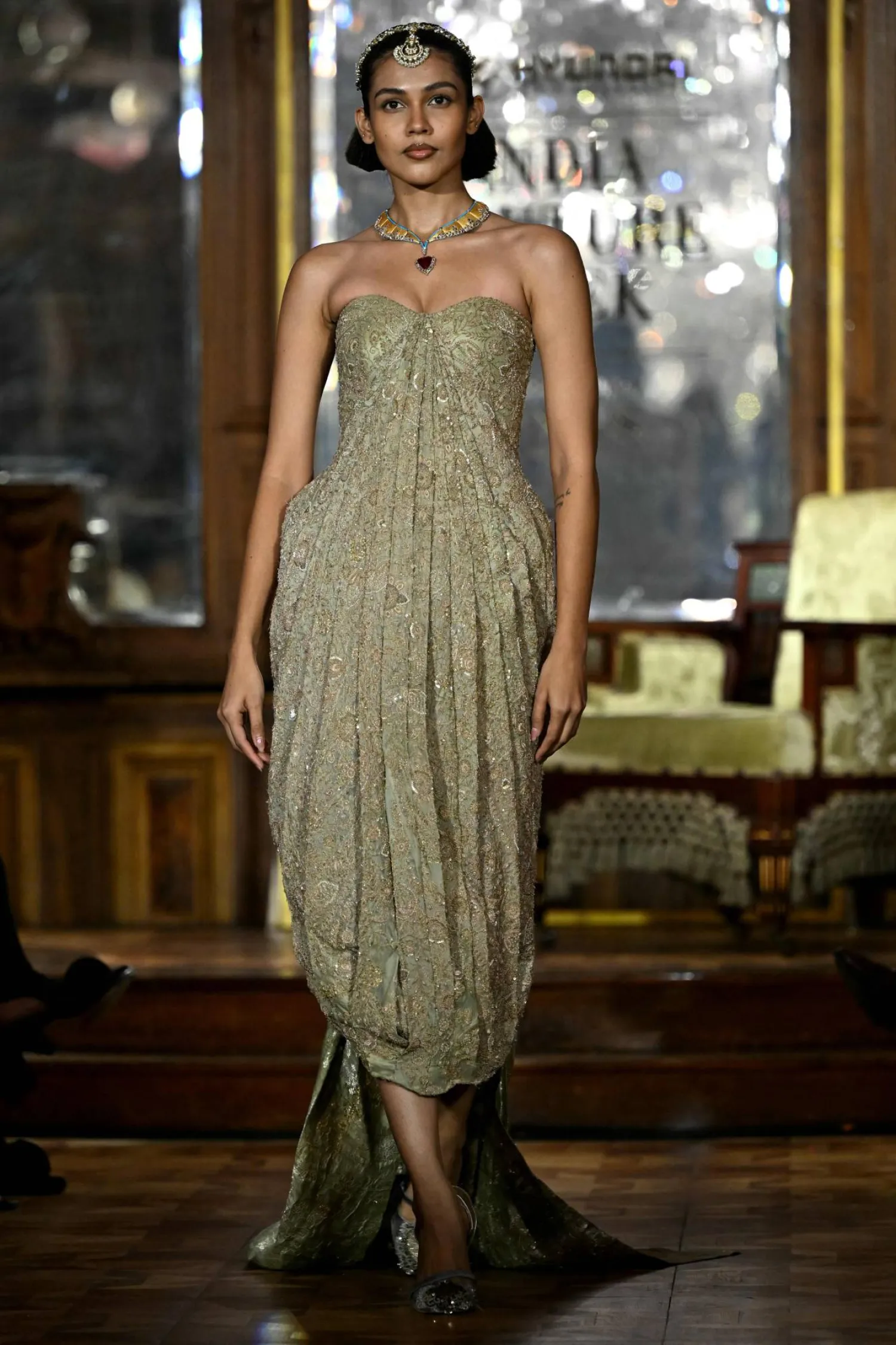
A model presents a creation by Indian designer Anamika Khannna during the opening show of the Hyundai India Couture week 2026 at the Falaknuma Palace in Hyderabad on July 23, 2026. (Photo by Noah SEELAM / AFP)
TT

As Fashion Stumbles, Jewelry Will Help Shape Luxury's Winners

A model presents a creation by Indian designer Anamika Khannna during the opening show of the Hyundai India Couture week 2026 at the Falaknuma Palace in Hyderabad on July 23, 2026. (Photo by Noah SEELAM / AFP)

As luxury groups grapple with weak fashion sales and a hit to spending from the Middle East conflict, investors are increasingly focused on one question: who sells enough jewels?

The answer may help determine the $400 billion industry's next winners and losers. The luxury goods sector was expected to return to growth in 2026 after contracting for two consecutive years, but the conflict was still curtailing spending in the first quarter and the impact is set to be greater in the three months to June, industry analysts say.

Leather bags, a traditional driver of profitability, are not offering enough support, viewed as too pricey and unattractive to younger consumers. But jewelry is doing better.

While still representing a relatively modest share of sales for most luxury players, the segment "punches well above its weight" in ⁠terms of steady ⁠growth and stronger margins, Vontobel analysts said earlier this year.

GOLD RALLY 'ADDS TO APPEAL'

Interest in the category was piqued as shoppers began to tire of a lack of innovation in high-end fashion during a period of designer changes, and a rally in gold has added to its appeal as an investment, said Carole Madjo, head of European luxury research at Barclays.

"All these points combined together were making jewelry a bit more attractive compared to soft luxury," she said. Sales of jewelry at Cartier and Van Cleef & Arpels owner Richemont soared ⁠by 24% in the quarter to June 30, far outpacing analyst estimates.

LVMH, owner of Bulgari and Tiffany, is also expected to improve its hard luxury sales.

Barclays analysts last month raised growth expectations for its Watches and Jewelry division from 7% to 8% for 2026, well above the 3% growth it posted last year. The division, LVMH's third largest, accounted for 13% of its €81 billion turnover in 2025.

LVMH reports second-quarter sales on Monday, Gucci owner Kering on Tuesday, and Hermes on Wednesday.

JEWELRY DRIVES INNOVATION

While Richemont and LVMH own the largest jewelry brands, smaller labels are doing well too, prompting renewed interest by traditional fashion-focused players.

Kering, owner of Pomellato and Boucheron, said in April sales of its new jewelry division grew 22% on a comparable basis in the first quarter, outperforming all other segments.

Hermes' jewelry segment has shown a ⁠compound annual growth rate of ⁠almost 30% since 2019, according to Vontobel analysts, albeit from a very small base.

"Even at soft luxury players like Hermes, Prada, Gucci, everybody's putting a bit more emphasis on jewelry because that's where the growth is coming from right now. So you want to be exposed to that," Madjo said.

BAGS AND SHOES LOSE FAVOR

The switch in consumer focus to jewelry from items such as high-end bags and shoes could pose a challenge for players like Hermes, whose global appeal has long rested on its tightly controlled Birkin bag franchise.

Its stock fell about 10% after it missed first-quarter growth estimates, raising questions about the strength of its scarcity-driven model.

"Bags and shoes are facing meaningful headwinds, as both have experienced significant softening in consumer desirability, particularly among younger audiences," said Claudia D'Arpizio, senior partner at consultancy Bain & Company.

"These categories, especially bags, have historically been strong contributors to revenues and margin growth; however, post-COVID dynamics have created a more challenging environment. So players need to find a winning formula for these."


Sources: Shein Aims to IPO on September 1

FILE PHOTO: Packs of clothing are displayed at a garment factory for Shein in Panyu District, Guangzhou, Guangdong province, China, July 27, 2026. REUTERS/Go Nakamura/File Photo
TT

Sources: Shein Aims to IPO on September 1

FILE PHOTO: Packs of clothing are displayed at a garment factory for Shein in Panyu District, Guangzhou, Guangdong province, China, July 27, 2026. REUTERS/Go Nakamura/File Photo

Shein aims to launch its Hong Kong initial public offering on Monday, according to a source familiar with the matter, and is targeting a listing on September 1, two other sources said, slightly later than previously planned.

While September 1 is the target date, the listing could happen a few days later, one ⁠of the sources ⁠said. Reuters reported last week that Shein had been aiming to list on August 28.

The delay, first reported by the South China Morning Post, comes as slower growth and rising costs have dampened investor appetite for Shein.

The online fast-fashion retailer was ⁠seen just a few years ago as a disruptive challenger to established retailers such as H&M and Zara, thanks to its rapid supply chain and ultra-low prices.

Among cornerstone investors in the IPO is the asset management arm of UBS Group, which would be investing in Shein for the first time, according to a fourth source with direct knowledge of the matter.

A spokesperson for the Swiss bank declined to comment.

Cornerstone investors ⁠agree to ⁠buy a set amount of shares before an IPO, and sign up to a lockup period of six months.

Shein is targeting a valuation of $26 billion to $27 billion, the fourth source said, down sharply from the $100 billion valuation it achieved in a private fundraising in 2022.

The company had previously sought an IPO valuation of $30 billion to $40 billion when investor meetings ahead of the IPO first kicked off.

Shein did not respond to a Reuters request for comment.


France Fines UK Fashion Site Boohoo Over Fake Discounts

FILE PHOTO: A woman poses with a smartphone showing the Boohoo app in front of the Boohoo logo on display in this illustration taken September 30, 2020. REUTERS/Dado Ruvic/Illustration/File Photo
TT

France Fines UK Fashion Site Boohoo Over Fake Discounts

FILE PHOTO: A woman poses with a smartphone showing the Boohoo app in front of the Boohoo logo on display in this illustration taken September 30, 2020. REUTERS/Dado Ruvic/Illustration/File Photo

French regulators said Thursday that they had fined the UK fast-fashion site Boohoo 2.33 million euros ($2.7 million) after finding "deceptive trade practices" including fake sale prices.

An inquiry by France's anti-fraud and consumer watchdog DGCCRF found that clothes and other items were often promoted as discounts, when in fact they were not, or at misleading sale prices.

Other ads described items as leather or suede that were actually made of synthetic materials.

"The use of discounted pricing and permanent sales gave clients the impression they were getting very good deals, and were likely to influence their purchases," AFP quoted the fraud agency as saying.

It found that among the hundreds of items it checked, 40 percent in fact were not actually on sale, seven percent had reduced prices that did not match the discount advertised, and 48 percent were actually more expensive than originally.

"In total 95 percent of the ads were not compliant," the DGCCRF said.

Online retailer Boohoo is part of Debenhams Group. In 2021, Boohoo bought the British department store brand out of bankruptcy and took on its name.

Debenhams also now owns the brands Karen Millen, boohooMAN and PLT.


Estee Lauder Forecasts Annual Profit Above Estimates on Strong China Demand

An Estee Lauder cosmetics counter is seen in Los Angeles, California, US, August 19, 2019. (Reuters)
TT

Estee Lauder Forecasts Annual Profit Above Estimates on Strong China Demand

An Estee Lauder cosmetics counter is seen in Los Angeles, California, US, August 19, 2019. (Reuters)

Estee ‌Lauder forecast annual profit above Wall Street estimates on Wednesday, betting on sustained spending on premium fragrances and strong performance in key markets such as China, reflecting persistent gains from its CEO's turnaround strategy.

Resilient spending by affluent ‌and younger ‌customers, especially on trendy ‌items, ⁠has helped boost ⁠demand for the cosmetics maker's luxury fragrances and skincare products such as Le Labo and Balmain Beauty.

To sustain that momentum, Estee ⁠has accelerated premium product launches, ‌streamlined ‌supply chain and ramped up investments in ‌innovation and marketing under ‌CEO Stephane de La Faverie's "Beauty Reimagined" strategy.

The Clinique and M.A.C owner, whose merger conversations with Jean ‌Paul Gaultier-owner Puig collapsed in May, expects 2027 adjusted ⁠earnings ⁠per share in the range of $3.10 to $3.35, with its midpoint above analysts' average estimate of $3.18 per share, according to data compiled by LSEG.

The company's quarterly sales of $3.63 billion were also ahead of the estimate of $3.54 billion.