
Analysts: Houthis’ Future Tied to Iran’s Fate, Solution Begins With Restoring the State

The Houthis' future is tied to the fate of the Iranian regime, according to analysts. (Reuters)
TT

Analysts: Houthis’ Future Tied to Iran’s Fate, Solution Begins With Restoring the State

The Houthis' future is tied to the fate of the Iranian regime, according to analysts. (Reuters)

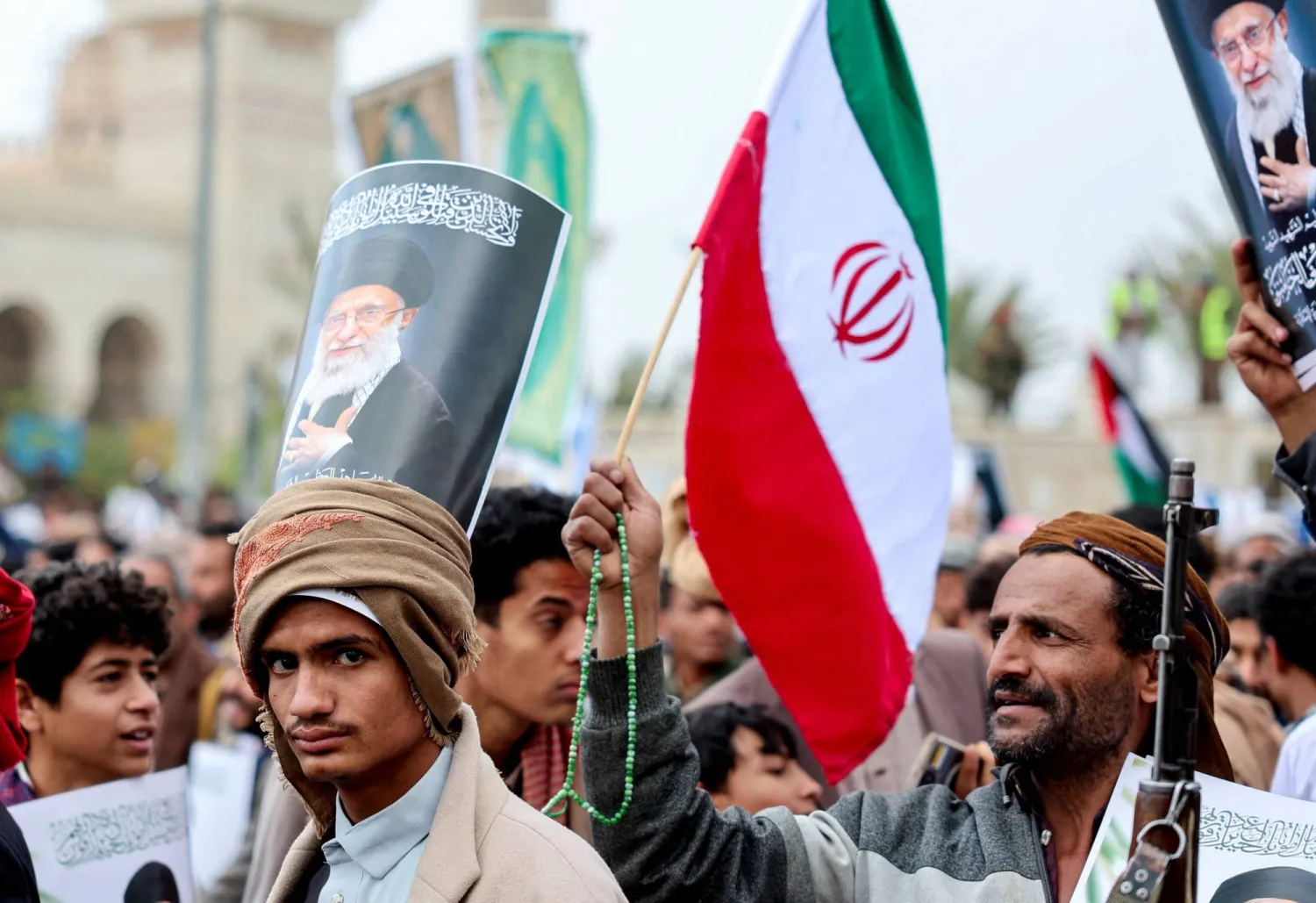
Political analysts have linked the future of Yemen’s Houthi movement to the fate of the Iranian regime and the trajectory of the wider regional confrontation, following the latest escalation affecting security in the Red Sea and freedom of international navigation. They argue that Tehran views the Yemeni front as one of its key pressure tools in response to mounting military and economic pressure.

Although the Houthis appear prepared to escalate as far as Tehran wishes, serving as a bargaining chip in Iran’s negotiations with Washington, analysts told Asharq Al-Awsat that the equation is different this time. They pointed to the increased readiness of Yemen’s government forces, along with stronger cohesion and a more unified military command, developments that could significantly influence any future confrontation.

At the same time, they stressed that Riyadh remains determined to avoid being drawn into a broad or direct confrontation with Tehran, while making clear that this does not imply tolerance of any threat to Saudi national security or compromise its legitimate right to self-defense.

Coordinated Fronts

Dr. Abdulaziz bin Sager, chairman of the Gulf Research Center in Jeddah, said Iran’s confrontation strategy is based on the principle of the "unity of the fronts," whereby multiple geographically dispersed battlefronts operate under centralized decision-making by the leadership of Iran’s Islamic Revolutionary Guard Corps (IRGC).

Bin Sager told Asharq Al-Awsat that "none of Iran’s external proxies can act outside the comprehensive strategy set by the Revolutionary Guard," adding that the Houthi movement forms a central component of this regional network and does not make strategic decisions independently of Iranian directives.

He added that the Houthis’ recent moves, including their challenge to what they describe as a blockade and their adoption of the slogan "blockade for blockade," would not, in his assessment, have occurred without direct orders from senior Iranian leadership and active support from Tehran.

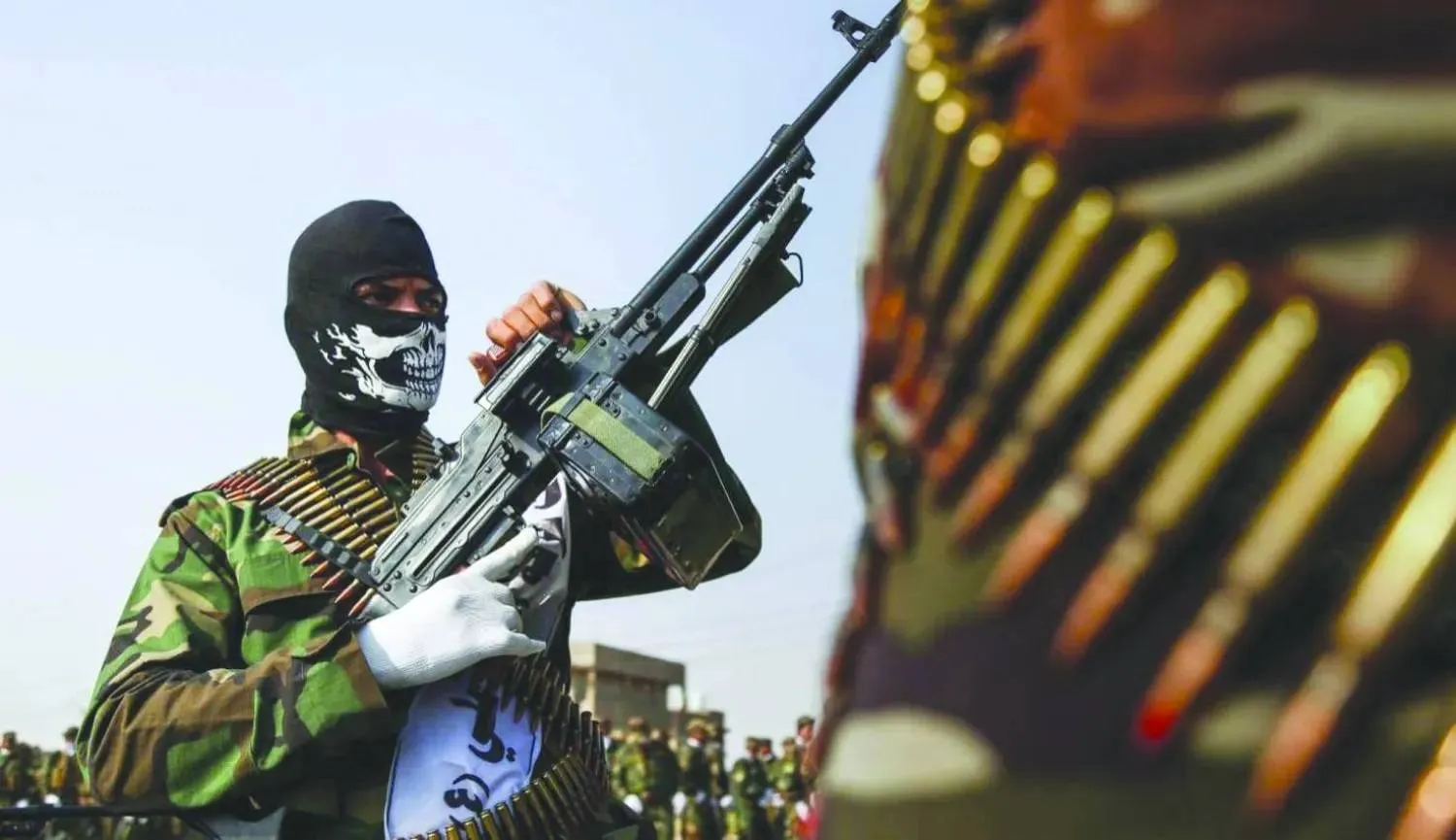
Yemeni Information Minister Muammar al-Eryani had earlier said that the simultaneous mobilization of the Houthis and Iranian-backed militias in Iraq demonstrates that they operate under a single command structure, with one operations room and one objective. He said the coordinated actions reflect an Iranian strategy aimed at shifting threats from the Strait of Hormuz to the Red Sea and Bab al-Mandab Strait, targeting international shipping and global energy supplies through coordinated action by Tehran’s regional proxies.

Yemen’s Foreign Minister Afrah al-Zouba also said that the Houthis are attempting to replicate Iran’s model in the Strait of Hormuz by applying it to the Bab al-Mandab Strait.

Bin Sager argued that Iran is under severe pressure from U.S. military operations as well as financial and economic sanctions, and believes that opening new conflict fronts could help distract Washington’s attention.

"Iran turned to the Yemeni front after failing to activate the Lebanese and Iraqi fronts in a meaningful way," he said, adding that Tehran approaches its relationship with Riyadh through two parallel tracks: maintaining cordial relations while simultaneously using conflict and confrontation as instruments of pressure and leverage.

Limits of National Security

Regarding Saudi Arabia’s position, the Gulf Research Center chairman said Riyadh remains committed to maintaining dialogue with Iran and avoiding a broad or direct confrontation, "but only so long as Saudi national security is not threatened."

He expected the Kingdom to preserve the gains achieved through the Beijing agreement while safeguarding its national security interests and maintaining its right to defend itself against any external aggression.

Turning to Yemen’s future, Bin Sager said that "the best solution for Yemen lies in ending Houthi control and restoring the state's stability and unity," noting that the Houthis’ future has become closely tied to the future of the Iranian regime.

He added that it remains too early to predict developments in Yemen independently of events unfolding inside Iran and the broader course of regional tensions.

An Organic Connection

Marwan Noman, a researcher at the Washington Center for Yemeni Studies, said the Yemeni government and political elites have warned since the Houthis launched their rebellion against the state in 2004 that the group was linked to Iran’s regional project, and that it has received growing financial, military, logistical, and media support, particularly since 2011.

Noman told Asharq Al-Awsat that the events following October 7, 2023, clearly demonstrated that the group has been acting in accordance with Iranian directives and political will, serving the interests of the regime in Tehran.

He said the latest escalation in the Red Sea and against Saudi Arabia fits squarely within that pattern and was not unexpected, noting that it was preceded by statements from Iranian officials regarding Tehran’s ability to threaten maritime traffic in the Red Sea and Bab al-Mandab through its Houthi proxy in Yemen.

Noman, who previously served as Yemen’s deputy permanent representative to the United Nations, said these developments once again confirm that the Houthis are "an Iranian tool used to destabilize the region and advance Tehran’s agenda and objectives at the expense of Yemen, its people, and neighboring countries."

He added that Houthi operations have contributed to the militarization of the Red Sea, prompting several countries to deploy naval vessels and warships across the Red Sea, the Arabian Sea, and the Gulf of Aden.

A Negotiating Card

Noman predicted that the Houthis would continue escalating to the extent desired by Tehran, with the aim of using the group as leverage in negotiations with the United States while easing pressure on Iran in the Strait of Hormuz.

The Washington Center for Yemeni Studies researcher noted that the Houthis have repeatedly resorted to military escalation to divert attention from domestic obligations and responsibilities toward people living under their control. He added that the group also exploits such escalation to boost recruitment and mobilization while attempting to extract concessions from the Arab coalition and the Yemeni government.

Nevertheless, Noman believes "the situation is different this time," citing the increased readiness of Yemen’s government forces to respond to any military escalation, as well as what he described as their growing unity and stronger command cohesion.


US Hits Hezbollah with Fresh Sanctions, Says Iran Controls it

FILE PHOTO: A general view of the US Department Of The Treasury on day two of a partial government shutdown in Washington, D.C., US, February 1, 2026. REUTERS/Ken Cedeno/File Photo
TT

US Hits Hezbollah with Fresh Sanctions, Says Iran Controls it

FILE PHOTO: A general view of the US Department Of The Treasury on day two of a partial government shutdown in Washington, D.C., US, February 1, 2026. REUTERS/Ken Cedeno/File Photo

The United States announced new sanctions Thursday against a Hezbollah financing network, while highlighting the Lebanese armed group's close ties to Iran's Revolutionary Guards.

Hezbollah's legal designation as a terrorist organization has been amended to note that it operates in "service to the Iranian regime under the command of Iran's Islamic Revolutionary Guard Corps," particularly the elite Quds Force, the Treasury Department said in a statement.

The new redesignation "specifies that Hezbollah is an Iranian proxy, not a stand-alone operation as implied by the previous designation," a State Department official said.

"This underscores that Hezbollah operates with little to no regard for Lebanese sovereignty, the Lebanese people, or the Lebanese state."

Hezbollah drew Lebanon into the broader Middle East war in March with rocket fire at Israel in support of its backer Iran.

Israel responded with a heavy air campaign and ground invasion that Lebanese authorities say have killed more than 4,300 people.

"This action builds on years of US designations that have repeatedly documented the operational, financial, and logistical integration between Hezbollah and the IRGC-QF," the State Department official said, calling Hezbollah "an extension" of the latter.

"It is not a Lebanese resistance movement," as Hezbollah describes itself, the official said.

The new sanctions target 10 people who are allegedly part of a network that transfers cash to Hezbollah, which has already been punished with US sanctions many times, the Treasury statement said.

The network utilizes couriers travelling on commercial airline flights “to move up to hundreds of millions of dollars between jurisdictions, providing an avenue outside the formal financial system for Hezbollah to obtain foreign currency and evade sanctions," the statement said.

US Treasury Secretary Scott Bessent said earlier on Thursday that he would hold a press conference on Monday about "the toughest sanctions in history" that Washington plans to impose on Iran.

He said that a plan to sharply increase pain from economic sanctions on Iran aims to "collapse" the country's government.

"It is going to work in Iran and we are going to collapse this regime," he told CNBC. "This is going to be the greatest coordinated economic isolation in the history of the world."


Arab League Chief Condemns Israeli Violations in Palestinian, Syrian, Lebanese Territories

Arab League headquarters in Cairo (The League's official Facebook page)
TT

Arab League Chief Condemns Israeli Violations in Palestinian, Syrian, Lebanese Territories

Arab League headquarters in Cairo (The League's official Facebook page)

Secretary-General of the Arab League Nabil Fahmy denounced Israel’s violations against Palestinian, Syrian, and Lebanese territories saying they cannot be viewed as isolated incidents or justified by fabricated security claims.

He said these actions reflect a persistent approach marked by the use of force, the imposition of a fait accompli, and violations of states' sovereignty and territorial integrity, the Saudi Press Agency said on Thursday.

In a statement, Fahmy asserted that Israel continues to act as a state that disregards international law. He called on the UN Security Council and the international community to take responsibility and implement practical measures to stop these violations and end the policy of impunity.

Fahmy underscored that Israel's actions not only threaten countries in the region but also undermine the credibility of the international legal order. He said they reinforce the notion that force can serve as an alternative to international legitimacy.


Abdi Announces Completion of SDF’s Civil, Military Integration with Damascus

(FILES) Syrian Democratic Forces (SDF) commander-in-chief Mazloum Abdi, speaks during a press conference in Syria's northeastern city of Hasakeh on December 6, 2024. (Photo by Delil SOULEIMAN / AFP)
TT

Abdi Announces Completion of SDF’s Civil, Military Integration with Damascus

(FILES) Syrian Democratic Forces (SDF) commander-in-chief Mazloum Abdi, speaks during a press conference in Syria's northeastern city of Hasakeh on December 6, 2024. (Photo by Delil SOULEIMAN / AFP)

The integration of the Kurdish administration within Syria's state institutions is now complete, Syrian Kurdish leader Mazloum Abdi said on Thursday.

The announcement follows months of negotiations between the two sides after a January agreement that called for the full integration of Kurdish civil and military institutions into the state -- a move Washington deemed "historic.”

"I want to say that the phase of integrating military, security and administrative institutions into national state institutions is complete and finished," Abdi, who heads the Kurdish-led Syrian Democratic Forces, said at an event in Qamishli in northeastern Syria.

"From now on, we begin a new phase," he added.

"Our struggle will continue, to cement our people's rights in the constitution."

Syrian President Ahmed al-Sharaa shakes hands with Mazloum Abdi, commander of the Syrian Democratic Forces (SDF), in Damascus on March 10, 2025 (SANA)

The January agreement, signed by Abdi and Syrian President Ahmed al-Sharaa, followed clashes between Syrian Kurdish fighters and the new authorities' forces that saw the Kurds lose swathes of territory they held in the oil-rich north and northeast.

Amid the violence, al-Sharaa signed on January 16 a decree enshrining the Kurds' national rights and recognizing Kurdish as a national language.

A photo showing SDF Commander Mazloum Abdi with his fighters wearing the military uniform of the Syrian Ministry of Defense as part of the integration steps last February (social media)

In February, Noureddine Ahmed Eissa, a Kurd from the city of Qamishli, was appointed governor of Hasakeh. In March, senior Kurdish military official Sipan Hamo was appointed regional assistant defense minister.

As part of the deal's implementation, government forces entered the cities of Hasakeh and Qamishli, and Damascus took over the management of Qamishli airport and key oil fields.

US troops also transferred more than 5,700 ISIS detainees in previously Kurdish-controlled camps to neighboring Iraq.