Algeria Set to Appoint First Woman as Speaker of Parliament

Khalida Boufedech (Parliament)
TT

Algeria Set to Appoint First Woman as Speaker of Parliament

Khalida Boufedech (Parliament)

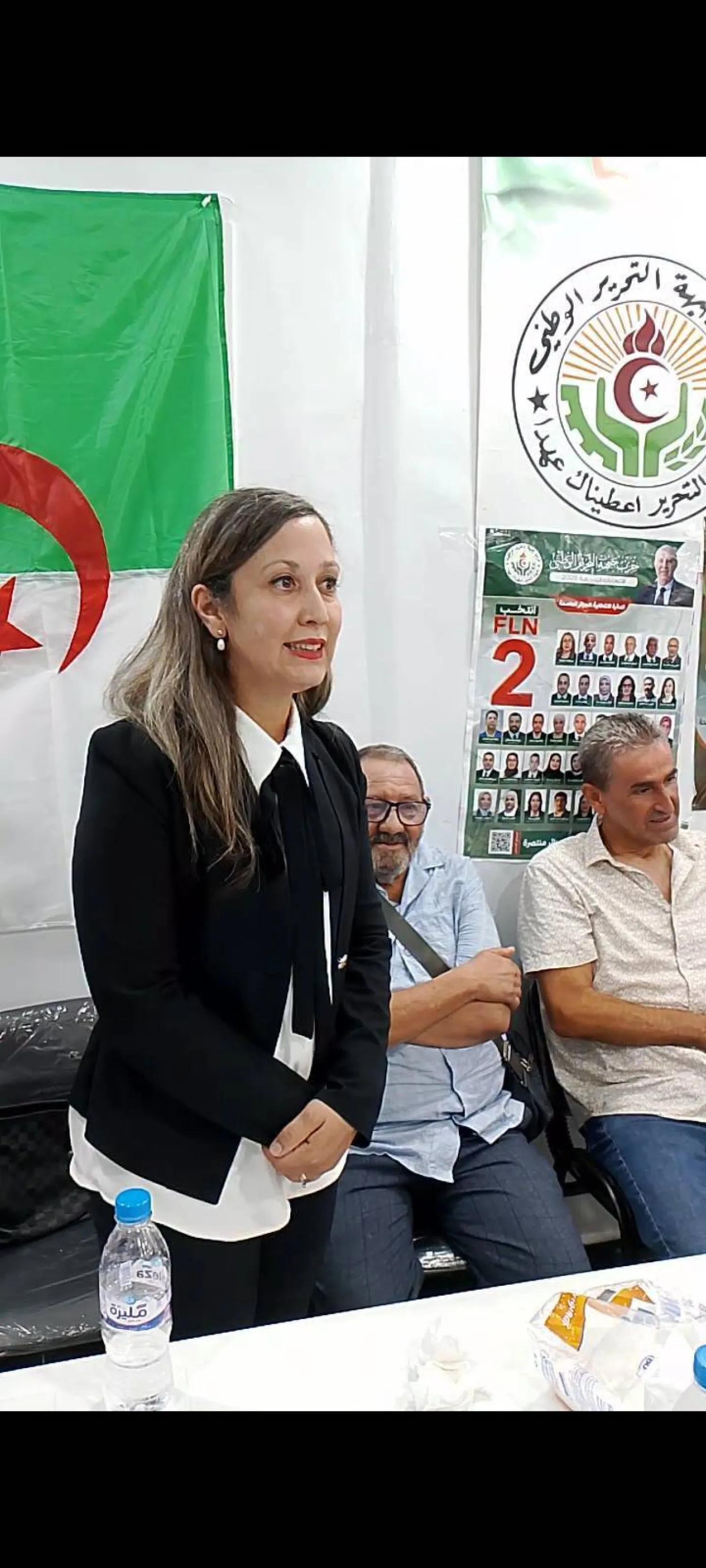
Algeria is poised to appoint the first woman in its history to lead parliament’s lower house after lawmakers from the presidential majority nominated Khalida Boufedech for the post.

Proceedings at Tuesday’s inaugural session of the newly elected parliament indicated that Boufedech, a member of the ruling National Liberation Front (FLN), is the clear favorite to become speaker of the People’s National Assembly. If elected, she will also become the first woman to hold the country’s fourth-highest office in the state protocol hierarchy.

The governing coalition endorsed Boufedech after receiving approval from the presidency, ahead of the start of the new five-year term for the 407 lawmakers elected in the July 2 parliamentary vote. Other potential candidates were ultimately dropped.

Opposition parties also fielded candidates: Amine Allouche of the Islamist Movement of Society for Peace (MSP) and Rachid Hassani of the secular Rally for Culture and Democracy (RCD).

Boufedech, a physician by profession, previously served on the Algiers provincial assembly and has spent decades within the FLN, which won more than 100 seats in the election.

Announcing her nomination, the FLN parliamentary bloc said it was based on her “competence and leadership experience” and would reinforce the legislature’s role in supporting stability and the country’s reform agenda.

The bloc expressed confidence in her ability to lead the chamber by consensus while strengthening its legislative, oversight, and parliamentary diplomacy functions, and urged lawmakers across party lines to back her candidacy.

Separately, President Abdelmadjid Tebboune downplayed the record-low voter turnout of 21.24 percent in the election, saying participation rates did not affect the legitimacy of parliament.

“Whether turnout is 20 percent, 21 percent, or even 70 percent, it will not undermine the credibility of the legislative institution,” Tebboune said in a televised interview Monday night. “Parliament remains the constitutional body responsible for legislation.”

Addressing the exclusion of hundreds of prospective candidates over allegations of “dirty money,” Tebboune said businesspeople were “not inherently bad,” but insisted that politics must remain separate from wealth to prevent oligarchic influence.

He added that parliamentary immunity would no longer shield lawmakers from prosecution, warning that any member found guilty of wrongdoing would immediately lose immunity and face the courts.

The president also praised the growing number of young university graduates entering politics, saying they deserved an opportunity to prove themselves and were already excelling in agriculture, innovation, and public life.

On foreign policy, Tebboune denied that Algeria had demanded visa quotas from France or sought an official apology and reparations for colonial rule, stressing that “Algeria will not beg anyone.”

His remarks came amid political debate in France over visas and immigration and as he reiterated Algeria’s position on historical memory and diplomatic sovereignty.

He also warned unnamed parties against attempting to undermine Tunisia’s security under the pretext of fighting terrorism.

Domestically, Tebboune announced planned increases in wages, the minimum wage, pensions, and university scholarships beginning in 2027, linking them to lower inflation, the fight against corruption, and stronger economic performance.

He also highlighted a new direction in relations with Europe, describing Germany as a strategic partner in technology transfer and advanced manufacturing, while expressing Algeria’s ambition to become Berlin’s leading supplier of green hydrogen.

Houthi Attacks on Taiz Leave Bloody Toll on Civilians

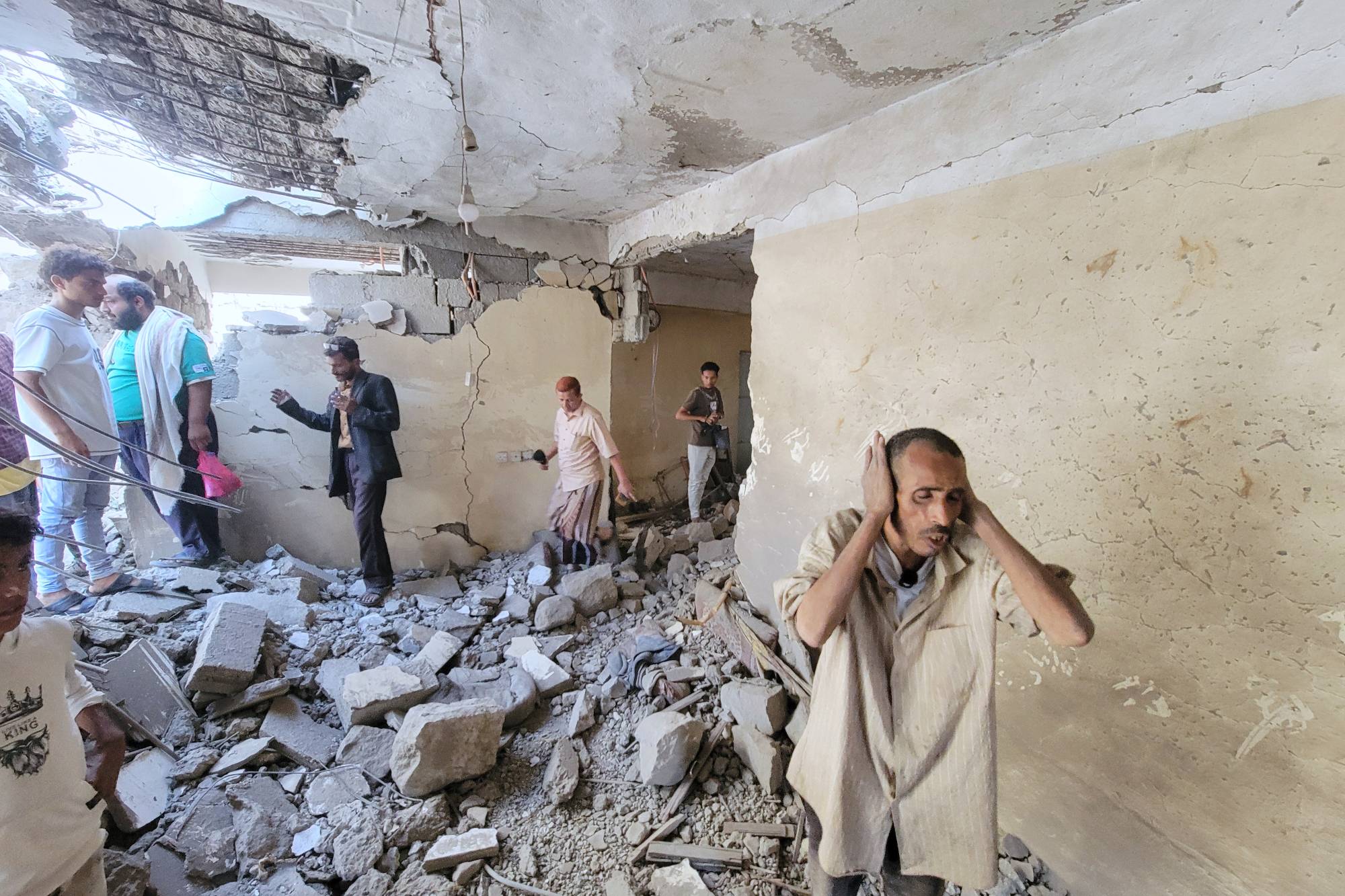
Residents walk amid debris from their homes after a missile strike in Seina, Taiz, Yemen, Tuesday, Oct. 20, 2026. (AP)
TT

Houthi Attacks on Taiz Leave Bloody Toll on Civilians

Residents walk amid debris from their homes after a missile strike in Seina, Taiz, Yemen, Tuesday, Oct. 20, 2026. (AP)

Yemen's Taiz governorate is facing a relentless Houthi military escalation that continues to deepen the suffering of its residents. Ongoing shelling targets residential neighborhoods and villages, while tightening restrictions choke civilian movement and block essential supplies.

Human rights reports documented hundreds of civilian casualties and abductions, and widespread damage to homes and vehicles.

The Yemeni Network for Rights and Freedoms documented 1,891 crimes and violations committed by the Iran-backed Houthi group against civilians and civilian objects in the governorate from September 1 to October 22.

This toll coincided with the network monitoring 21 additional crimes and violations within a 24-hour period, along with the firing of around 213 projectiles into residential areas.

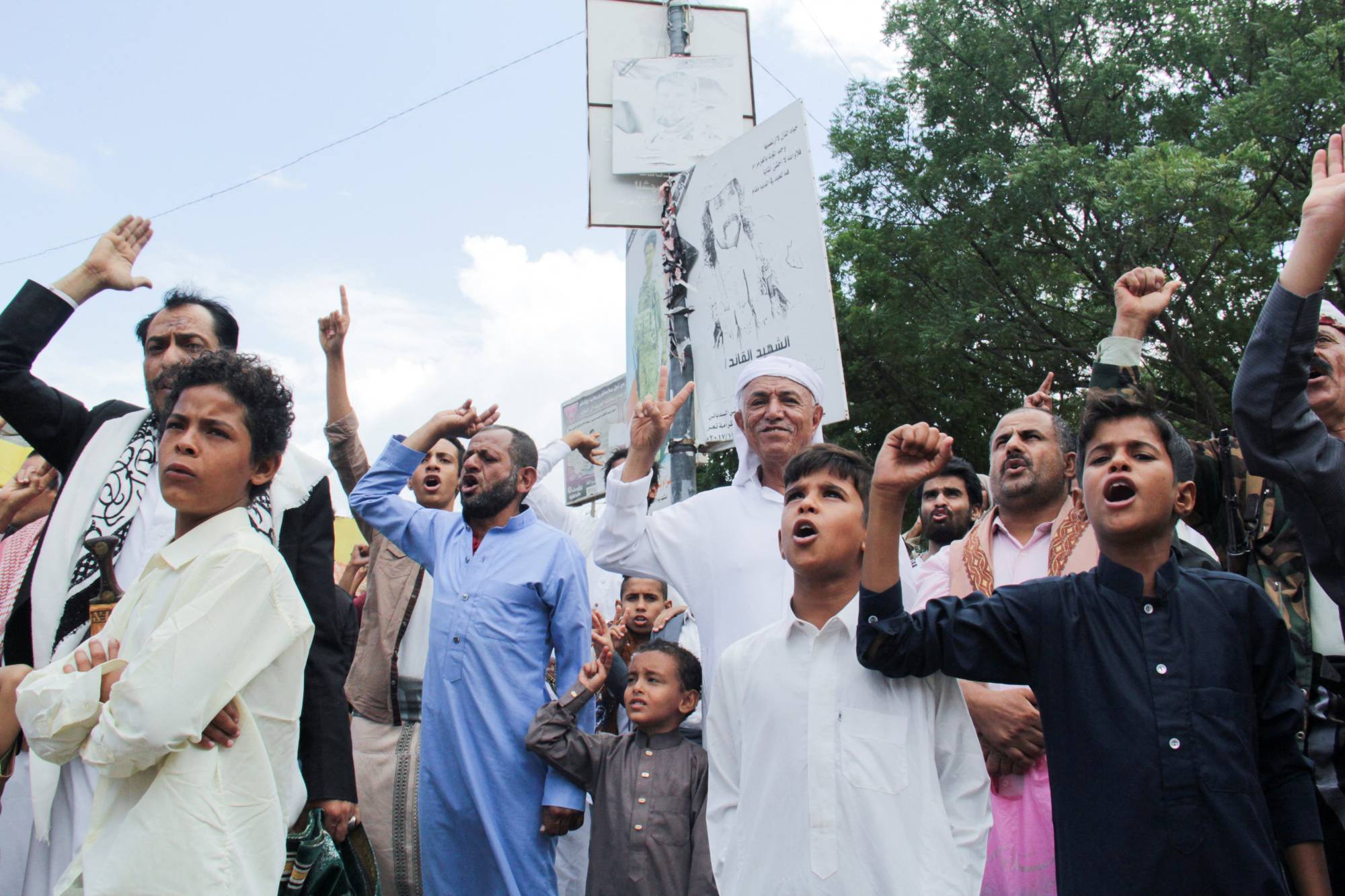
People chant slogans after they performed the Friday weekly prayer at the Freedom Square in the southwestern city of Taiz, Yemen October 23, 2026. (Reuters)

In its report, "Taiz... Bloody Invasion and Systematic Killing," the monitor said the violations resulted in the killing of 212 civilians, including 38 children - seven of whom were infants - and 27 women, as well as the wounding of 319 civilians, including 29 children and 46 women.

The report documented 23 cases of field executions, five massacres, and 314 instances of abduction and enforced disappearance, including 14 children held hostage to pressure their families. Additionally, 516 homes were raided in search of individuals suspected of being linked to government forces.

Residents walk on debris of their homes at Seina district in Taiz, Yemen, after a missile strike, Tuesday, Oct. 20, 2026. (AP)

Houthi attacks damaged 356 homes, including 98 that were completely destroyed, while three others were blown up.

According to the report, Houthi shelling and sniper fire extended to the villages of Kahlan and al-Shaqb, the old airport neighborhood.

The repercussions are not limited to casualties and destruction; the network said the Houthis fired around 9,876 projectiles during the period covered by its report, tightened the siege on the governorate since September 3, and established 26 illegal checkpoints and barriers.

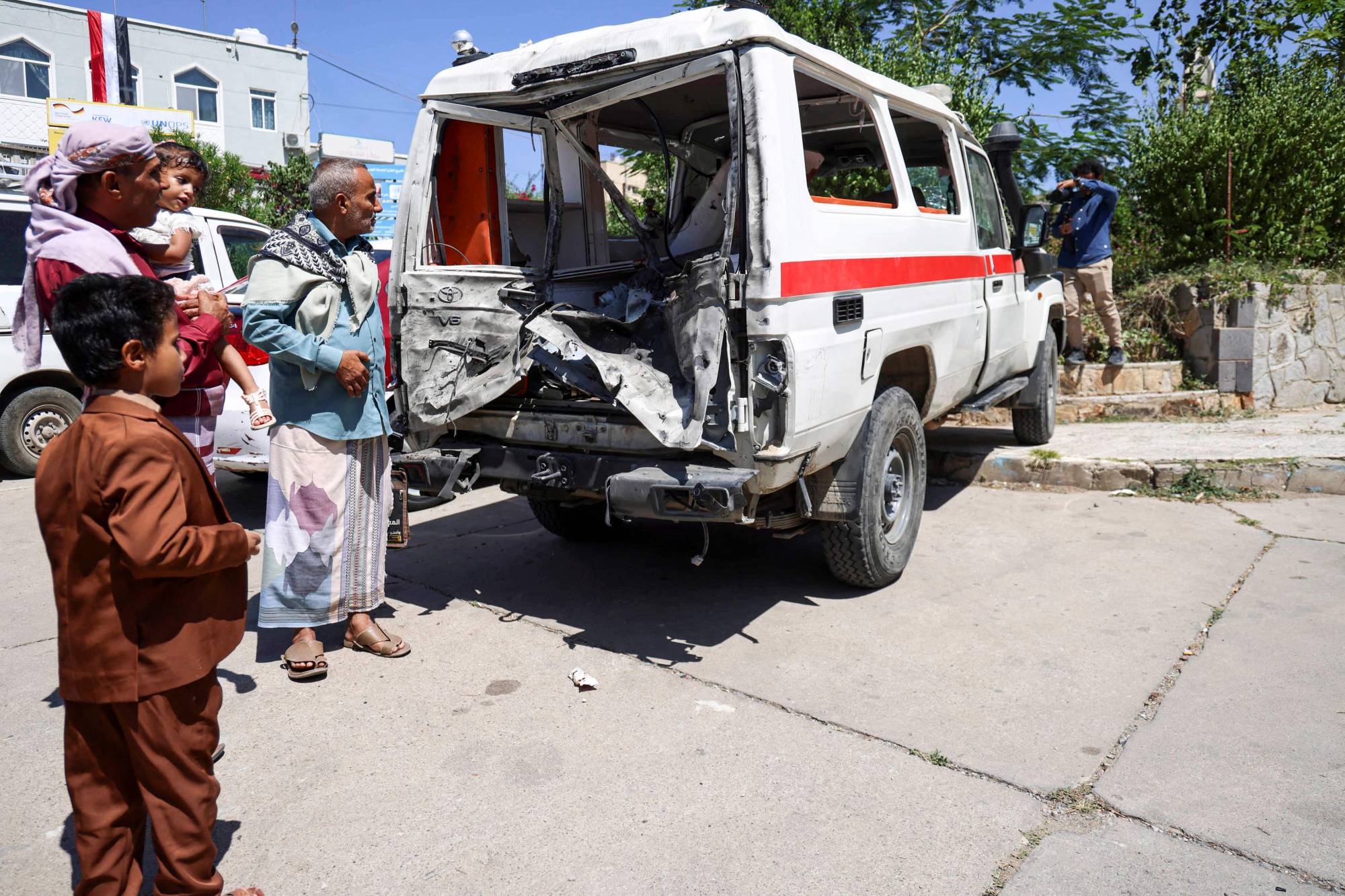
Yemeni people inspect a damaged ambulance in front of Al-Thawra General Hospital in Taiz on October 22, 2026. (AFP)

The report accused the group of obstructing the entry of food, medicine, fuel, oxygen cylinders, and drinking water, as well as blocking relief convoys and commercial supplies, including chronic disease medications and child vaccines.

It warned that blocking the fuel required to operate generators for hospitals, cancer treatment centers, and kidney dialysis units threatens patients' lives, noting that the escalation has caused the displacement of around 280,000 people from the governorate.

The network said the Houthis also turned five schools into operations rooms and detention centers.

It demanded that Taiz be declared a disaster city, calling for an end to the attacks, the lifting of the siege, the opening of roads, and guaranteed access to aid.


Taiz Withstands Houthi Attacks and Siege

Smoke billows from a site that was targeted during battles between Yemeni government fighters and Yemen's Iran-backed Houthis at the Jabal Han front, west of the city of Taiz, on October 21, 2026. (AFP)
TT

Taiz Withstands Houthi Attacks and Siege

Smoke billows from a site that was targeted during battles between Yemeni government fighters and Yemen's Iran-backed Houthis at the Jabal Han front, west of the city of Taiz, on October 21, 2026. (AFP)

Yemeni government forces are intensifying counterattacks and warplanes are expanding strikes on Houthi positions across Taiz's countryside and the besieged city's outskirts, as fierce resistance halts militant assaults despite relentless bombardment, a tight siege and steady reinforcements.

Elsewhere, troops repelled Houthi attacks on the Kahboub front overlooking the Bab al-Mandeb Strait and blocked militant advances into the al-Maqatirah district toward southern Lahj.

The Iran-backed Houthi group, which has seized vast parts of the Taiz countryside, is attempting to expand its field gains and pressure the besieged city. However, it is facing stiff resistance from government forces and the popular resistance, as clashes spread to the al-Aqrud, al-Shaqb, and Kahlan fronts.

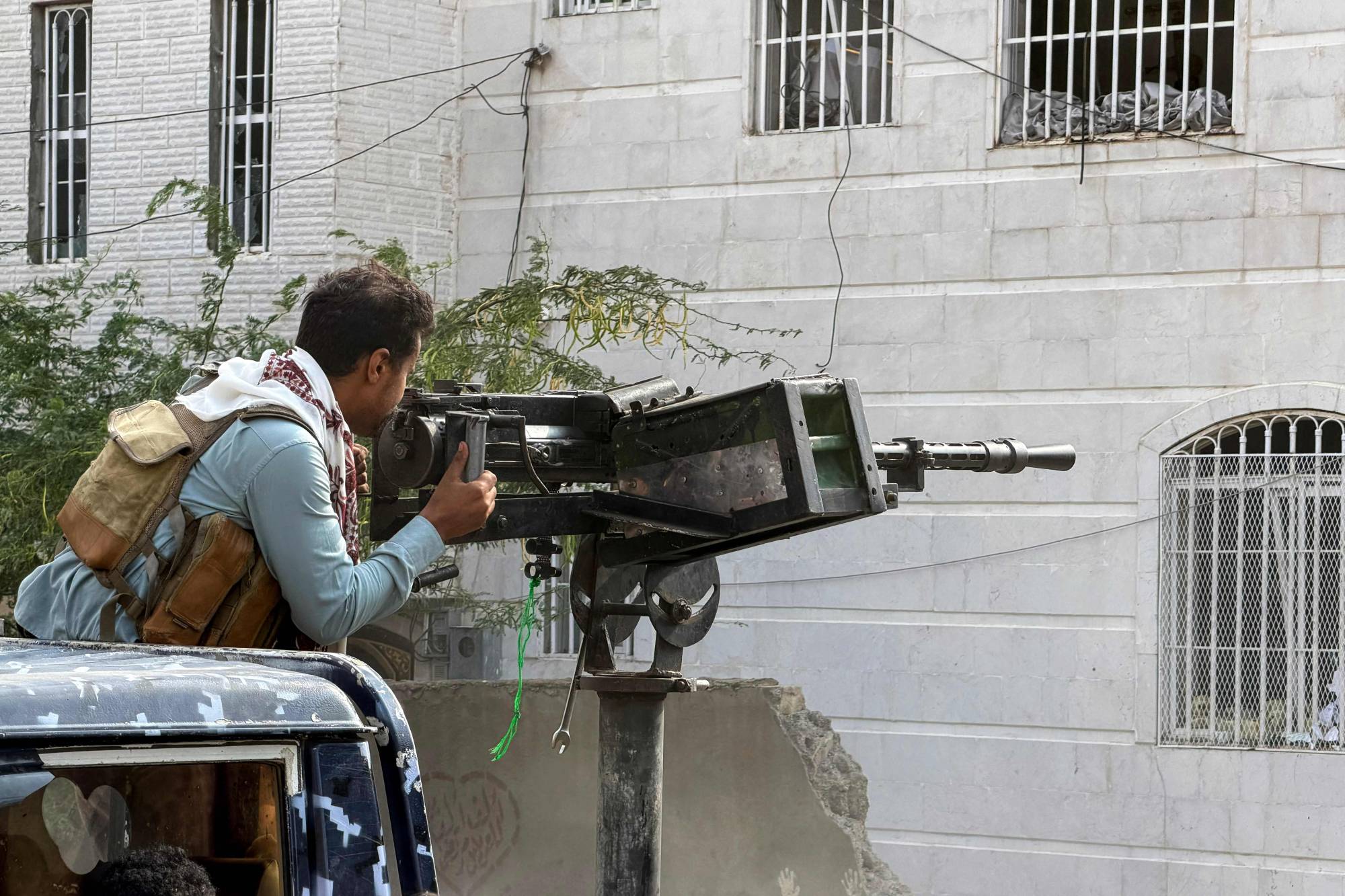
A Yemeni government fighter aims his machine gun during battles against Yemen's Iran-backed Houthis at the Jabal Han front west of the city of Taiz on October 21, 2026. (AFP)

In the latest developments, government forces targeted a command-and-control center and two tanks inside the abandoned Sofitel Hotel in Taiz, according to official spokesperson for the Yemeni Armed Forces Majed Al-Nuzaili.

The Houthis had used the building as a launchpad to target civilians in the city, and that the strike aimed to disrupt this activity and protect residents, he added.

Government forces made advances in southern Taiz, carrying out counterattacks against the Houthis and amid clashes in al-Shaqb and al-Kahlan districts. The Houthis are reportedly sending more reinforcements to the area.

On the western front, local Yemeni sources said Houthi commander Mohammed Qiran, known as Abou Hashem, was killed, along with seven of his companions, during clashes on Friday.

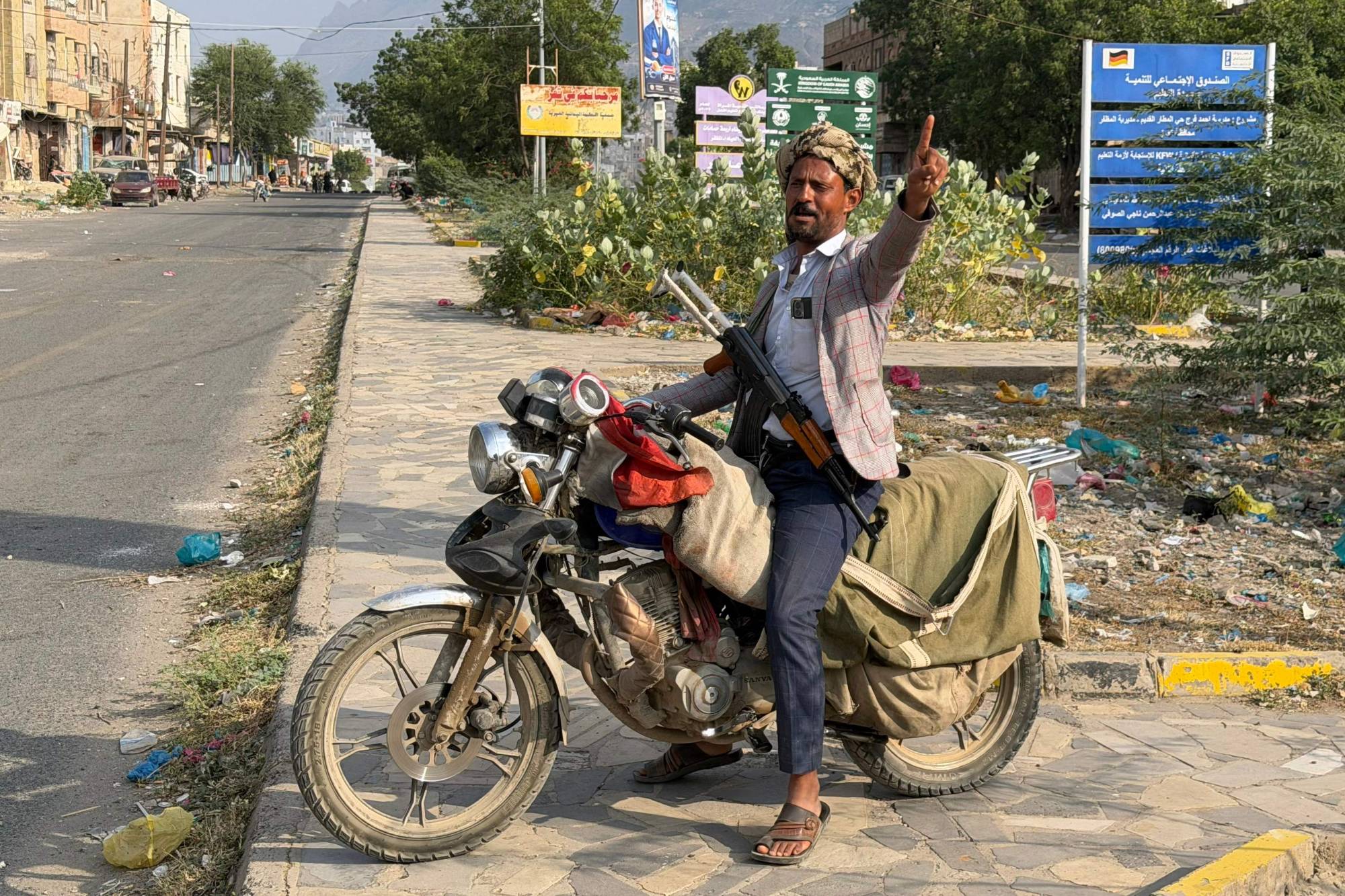
A Yemeni government fighter gestures during battles against Yemen's Iran-backed Houthis at the Jabal Han front west of the city of Taiz on October 21, 2026. (AFP)

Another commander, Mohammed Ismail al-Darb, and several of his companions were also killed in the al-Aqrud front. Military sources said he was overseeing operations to invade Taiz.

Government airstrikes hit several regions in the Taiz countryside, targeting Houthi positions and leaving dozens of fighters dead and injured and destroying heavy weapons and military equipment.

On the Kahboub front, the Giants Brigades and National Shield forces repelled Houthi attacks, including an offensive that lasted 30 hours. The Brigades said the fierce fighting forces the attackers to retreat, while leaving several of their members dead.

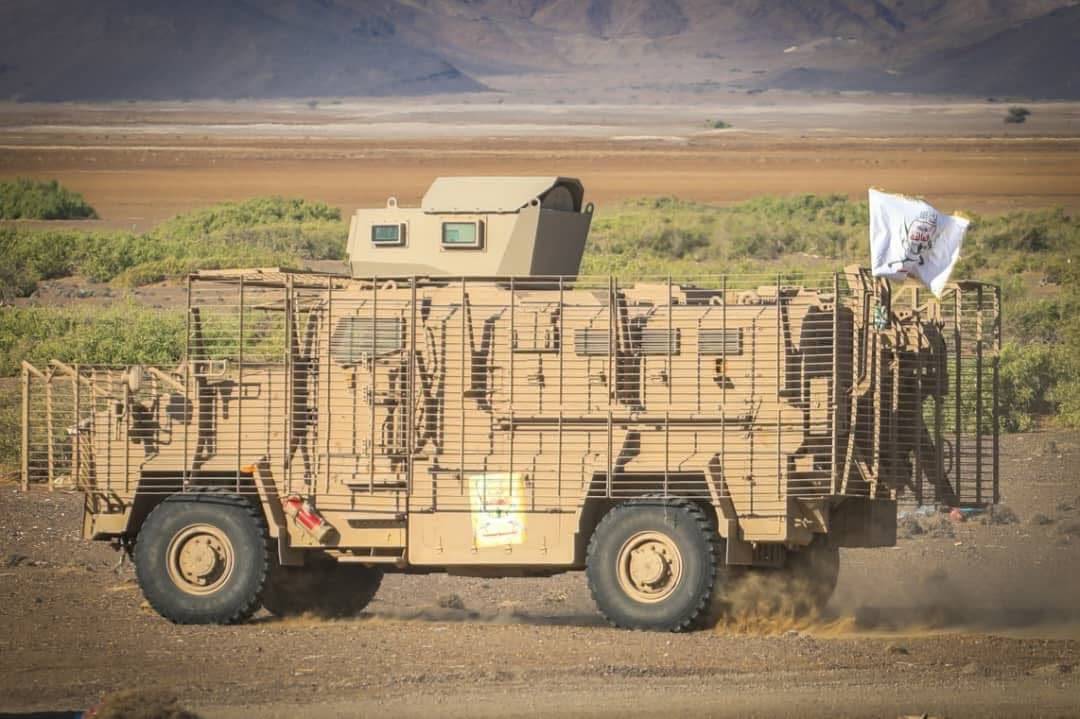
The Giants Brigades forces repel Houthi attacks on the Bab al-Mandeb front. (Military media)

Kahboub is significant because of its proximity to the Bab al-Mandeb Strait.

In Lahj, field reports said an ambush left dozens of Houthis dead and injured and stopped an attempt to advance on new regions.

The armed forces announced that they carried out 1,392 operations in the past 24 hours across various fronts. The attacks targeted Houthi gatherings, fortifications, military equipment and sources of fire. Preliminary figures said 620 militants were neutralized and 190 vehicles were destroyed.


Syrian Govt Accuses ‘Outlaw Groups’ of Blocking Sweida-Damascus Highway

Part of the halted traffic on the Sweida-Damascus road on Saturday (circulated online)
TT

Syrian Govt Accuses ‘Outlaw Groups’ of Blocking Sweida-Damascus Highway

Part of the halted traffic on the Sweida-Damascus road on Saturday (circulated online)

The Syrian government on Saturday accused “outlaw groups” of completely blocking the Sweida-Damascus highway, while websites affiliated with Sheikh Hikmat al-Hijri reported that relatives of detainees from Sweida had blocked the road to demand the immediate release of their family members.

Qutaiba Azzam, director of media relations at the Sweida Media Department, said the groups had closed both directions of the highway at the Um al-Zaytun checkpoint, which they control. He added that internal security forces continued to facilitate passage at the al-Matouna checkpoint.

The "outlaw groups", affiliated with Druze spiritual leader Sheikh Hikmat al-Hijri reportedly blocked around 100 employees from reaching their workplaces in northern Sweida on Wednesday and had previously prevented students from travelling to sit for general certificate examinations.

Tensions persist in southern Syria amid Israeli incursions and attacks, with the risk of escalation growing between government forces and the groups controlling Sweida.

Remarks by US envoy to Syria, Tom Barrack, criticizing al-Hijri sparked anger among his supporters, whose media office said in a statement published on its official accounts late Friday that the comments amounted to “systematic and unacceptable targeting.”

The statement rejected describing Sweida’s Jabal al-Arab region as a “center for captagon production,” claiming that captagon production networks were controlled and protected by transnational forces, security agencies, and sectarian and regional militias, which it accused of using drugs to destabilize the region and finance chaos.

Al-Hijri’s office rejected Barrack’s claims that the Druze leader was exploiting perceived Israeli support and US backing, saying the leadership had never sought support from Washington or elsewhere.

Barrack also accused al-Hijri of persecuting fellow Druze and described the Sweida-Daraa area as a major hub for captagon production and trafficking. He defended Israeli operations in southern Syria on security grounds and praised Damascus for exercising restraint to avoid wider escalation.

Barrack said an understanding between Syria and Israel remained possible.

Meanwhile, Sweida Governor Mustafa al-Bakour said residents of the province were struggling with deteriorating living conditions and lawlessness under the control of “outlaw groups.” He cited threats and kidnappings and accused the groups of obstructing solutions to protect their own interests.