
Iraq’s Government Admits Difficulty Paying Salaries on Time

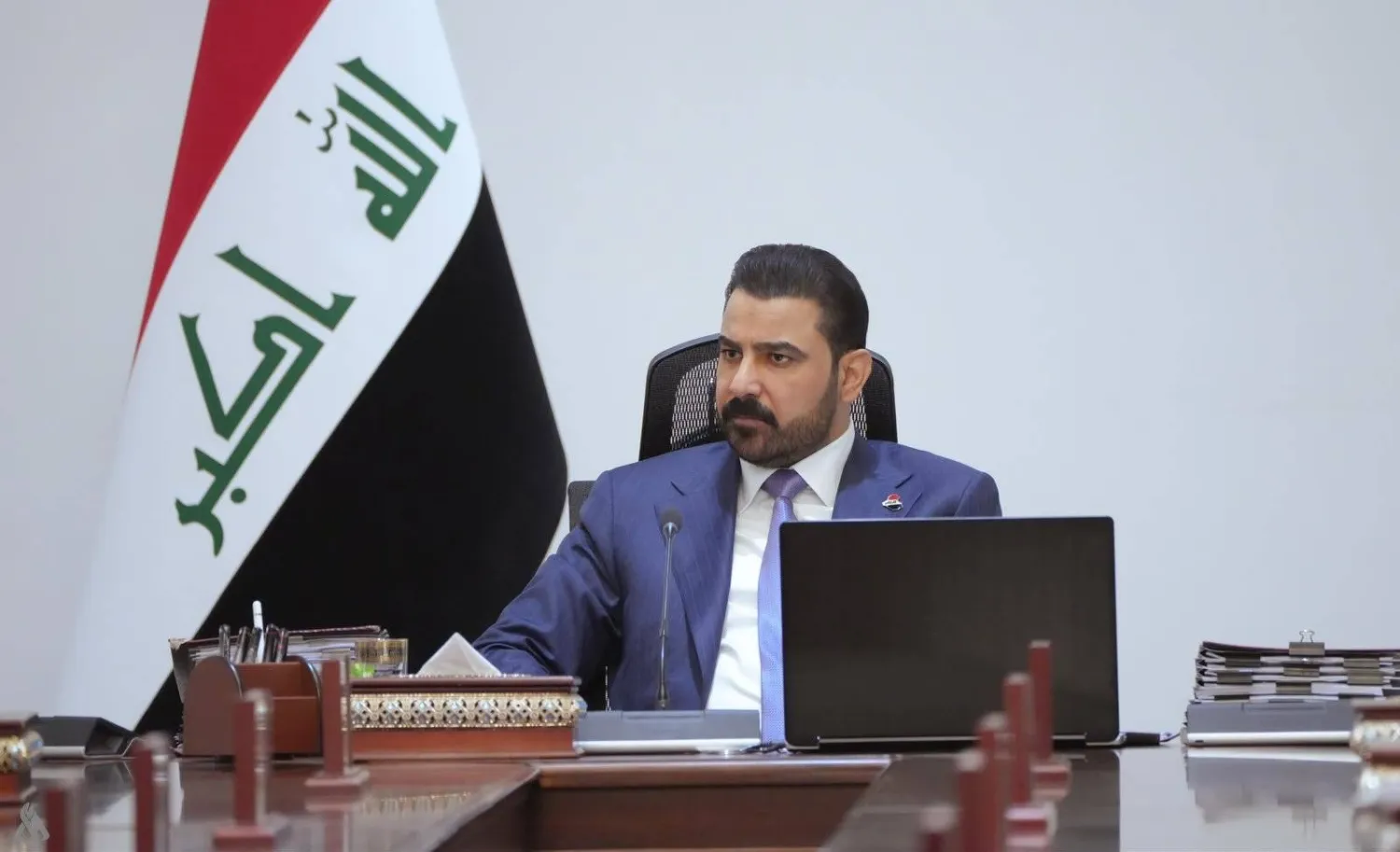
Ali al-Zaidi, Commander-in-Chief of the Armed Forces and Iraqi Prime Minister (INA)
TT

Iraq’s Government Admits Difficulty Paying Salaries on Time

Ali al-Zaidi, Commander-in-Chief of the Armed Forces and Iraqi Prime Minister (INA)

Iraq’s financial crisis has entered a more critical phase, with government officials acknowledging that the state is struggling to pay employees on time and politicians urging Iran-aligned factions to press Tehran to exempt Iraqi oil from restrictions in the Strait of Hormuz.

Regular salary payments are a key measure of economic and social stability in Iraq. Millions of state employees, pensioners, contractors, and welfare recipients depend on government payments as their main source of income.

Those payments also sustain local markets and purchasing power, the main engine of commerce in a country heavily dependent on oil revenue.

Oil provides more than 90% of Iraq’s public revenue, while salaries, wages, and social protection programs account for the bulk of government spending.

In recent years, strong oil revenue has helped maintain relatively high domestic consumption, driving investment in services, particularly shopping malls, restaurants, and cafes.

But that growth has drawn persistent criticism over alleged links between some investments, money laundering, and influence-peddling. Successive governments have also faced accusations of failing to curb corruption or to establish full control over border crossings.

The crisis comes as the government of Prime Minister Ali al-Zaidi promotes an economic program centered on the “Development Road” project and expanded partnerships with the private sector and international companies.

The plan aims to reshape Iraq’s economy and diversify revenue after decades of dependence on oil and the public sector.

But the closure of the Strait of Hormuz and the resulting drop in Iraqi oil exports have exposed the risks of relying on a single main export route.

Iraq has no fully developed alternative for shipping oil through neighboring countries. Projects involving routes through Türkiye, Syria, Jordan and Saudi Arabia have faced political objections in recent years.

As oil revenue falls, the government is under mounting pressure to find enough cash to cover essential spending.

The squeeze coincides with an anti-corruption campaign that authorities say has uncovered wide-ranging cases involving senior and mid-level officials. Iraqis commonly use the phrase “big whales” to describe powerful figures believed to stand behind corruption networks.
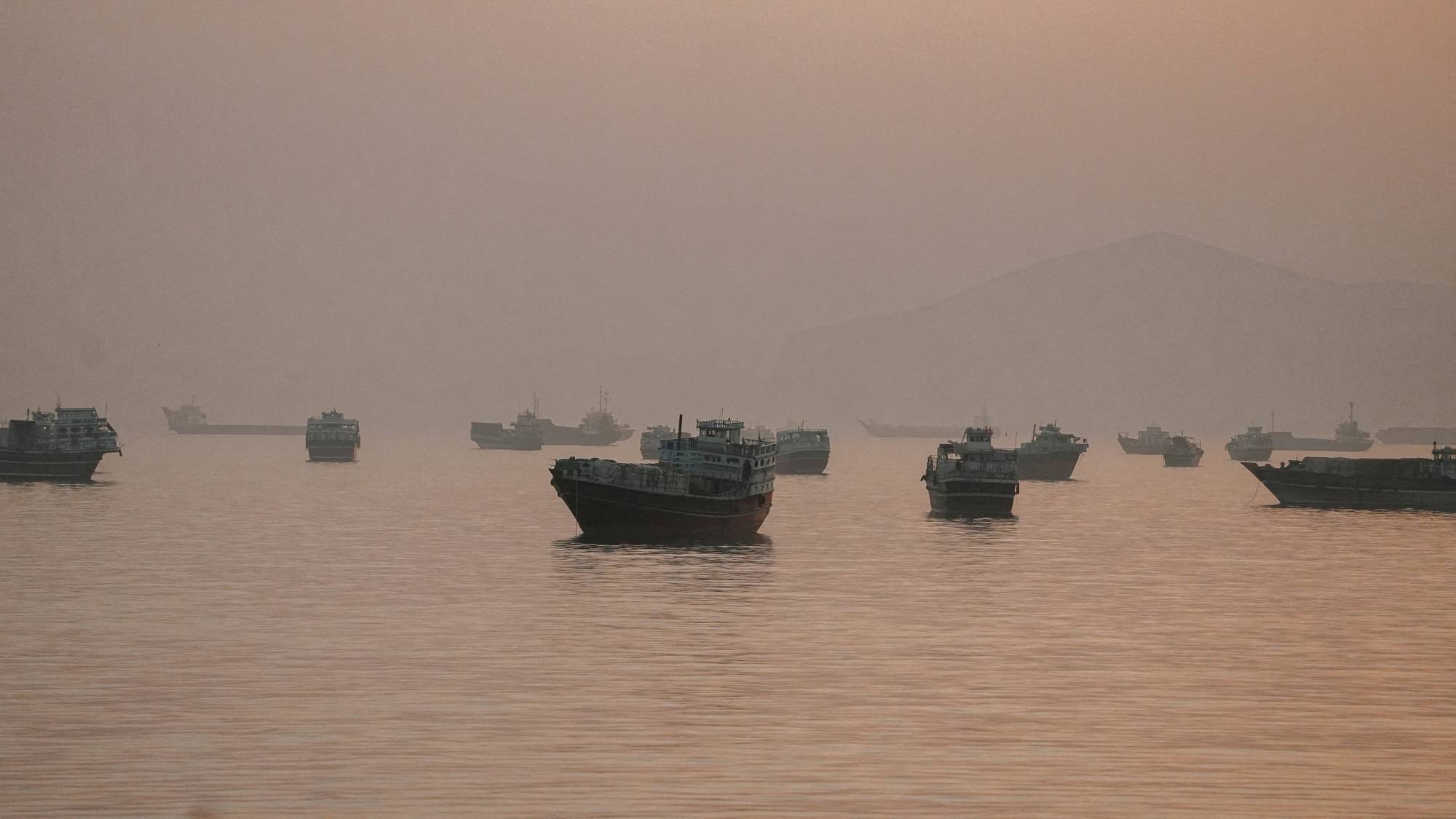
Ships anchored in the Strait of Hormuz await passage (Reuters)

Official Admission

The first public acknowledgment of the crisis came after the government delayed its usual announcement authorizing salary payments, fueling concern among Iraqis as reports of multibillion-dollar corruption cases continued to mount.

“There is no money,” Health Minister Abdul Hussein al-Musawi said in televised remarks, adding that the prime minister was “at a loss over how to secure the monthly salaries.”

Finance Minister Faleh al-Sari said the government needed about 8 trillion Iraqi dinars to cover salaries, but had only around 3 trillion dinars available.

He said salaries were being paid late and in installments as funds became available.

Government spokesman Haider al-Aboudi said in televised remarks on Friday that Iraq could turn to domestic and foreign borrowing if the Strait of Hormuz remained closed.

He said the government had signed agreements during its latest visit to Türkiye on implementing the Development Road project and was working to keep Iraqi oil flowing despite regional crises.

“Geopolitical changes have affected Iraqi foreign policy, which is based on economics and non-alignment,” he said.

Al-Aboudi said the regional crisis had dealt a severe blow to Iraq’s economy and that Baghdad and Ankara had formed joint committees to prepare a comprehensive study on Iraqi oil exports.

Temporary Fix

Financial adviser to the Iraqi PM Mazhar Mohammed Saleh warned that any expansion of domestic borrowing should be handled with extreme caution.

“Resorting to domestic borrowing and expanding it carries a range of consequences that must be taken into account,” Saleh told Asharq Al-Awsat.

“If borrowing becomes necessary, it should remain within carefully studied limits and be directed toward temporary needs or projects that generate economic returns, rather than repeatedly financing operating expenses,” he said.

“Expanding this approach could increase the public debt burden and create a crowding-out effect, limiting the private sector’s access to investment financing as borrowing and bank credit costs rise.”

Saleh said carefully managed foreign borrowing could provide temporary relief during the transition until oil revenue returned to more stable levels.

But he said it must be paired with fiscal and economic reforms that tackle the roots of the crisis and reduce future dependence on debt.

Political analyst Iyad al-Samawi said fiscal reform should go beyond cutting spending and controlling the public payroll to include a serious review of loss-making state-owned companies.

“State-owned companies were not created to burden the public budget or survive on government subsidies,” he told Asharq Al-Awsat. “They were meant to be productive tools, engines of development, and a source of support for the national economy.”

“Fiscal reform is not limited to rationalizing spending, controlling salaries or halting government expenditure,” he said. “It requires a serious review of loss-making state-owned companies that drain public funds year after year.”

Call to Iran-Aligned Factions

Iraqi politician Dhafir al-Ani called on parties close to Iran to press Tehran to exempt Iraqi oil shipments from any restrictions on passage through the Strait of Hormuz.

His appeal came as the health minister warned of the government’s financial shortfall.

In a post on X, Al-Ani described the minister’s remarks as “a resounding cry.”

“Can the Iran-aligned loyalists ask Iran to allow Iraq to export its oil through the Strait of Hormuz so Iraqis can secure their salaries and medicine?” he wrote.


Alarmed Yemenis Flee South as Houthis Keep Up Attacks

 Salma Mohammed, 60, a displaced Yemeni woman, sits inside her tent at the Al-Firdaws camp in Ras Imran, just outside Aden, Yemen, Monday, Sept. 14, 2026. (AP)
Salma Mohammed, 60, a displaced Yemeni woman, sits inside her tent at the Al-Firdaws camp in Ras Imran, just outside Aden, Yemen, Monday, Sept. 14, 2026. (AP)
TT

Alarmed Yemenis Flee South as Houthis Keep Up Attacks

 Salma Mohammed, 60, a displaced Yemeni woman, sits inside her tent at the Al-Firdaws camp in Ras Imran, just outside Aden, Yemen, Monday, Sept. 14, 2026. (AP)
Salma Mohammed, 60, a displaced Yemeni woman, sits inside her tent at the Al-Firdaws camp in Ras Imran, just outside Aden, Yemen, Monday, Sept. 14, 2026. (AP)

After a drone strike sent shrapnel flying into his wife's chest, killing her, Muhammad Aiyash and his three children fled with no belongings to a new makeshift camp for the displaced in the southern Yemeni city of Aden, the interim capital.

Panic has spread as Yemen's Houthis captured territories along the country's Red Sea coast that has enabled the Iran-aligned militants to seize another part of the country and tighten their grip over the Bab al-Mandeb Strait, one of the world's most important shipping routes for goods and commodities, including oil.

"By God, we do not possess even a single grain of flour. We have no mattresses and no clothes," said Aiyash, who is in his 60s and left his home behind in the ancient port city of Mokha in ‌a desperate search ‌for shelter in Yemen's latest crisis.

The UN refugee agency said on Tuesday ‌that ⁠more than 100,000 people ⁠had been internally displaced by the renewed conflict in Yemen, and that thousands more have fled by sea to Djibouti.

In the latest round of fighting, the Houthis have extended their control from the northern, most populous areas of Yemen, to cities and towns and islands in the west.

They have also opened a new area of combat in the Iran war, increasing pressure on ⁠global energy markets following the earlier effective closure of the Strait of Hormuz. The ‌Houthis have also stepped up attacks on Saudi Arabia.

'THE WAR CAME SUDDENLY'

At the Aden camp, families ‌sat beside tents, tending sheep and trying to assemble rudimentary shelters. Children stayed close to their parents as ‌adults carried belongings.

One displaced man, Tawfiq al-Kharij, showed a shrapnel injury to his leg as he sat with relatives outside a tent. He said he escaped with nothing but the clothes he was wearing.

"We were living peacefully in God's care, then the war came suddenly,” Kharij said. "Some died, and others survived."

UNHCR said on Tuesday that humanitarian access ‌remained "a major challenge".

"Insecurity, damaged roads, telecommunications disruptions and movement restrictions are affecting operations," the agency said in a statement.

Khadija Kudaf and her children had to walk for ⁠three days to get to ⁠Aden, a port city. "We didn't even bring the children's clothes," she said.

Yemenis are all too familiar with suffering.

The Arab world's most impoverished country has been mired in conflict since the Houthis seized the capital, Sanaa, in 2014, leading to a civil war that led to one of the world's biggest humanitarian crises.

A UN-brokered truce in 2022 largely halted major fighting, despite expiring six months later, but efforts to turn it into a lasting political settlement have stalled as regional tensions have intensified.

In Taiz province, northwest of Aden, another newly erected camp has begun to receive people fleeing fighting. Women and children carried water in jerrycans at the camp, while others washed clothes and gathered around tents.

A displaced woman there, Taghreed Salem, said families were struggling to find basic supplies.

“We arrived fleeing from the war, from the shells, from the missiles, from the aircraft that strike,” Salem said. “We came as newly displaced people. We want water, we want anything from them,” she said.


Israeli Strikes in Gaza Kill Two People, Including a Child, Medics Say

FILE PHOTO: Young Palestinians amid the rubble of buildings destroyed during the war, at Jabalia refugee camp in the northern Gaza Strip, August 5, 2026. REUTERS/Mahmoud Issa/File Photo
TT

Israeli Strikes in Gaza Kill Two People, Including a Child, Medics Say

FILE PHOTO: Young Palestinians amid the rubble of buildings destroyed during the war, at Jabalia refugee camp in the northern Gaza Strip, August 5, 2026. REUTERS/Mahmoud Issa/File Photo

Israeli airstrikes hit a vehicle, killing at least two Palestinians, including a child, and wounding seven others in the northern Gaza Strip neighborhood of Sheikh Radwan on Tuesday, the territory's health officials said.

The Israeli military said it had struck a militant in the area, without elaborating.

Witnesses said some of the casualties resulted from a second strike that hit near a group of people who rushed to help in the rescue. A video, that wasn't immediately verified by Reuters, showed a missile exploding near at least five men.

Palestinians earlier held funerals in Gaza for two people who were killed by Israeli strikes a day ago, Ahmed Al-Batsh and

Rafat Zummar.

Batsh was a local Hamas commander, according to Hamas sources and the Israeli military. Medics said Batsh died in an attack on his vehicle in northern Gaza Strip.

The Israeli military said in separate statements that it had killed both men, and it described Zummar also as a Hamas commander. Hamas didn't immediately comment on Zummar's affiliation.

Relatives and friends paid farewell to Batsh's body draped in a white shroud and a Hamas green flag inside Gaza City's Al Shifa Hospital. An M16 assault rifle was placed on top of the body.

"Israel thinks... it will eliminate the resistance and the spirit of jihad (devotion) within us," said Khalil Al-Batsh, a relative of the dead Hamas militant, of the killing.

"I tell them that this cowardly operation only strengthens our people's determination to continue on this path,” he told Reuters at the funeral.

An October 2025, US-backed, ceasefire halted large-scale fighting in Gaza, but it has not ended Israeli strikes and there has been little progress on steps towards permanent peace.

Hamas accuses Israel of violating the ceasefire and undermining efforts to implement US President Donald Trump's broader plan to end the Gaza conflict, which includes the Israeli withdrawal from the strip and the disarmament of Hamas.

Israel says Hamas has been violating the deal.

More than 1,300 Palestinians, mostly civilians, have been killed in Gaza since the ceasefire took effect, according to the territory's health officials, while the Israeli military says four Israeli soldiers have been killed.

Hamas does not usually disclose information about fatalities among its fighters.


Syria Protests Spread to Kurdish-majority Northeast

A man holds Syrian opposition flags as he celebrates after Syria's army command notified officers that President Bashar al-Assad's 24-year authoritarian rule has ended, in Aleppo, Syria December 8, 2024. REUTERS/Karam al-Masri
TT

Syria Protests Spread to Kurdish-majority Northeast

A man holds Syrian opposition flags as he celebrates after Syria's army command notified officers that President Bashar al-Assad's 24-year authoritarian rule has ended, in Aleppo, Syria December 8, 2024. REUTERS/Karam al-Masri

Hundreds of people took to the streets in Syria's Kurdish-majority city of Qamishli on Tuesday amid wider protests over fuel price hikes, the largest against the new authorities.

Syrian authorities on Sunday announced an increase in fuel prices amid global surges due to the Middle East war. The price of diesel saw a 40 percent increase, while petrol prices increased by 26 percent.

An AFP correspondent on Tuesday saw men and women in Qamishli holding placards that read "no to the policy of starvation", "preserve people's strength" and "no to the increase in fuel prices" while others chanted "our fuel is for the people".

North and northeast Syria contain the country's largest oil and gas fields and are now under government control after Damascus earlier this year seized areas previously held by Kurdish forces.

Despite a January agreement to integrate Kurdish forces and areas into the state, tensions have remained, as Kurds demand safeguards for their rights.

"This decision is wrong. It's a decision against farmers, workers, and students -- against all the poor in Syria," Abdul Rahman Khalil, 56, said.

"People will not remain silent about this decision," he added.

Khansa Nehmat, 48, said "the prices of diesel and bread must return to what they were, and they must comply with the people's demands".

Protests have erupted for three consecutive days in different parts of Syria's north, northwest and northeast.

Damascus has sought to justify the move, citing higher prices in global energy markets due to the regional war, as Syria currently relies heavily on imports to meet its fuel needs.

The country's energy infrastructure remains dilapidated as a result of more than a decade of war and neglect.

The ongoing protests are the first of their kind since the new authorities seized power after ousting in December 2024 longtime ruler Bashar al-Assad, under whom demonstrations were strictly prohibited.