




Lebanon and Israel will hold their seventh round of negotiations on Tuesday as Beirut hopes to achieve progress in the implementation of the US-sponsored “framework agreement”.
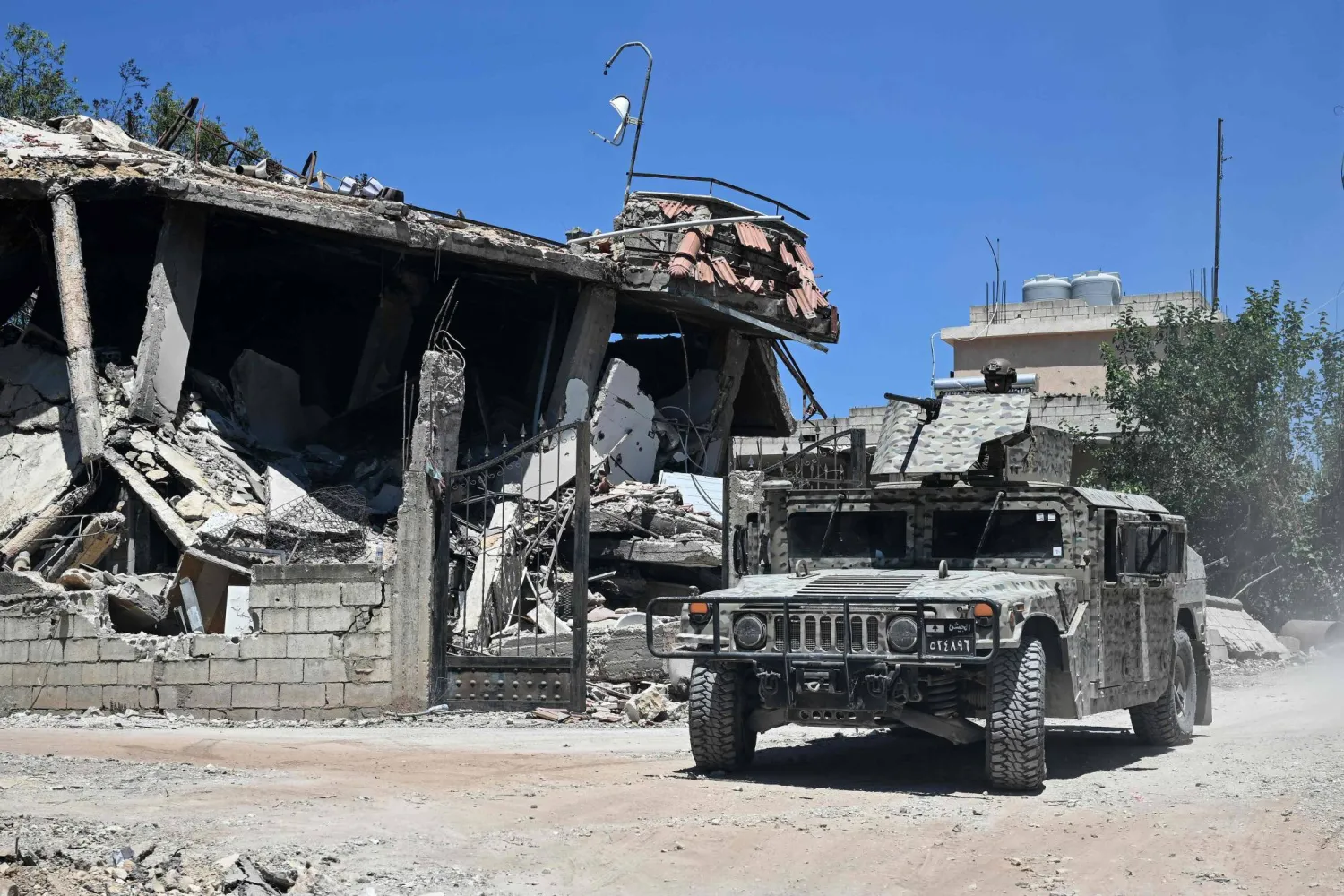
However, two main obstacles remain: Israel’s continued demolitions and detonations in the South and the division over Hezbollah’s weapons arsenal amid no serious internal Lebanese discussions over the issue and the Iran-backed party’s refusal to disarm.
Tel Aviv, meanwhile, continues to tie its withdrawal from the South to Hezbollah laying down its weapons.
Tuesday’s talks in Rome will tackle Lebanon’s demands that Israel cease its attacks and demolitions in Lebanese towns, as well as its full withdrawal from the country.
Informed ministerial sources told Asharq Al-Awsat that the dilemma over Hezbollah’s weapons still remains and no progress has been made over it.
“The issue is not being discussed in Lebanon,” they noted, while Hezbollah continues to attack the framework agreement and reject the “pilot zones” program.
Israel, on the other hand, is continuing with its detonations and demolitions in the South. The sources said it was unlikely that a breakthrough would happen before Israel’s elections in October.
They revealed that it had been proposed before that Hezbollah turn over its heavy weapons as an initial step that would be followed with a discussion about its entire arsenal at a later phase. The party refused and Tel Aviv has so far not taken any positive step that may help achieve progress over the issue.
Meanwhile, US Ambassador to Lebanon Michel Issa said on Monday: “I am encouraged that talks in Rome remain ongoing, and I hope both governments reach a successful outcome.”
“A great deal of technical work remains to ensure civilian safety on the ground. There is a meaningful difference between drafting an agreement on paper and implementing it responsibly — moving too quickly risks jeopardizing the very civilians this process is meant to protect,” he added in a statement carried by the US Embassy in Lebanon.
“We believe it is better to take the time needed to get this right the first time. Doing so will allow subsequent pilot zones to move forward more efficiently. Above all, both sides must agree on a clear, workable process before proceeding,” he urged.
Lebanon’s Agriculture Minister Nizar Hani stressed that Beirut’s goal are clear: ending Israeli attacks and demolitions, and its withdrawal from Lebanon.
He noted that the US still remains interested in the Lebanese file, adding that contacts between parliament Speaker Nabih Berri, a Hezbollah ally, and the party still stand.
He hoped that Hezbollah would not kick off a new conflict with Israel should the situation between the US and Iran escalate.
On the other side of the divide, Hezbollah and Amal movement officials continued to express their opposition to the framework agreement and negotiations.
Member of Amal’s Development and Liberation bloc MP Hassan Khalil said the agreement was a failure so long as Israel continues to occupy southern regions and to carry out killings and demolitions.
He called for reviewing the negotiations, demanding that priority should lie in Israel’s complete withdrawal from the South, the return of southern residents to their homes, the beginning of reconstruction, the release of detainees held by Israel, deployment of the army and return of state institutions to the South.
Hezbollah MP Hussein al-Hajj Hassan declared that the party will not disarm, warning that “any army that comes to our towns with the mission to remove the resistance’s weapons will be viewed as an occupier.”
He backed Berri’s view that the “framework agreement was born dead and that it was buried by Israel.”


