Tiger Shark Caught Off Massachusetts Could be Sign of Warming Waters

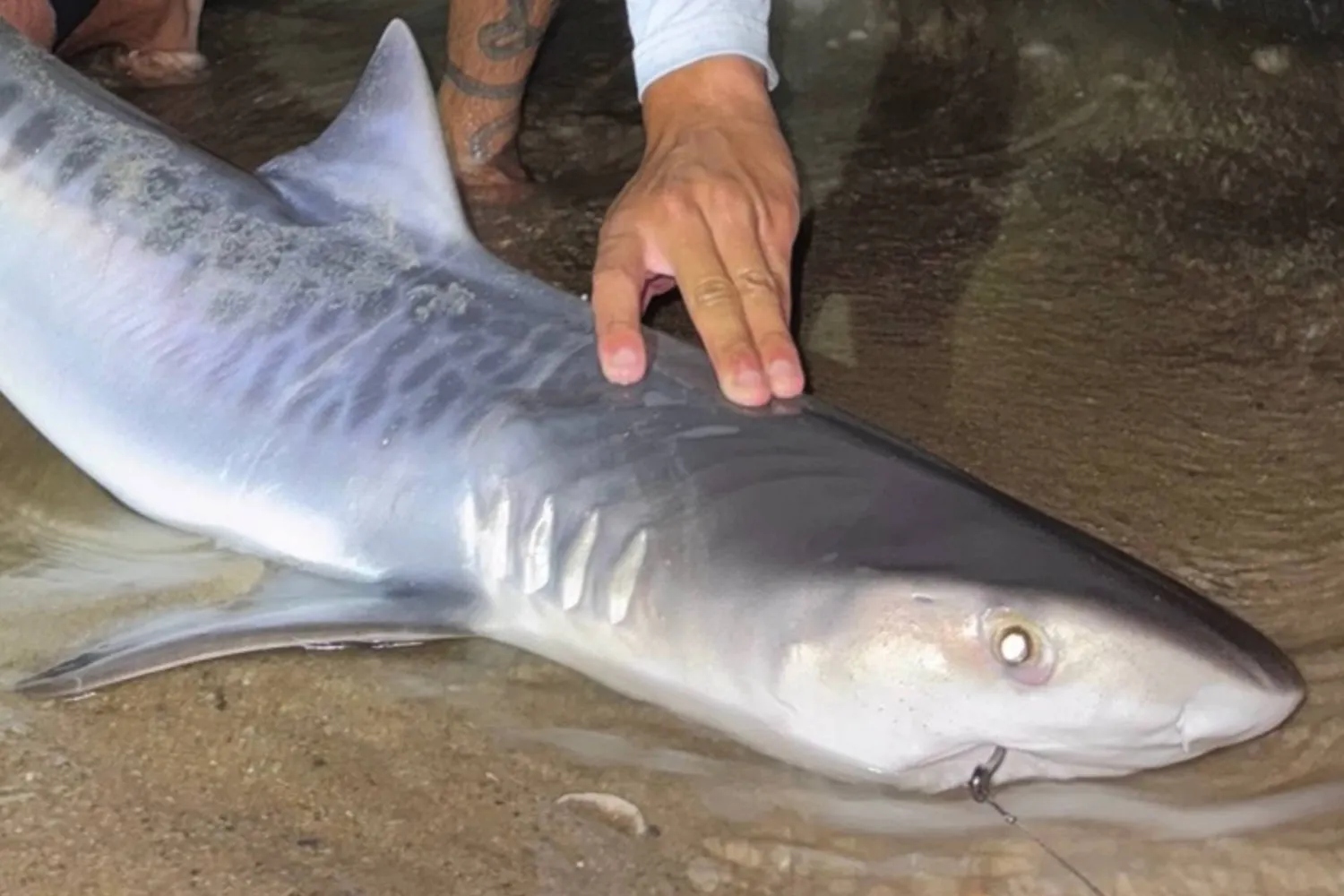
This photo provided by Nelson Rouette shows his brother, Nate Rouette, holding a young tiger shark that they caught off Falmouth Mass., July 23, 2026. (Nelson Rouette via AP)
TT

Tiger Shark Caught Off Massachusetts Could be Sign of Warming Waters

This photo provided by Nelson Rouette shows his brother, Nate Rouette, holding a young tiger shark that they caught off Falmouth Mass., July 23, 2026. (Nelson Rouette via AP)

Nate Rouette and his brother Nelson went shark fishing on Cape Cod hoping for an exciting catch, but were shocked by what they reeled in -- a tropical species of shark with a reputation for eating everything it can swallow.

The brothers, longtime sport fishermen who live in Massachusetts, released a juvenile tiger shark in late July after catching it from a beach. The five-foot shark is far more common in warmer, southern waters such as the Caribbean Sea, and scientists said its appearance off Falmouth, Massachusetts, is an indicator of warming seas caused by climate change.

Nate and Nelson said the late-night catch was a thrill after hours of seeking far more common brown sharks.

“And I saw those horizontal lines, indicating it was a tiger shark, which was super cool,” said Nate, who is the social media manager for On The Water magazine. “Immediately I started yelling to my brother, ‘It’s a tiger, it's a tiger shark!' And he was in disbelief.”

The Rouette brothers caught a young specimen of a shark that can grow to more than 15 feet (4.6 meters) and 1,400 pounds (635 kilograms). Tiger sharks eat a wide array of other ocean life, including fish, crustaceans and birds, and are famous for sometimes eating man-made items such as old license plates and shoes that are later found in their stomachs. The adults are also more dangerous to humans than most shark species, though unprovoked fatal bites are rare.

Juvenile tiger sharks have been spotted more often in northern waters in recent years, said John Chisholm, adjunct scientist at the New England Aquarium’s Anderson Cabot Center for Ocean Life in Boston. Rising temperatures of global seas appear to have made the Atlantic Ocean off New England more hospitable to them, The Associated Press quoted him as saying.

Young tiger sharks are historically less common than adults in northern waters, which makes the brothers' discovery even more surprising, Chisholm said.

“Maybe they are coming up here because conditions are right. There's food, there's warm waters,” he said. “Maybe it's becoming a nursery -- that's one of the issues that we will investigate.”

Tiger sharks are among many kinds of sea life that have been trending north in recent years as seas have warmed, and other sharks have done the same, scientists have said. Sightings of great whites off Cape Cod have been increasingly frequent, and the big sharks have also been seen off of New Hampshire and Maine. Scientists have attributed the shift in great white sightings to factors including a higher abundance of seals, which the great whites prey on.

Other sea animals, including black sea bass, appear to be moving north because of the warming of the ocean.

For the Rouette brothers, the encounter with a tiger shark provided a thrill they won't forget. Nate said the discovery was a reminder of that warming.

“People are definitely seeing more species that indicate that,” Nate said.


Challenging Scientific Assumptions: Blood Remnants Found in 115-Million-Year-Old Dinosaur Bones

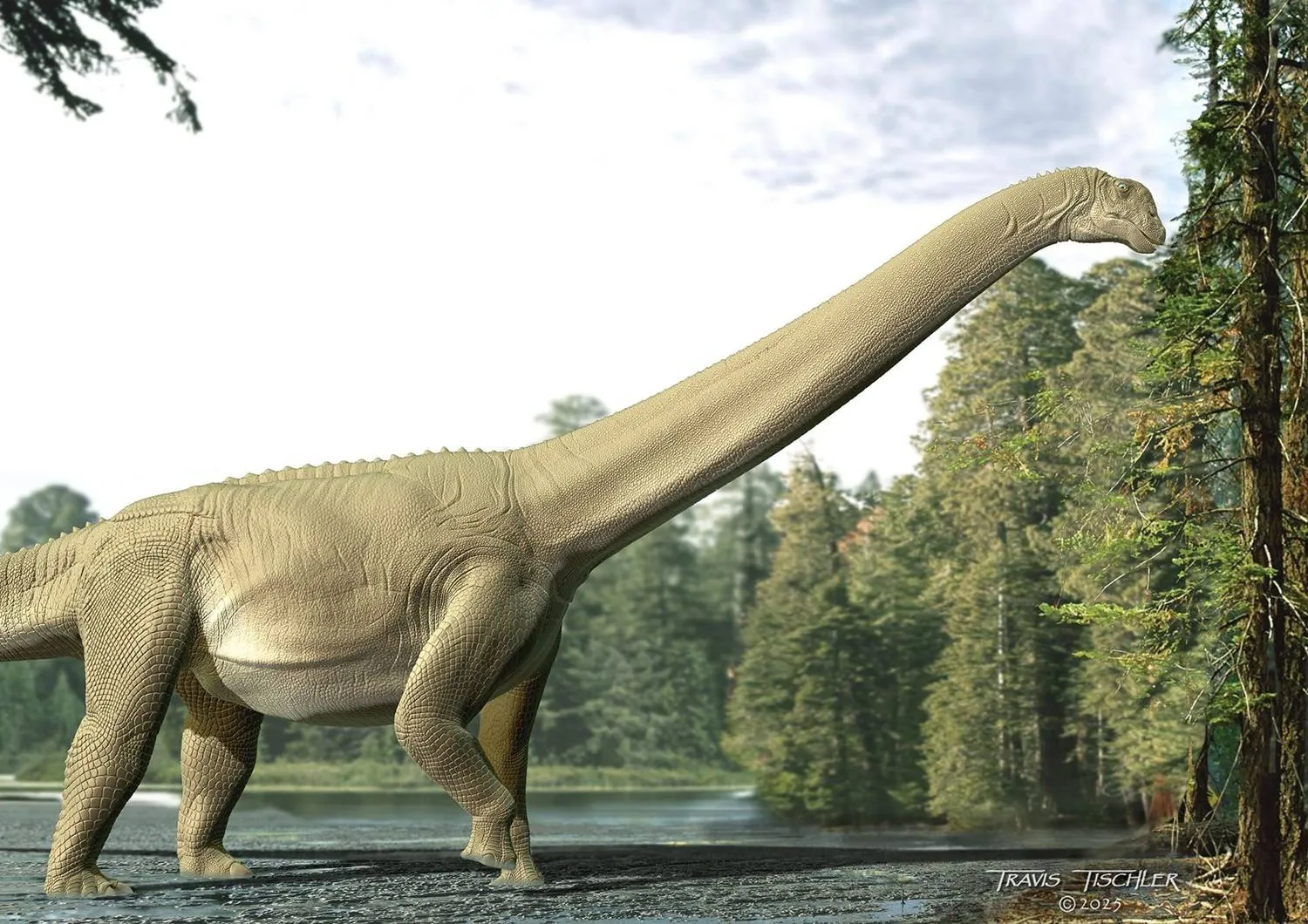
An artist's impression of a giant dinosaur (Curtin University, Australia)
TT

Challenging Scientific Assumptions: Blood Remnants Found in 115-Million-Year-Old Dinosaur Bones

An artist's impression of a giant dinosaur (Curtin University, Australia)

An international research team has discovered fossilized red blood cells, hemoglobin-derived biomolecules and amino acids from collagen protein inside the bones of a dinosaur that lived approximately 115 million years ago in Brazil. The unprecedented discovery opens new avenues for studying ancient life and challenges existing assumptions about how long fossils can preserve their biological components.

The researchers, led by Australia's Curtin University, said the remains were discovered inside the limb bones of a theropod dinosaur known as Aratasaurus museunacionali, whose fossils were found in northwestern Brazil. The findings were published Monday in the journal Proceedings of the National Academy of Sciences (PNAS).

Analyses revealed large numbers of preserved red blood cells within the bones' vascular canals. For the first time, researchers were able to establish the presence of hemoglobin-derived chemical compounds inside these cells by detecting heme, the component of hemoglobin responsible for binding and transporting oxygen.

The finding provides confirmed chemical evidence of fossilized blood remnants, unlike previous studies that identified structures resembling red blood cells in fossils but could not conclusively establish their chemical nature.

The discovery surprised researchers because the preservation of delicate biological components, such as red blood cells and hemoglobin molecules, over 115 million years challenges scientific assumptions about how long these materials can survive degradation.

The researchers described the identification of heme-derived molecules within red blood cells of such extraordinary age as a remarkable discovery and a significant milestone in paleontology.

They added that the findings not only expand the fossil record of blood remnants but also provide a direct molecular window into the physiological characteristics of extinct animals, helping scientists better understand their biology and the environments in which they lived.

The study explained that the red blood cells had been mineralized by hausmannite, a mineral that acted as a natural time capsule, helping stabilize cellular structures and biological components, including amino acids associated with collagen protein, and protecting them from degradation over millions of years.

Researchers believe this exceptional preservation resulted from the dinosaur's carcass being rapidly buried after death in a low-oxygen environment rich in microorganisms. These conditions may have helped preserve the biological components within the bones.

The researchers said the findings challenge long-standing scientific assumptions that biomolecules such as hemoglobin could not survive over extended geological timescales.

They also open new avenues for investigating the evolution of blood and metabolic processes, potentially offering insights into the activity levels of ancient animals.

According to the team, the study redefines the limits of molecular preservation across vast periods of time, even under harsh environmental conditions.

The findings may also have implications for astrobiology, potentially helping scientists develop methods to search for evidence of ancient life beyond Earth.


Charles Left without Umbrella in Rainstorm Fit for a King

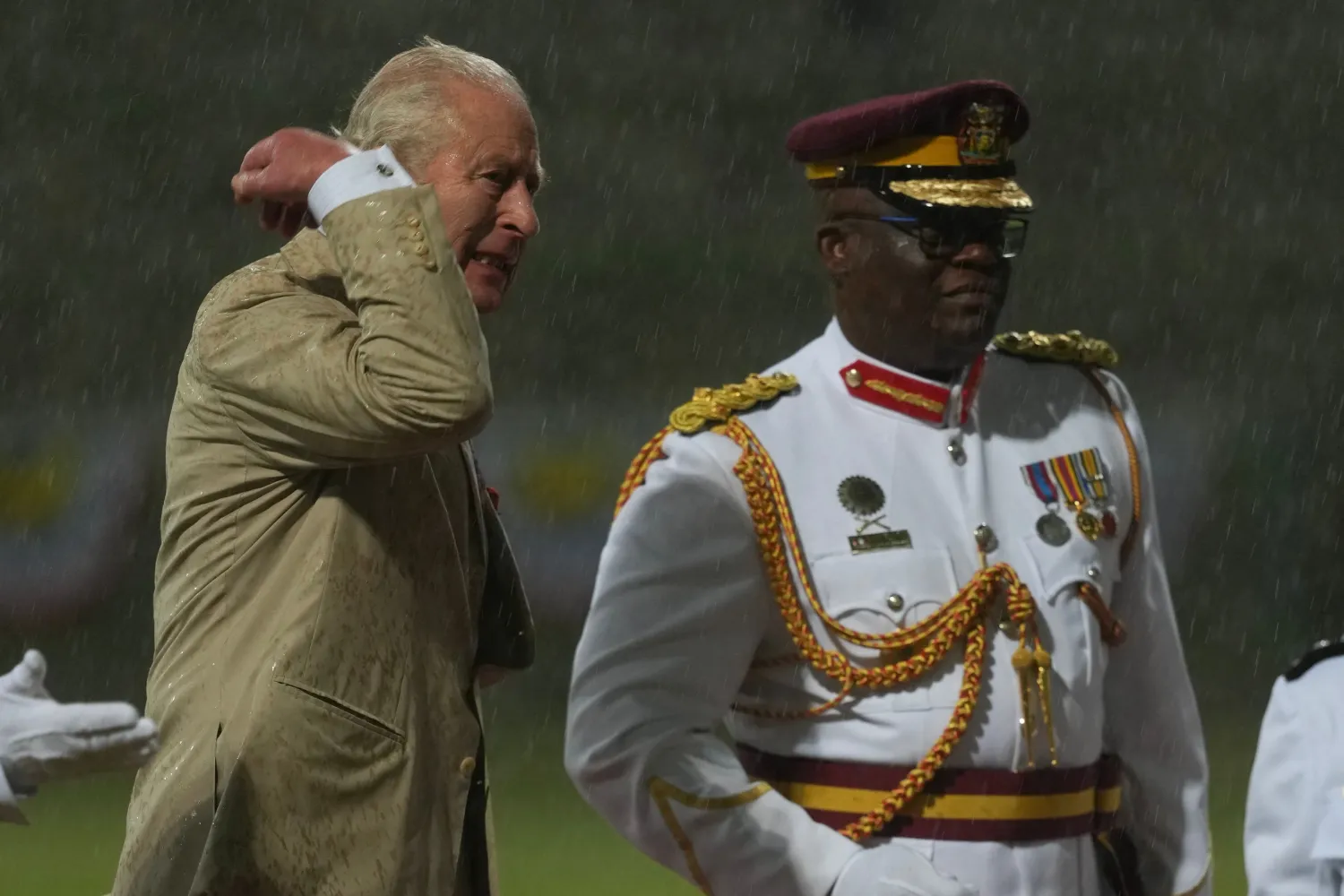
Britain's King Charles III arrives alongside Chief of Defense Staff, Brigadier General Telbert Benjamin in the rain for a military parade marking Antigua and Barbuda's 45th Independence anniversary at the Sir Vivian Richards Stadium, Antigua and Barbuda, on November 1, 2026. (AFP)
TT

Charles Left without Umbrella in Rainstorm Fit for a King

Britain's King Charles III arrives alongside Chief of Defense Staff, Brigadier General Telbert Benjamin in the rain for a military parade marking Antigua and Barbuda's 45th Independence anniversary at the Sir Vivian Richards Stadium, Antigua and Barbuda, on November 1, 2026. (AFP)

King Charles flung up his hands in despair as he was caught in a tropical rainstorm in Antigua, while his wife Queen Camilla strolled off with the only available umbrella.

The couple's Caribbean tour has been dominated by the debate over Britain's role in the slave trade, but it was the sight of the soaked monarch which made headlines on Sunday.

As the rain hammered down on Charles, ‌77, he ‌was seen gesturing and turning round to ‌try ⁠to attract the ⁠attention of someone who might help, while Camilla was shielded from the downpour.

Locals taking part in the Antigua and Barbuda independence day parade did not flinch as they were lashed by the storm.

Charles was eventually given an umbrella and was seen joking about ⁠his experience with Prime Minister Gaston ‌Browne. "I think I'm about to ‌grow watercress on my suit," he said in a ‌video posted on the royal family's Instagram account.

It ‌is not the first time the frustration of the famously short-fused Charles has been captured in public.

Not long after he became king in 2022 in an incident which went ‌viral on social media, he reacted grumpily when a pen leaked ink onto ⁠his ⁠hand at an event in Northern Ireland.

"Oh God, I hate this," he cursed.

"I can't bear this bloody thing... every stinking time," he continued.

He has since made fun of himself, quipping at a subsequent event, "I'm hoping that my pen is going to work. It doesn't usually."

He is due to make a speech to Commonwealth leaders on Tuesday. Since becoming king, he has expressed sorrow for the suffering caused by slavery without crossing a line that Britain has long resisted: an apology.


UK Adventurer Ends Epic 28-Year Journey Across Jungles, Mountains and a Frozen Sea

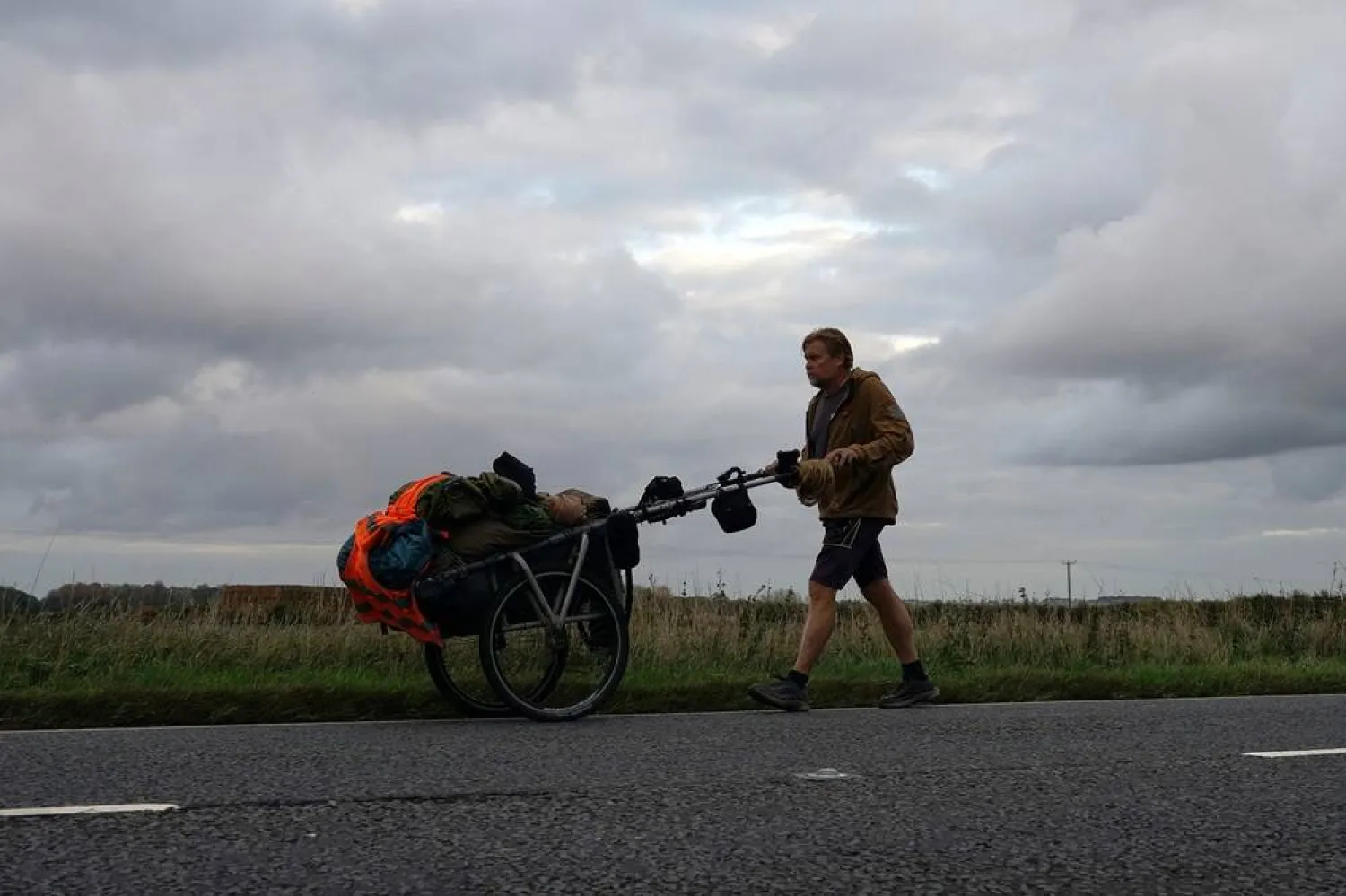
 British adventurer Karl Bushby walks near Market Rasen, Lincolnshire, England, Wednesday, Oct. 28, 2026, on the final stretch of his 28-year walk around the world to get back to his mother's home in Hull. (AP)
British adventurer Karl Bushby walks near Market Rasen, Lincolnshire, England, Wednesday, Oct. 28, 2026, on the final stretch of his 28-year walk around the world to get back to his mother's home in Hull. (AP)
TT

UK Adventurer Ends Epic 28-Year Journey Across Jungles, Mountains and a Frozen Sea

 British adventurer Karl Bushby walks near Market Rasen, Lincolnshire, England, Wednesday, Oct. 28, 2026, on the final stretch of his 28-year walk around the world to get back to his mother's home in Hull. (AP)
British adventurer Karl Bushby walks near Market Rasen, Lincolnshire, England, Wednesday, Oct. 28, 2026, on the final stretch of his 28-year walk around the world to get back to his mother's home in Hull. (AP)

After 28 years, British adventurer Karl Bushby on Monday ends a 50,000-kilometer (31,000-mile) trek home from Chile across four continents without using any transport.

Bushby, who set off on his odyssey from south America in 1998, had two golden rules for his journey -- he should avoid all forms of transport to advance and not return until he completed his challenge.

The route back to his home city of Hull in northeastern England has seen him walk the length of the Americas, across the Bering Strait from Alaska to Russia and then through parts of central Asia and Europe covering jungles, mountains, deserts and a frozen sea.

People on Sunday applauded him as he crossed the Humber Bridge near Hull in thick mist, ahead of his final push into the city center and then on to his mother's home.

The 57-year-old former paratrooper, who pushed his belongings with him on a metal-framed cart, told BBC radio he was "absolutely overwhelmed" by the reception.

He will be given a civic welcome Monday by the city's mayor and members of the public.

"So many people have followed Karl on his epic journey. We have all felt inspired by his spirit, tenacity and dogged determination," said Hull's mayor Maria Coward, adding the city took "pride in his incredible achievement".

He will then embark on the very final leg of his journey to north Hull to be reunited with his mother Angela, his 36-year-old son Adam and a 12-year-old granddaughter he has never met.

- 'UK soil' -

Bushby began his odyssey adventure when he was 29 after his marriage broke down and his wife returned to Northern Ireland with their son.

He paused the journey several times, including when Moscow refused him a visa. The 2008 financial crisis and then the Covid-19 pandemic proved to be other hold-ups.

At those times, he stepped away from the journey, living notably at a base in Mexico, then once the situation had been resolved, he would resume from the exact spot where he had left off.

He reached Britain early last month by swimming across the busy English Channel from northern France.

A small gathering of friends and family including his father greeted him on the beach near Dover in southern England.

"Feels good to have UK soil under my feet after all these years," he said afterwards in a statement, adding his journey "hadn't been easy, and that's part of the point -- proving I'm more capable than I give myself credit for".

"All of us can accomplish more than we will ever imagine," he said.

Legendary German filmmaker Werner Herzog and a film crew are accompanying Bushby on his homecoming.

Herzog is making a feature-length documentary about the journey entitled "Walk of Life".

The production company behind the film has been supporting Bushby's progress for the past 16 years, providing financial and logistical assistance.

In an interview with AFP from northern France in September, Bushby voiced some apprehension about returning to a more normal life back in Britain.

"I've got to try and get established in the grown-up world again," he said.