Hong Kong Wildlife Groups Push for Tighter Exotic Pet Rules After 3.7 Million Importshttps://english.aawsat.com/varieties/5345916-hong-kong-wildlife-groups-push-tighter-exotic-pet-rules-after-37-million-imports
Hong Kong Wildlife Groups Push for Tighter Exotic Pet Rules After 3.7 Million Imports
Birds fly near Wang Fuk Court in Hong Kong, China, November 26, 2026. REUTERS/Tyrone Siu
Every hour, some 80 live exotic animals are imported into Hong Kong as a vast wildlife trade outpaces regulation, conservation groups said, warning of pathogens and parasites that threaten the health of humans and native wildlife.
The city imported 3.7 million live exotic animals from 86 countries and jurisdictions between 2020 and 2025, positioning itself as the largest global importer of endangered reptile species, according to research released this week by the ADM Capital Foundation (ADMCF).
At Hong Kong's Legislative Council on Tuesday, groups including ADMCF, WWF-Hong Kong, Kadoorie Farm and Botanic Garden (KFBG), the SPCA and local lawmakers called for a "Positive List" of species approved for import, sale and keeping as pets.
Legislator Elizabeth Quat said the government should review and update such a list in a timely manner, while also revisiting the legal definition of "animal," which under existing trade regulations excludes amphibians and invertebrates.
Hong Kong's Agriculture, Fisheries and Conservation Department did not immediately respond to a Reuters request for comment.
A Positive List model is already in place in regional neighbors such as Singapore, which bans the keeping of most exotic wildlife, and South Korea, which recently enacted legislation to regulate exotic pet cafes and private ownership.
Jianhuan Yang, conservation manager at KFBG, said its Wild Animal Rescue Centre was seeing a growing trend in the keeping of exotic reptiles, including venomous snake species.
Yang also pointed to the chytrid fungus — which has caused dramatic global amphibian declines — as likely to have been introduced into Hong Kong by the release of exotic amphibians.
The warning follows the charging in August of the owner of a Hong Kong reptile education center, who co-hosted a major wildlife expo for children, with the illegal possession of endangered species.
Court: EU Must Set Out Timeline to End Cage Farminghttps://english.aawsat.com/varieties/5345851-court-eu-must-set-out-timeline-end-cage-farming
A shepherd leads a flock of around 600 sheep through the main market square in Nuremberg, southern Germany, on November 15, 2026. (Photo by Frank Boxler / AFP)
Court: EU Must Set Out Timeline to End Cage Farming
A shepherd leads a flock of around 600 sheep through the main market square in Nuremberg, southern Germany, on November 15, 2026. (Photo by Frank Boxler / AFP)
An EU court told the bloc Wednesday to set out a new timeline for plans to ban cages for farm animals, ruling it had failed to adequately follow up on a popular petition.
The European Commission had pledged in 2021 to put forward legislation by the end of 2023 to bar farmers from rearing hens, rabbits, sows and other animals in cages.
But it failed to do so, prompting the promoters of an EU petition calling for a ban that had gathered about 1.4 million signatures to request a new timeline -- eventually resulting in a court case when that was not forthcoming.
The Luxembourg-based General Court, the European Union's second-highest, found in favor of the animal rights' campaigners.
"The commission is under an obligation -- which is not limited in time -- to set out a timeline for all the measures which it intends to take in response to such an initiative," the court said.
The ruling was cheered by dozens of campaigners gathered outside the commission headquarters in Brussels, where they installed a giant inflatable caged pig.
"It's an exceptional victory," said Debbie Tripley, a director at Compassion in World Farming, an animal welfare group among the proponents of the 2018 "End the Cage Age" petition.
"They have to come forward with a timeline for those proposals," she told AFP.
Under the "European citizens' initiative" system, the commission has to address petitions that gather over one million signatures across at least seven EU countries -- although it is not legally bound to agree to their demands.
But once it states it intends to take action, the commission has to keep the public and the European Parliament posted on a timeline in line with the principle of "good administration", the court said.
The commission, which can still appeal the ruling, said it was analyzing the judgment before deciding on the next steps.
It has previously said it intends to put forward a proposal to phase out cages for chickens by the end of this year and another to move from farrowing crates to pen systems for pigs in 2027.
About 143 million egg-laying chickens in the EU are raised in cages and the majority of female pigs spend at least part of their lives in a cage.
Cage farming is already banned in farming accredited as organic in the EU.
The Return of the Wolf Divides the Densely Populated Netherlandshttps://english.aawsat.com/varieties/5345843-return-wolf-divides-densely-populated-netherlands
The Return of the Wolf Divides the Densely Populated Netherlands
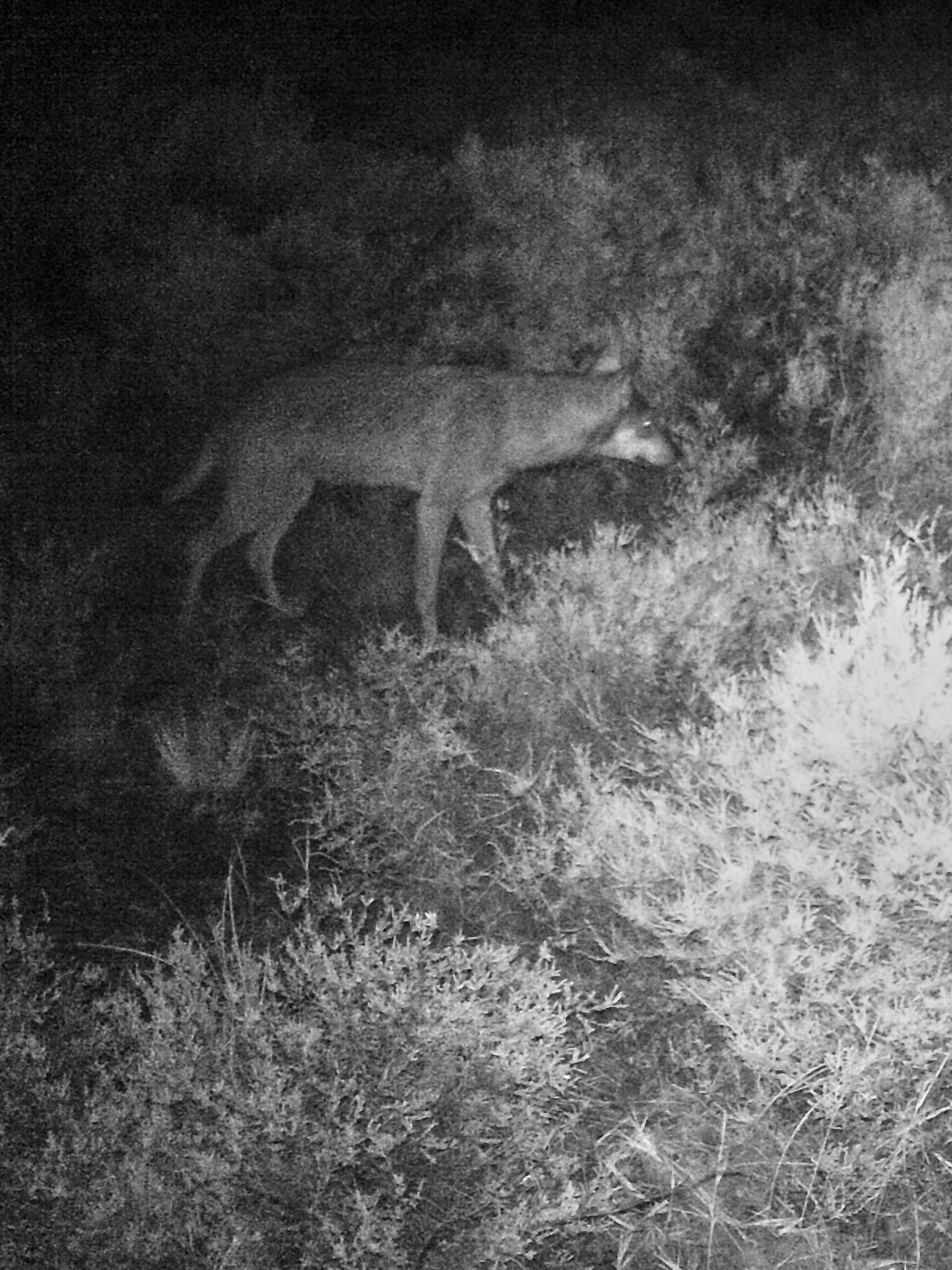
A wolf hunts at De Hoge Veluwe National Park, Netherlands, Monday, June 15, 2026. (AP Photo/Peter Dejong)
The return of wolves to the Netherlands some two centuries after they were hunted to extinction was seen as a fairy tale comeback and a conservation success story.
But the initial joy when a pair of wolves first bred in the Netherlands in 2019 soured as the return of the apex predator led to deadly attacks on livestock and unwanted encounters with humans that have fed into existing tensions in Dutch society.
Wolf numbers are growing across Europe, and the population in the Netherlands — estimated at fewer than 150 divided into about 15 packs — is tiny compared to those in many other European Union countries where wolves have been established for far longer.
Even so, the densely populated nation of 18 million people with an influential, multibillion-dollar agricultural industry is the backdrop for a particularly prickly debate about just how well the wolf, a protected animal across the EU, can coexist with people and livestock.
While packs often remain in their own territories, lone wolves can drift around the country. Tracking data gathered by researchers at the respected Wageningen University and Research institute showed a single wolf covered just over 2,500 kilometers (1,550 miles) in three months, swimming over a major river twice and crossing several highways.
The Dutch government announced this week that it intends to allow some wolves to be culled, citing the need to prevent attacks on people and animals.
Fearing wolf attacks, a farmer keeps most sheep in his barn When Robertjan Feijen first began raising sheep in the rural northeast of the Netherlands about a decade ago, wild wolves were a distant memory. His sheep grazed on other farmers’ fields and pastures that are submerged during the winter to create speed skating ovals.
Things changed fast.
Since wolves returned to the Netherlands, the farmer has lost around 250-300 sheep in more than 50 wolf attacks.
The worst feeling for Feijen is if he has helped deliver a lamb and then sees that animal maimed or, worse still, “you see it lying dead, completely ripped open and then looking around you, it’s a battlefield with dead animals in ditches,” he said. “It’s indescribable.”
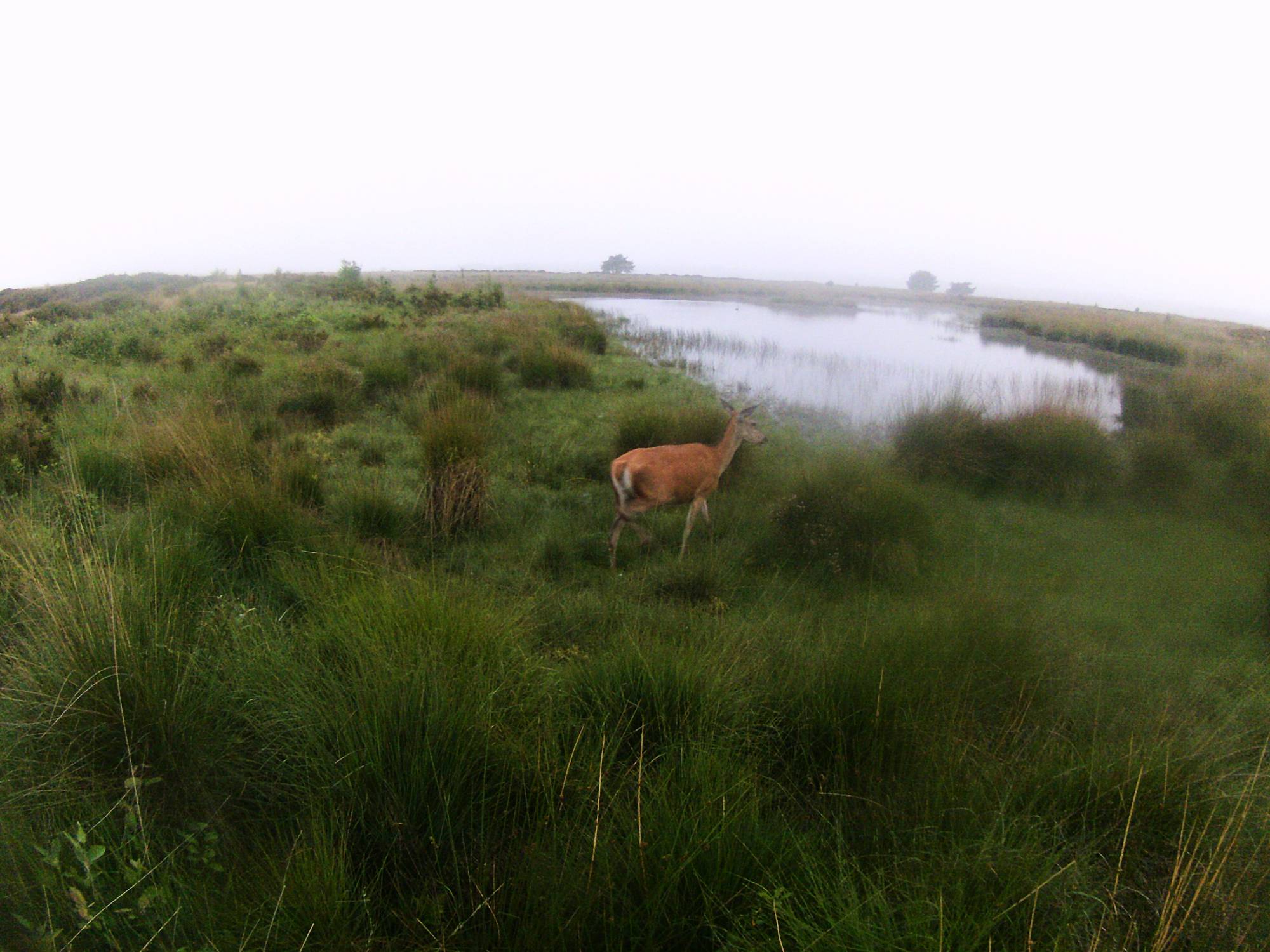
A deer heads to a watering hole at De Hoge Veluwe National Park, Netherlands, Thursday, July 9, 2026. (AP Photo/Peter Dejong)
Researchers at Wageningen reported wolves killed more than 3,300 animals last year in the Netherlands, almost all of them sheep, and farmers were paid nearly 1.5 million euros ($1.6 million) for their livestock losses.
Farmers can also get subsidies for protective measures like electric fences. But Feijen said the government support doesn’t come close to covering his losses. He feels forced now to keep many of his sheep in his barn.
A peaceful walk in the woods now involves wolf prevention measures Photographer Liesbeth van Asselt has lived near the forests and heathlands that border the central town of Epe all of her 62 years and loves to walk the paths that crisscross shady groves of pine and oak.
But such outings are no longer a source of carefree relaxation.
Even though reports of wolves attacking dogs are rare, when Van Asselt walks with her dog, Raico, she wears a red whistle around her neck to scare off wolves that sometimes walk down the sandy roads near her garden.
“I think we can have an amount of wolves in the Netherlands, but not in between our houses, walking in our streets and in our gardens,” Van Asselt said.
The return of the wolf feeds into existing divisions in a polarized Dutch society Long seen as a bastion of tolerance, the Netherlands has been roiled in recent years by protesting farmers angry at government plans to rein in nitrogen emissions; by black-clad demonstrators seeking to prevent towns opening asylum-seeker centers; and by people demanding action on climate change.
The debate about wolves opened up one more fault line. In December, when animal welfare activists held a symbolic funeral procession for the only Dutch wolf to have been shot in an officially sanctioned hunt, they were threatened by villagers. Activists said one opponent drove his car at them. Police intervened but made no arrests.
The wolf in question, nicknamed Bram by some locals, had menaced joggers and cyclists and was blamed for biting a child in a forest close to the university city of Utrecht.
Maarten Jacobs, a polarization expert at Wageningen, said wolves are being exploited by agitators seeking to deepen rifts in society.
“So there was existing polarization, and polarization needs fuel to keep the conflict going," he said. “And then the wolf arrived, and that’s perfect new fuel.”
An apex predator returns to a popular national park At De Hoge Veluwe National Park, a tourist destination in the central Netherlands, the return of the wolf is having a potentially devastating effect on the protected landscape of inland drifting sands.
Head of operations at the park, Jakob Leidekker, points to countless Scots pine saplings sticking out of a sandy plain. Wild sheep introduced from Cyprus and Corsica called mouflons used to graze on the young shoots before they could mature.
“All the mouflons are gone now because they were killed by wolves,” Leidekker said. “And what you see now is that all these pines are getting up."
The park is home to the Kröller-Müller Museum and its jaw-dropping collection of Vincent van Gogh paintings and other artworks. Some 570,000 people visited the park last year, many of them riding through forests and sand dunes on a fleet of white bicycles. Visitors are now handed a pamphlet explaining what to do if they encounter a wolf.
At least one wolf attacked a jogger and approached visitors. The park sought permission to use paintball guns to scare it off. By the time it was granted, the wolf was gone.
A wolf hunts at De Hoge Veluwe National Park, Netherlands, Monday, June 15, 2026. (AP Photo/Peter Dejong)
While farmers and others lament the return of the wolf, conservation and animal welfare groups have welcomed it.
Nature organization Natuurmonumenten said it considers the animal “an enrichment to nature, but at the same time attaches great importance to cooperation between parties so that we can coexist with this animal with minimal conflict.”
While wolves are a threat to De Hoge Veluwe's protected landscape, experts say they generally have a positive impact on the environment by keeping large animals like deer on the move, ensuring they don’t overgraze areas.
“There’s a very nice saying in Eastern Europe,” said Hugh Jansman, an animal ecologist at Wageningen. “Where the wolf lives, the forest thrives.”
Europe is walking back wolf protections Wolves are thriving in Europe. The European Commission estimated the population across the continent almost doubled in 10 years to some 20,300 animals in 2023 with breeding packs in 23 countries.
But spurred by anger in communities where wolves prey on livestock, the EU last year relaxed the status of wolves from “strictly protected” to “protected” to give “more flexibility to member states to manage the populations of wolves.”
The Dutch move to allow for some culling will have to be hammered out with provincial governments. But State Secretary for Agriculture, Fisheries and Nature Silvio Erkens called it "an important step because there are now too many serious incidents with wolves.”
Some flout the protections anyway.
A report from the EcoJust consultancy estimates at least 41 wolves have been illegally killed in the Netherlands since their return.
Despite the competition for space in the Netherlands, Jansman says wolves have clearly demonstrated that they have a place in the Dutch landscape.
“I think the biggest challenge is, as humans, are we willing to share this landscape with a predator, the wolf?”
لم تشترك بعد
انشئ حساباً خاصاً بك لتحصل على أخبار مخصصة لك ولتتمتع بخاصية حفظ المقالات وتتلقى نشراتنا البريدية المتنوعة