


BP's Quarterly Profit Doubles to Over $5 Billion after Iran War Oil Surge

BP reported second-quarter profit more than doubled to $5.73 billion, beating forecasts thanks to higher energy prices. Reuters
TT

BP's Quarterly Profit Doubles to Over $5 Billion after Iran War Oil Surge

BP reported second-quarter profit more than doubled to $5.73 billion, beating forecasts thanks to higher energy prices. Reuters

BP reported second-quarter profit more than doubled to $5.73 billion, beating forecasts thanks to higher energy prices, trading and refining margins, as CEO Meg O'Neill outlined the group's priorities.

Oil majors have benefited this year from market volatility caused by the US-Iran conflict, which has disrupted energy flows and tightened global supplies.

BP's second-quarter underlying replacement cost profit, its version of net income, beat expectations of $5.11 billion in a company-provided poll of analysts and rose from $2.35 billion a year earlier. The group said it would increase its dividend by 4% to 8.66 cents per ordinary share for the second quarter.

BP also on Tuesday said it had launched processes to sell its US biogas ⁠business Archaea as ⁠it continues to reduce its renewables investments to focus on oil and gas.

It bought Archaea in 2022 for $4.1 billion as part of an aggressive expansion in renewables - a strategy it abandoned in 2025. BP has written down over $4 billion in recent months, mainly related to Archaea, its solar unit Lightsource BP and other low-carbon ventures.

In recent weeks, BP has also completed the sale of its Gelsenkirchen refinery, agreed to sell its retail business in Austria and announced its intention to sell its UK North Sea business.

BP's shares rose 0.4% in early trading, compared with ⁠a 0.9% uptick for a broader index of European energy firms, Reuters reported.

O'Neill, who took over as CEO in April, outlined on Tuesday five priorities for BP: further strengthening the balance sheet, simplifying the portfolio, tightening investment discipline, improving operational performance, and creating structures that enable faster decision-making and greater accountability.

"We are not making the most of our potential," O'Neill said. "Our performance over the past few years has not met our own expectations, let alone those of our shareholders. We have not delivered consistently; we have written off too much value; and our costs and liabilities are not resilient enough in a low price environment."

BP's priorities ultimately will be judged on execution, RBC analysts said in a note.

"Ownership of BP's historical failings is a good step forward for the investment case, and we look to the call for more clarity on ⁠the financial framework and ⁠tangible plans ahead," they said.

BP expects capital expenditure in 2026 to be $13.5 billion to $14 billion, reflecting a decision to delay asset farm-downs and capture better value. Previous guidance was $13 billion to $13.5 billion. BP recorded its highest quarterly net profit since the third quarter of 2022, and second-quarter profits across all units beat expectations.

Pre-tax profit at its customers and products unit, which includes BP's huge oil trading desk, was $4.95 billion, above the average estimate in a BP-provided analyst poll of $4.46 billion and $1.53 billion a year ago.

The group said upstream plant reliability fell to 92.4% in the second quarter from 95.7% in the previous quarter, while production declined to 2.2 million barrels of oil equivalent per day and its refineries processed less crude, partly due to planned maintenance and disruption from the conflict in the Middle East.

Brent crude prices averaged about $97 a barrel in the second quarter, up from $78 in the first quarter and $67 a year earlier, while European gas prices rose to €46 ($52.96) per megawatt-hour from €40 in the first quarter and €36 a year earlier.



Oil Prices Fall on Easing Fears Over Saudi Supply Disruption

FILE PHOTO: Vessels near the Strait of Hormuz, as seen from Musandam, Oman, September 2, 2026. REUTERS/Stringer/File Photo
TT

Oil Prices Fall on Easing Fears Over Saudi Supply Disruption

FILE PHOTO: Vessels near the Strait of Hormuz, as seen from Musandam, Oman, September 2, 2026. REUTERS/Stringer/File Photo

Oil prices fell 2% on Friday, extending losses for a third straight session as easing concerns over Saudi supply disruptions outweighed anxiety about a widening of conflict across the Middle East.

Brent crude futures fell by $2.14, or 2%, to $102.68 a barrel by 0806 GMT. US West Texas Intermediate futures fell $1.83, or 1.8%, to $100.08, Reuters reported.

Benchmark Brent prices are on track for their first weekly loss in three.

Prices climbed to close to four-month highs earlier in the week after sources said crude loadings ⁠at Saudi Arabia's Red Sea export hub of Yanbu had been suspended and Riyadh cancelled some deliveries to Europe after its East-West pipeline was damaged in an attack last week.

However, prices have cooled since on reports that Saudi Arabia was seeking to restore about half the capacity of its East-West oil pipeline within days.

Saudi Arabia has sold about 60 million barrels of crude from its Gulf port of Ras Tanura inside the Strait of Hormuz for loading via ship-to-ship transfer at the Omani port of Sohar this month and next, multiple trade sources said on Friday.

The rebound in Saudi Aramco's exports from inside the Gulf to between 1 million to 1.5 million barrels per day on average, similar to or slightly higher than August's levels, has cooled global oil prices as it could make up for some of the ⁠volume lost at its port of Yanbu.

Chinese and South Korean refiners are among the top buyers of the spot supplies, while some volumes will be going to India and Japan, said the sources, who spoke on condition of anonymity.

"Recent efforts ‌to restore Saudi export capacity have reduced some of the immediate supply ‌anxiety," said Priyanka Sachdeva, head of market insights at Phillip Nova.


ECB's Lagarde Keeps Door Open to Early Exit

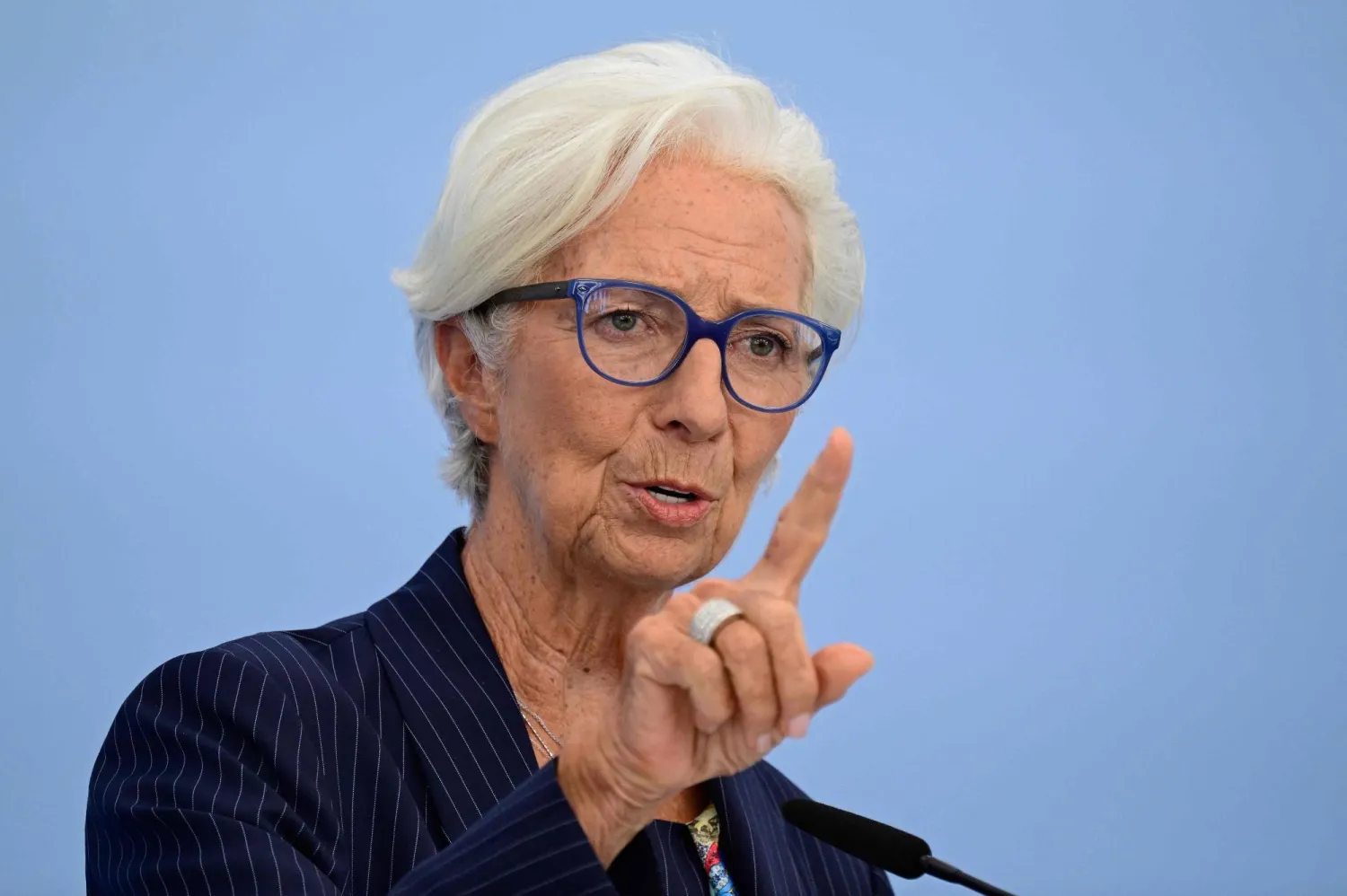
European Central Bank (ECB) President Christine Lagarde addresses a press conference after a meeting of the Governing Council of the European Central Bank (ECB) in Berlin on September 10, 2026. (Photo by John MACDOUGALL / AFP)
TT

ECB's Lagarde Keeps Door Open to Early Exit

European Central Bank (ECB) President Christine Lagarde addresses a press conference after a meeting of the Governing Council of the European Central Bank (ECB) in Berlin on September 10, 2026. (Photo by John MACDOUGALL / AFP)

European Central Bank President Christine Lagarde on Friday kept the door open to leaving her post early, replying "we'll see" when asked if she would remain in the position until her term ends ‌in October 2027.

"I ‌leave in ‌2027," ⁠Lagarde told Irish ⁠national broadcaster RTE in response to a question on rumors of her early resignation that have persisted for most ⁠of this year.

When asked ‌if ‌that meant October 2027, ‌Lagarde replied: "We'll see."

"What I ‌can tell you at this point is that whatever the time, it will be ‌handled in the most professional way as ⁠it should ⁠be," she added.

Sources told Reuters this week that France would back Dutchman Klaas Knot to succeed Lagarde as part of a bargain in which a French candidate would be picked for chief economist.


5 Countries Want Smaller Growth of Next EU Budget, Spain Offers Ideas

FILE PHOTO: European Union flags flutter outside the European Commission headquarters in Brussels, Belgium April 29, 2026. REUTERS/Yves Herman/File Photo
TT

5 Countries Want Smaller Growth of Next EU Budget, Spain Offers Ideas

FILE PHOTO: European Union flags flutter outside the European Commission headquarters in Brussels, Belgium April 29, 2026. REUTERS/Yves Herman/File Photo

Germany, Denmark, Finland, the Netherlands and Austria said on Friday the European Union's budget for 2028-2034 must be "several hundred billion euros" smaller than the €2 trillion proposed by the European Commission, drawing battle lines before EU budget talks come to a head in the next three months.

The leaders of the five countries, among the biggest net contributors to the budget, wrote in a joint op-ed in Politico that EU taxpayers ⁠cannot keep paying ⁠more to pay for both old and new priorities.

"It (the budget) is too focused on subsidies and transfers allocated largely in advance, leaving too little room for what Europe urgently needs: common investment in security and defense, competitiveness, innovation, and the fight against irregular migration," the five leaders said.

Net beneficiaries of the EU budget are concerned that ⁠would reduce EU funds for farmers and for equalizing standards of living between the poorer and richer regions of Europe -- a major political concern before parliamentary elections next year in France, Italy, Spain, Poland, Greece, Finland, Slovakia and Estonia.

The European Commission has proposed the budget should amount to €2 trillion or 1.26% of EU Gross National Income (GNI), of which some 168 billion, or 0.11% of GNI, is to service the EU's borrowing for the post-pandemic recovery fund. The five leaders called the proposed nominal increase of around 60% over the 2021-2027 budget "simply not ⁠realistic."

"This is ⁠why we call for a balanced cut to the Commission’s proposal of several hundred billion euros," Reuters quoted them as saying.

To help find a solution, Spain proposed to change the repayment schedule of part of the EU post-pandemic borrowing, linking it to economic growth and spreading it out over a longer period. This, according to Spanish Economy Minister Carlos Cuerpo, would free up some €70 billion.

"An annual payment of about 0.06% of EU GDP would retire the debt by 2058, the deadline agreed by member states," Cuerpo said.

EU governments will discuss the next EU budget at summits in October, November and December in an effort to get a deal before the end of the year.