


Syria Says will Restore Iraq Oil Pipeline Link within Three Years

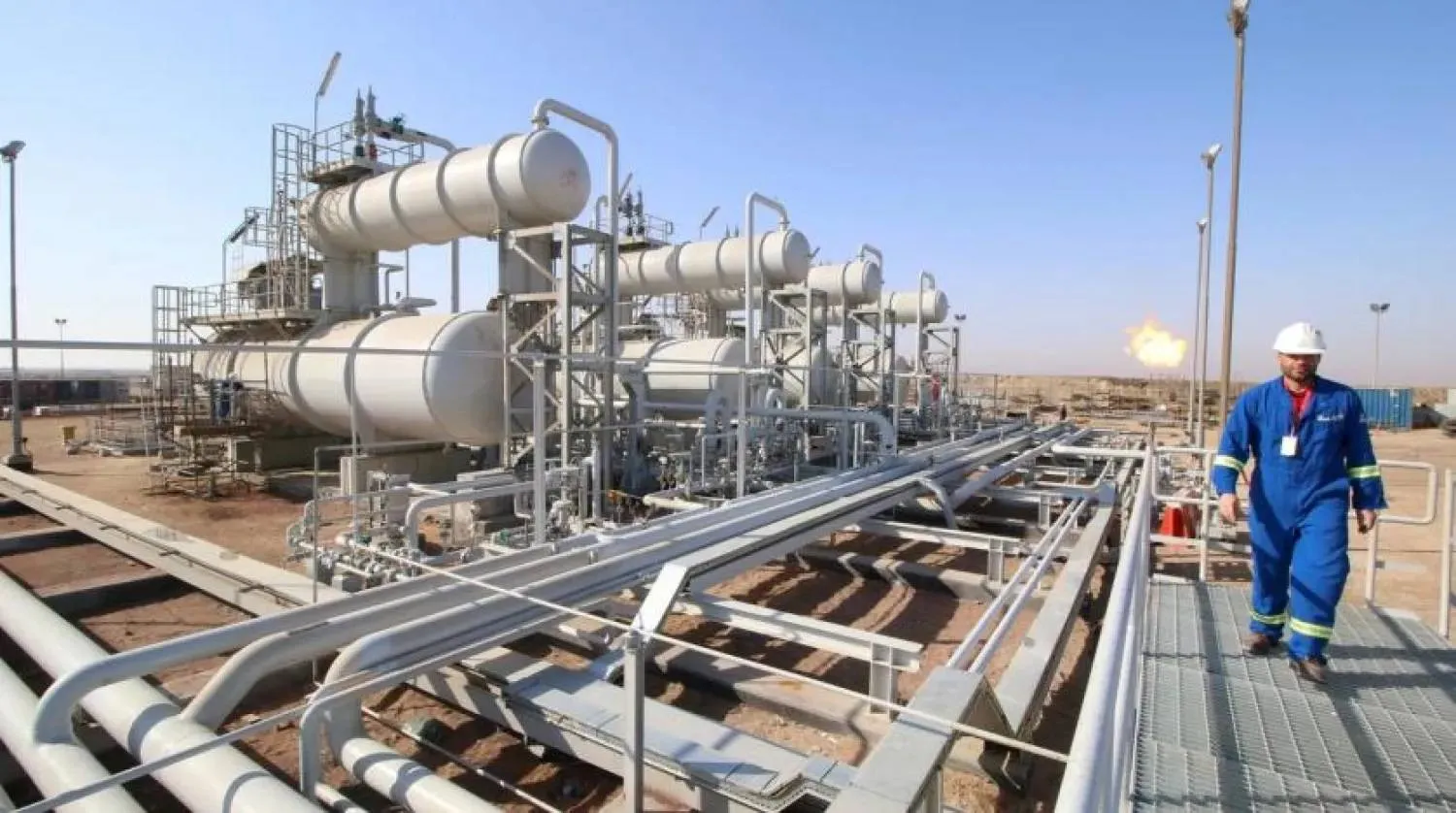
A worker walks at the Rumaila oil field in Basra, Iraq (Reuters file photo)
TT

Syria Says will Restore Iraq Oil Pipeline Link within Three Years

A worker walks at the Rumaila oil field in Basra, Iraq (Reuters file photo)

Syria and Iraq are finalizing negotiations on a contract to restore a key oil pipeline between the countries, a Syrian official said on Tuesday, laying out a timeline of around three years to complete the work.

Last month, Damascus signed a memorandum of understanding with Baghdad to revive the Haditha-Banias pipeline for transporting oil from Iraq to Syria's coast, linking Iraqi production to export markets in the Mediterranean and beyond.

A consortium of three companies including Chevron are set to carry out the project.

The US State Department last month welcomed the plan, calling it "of bilateral and regional strategic significance".

On Tuesday, Syrian Petroleum Company CEO Youssef Qablawi told a press conference at the Rmeilan oil field in the country's northeast that "negotiations have begun to finalise the contract".

He expressed hope that the talks would be completed within three months, followed by engineering studies, procurement and restoration work, expected to take "three years at most".

Syrian state news agency SANA said the pipeline, vital for Iraqi oil exports via the Mediterranean, dates to 1952 but went out of service in 2003 after being damaged during the US invasion of Iraq.

Qablawi hailed "a vital project" for Syria, putting the pipeline's capacity at "between 1.5 million and 2 million barrels a day" and saying the project would generate significant revenues.

The prospect of a pipeline link to the Mediterranean via Syria has gained new urgency with the closure of the Strait of Hormuz -- a vital maritime route for Gulf oil and gas exports -- as a result of the Middle East war.

The closure of Hormuz has hit Iraqi oil exports hard, and in April Baghdad said it began shipping crude through Syria by truck to circumvent the strait.

Syria's new authorities, who ousted longtime ruler Bashar al-Assad in December 2024, have been seeking to reboot the country's economy and revive its infrastructure and institutions after more than a decade of war.

Damascus now controls all the country's oil and gas fields, after taking over areas previously under Kurdish control in the north and northeast earlier this year, including Rmeilan.

Texas-based firm HKN Energy is operating the fields in the northeast under a contract signed with Damascus.

At Rmeilan, the company's president, Mark Rollins, said Tuesday that "this is one of Syria's most important oil fields", adding: "Our team has been here on the ground for about two months."

Qablawi said HKN Energy was in charge of repairing existing wells and drilling new ones.

Syria aims to produce one million barrels of oil per day by 2030 and is seeking to broaden international cooperation on exploration and production.

Qablawi said Syria's own oil production was currently between 100,000 and 110,000 barrels a day, but was projected to reach 250,000 by the end of next year.



Alarmed Yemenis Flee South as Houthis Keep Up Attacks

 Salma Mohammed, 60, a displaced Yemeni woman, sits inside her tent at the Al-Firdaws camp in Ras Imran, just outside Aden, Yemen, Monday, Sept. 14, 2026. (AP)
Salma Mohammed, 60, a displaced Yemeni woman, sits inside her tent at the Al-Firdaws camp in Ras Imran, just outside Aden, Yemen, Monday, Sept. 14, 2026. (AP)
TT

Alarmed Yemenis Flee South as Houthis Keep Up Attacks

 Salma Mohammed, 60, a displaced Yemeni woman, sits inside her tent at the Al-Firdaws camp in Ras Imran, just outside Aden, Yemen, Monday, Sept. 14, 2026. (AP)
Salma Mohammed, 60, a displaced Yemeni woman, sits inside her tent at the Al-Firdaws camp in Ras Imran, just outside Aden, Yemen, Monday, Sept. 14, 2026. (AP)

After a drone strike sent shrapnel flying into his wife's chest, killing her, Muhammad Aiyash and his three children fled with no belongings to a new makeshift camp for the displaced in the southern Yemeni city of Aden, the interim capital.

Panic has spread as Yemen's Houthis captured territories along the country's Red Sea coast that has enabled the Iran-aligned militants to seize another part of the country and tighten their grip over the Bab al-Mandeb Strait, one of the world's most important shipping routes for goods and commodities, including oil.

"By God, we do not possess even a single grain of flour. We have no mattresses and no clothes," said Aiyash, who is in his 60s and left his home behind in the ancient port city of Mokha in ‌a desperate search ‌for shelter in Yemen's latest crisis.

The UN refugee agency said on Tuesday ‌that ⁠more than 100,000 people ⁠had been internally displaced by the renewed conflict in Yemen, and that thousands more have fled by sea to Djibouti.

In the latest round of fighting, the Houthis have extended their control from the northern, most populous areas of Yemen, to cities and towns and islands in the west.

They have also opened a new area of combat in the Iran war, increasing pressure on ⁠global energy markets following the earlier effective closure of the Strait of Hormuz. The ‌Houthis have also stepped up attacks on Saudi Arabia.

'THE WAR CAME SUDDENLY'

At the Aden camp, families ‌sat beside tents, tending sheep and trying to assemble rudimentary shelters. Children stayed close to their parents as ‌adults carried belongings.

One displaced man, Tawfiq al-Kharij, showed a shrapnel injury to his leg as he sat with relatives outside a tent. He said he escaped with nothing but the clothes he was wearing.

"We were living peacefully in God's care, then the war came suddenly,” Kharij said. "Some died, and others survived."

UNHCR said on Tuesday that humanitarian access ‌remained "a major challenge".

"Insecurity, damaged roads, telecommunications disruptions and movement restrictions are affecting operations," the agency said in a statement.

Khadija Kudaf and her children had to walk for ⁠three days to get to ⁠Aden, a port city. "We didn't even bring the children's clothes," she said.

Yemenis are all too familiar with suffering.

The Arab world's most impoverished country has been mired in conflict since the Houthis seized the capital, Sanaa, in 2014, leading to a civil war that led to one of the world's biggest humanitarian crises.

A UN-brokered truce in 2022 largely halted major fighting, despite expiring six months later, but efforts to turn it into a lasting political settlement have stalled as regional tensions have intensified.

In Taiz province, northwest of Aden, another newly erected camp has begun to receive people fleeing fighting. Women and children carried water in jerrycans at the camp, while others washed clothes and gathered around tents.

A displaced woman there, Taghreed Salem, said families were struggling to find basic supplies.

“We arrived fleeing from the war, from the shells, from the missiles, from the aircraft that strike,” Salem said. “We came as newly displaced people. We want water, we want anything from them,” she said.


Israeli Strikes in Gaza Kill Two People, Including a Child, Medics Say

FILE PHOTO: Young Palestinians amid the rubble of buildings destroyed during the war, at Jabalia refugee camp in the northern Gaza Strip, August 5, 2026. REUTERS/Mahmoud Issa/File Photo
TT

Israeli Strikes in Gaza Kill Two People, Including a Child, Medics Say

FILE PHOTO: Young Palestinians amid the rubble of buildings destroyed during the war, at Jabalia refugee camp in the northern Gaza Strip, August 5, 2026. REUTERS/Mahmoud Issa/File Photo

Israeli airstrikes hit a vehicle, killing at least two Palestinians, including a child, and wounding seven others in the northern Gaza Strip neighborhood of Sheikh Radwan on Tuesday, the territory's health officials said.

The Israeli military said it had struck a militant in the area, without elaborating.

Witnesses said some of the casualties resulted from a second strike that hit near a group of people who rushed to help in the rescue. A video, that wasn't immediately verified by Reuters, showed a missile exploding near at least five men.

Palestinians earlier held funerals in Gaza for two people who were killed by Israeli strikes a day ago, Ahmed Al-Batsh and

Rafat Zummar.

Batsh was a local Hamas commander, according to Hamas sources and the Israeli military. Medics said Batsh died in an attack on his vehicle in northern Gaza Strip.

The Israeli military said in separate statements that it had killed both men, and it described Zummar also as a Hamas commander. Hamas didn't immediately comment on Zummar's affiliation.

Relatives and friends paid farewell to Batsh's body draped in a white shroud and a Hamas green flag inside Gaza City's Al Shifa Hospital. An M16 assault rifle was placed on top of the body.

"Israel thinks... it will eliminate the resistance and the spirit of jihad (devotion) within us," said Khalil Al-Batsh, a relative of the dead Hamas militant, of the killing.

"I tell them that this cowardly operation only strengthens our people's determination to continue on this path,” he told Reuters at the funeral.

An October 2025, US-backed, ceasefire halted large-scale fighting in Gaza, but it has not ended Israeli strikes and there has been little progress on steps towards permanent peace.

Hamas accuses Israel of violating the ceasefire and undermining efforts to implement US President Donald Trump's broader plan to end the Gaza conflict, which includes the Israeli withdrawal from the strip and the disarmament of Hamas.

Israel says Hamas has been violating the deal.

More than 1,300 Palestinians, mostly civilians, have been killed in Gaza since the ceasefire took effect, according to the territory's health officials, while the Israeli military says four Israeli soldiers have been killed.

Hamas does not usually disclose information about fatalities among its fighters.


Syria Protests Spread to Kurdish-majority Northeast

A man holds Syrian opposition flags as he celebrates after Syria's army command notified officers that President Bashar al-Assad's 24-year authoritarian rule has ended, in Aleppo, Syria December 8, 2024. REUTERS/Karam al-Masri
TT

Syria Protests Spread to Kurdish-majority Northeast

A man holds Syrian opposition flags as he celebrates after Syria's army command notified officers that President Bashar al-Assad's 24-year authoritarian rule has ended, in Aleppo, Syria December 8, 2024. REUTERS/Karam al-Masri

Hundreds of people took to the streets in Syria's Kurdish-majority city of Qamishli on Tuesday amid wider protests over fuel price hikes, the largest against the new authorities.

Syrian authorities on Sunday announced an increase in fuel prices amid global surges due to the Middle East war. The price of diesel saw a 40 percent increase, while petrol prices increased by 26 percent.

An AFP correspondent on Tuesday saw men and women in Qamishli holding placards that read "no to the policy of starvation", "preserve people's strength" and "no to the increase in fuel prices" while others chanted "our fuel is for the people".

North and northeast Syria contain the country's largest oil and gas fields and are now under government control after Damascus earlier this year seized areas previously held by Kurdish forces.

Despite a January agreement to integrate Kurdish forces and areas into the state, tensions have remained, as Kurds demand safeguards for their rights.

"This decision is wrong. It's a decision against farmers, workers, and students -- against all the poor in Syria," Abdul Rahman Khalil, 56, said.

"People will not remain silent about this decision," he added.

Khansa Nehmat, 48, said "the prices of diesel and bread must return to what they were, and they must comply with the people's demands".

Protests have erupted for three consecutive days in different parts of Syria's north, northwest and northeast.

Damascus has sought to justify the move, citing higher prices in global energy markets due to the regional war, as Syria currently relies heavily on imports to meet its fuel needs.

The country's energy infrastructure remains dilapidated as a result of more than a decade of war and neglect.

The ongoing protests are the first of their kind since the new authorities seized power after ousting in December 2024 longtime ruler Bashar al-Assad, under whom demonstrations were strictly prohibited.