


Netanyahu Says No Israeli Withdrawal from Gaza Until Hamas Has Been Completely Disarmed

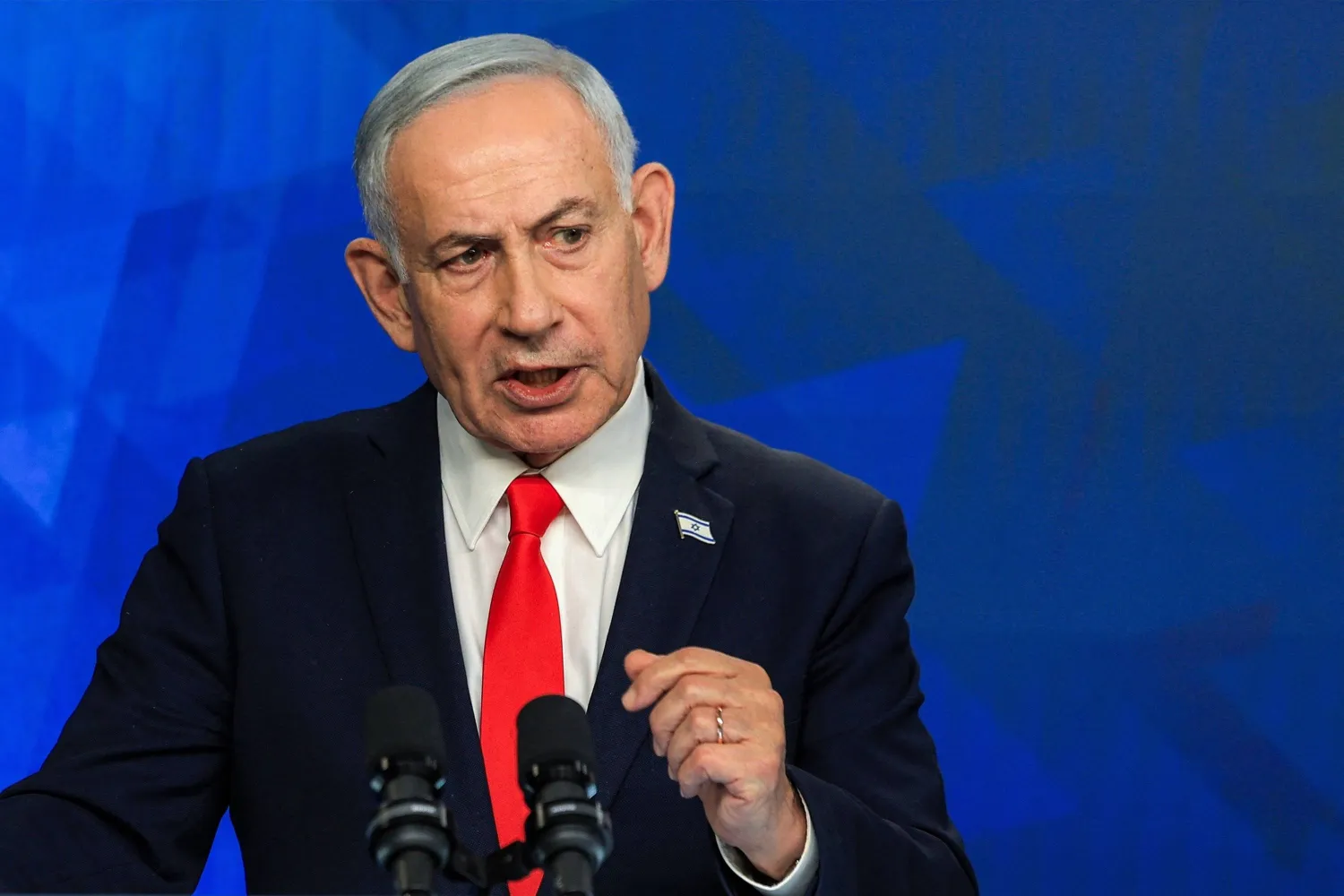
Israel's Prime Minister Benjamin Netanyahu gives a news conference in West Jerusalem, Israel, June 15, 2026. (AFP)
TT

Netanyahu Says No Israeli Withdrawal from Gaza Until Hamas Has Been Completely Disarmed

Israel's Prime Minister Benjamin Netanyahu gives a news conference in West Jerusalem, Israel, June 15, 2026. (AFP)

Prime Minister Benjamin Netanyahu said Tuesday that Israel will not withdraw from its current lines in Gaza until Hamas has completely disarmed and pushed back on a recent deal announced by US President Donald Trump.

Netanyahu's remarks cast more doubt on the deal to disarm Hamas, which was seen as a potential breakthrough for ending the war. It also marked a rare public display of friction with the Trump administration.

The agreement called for Hamas to begin disarming and for Israel to halt its strikes and begin withdrawing from the roughly 60% of Gaza it currently controls. It was based on an October ceasefire agreement that ended major military operations and brought about the release of the remaining hostages held in Gaza but has stalled on other fronts.

Netanyahu, who faces a tough battle for reelection in October, reiterated his stance that disarmament should come first. He said Israeli forces would continue to “do whatever is necessary to protect themselves, our territory, and our citizens.”

The Trump administration “sent us a draft. We did not agree. It is not our draft. We sent our comments. ... This is our position,” Netanyahu said in a video posted on social media.

At least 1,252 people have been killed in Gaza since the ceasefire took effect, according to the territory’s Health Ministry.

The ministry, part of the Hamas-led government, maintains detailed casualty records that are seen as generally reliable by UN agencies and independent experts. It does not give a breakdown of civilians and militants but says women and children make up most of the dead.

Israel says its strikes are against fighters who endanger its soldiers, took part in the Oct. 7 attack or carry out other violations. Five Israeli soldiers have been killed since the ceasefire.

The US-backed ceasefire agreement last October called for Hamas to be disarmed and for Israel to withdraw. An International Stabilization Force was to be deployed, and an independent Palestinian administration was to oversee governance and reconstruction.

Israel says everything hinges on Hamas giving up its weapons, while Hamas says Israel must end its strikes and begin withdrawing from the territory. Each side accuses the other of violating the truce.

Gaza remains largely shattered. Most of its 2 million Palestinians are displaced, many living in tent camps where poor conditions and overcrowding have led to rodent infestations and outbreaks of infectious diseases such as chickenpox.



139 Migrants, Including Children, Die After Boat Capsizes off Djibouti

A portion of the vessel floats after it capsized while carrying about 305 people from Djibouti to Yemen. (Kennedy Omondi Okoth/International Organization for Migration/Handout via Reuters)
TT

139 Migrants, Including Children, Die After Boat Capsizes off Djibouti

A portion of the vessel floats after it capsized while carrying about 305 people from Djibouti to Yemen. (Kennedy Omondi Okoth/International Organization for Migration/Handout via Reuters)

At least 139 people, including children, have died after a boat carrying more than 300 migrants capsized off the coast of Djibouti in east Africa, the International Organization for Migration said Sunday.

That number only includes those buried by authorities in Djibouti. Others have been buried by the migrants themselves, but they won't be added to the official count until authorities can verify the bodies, Alexandre Coissac, IOM Chief of Mission in Djibouti, told the AP via the phone.

“What is terrible is that they were buried with no names, in a common grave, like in a war situation,” Coissac said. “They all have a mother, a father, and we may never learn what happened.”

Coissac said the migrants boarded the ship in the evening of Oct. 8 and that it sank very soon after, close to the shore, “mainly because it was overcrowded.”

“The local authorities did their best,” Coissac said, “but they were overwhelmed with all the bodies that kept coming at once towards the shore.”

He said authorities were bringing the surviving migrants to the IOM rescue center in Obock where they received medical assistance after swallowing sea water, and psychological support.

“They're all in a state of shock,” Coissac, who visited the area of the shipwreck Saturday, said. “I tried to talk to some of them but it's very difficult.”

Some of the migrants in the IOM center are already aware that their family members died during the shipwreck. Others were given access to phones to call loved ones back home to notify them they are alive.

At least 84 people remained missing in one of the deadliest shipwrecks yet on the popular but perilous crossing from the Horn of Africa to the Arabian Peninsula, where many migrants seek work in Gulf nations.

The boat was traveling from Djibouti to Yemen when it capsized on Thursday night or Friday morning, according to the IOM. More than 80 people survived, all of them Ethiopian nationals, it said.

The Geneva-based UN migration agency said the vessel had 305 people on board and warned that the death toll could still rise.

Personal items likely belonging to the migrants, including shoes, were seen on a beach in a video shared by IOM. Rescue work continued as fears grew for the missing.

Tens of thousands of migrants from the Horn of Africa travel every year through Djibouti and across the Bab al-Mandeb Strait towards Gulf countries in search of safety and economic opportunities, the IOM said in its statement.

That movement has continued despite newly escalating fighting in Yemen, on the other side of the strait.

“This is a devastating loss of life,” said Coissac. “This tragedy is a stark reminder of the dangers faced by migrants along this migration corridor as they seek economic opportunities.”

In recent weeks, at least 2,000 Yemenis have received aid in Djibouti as the fighting has escalated in Yemen between the legitimate government and Iranian-backed Houthi militia.

That's the opposite direction from the movement of the migrants who died in the shipwreck and the typical migration patterns of recent years: The tens of thousands who cross from eastern Africa toward Yemen each year have typically been looking for work in the Gulf.

Over 900 migrants died or went missing along the route last year, according to IOM’s Missing Migrants Project.

“No one gets into a boat like that unless they believe there is no other safe way,” IOM Director-General Amy Pope said. “We cannot keep treating these deaths as normal. Safe and legal pathways save lives. I am asking governments and donors to act before the next boat goes down.”


Saddam Haftar Assures Shaibani of General Command’s Readiness to Support Syrian People

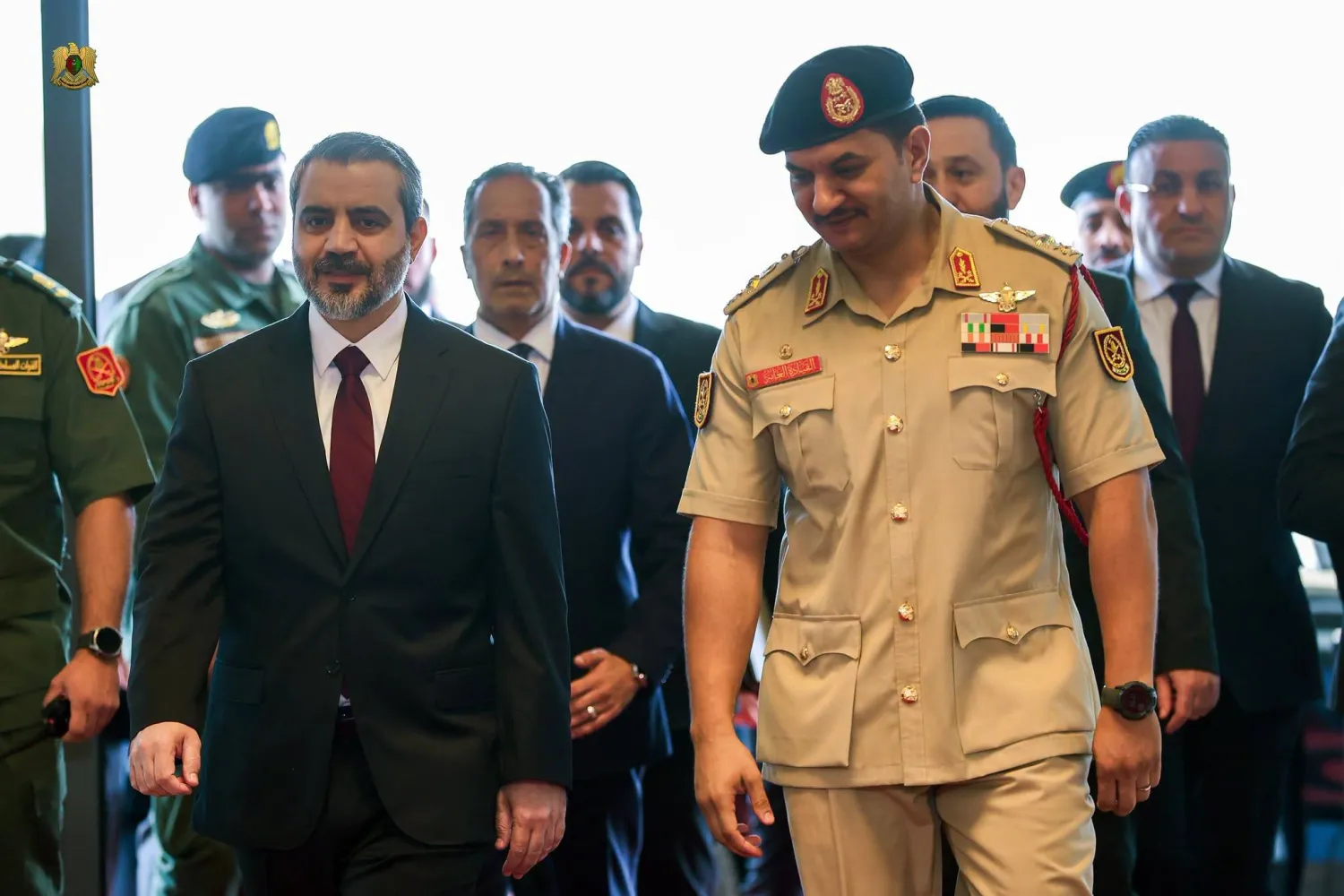
General Saddam Haftar, deputy commander-in-chief of the Libyan National Army, and Syrian Foreign Minister Asaad al-Shaibani in Benghazi. (LNA General Command)
TT

Saddam Haftar Assures Shaibani of General Command’s Readiness to Support Syrian People

General Saddam Haftar, deputy commander-in-chief of the Libyan National Army, and Syrian Foreign Minister Asaad al-Shaibani in Benghazi. (LNA General Command)

General Saddam Haftar, deputy commander-in-chief of the Libyan National Army, discussed with Syrian Foreign Minister Asaad al-Shaibani several issues of common interest during the minister’s first visit to Benghazi.

They also underlined the depth of the fraternal and historical relations uniting the Libyan and Syrian people.

Libya and Syria restored diplomatic ties after nearly 14 years after Shaibani visited Tripoli in August. Talks discussions aimed to strengthen bilateral relations and expand joint cooperation between the two countries, culminating in the reopening of the Syrian embassy in Libya.

The LNA General Command said on Sunday that Saddam praised the role of the Syrian leadership "in achieving security and stability in Syria, overcoming the challenges faced during the transition phase, and working to restore normalcy and open up to the international community."

He underscored the General Command's support for the Syrian leadership, and “its readiness to provide everything within its power to support the brotherly Syrian people to help Syria regain its position in the Arab and international arenas.”

For his part, Shaibani expressed the Syrian leadership's keenness to support everything that would achieve permanent stability in Libya.


139 Migrants, Including Children, Die After Boat Capsizes off Djibouti

 A portion of the vessel floats after it capsized while carrying about 305 people from Djibouti to Yemen. (Kennedy Omondi Okoth/International Organization for Migration/Handout via Reuters)
A portion of the vessel floats after it capsized while carrying about 305 people from Djibouti to Yemen. (Kennedy Omondi Okoth/International Organization for Migration/Handout via Reuters)
TT

139 Migrants, Including Children, Die After Boat Capsizes off Djibouti

 A portion of the vessel floats after it capsized while carrying about 305 people from Djibouti to Yemen. (Kennedy Omondi Okoth/International Organization for Migration/Handout via Reuters)
A portion of the vessel floats after it capsized while carrying about 305 people from Djibouti to Yemen. (Kennedy Omondi Okoth/International Organization for Migration/Handout via Reuters)

At least 139 people, including children, have died after a boat carrying more than 300 migrants capsized off the coast of Djibouti in east Africa, the International Organization for Migration said Sunday.

That number only includes those buried by authorities in Djibouti. Others have been buried by the migrants themselves, but they won't be added to the official count until authorities can verify the bodies, Alexandre Coissac, IOM Chief of Mission in Djibouti, told the AP via the phone.

“What is terrible is that they were buried with no names, in a common grave, like in a war situation,” Coissac said. “They all have a mother, a father, and we may never learn what happened.”

Coissac said the migrants boarded the ship in the evening of Oct. 8 and that it sank very soon after, close to the shore, “mainly because it was overcrowded.”

“The local authorities did their best,” Coissac said, “but they were overwhelmed with all the bodies that kept coming at once towards the shore.”

He said authorities were bringing the surviving migrants to the IOM rescue center in Obock where they received medical assistance after swallowing sea water, and psychological support.

“They're all in a state of shock,” Coissac, who visited the area of the shipwreck Saturday, said. “I tried to talk to some of them but it's very difficult.”

Some of the migrants in the IOM center are already aware that their family members died during the shipwreck. Others were given access to phones to call loved ones back home to notify them they are alive.

At least 84 people remained missing in one of the deadliest shipwrecks yet on the popular but perilous crossing from the Horn of Africa to the Arabian Peninsula, where many migrants seek work in Gulf nations.

The boat was traveling from Djibouti to Yemen when it capsized on Thursday night or Friday morning, according to the IOM. More than 80 people survived, all of them Ethiopian nationals, it said.

The Geneva-based UN migration agency said the vessel had 305 people on board and warned that the death toll could still rise.

Personal items likely belonging to the migrants, including shoes, were seen on a beach in a video shared by IOM. Rescue work continued as fears grew for the missing.

Tens of thousands of migrants from the Horn of Africa travel every year through Djibouti and across the Bab al-Mandeb Strait towards Gulf countries in search of safety and economic opportunities, the IOM said in its statement.

That movement has continued despite newly escalating fighting in Yemen, on the other side of the strait.

“This is a devastating loss of life,” said Coissac. “This tragedy is a stark reminder of the dangers faced by migrants along this migration corridor as they seek economic opportunities.”

In recent weeks, at least 2,000 Yemenis have received aid in Djibouti as the fighting has escalated in Yemen between the legitimate government and Iranian-backed Houthi militia.

That's the opposite direction from the movement of the migrants who died in the shipwreck and the typical migration patterns of recent years: The tens of thousands who cross from eastern Africa toward Yemen each year have typically been looking for work in the Gulf.

Over 900 migrants died or went missing along the route last year, according to IOM’s Missing Migrants Project.

“No one gets into a boat like that unless they believe there is no other safe way,” IOM Director-General Amy Pope said. “We cannot keep treating these deaths as normal. Safe and legal pathways save lives. I am asking governments and donors to act before the next boat goes down.”