


Al-Yami to Asharq Al-Awsat: OIC to Establish Islamic Human Rights Observatory

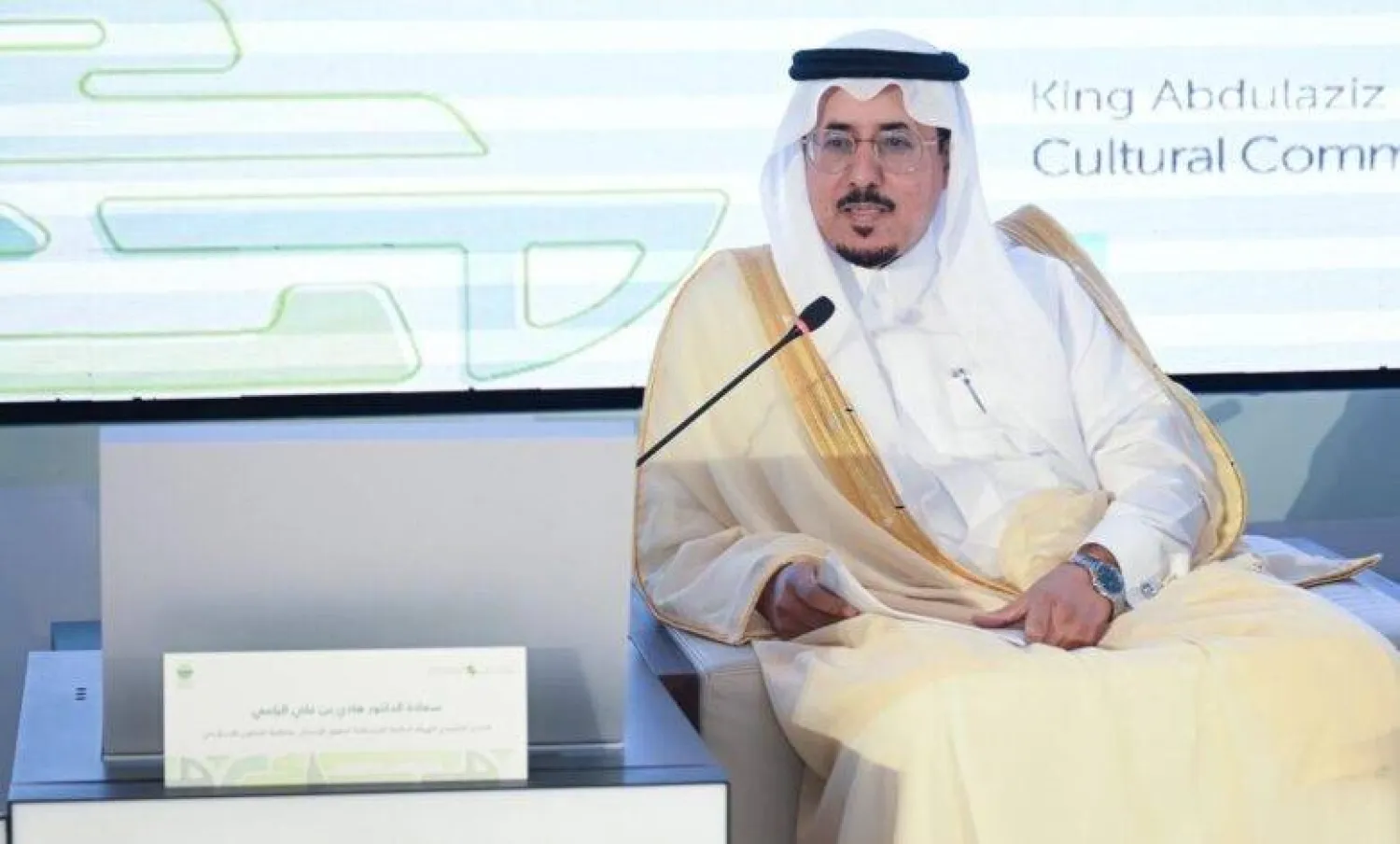
Dr. Hadi Al-Yami, Executive Director of the Independent Permanent Human Rights Commission of the Organization of Islamic Cooperation. (Asharq Al-Awsat)
TT

Al-Yami to Asharq Al-Awsat: OIC to Establish Islamic Human Rights Observatory

Dr. Hadi Al-Yami, Executive Director of the Independent Permanent Human Rights Commission of the Organization of Islamic Cooperation. (Asharq Al-Awsat)

Dr. Hadi Al-Yami, Executive Director of the Independent Permanent Human Rights Commission of the Organization of Islamic Cooperation (OIC), revealed plans to establish the Islamic Human Rights Observatory, an institutional mechanism that will monitor, document, and analyze human rights violations affecting Muslim communities and minorities worldwide while supporting early warning systems and evidence-based policy responses.

In an interview with Asharq Al-Awsat, Al-Yami said the commission is expanding its cooperation with international justice and accountability mechanisms. It supports efforts before the International Criminal Court and UN mechanisms to strengthen documentation of violations in the Palestinian territories, advance accountability and justice, and combat impunity, SPA reported.

He said the commission's engagement on the Palestinian issue extends beyond statements of condemnation to include legal analysis, documentation of alleged crimes, protection of civilians, ensuring the delivery of humanitarian aid, and support for Palestinian rights during recovery and reconstruction efforts.

Al-Yami added that Saudi Arabia's support has strengthened the commission's work, enhanced its institutional stability, and expanded its international presence. He said the Kingdom's voluntary financial contribution as the host country reflected its confidence in the commission's new strategic direction, while Jeddah has hosted major human rights initiatives on artificial intelligence governance and youth empowerment.

Observatory to Monitor Violations

Al-Yami disclosed plans to establish the Islamic Human Rights Observatory as a specialized institutional mechanism to monitor, document, and analyze violations affecting Muslim communities and minorities.

He said the observatory will provide reliable information and real-time analysis, support early warning systems, and help member states formulate evidence-based legal and policy responses, particularly in addressing Islamophobia, hate speech, religious discrimination, media disinformation, and challenges arising in conflict zones.

He added that the commission is working with the OIC's special envoy on combating Islamophobia, the organization's General Secretariat, and UN mechanisms to develop a comprehensive strategy that addresses the root causes of the phenomenon while supporting legislation that prohibits and criminalizes incitement to hatred.

Al-Yami said the commission has, for the first time since its establishment, adopted a comprehensive strategic framework that will serve as its roadmap for 2026-2030, enhancing institutional effectiveness and shifting its work from isolated activities to a systematic, results-based approach.

He added that the new framework places particular emphasis on promoting the rights of families, women, children, older persons, and people with disabilities in line with Islamic values and the international obligations of member states.

Palestine: Advancing Accountability

Al-Yami stressed that the Palestinian issue will remain at the forefront of the commission's priorities and that its role extends beyond issuing statements of condemnation to monitoring, documentation, legal analysis, and cooperation with international justice and accountability mechanisms.

He outlined four priorities: protecting civilians and ensuring humanitarian access; strengthening documentation and accountability in cooperation with Palestinian institutions, the International Criminal Court, and UN mechanisms; ensuring that recovery and reconstruction efforts are grounded in Palestinian rights, property ownership, and the right of displaced people to return; and coordinating diplomatic efforts to support the Palestinians' right to self-determination.

He said the commission supports accountability proceedings before the International Criminal Court and cooperates with the UN Special Rapporteur on the situation of human rights in the Occupied Palestinian Territory and the Office of the UN High Commissioner for Human Rights to combat impunity.
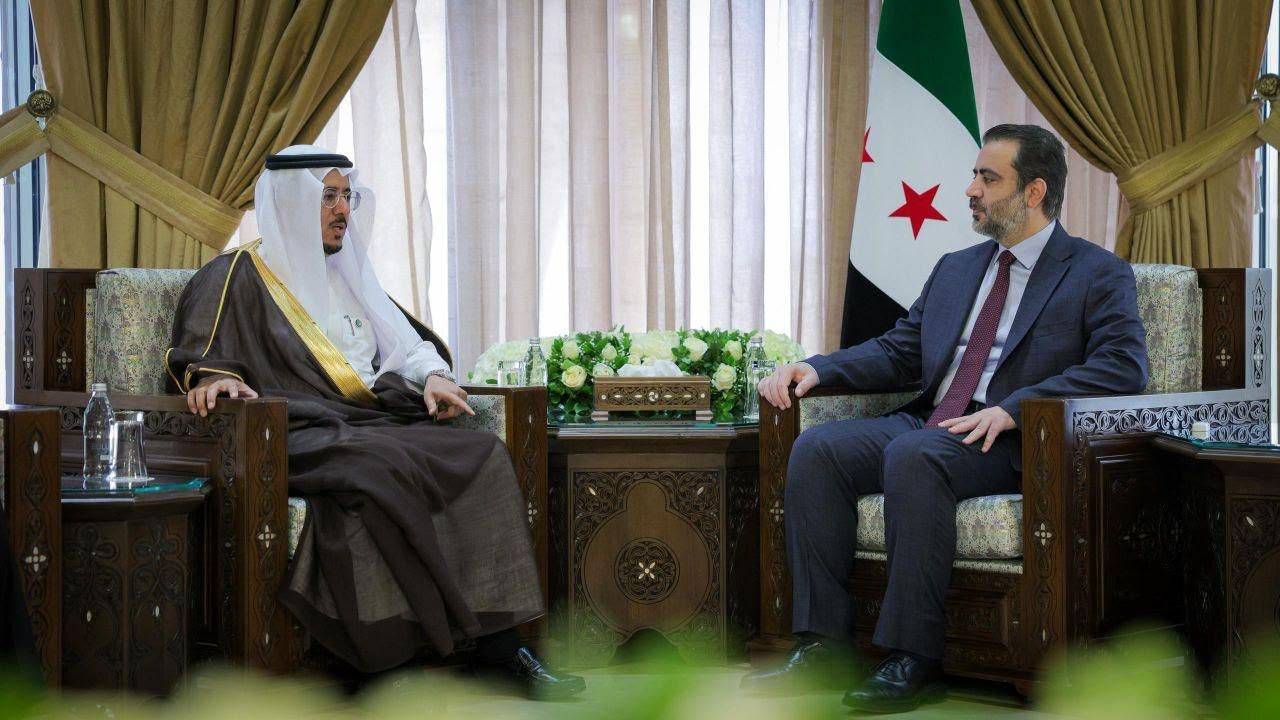
Dr. Al-Yami during his visit to Damascus, where he met Syrian Foreign Minister Asaad Al-Shaibani. (Independent Commission)

Islamic Human Rights Day

Al-Yami said Islamic Human Rights Day, observed annually on Aug. 5, serves as an opportunity for member states to renew their commitment to protecting human dignity and promoting fundamental rights and freedoms in line with Islamic values and international obligations.

"It should not be limited to messages and events," he said. "It should serve as a catalyst for strengthening legislation, institutions, and practices, expanding education, awareness, and capacity-building, and deepening cooperation to address violations and protect the most vulnerable. The commission is working to translate these principles into practical, measurable, and implementable policies and initiatives."

Continued Saudi Support

Al-Yami expressed his appreciation to Custodian of the Two Holy Mosques King Salman bin Abdulaziz and Crown Prince and Prime Minister Mohammed bin Salman for the confidence placed in him through his nomination as the commission's executive director, saying the trust carries the responsibility of enhancing the institution's performance, credibility, and international standing.

He said Saudi Arabia's voluntary financial contribution, alongside contributions from Türkiye and Azerbaijan, reflected member states' confidence in the commission's new strategic direction. He also highlighted the Kingdom's role as host of the commission's headquarters, saying it has helped ensure the institution's operational stability and ability to carry out its mandate.

According to Al-Yami, Saudi Arabia has also played a leading role in hosting landmark human rights initiatives, including the Jeddah Declaration on Guiding Principles for Artificial Intelligence Governance and Human Rights Protection and the Jeddah Declaration on Youth Empowerment, Development, and Peacebuilding. He said both declarations provide a foundation for the commission's work in addressing emerging challenges while placing young people at the center of human rights and development policies.

Budget Unchanged Since 2018

Al-Yami said limited human and financial resources remain among the commission's biggest challenges. He noted that its small secretariat is responsible for serving all 57 OIC member states while addressing an increasingly complex range of human rights issues.

He said the commission's regular budget has not been revised since 2018 despite the significant expansion of its responsibilities and activities, limiting its ability to carry out technical assistance programs, field visits, and capacity-building initiatives.

He added that the time has come to review the commission's statute and rules of procedure, more than a decade after it began operating, in order to strengthen its operational effectiveness, keep pace with evolving human rights developments, and maximize its impact.

Sovereignty Does Not Preclude Human Rights Protection

On promoting and protecting human rights within member states, Al-Yami said the commission operates independently and provides objective, impartial, evidence-based human rights assessments.

He said the commission's human rights approach is based on dialogue, technical cooperation, and support for national legislation and institutions, helping member states fulfill their international obligations. Sustainable reform, he said, is most effective when it is nationally owned and implemented by states in line with those commitments.
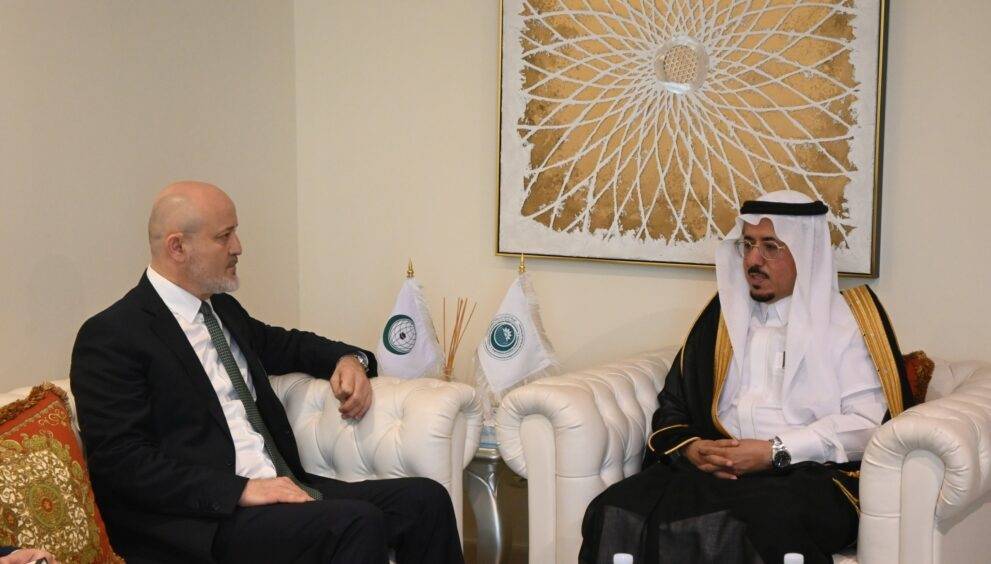
Al-Yami during a meeting Tuesday with Russia's permanent representative to the Organization of Islamic Cooperation. (Independent Commission)

Artificial Intelligence and Children's Rights

Al-Yami said the commission is drafting recommendations on artificial intelligence governance, privacy protection, safeguarding children in a secure digital environment, and addressing disinformation, hate speech, and violence.

The commission is also working with the Islamic Labor Organization to review and update the Covenant on the Rights of the Child in Islam so that it reflects international standards and contemporary challenges.

He added that youth empowerment has become one of the commission's priorities given the demographic profile of OIC member states, where nearly 60 percent of the population is under the age of 30.

Al-Yami concluded by saying that the commission's goal by 2030 is to become a more visible, responsive, and credible institution, evolving from a body that issues statements into a practical partner capable of providing member states with implementable legal and institutional solutions.



Saudi Arabia Stresses Support for Diplomatic Solutions to Conflicts

Custodian of the Two Holy Mosques King Salman bin Abdulaziz chairs a cabinet session in Jeddah (SPA)
TT

Saudi Arabia Stresses Support for Diplomatic Solutions to Conflicts

Custodian of the Two Holy Mosques King Salman bin Abdulaziz chairs a cabinet session in Jeddah (SPA)

The Saudi Cabinet stressed on Tuesday its support for comprehensive diplomatic solutions to conflicts and safeguarding the freedom of maritime navigation.

The Cabinet, which was chaired by Custodian of the Two Holy Mosques King Salman bin Abdulaziz Al Saud in Jeddah, stressed the need to keep the straits of Hormuz and Bab al-Mandab, as well as all vital waterways, open, secure, and free from any threats.

The Cabinet praised the state visit of Prince Mohammed bin Salman bin Abdulaziz Al Saud, Saudi Crown Prince and Prime Minister, to Paris, as well as his talks with French President Emmanuel Macron.

The meeting reaffirmed the strength of the longstanding relations between the two countries, their shared desire to deepen strategic cooperation across various fields, and continued coordination and consultation based on a common vision.

This vision aims to promote stability in the region and the world by safeguarding state sovereignty, respecting international law, prioritizing political and diplomatic solutions to conflicts, and addressing security threats.

The Cabinet also welcomed the outcomes of the inaugural meeting of the Saudi-French Strategic Partnership Council, co-chaired by the Crown Prince and the French president, which saw the launch of new initiatives, agreements, and memoranda of understanding in defense, healthcare, artificial intelligence and emerging technologies, as well as entertainment.

It also welcomed the results of the French-Saudi Investment Roundtable Meeting, which included the announcement of 21 agreements and memoranda of understanding, contributing to the development of the economic partnership between the two countries and opening new horizons for cooperation and joint investment amid growing bilateral ties and the wide-ranging opportunities offered by Saudi Vision 2030.

The Cabinet was briefed on discussions held in recent days between the Kingdom and several countries, including the two messages received by the Custodian of the Two Holy Mosques and the Crown Prince from President of the United Arab Emirates Sheikh Mohamed bin Zayed Al Nahyan and British Prime Minister Andy Burnham.

The Cabinet also hailed the outcomes of the third Strategic Dialogue between the Saudi and Japanese foreign ministers, which underscored the importance of further strengthening longstanding bilateral relations, expanding cooperation into broader horizons by capitalizing on economic opportunities in both countries, particularly in investment, energy, resources, supply chains, and technology, and enhancing the exchange of expertise and capabilities to advance shared priorities and objectives.


Saudi Arabia Welcomes US Decision to Remove Syria from Terror List

The Saudi Ministry of Foreign Affairs logo
TT

Saudi Arabia Welcomes US Decision to Remove Syria from Terror List

The Saudi Ministry of Foreign Affairs logo

The Saudi Ministry of Foreign Affairs welcomed on Tuesday Washington’s decision to remove Syria from the list of State Sponsors of Terrorism.

The Kingdom extended its sincere congratulations to the Syrian government and people, wishing Syria further security, stability, and prosperity, and continued progress in its reconstruction and development efforts in a manner that fulfills the aspirations of its people.

The Kingdom reiterated its support for the positive steps taken by the Syrian government to reinforce Syria’s security and stability, contribute to building state institutions, and fulfill the aspirations of the Syrian people for a more stable and prosperous future.


Riyadh and Paris Reach Understanding on Regional Issues, Agree to Strengthen Strategic Partnership

Prince Mohammed bin Salman bin Abdulaziz Al Saud, Saudi Crown Prince and Prime Minister, and French President Emmanuel Macron are seen at the Elysee Palace in Paris on Monday. SPA
TT

Riyadh and Paris Reach Understanding on Regional Issues, Agree to Strengthen Strategic Partnership

Prince Mohammed bin Salman bin Abdulaziz Al Saud, Saudi Crown Prince and Prime Minister, and French President Emmanuel Macron are seen at the Elysee Palace in Paris on Monday. SPA

The reception that French President Emmanuel Macron prepared for Prince Mohammed bin Salman bin Abdulaziz Al Saud, Saudi Crown Prince and Prime Minister, on Monday strongly reflects the warmth of the relationship between the two countries.

That relationship began in 2017 with the French president's first official visit to Saudi Arabia. Since then, meetings between the two sides have been held regularly.

On Monday, Macron welcomed the Crown Prince at the Elysee Palace in Paris, as part of the Saudi leader's state visit to France.

Earlier, the Crown Prince visited Les Invalides where he was received by French Prime Minister Sebastien Lecornu in an official welcoming ceremony.

Escorted by cavalry from the French Republican Guard and a motorcycle motorcade, the Crown Prince was greeted with the playing of the Saudi Royal Anthem and the French National Anthem, before inspecting the guard of honor as the unit commander presented the participating military formations.

Saudi Arabia's Crown Prince Mohammed bin Salman's motorcade during his two-day official visit to France, at the Hotel des Invalides in Paris, France, August 24, 2026. Bandar Algaloud/Courtesy of Saudi Royal Court/Handout via REUTERS

Agreement on Regional Issues

The visit comes at a highly volatile moment for the region, whether regarding Iran, about which sources at the French presidency say that “no one has any clear vision of how to find a way out of it,” or the situations in Gaza, the West Bank, Lebanon, Syria, the Red Sea, and Yemen.

All of these crises carry significant risks not only for the region but also for the world as a whole, particularly given the severe disruption to shipping through the Strait of Hormuz and the threats affecting the Bab el-Mandeb Strait and the Red Sea.

A joint statement was issued at the conclusion of the Crown Prince’s visit to Paris. The two leaders affirmed “their mutual aspiration to strengthen the existing strategic partnership between the two countries.”

They also stressed “the historic depth of the relationship between France and Saudi Arabia on the occasion of the centenary of the establishment of political relations between the two countries.”

“They reaffirmed their shared ambition that the strategic partnership between Saudi Arabia and France ... gave a new momentum to the friendship, trust, and mutual respect between the two countries, and respond to their common interests and to the challenges facing the world and the Middle East region.”

The two leaders presided over the first meeting of the French-Saudi Strategic Partnership Council, launching new initiatives.

Regional crises

The Crown Prince and Macron “expressed their shared vision for stability in the Middle East, based on the sovereignty of states, respect for international law, and the pursuit of political and diplomatic solutions to conflicts and security threats.”

On Iran, “they emphasized the necessity of a negotiated solution to avoid further escalation and ensure regional security. They reaffirmed their long-standing commitment to a diplomatic solution ensuring the peaceful nature of Iran’s nuclear program.”

According to the statement, they also urged Iran to resume full cooperation with the International Atomic Energy Agency.

“The two sides condemned the attacks on ships in the Strait of Hormuz and threats to the security of waterways, and they stressed the importance of restoring navigation in the Strait of Hormuz to its normal state as it was before February 28, 2026, in terms of freedom of navigation, regular shipping traffic, and the absence of any direct or indirect tolls, restrictions on passage, in accordance with international law.”

France's President Emmanuel Macron (R) welcomes Saudi Arabia's Crown Prince Mohammed bin Salman as he arrives for a State dinner in his honor at the Elysee Palace in Paris on August 24, 2026. (Photo by LOU BENOIST / AFP)

On Palestinian affairs, the Saudi Crown Prince and Macron welcomed the announcement of an agreement on the disarmament of Hamas in the Gaza Strip and called on its implementation.

They stressed “the importance of preserving the unity of the Palestinian territories and rejected any attempt to undermine the Palestinian people's right to establish their independent state within the 1967 borders. Saudi Arabia and France called for an end to the Israeli settlement policy and settlers’ violence that threaten the two-state solution and reiterated their commitments to the full implementation of the New York Declaration.”

On the war in Lebanon, Prince Mohammed and Macron “agreed to intensify their efforts towards a final resolution of the conflict in Lebanon, which must involve strengthening the Lebanese state and its institutions, as well as preserving Lebanon's sovereignty and territorial integrity.”

They also lauded measures taken by Lebanese President Joseph Aoun, and the government, headed by Prime Minister Nawaf Salam, in rebuilding state institutions and extending the authority of the state.

“They also reaffirmed their commitment to supporting the Lebanese Armed Forces and security forces, with a view to enabling them to fully fulfil their national responsibilities. They stressed the importance of the full implementation of UN Security Council Resolution 1701 and the need for the disarmament of all non-state armed groups to be successfully completed. They also stressed the need for Israel to withdraw from all Lebanese territory,” the joint statement said.

On Sudan, both sides emphasized the importance of halting foreign interference in the country, and stressed their commitment to the unity, stability, and economic recovery of Syria.

They specifically welcomed the establishment of a Saudi-Syrian-French business council.

Consolidating defense cooperation

As expected, Riyadh and Paris adopted a declaration strengthening their defense cooperation, including in the field of armaments and training.

In the energy sector, “both sides emphasized the importance of stability in global energy markets, security of supply, and the protection of maritime routes, while commending the Kingdom's role and efforts in enhancing the resilience of supply chains and the sustainability of energy sources.”

“They also stressed the need to strengthen strategic cooperation in oil and petrochemicals, sustainable electricity generation (including energy efficiency, renewable energy, energy storage, peaceful nuclear energy, clean hydrogen, and emission reduction and removal technologies), and capacity building in these areas.”

As France has become a leading investor in Saudi Arabia, particularly in sectors such as energy, water management, transportation, and logistics, the two countries have agreed to strengthen their economic ties and cross-investments.

They welcomed Qiddiya Investment Company’s ambition to develop a major mixed-use, multi-park destination in Cergy-Pontoise, in the Île-de-France region, bringing together entertainment, leisure, hospitality, culture and sport within an integrated new destination.

“Current ambitions include up to three major entertainment anchors, hotels and complementary leisure experiences, for a total amount of around €6 billion over the development lifecycle,” said the statement.

“As a symbol of the strength of this partnership, Saudi Arabia and France reaffirmed the importance of their exceptional cooperation on AlUla, within the framework of Saudi Vision 2030, in particular in the fields of archaeology, heritage, and culture,” it said.

“In this regard, they decided to extend the Saudi-French partnership on AlUla until 2035 and work on an evolved framework that reflects the maturity of cooperation between the two countries and builds on the opportunities AlUla offers as a major cultural and heritage destination of the 21st century,” the joint statement added.