
Israel Resumes Lebanon Strikes as Talks Underway in Rome

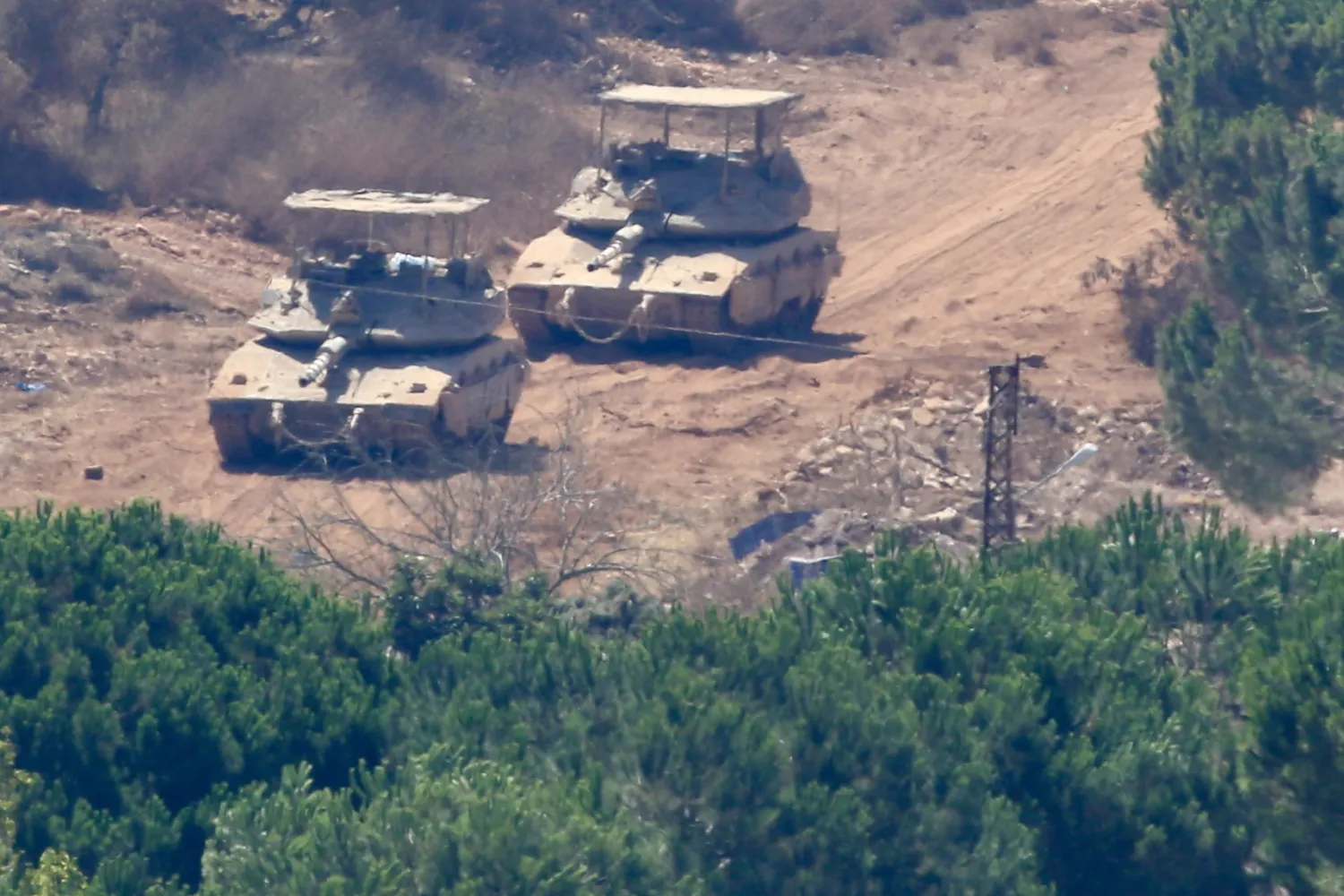
Israeli tanks in Zawtar al-Sharqiyeh as seen from Zawtar al-Gharbiyeh, southern Lebanon, 05 August 2026. (EPA)
TT

Israel Resumes Lebanon Strikes as Talks Underway in Rome

Israeli tanks in Zawtar al-Sharqiyeh as seen from Zawtar al-Gharbiyeh, southern Lebanon, 05 August 2026. (EPA)

Israel's military resumed strikes in southern Lebanon on Wednesday despite ongoing talks, blaming a ceasefire violation by the Hezbollah group as state media reported at least one person killed. 

The fresh strikes, accompanied by the first evacuation warning in weeks, came as the United States led diplomacy between Israel and Lebanon in Rome aimed at putting an end to hostilities, with Beirut seeking Israel's phased withdrawal from the south. 

"In response to a blatant violation of the ceasefire by the Hezbollah terrorist organization, the army has begun conducting precise strikes in southern Lebanon," the Israeli military said in a statement, shortly after telling residents to evacuate the town of Mansouri in the south. 

Lebanese state media said one person died and 11 were wounded in a separate strike. 

In Rome, Israel requested that the day's talks with Lebanon end three hours early, a source in the negotiations told AFP, saying the head of the Israeli delegation, US ambassador Yechiel Leiter, had blamed alleged "misleading leaks" by the Lebanese side. 

But the talks were expected to resume on Thursday for a third and final day. 

In previous US-sponsored talks in June, Israel and Lebanon agreed to a framework deal that involves the disarmament of Hezbollah, a gradual withdrawal of Israeli forces from Lebanon's south and the deployment of the Lebanese army to the region, starting in test areas known as "pilot zones". 

This week's negotiations are the seventh round since Hezbollah drew Lebanon into the Middle East war in March with rocket fire at Israel in support of its backer Iran. 

Israel responded with heavy airstrikes and a ground invasion that Lebanon says have killed more than 4,300 people. 

In its first such warning since June, the Israeli military on Wednesday told the residents of Mansouri: "In light of Hezbollah's violations of the ceasefire agreement, the Israeli forces are compelled to act against it with force." 

"For your safety, you must evacuate your homes immediately and move north," the military's Arabic-language spokeswoman, Ella Waweya, posted on X. 

The UN's humanitarian agency had said just the night before that more than 800,000 people displaced by earlier fighting in Lebanon had begun heading back home following the recent lull in violence, though more than 360,000 remained displaced. 

- 'Shame, humiliation' - 

The town of Mansouri, located around nine kilometers (six miles) south of Tyre and 10 kilometers north of Israel, and its surroundings were subjected to several Israeli strikes and artillery shelling in recent weeks despite the ceasefire between Hezbollah and Israel that took hold in June. 

The town's municipality told residents on June 22 that they could return, but asked them to avoid the part of the town that fell within Israel's so-called "security zone" in southern Lebanon. 

The "security zone" designates a strip of territory where Israeli forces continue to operate that runs around 10 kilometers deep inside southern Lebanon along its border with Israel. 

A US State Department official had told AFP that this week's discussions would "include expanding the pilot zone process, resolving all outstanding border issues, and working on a comprehensive peace and security agreement". 

As the delegations met in Rome, Italian Foreign Minister Antonio Tajani spoke with his counterpart from Iran, Hezbollah's main patron, and called on Tehran to halt the group's operations. 

Tajani, in a post shortly before the Israeli strikes, voiced hope that the talks would "yield concrete results". 

Hezbollah leader Naim Qassem said on Tuesday that the direct negotiations would bring "nothing but shame, humiliation" and successive concessions for Lebanon. 

Hezbollah has repeatedly rejected the direct talks and refuses to surrender its weapons. 

Violence in Lebanon has decreased since the Lebanon-Israel deal and the signing in June of a preliminary US-Iran agreement on the Middle East conflict. 

But Lebanon continued to report intermittent Israeli strikes and shelling, as well as detonations and demolitions in southern villages. 

Since the war between Israel and Hezbollah erupted in early March, Israel's military has lost 38 soldiers and one civilian contractor. 


Contaminated Gasoline Sparks Fears Over Diesel Quality in Syria

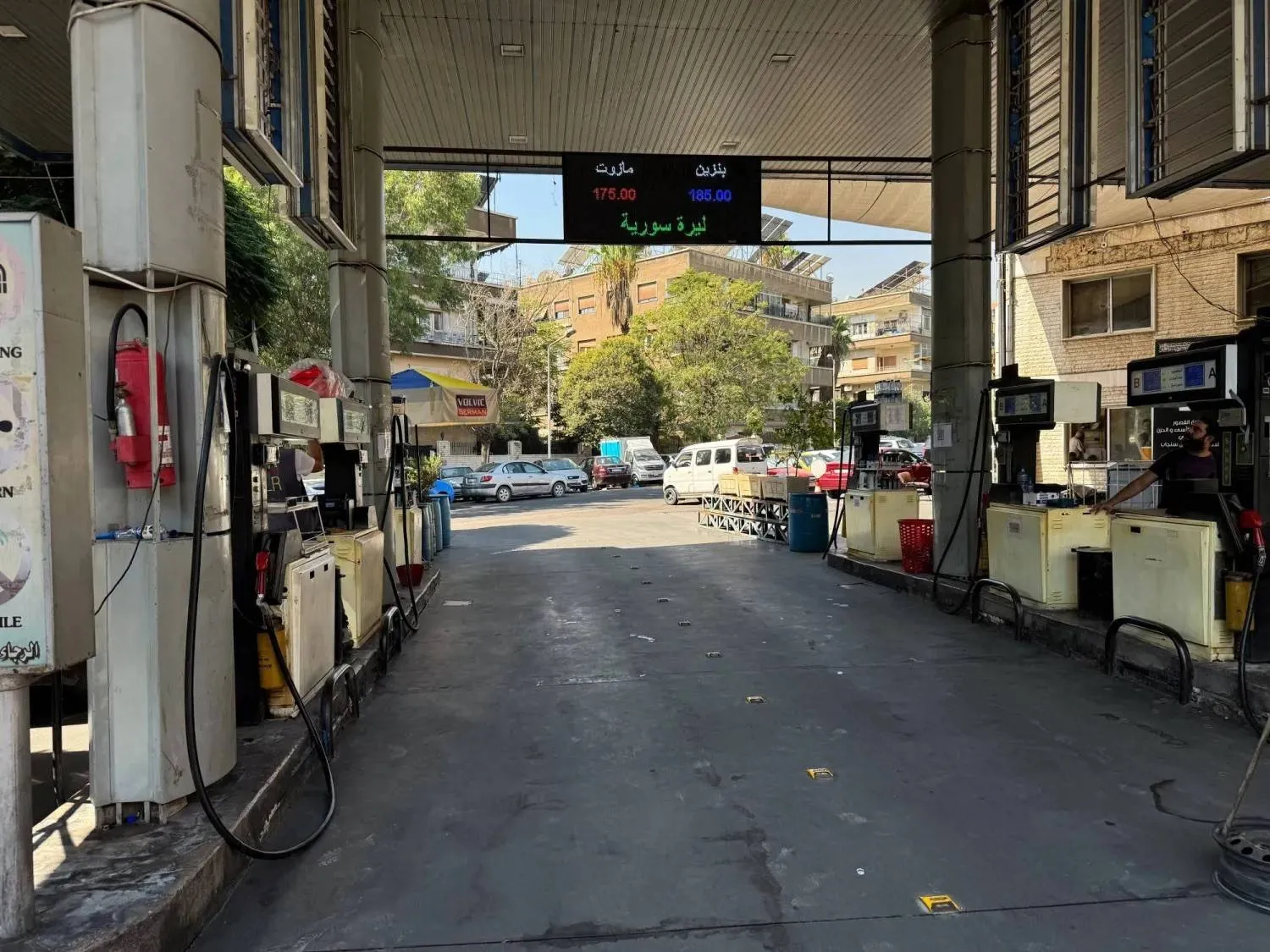
A gas station in Damascus displays fuel prices following the latest increase, which sparked protests in several Syrian cities (Reuters). 
TT

Contaminated Gasoline Sparks Fears Over Diesel Quality in Syria

A gas station in Damascus displays fuel prices following the latest increase, which sparked protests in several Syrian cities (Reuters). 

A video of a young girl collecting animal dung for heating in northeastern Syria has revived memories of bitter winters during the war, as rising fuel prices, a weakening currency and a scandal involving contaminated gasoline fuel concerns over a worsening cost-of-living crisis.

The widely circulated footage shows the girl gathering dung from farmland in rural Hasakah to make "jalla", a traditional fuel used for heating. With winter approaching, she explains that diesel is too expensive to obtain.

The images brought back painful memories for Fatima Hamid, 49, who fled Deir Ezzor for Sahnaya, near Damascus, where she spent several years living with her three children in a cold, dark basement.

For Hamid, the recent increase in diesel prices and plans to introduce a cheaper, lower-quality heating fuel have revived fears of the hardships she endured.

“Under Assad, they used to sell us tiny quantities of black diesel, thick as mud, for our heaters. Its smell would suffocate us,” she recalled.

“Today, we fear the cheaper diesel they’re talking about will be like the red gasoline that damaged cars.”

Fuel prices rise as pound weakens

Syria’s Energy Ministry raised diesel and other petroleum product prices by 40% in September, increasing the price of diesel from 125 to 175 Syrian pounds per liter.

Authorities subsequently introduced a lower-quality, subsidized diesel for heating and agricultural use at 115 pounds per liter.

The Syrian pound weakened against the dollar on Tuesday, with the exchange rate exceeding 141 pounds to the dollar after several months of stability at around 130.

Economists linked the depreciation to inflationary pressures resulting from higher fuel prices.

Meanwhile, the Syrian Petroleum Company recently refused to unload two diesel tankers because their cargoes failed to meet required specifications.

Oday al-Sattouf, the company’s media department director, announced that a tanker carrying 16,000 tons of diesel had begun docking and unloading at storage facilities in the port of Baniyas, while a second vessel was awaiting its turn.

The shipments are intended to meet growing demand ahead of winter.

Speaking to the official SANA news agency, al-Sattouf outlined measures to address shortages, including coordinating with the Homs refinery to increase production and supply diesel to all provinces at 150 pounds per liter.

Additional quantities priced at 115 pounds per liter would be produced at Hasakah refineries, while remaining stocks at the Tishreen and Baniyas storage facilities would also be used.

He expected supplies to stabilize as deliveries became regular and the Baniyas refinery resumed operations.

Contaminated gasoline sparks anger

The controversy over contaminated gasoline distributed in Syrian markets has continued since the beginning of October.

It followed fuel shortages and widespread confusion after authorities raised the price of 90-octane gasoline to 185 pounds per liter and 95-octane gasoline to 195 pounds.

An employee at a Damascus filling station told Asharq Al-Awsat that the adulterated fuel had been withdrawn from all government-run Sadcop stations.

Supplies of gasoline meeting the required specifications began reaching those outlets early Tuesday, following quality checks at both the source and delivery points in Damascus.

The additional inspections delayed deliveries to filling stations in several provinces, the employee explained.

He denied that there was a gasoline shortage and advised motorists to use government stations until the remaining contaminated fuel had been removed from private-sector outlets.

Khaled Jamal al-Khalaf, a member of the Syrian People’s Assembly’s fuel committee, has called for the dismissal and prosecution of Syrian Petroleum Company director Youssef Qablawi.

Speaking on Syria’s state news channel on Sunday, al-Khalaf held Qablawi fully responsible for what he described as the “contaminated gasoline disaster,” citing extensive damage to motorists’ vehicles.

At a car repair workshop in Damascus, Fadi al-Akram was trying to drain the contaminated gasoline from his vehicle and assess the damage to its fuel pump.

He estimated his initial loss at two million Syrian pounds for the gasoline alone, while repairs could cost another five million.

Al-Akram questioned who would compensate him for the damage.

Investigation results pending

Authorities have yet to announce the findings of an investigation into the contaminated gasoline.

The Syrian Company for the Storage and Distribution of Petroleum Products, Sadcop, previously announced an inquiry into the source of the substandard fuel and how it had reached filling stations.

In a statement issued amid mounting complaints, the company reported that tests on samples collected at different stages of the supply chain showed compliance with approved specifications.

It nevertheless acknowledged that cases of fuel failing to meet quality standards had been detected in the domestic market.


Hezbollah Aid to Displaced Families Raises Questions Over Funding Sources

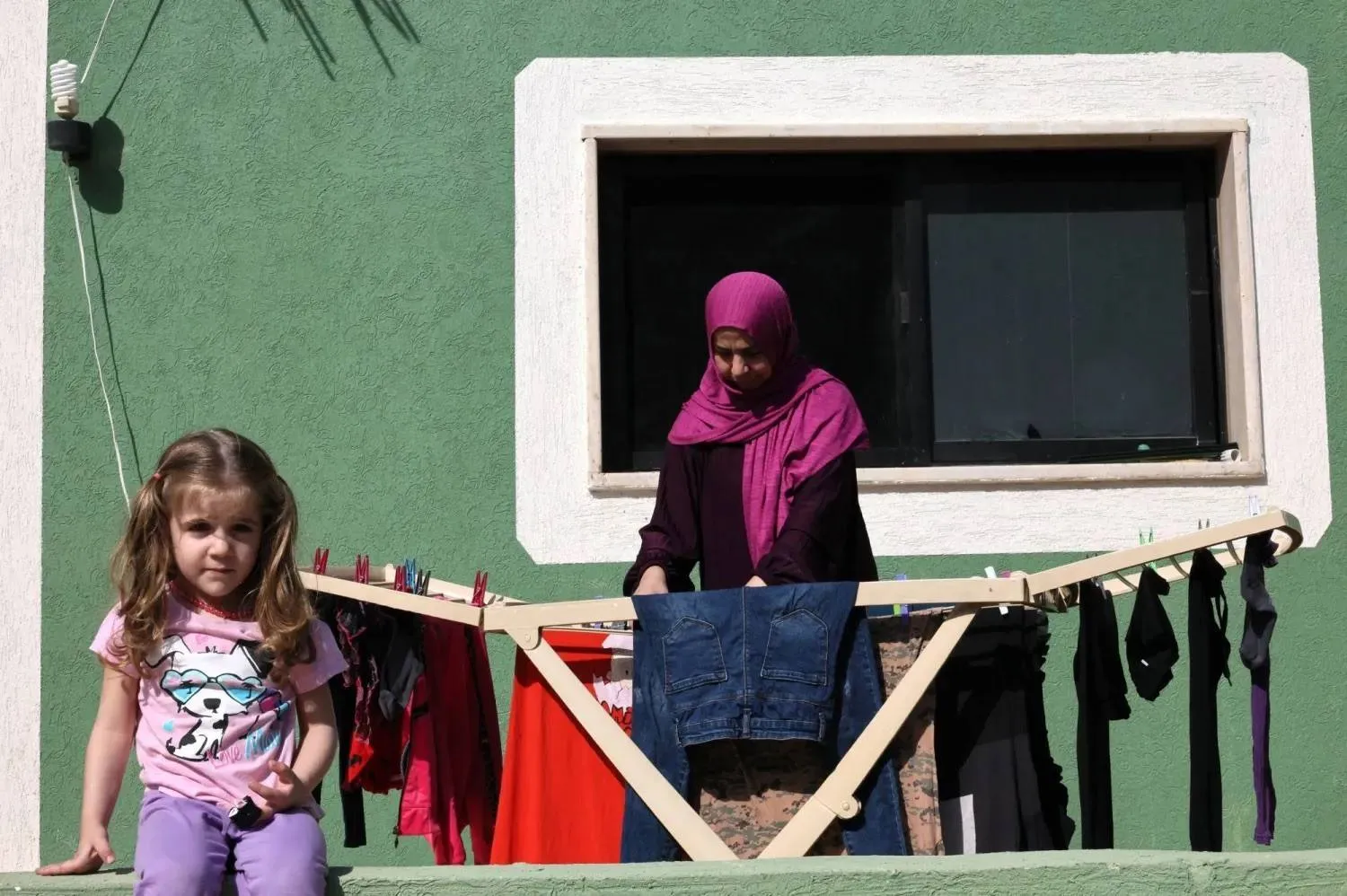
A woman and her daughter, displaced from their home in the South Lebanon village of Aita al-Shaab in 2023, live in a rented apartment in the southern town of Maarakeh (EPA). 
TT

Hezbollah Aid to Displaced Families Raises Questions Over Funding Sources

A woman and her daughter, displaced from their home in the South Lebanon village of Aita al-Shaab in 2023, live in a rented apartment in the southern town of Maarakeh (EPA). 

Hezbollah’s announcement of financial assistance for displaced Lebanese families and those affected by the fighting with Israel has raised questions about where the money comes from and how it is transferred and distributed, amid US sanctions on Iran and tighter Lebanese oversight of funding channels.

The announcement also comes as Lebanese authorities move to place all weapons under the control of legitimate state forces.

Meanwhile, President Joseph Aoun received a telephone call from Iranian Foreign Minister Abbas Araghchi to discuss regional developments. According to the Lebanese presidency, the two agreed on the need to support diplomatic solutions as the best way to end conflicts in the region.

Hezbollah’s funding sources

Hezbollah has traditionally relied on direct Iranian support, donations from sympathizers abroad and commercial activities, as well as illicit sources that US authorities accuse the group of exploiting.

Lebanese authorities, meanwhile, are seeking to strengthen financial regulations and oversight, particularly through proposed amendments to Law No. 44 on combating money laundering and terrorist financing.

The changes aim to identify the beneficial owners of companies and commercial ventures, trace the origins and destinations of funds, and tighten supervision of currency exchange dealers and money transfer companies.

US questions reported Iranian funding

A US State Department spokesperson has questioned, for a second time, reports of money reaching Hezbollah from Iran.

“The money supposedly arriving from Iran simply does not exist,” the spokesperson was quoted as saying.

The official accused Hezbollah of relying on criminal activities, including drug trafficking and partnerships with Latin American drug cartels, to compensate for funds it was not receiving from Tehran.

No detailed public evidence was provided to substantiate the allegations.

The spokesperson described Hezbollah’s aid announcement as an attempt to salvage its reputation rather than help those it had drawn into war. The official also accused the group of dragging Lebanon into war in a “suicidal” manner, arguing that even if Hezbollah had the money, it would use it to purchase weapons to threaten Israel and intimidate its opponents.

Hezbollah’s weapons, the spokesperson added, had brought Lebanon nothing but misery and destruction.

The official said Washington was working with Gulf and European partners on a plan to make billions of dollars available for Lebanon’s reconstruction, without specifying a final amount or implementation timetable.

Disarming Hezbollah was an essential part of efforts to restore stability and prevent renewed conflict, he stressed.

On Tuesday, Hezbollah announced a financial assistance program for displaced families whose homes had been destroyed or damaged and who had no alternative accommodation.

The program covers rent and furniture expenses of up to $14,000, payable over one year.

The announcement came days after Reuters reported that Hezbollah had received $200 million from Iran to assist displaced Lebanese families, a claim also questioned by Washington.

Questions over alternative funding channels

Sami Nader, director of the Middle East Institute for Strategic Affairs, told Asharq Al-Awsat that US skepticism suggested Washington was closely monitoring Hezbollah’s potential funding sources.

However, he did not rule out the possibility that Iran and Hezbollah had recently developed new methods of transferring money, including cryptocurrencies or gold.

Nader said US trade monitoring and tighter financial restrictions posed challenges to such channels, potentially explaining the latest round of sanctions. He stressed the need for Lebanon to enforce its financial laws across all sectors.

“The Lebanese state must enforce the laws as it did with Al-Qard Al-Hassan, and oversight must cover all areas,” he said.

Nader called for scrutiny of cryptocurrency exchange offices to determine whether they complied with Lebanese regulations, adding that new legislation might be needed to address emerging financial mechanisms.

Concerns over Lebanon’s financial standing

Lebanese Forces lawmaker Razi al-Hajj accused Hezbollah of trying to project the same strength it possessed before the two wars, while disregarding the deaths, injuries and economic collapse that followed.

He also accused the group of attempting to shift responsibility onto the government, which he said had already shouldered more than it could manage. While affirming that those affected by the fighting were entitled to assistance, al-Hajj said the central issue was enforcing laws against money laundering and terrorist financing.

He warned that failures in this area could damage Lebanon’s financial standing and international relations.

The deputy argued that Hezbollah’s funding, which he characterized as generally originating from illicit sources, posed a threat to state stability and ties with the international community.

He also warned that Lebanon could move from the Financial Action Task Force’s gray list to its blacklist.

Transparency must apply to everyone

Lawmaker Fouad Makhzoumi said demands for transparency and verification of funding sources, transfer methods and distribution mechanisms should apply to everyone without exception.

Writing on X, he warned of the risks of money laundering and terrorist financing, particularly given Lebanon’s inclusion on the gray list of the Financial Action Task Force (FATF).

Makhzoumi also urged the government to assume responsibility for providing shelter and assistance to displaced families, stressing that no Lebanese citizen should be left to face hardship alone.


Sudan's Famine Risk Worsened by Conflict, Drought and Funding Shortages

A Sudanese farmer plants seeds in an agricultural field in Gedaref State, eastern Sudan, on July 18, 2026. (Photo by AFP)
TT

Sudan's Famine Risk Worsened by Conflict, Drought and Funding Shortages

A Sudanese farmer plants seeds in an agricultural field in Gedaref State, eastern Sudan, on July 18, 2026. (Photo by AFP)

Conflict and drought are worsening food insecurity across parts of Sudan’s Darfur and Kordofan regions, a global food crisis monitor warned on Monday.

There is a “deteriorating humanitarian situation” across greater Darfur and Kordofan, including areas identified as at risk of famine, as well as other locations, according to the Integrated Food Security Phase Classification, or IPC.

Severe drought linked to El Niño is affecting more than half of Sudan, causing localized crop failures and depriving households of food and income, it said.

In May, nearly 19.5 million people — more than 40% of the population — were facing high levels of acute food insecurity, according to an IPC assessment. Of those, 135,000 were in Phase 5, the most severe classification, characterized by extreme food shortages, starvation, very high levels of malnutrition and deaths from disease or acute malnutrition.

Sudan’s war erupted in April 2023 when tensions between the military and the paramilitary Rapid Support Forces, or RSF, escalated into open fighting in the capital, Khartoum, before spreading across the country. The conflict has killed at least 150,000 people, according to conflict monitor ACLED, though aid groups say the true toll is likely higher.

The war has also displaced about 13 million people and pushed parts of the country into famine.

Farmers’ livelihoods have been affected, and they're now relying more on assistance, the IPC said. Without a quick and significant increase in assistance to Sudan, “food insecurity, acute malnutrition, and excess mortality will likely intensify," the group said.

Poor levels of growth have affected 64% of croplands in North Darfur and about half in South Darfur, West Kordofan and South Kordofan.

The IPC reported worsening acute malnutrition in additional areas, including Nyala, where children accessing nutrition services who were admitted for severe acute malnutrition doubled from approximately 5% to 11% between January and August. Two displacement camps in South Darfur also recorded global acute malnutrition above famine thresholds.

In North Darfur, delayed rains that impacted crop cultivation and “critically low” food stocks have worsened food insecurity. Meanwhile, Western Kordofan is experiencing one of its worst droughts since 2004, the IPC said, citing rainfall levels.

Humanitarian organizations have repeatedly said that ending the conflict and ensuring safe, sustained humanitarian access are essential to improving conditions across Sudan. But repeated efforts to achieve peace have yet to bring the war to an end.

In the latest bout of violence, an airstrike killed at least 72 civilian miners in a border area between Sudan and Egypt where artisanal and small gold mining is widespread, local rights group Emergency Lawyers said Sunday.

The group, which tracks violence across Sudan, said without providing evidence that Egyptian warplanes targeted the miners in Sudan’s North Wadi area.

The Egyptian Armed Forces released a statement late Monday saying that they had launched the latest wave of a "large-scale campaign to confront illegal mining in the Eastern Desert” by dropping “warning leaflets” on citizens. They did not provide any further details or explanation.

In June, Egyptian security forces detained hundreds of people, including foreigners, on the border with Sudan, accusing them of illegal gold mining and smuggling.

Separately, the Egyptian Foreign Ministry also announced the death of two Egyptian truck drivers in the Sudanese capital of Khartoum after a gunman opened fire. The statement said the shooter has been apprehended by the authorities.