Palestinian Source: Israeli Reservations Delay Cairo Mediators’ Meeting on Gaza

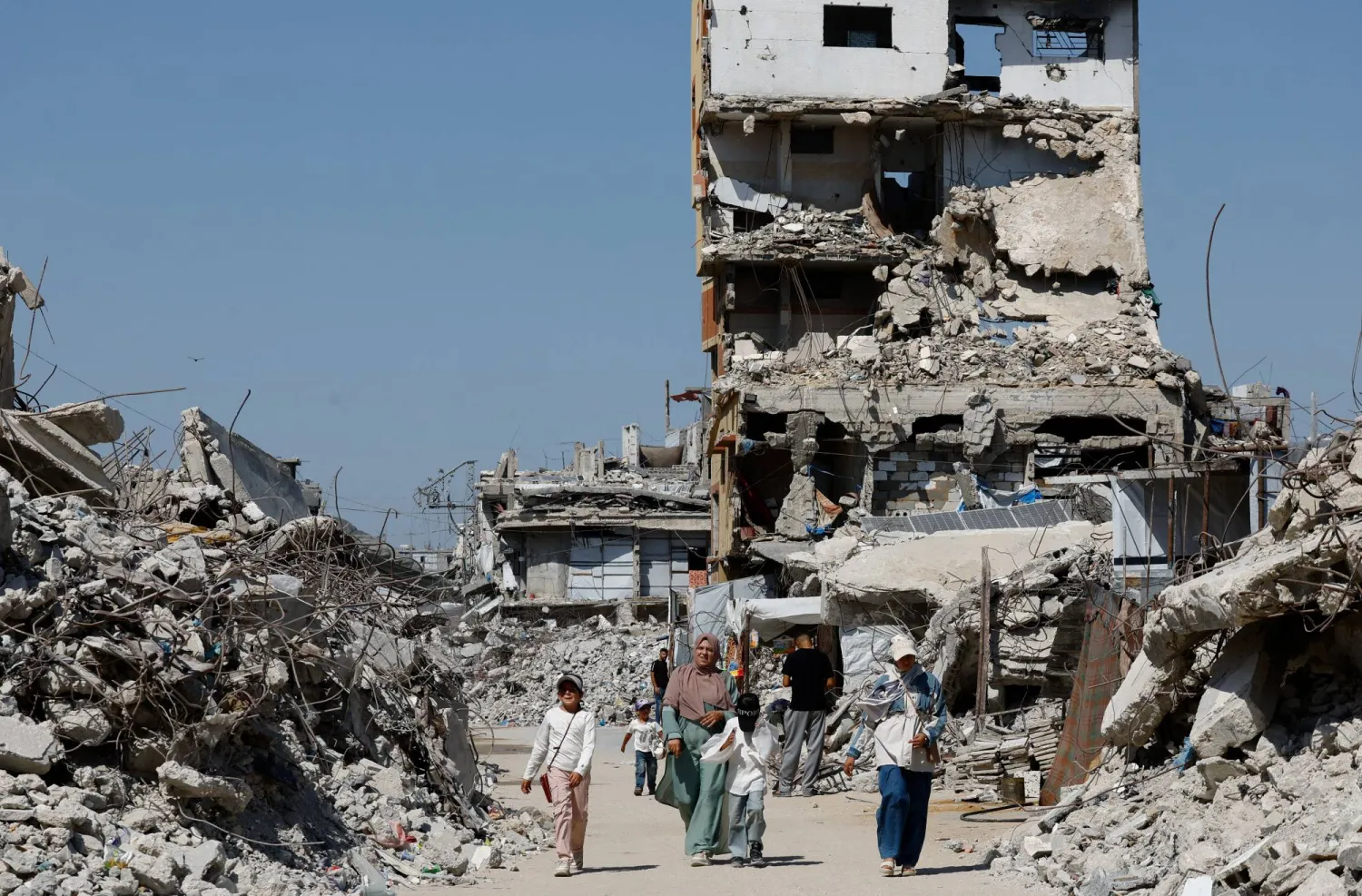
 Palestinians walk past the rubble of residential buildings destroyed during the war, at Jabalia refugee camp in the northern Gaza Strip, August 5, 2026. (Reuters)
Palestinians walk past the rubble of residential buildings destroyed during the war, at Jabalia refugee camp in the northern Gaza Strip, August 5, 2026. (Reuters)
TT

Palestinian Source: Israeli Reservations Delay Cairo Mediators’ Meeting on Gaza

 Palestinians walk past the rubble of residential buildings destroyed during the war, at Jabalia refugee camp in the northern Gaza Strip, August 5, 2026. (Reuters)
Palestinians walk past the rubble of residential buildings destroyed during the war, at Jabalia refugee camp in the northern Gaza Strip, August 5, 2026. (Reuters)

Israeli reservations are holding up a meeting of mediators in Cairo to discuss implementation of new understandings reached more than a week ago on the Gaza ceasefire agreement, a well-informed Palestinian source told Asharq Al-Awsat on Friday.

The Gaza ceasefire entered a new phase about a week ago after mediators — Egypt, Qatar and Türkiye — reached fresh understandings with Hamas and other Palestinian factions on arrangements to implement the second phase of the agreement struck last October. Implementation had stalled following the outbreak of the Iran war and Israeli violations.

In early August, Egypt’s Al Qahera News television channel cited sources as saying Cairo would soon host a meeting bringing together representatives of Egypt, the United States, Qatar and Türkiye to reaffirm all parties’ commitment to implementing the Gaza agreement.

The channel said Egypt was intensifying contacts with the parties concerned to push forward implementation, while Hamas and other Palestinian factions were responding positively to Egyptian and mediation efforts.

An informed Egyptian source later told Asharq Al-Awsat that preparations were under way for a four-way meeting between Egypt, Qatar, the United States and Türkiye to ensure the ceasefire understandings were carried out.

But Israeli Prime Minister Benjamin Netanyahu has yet to state a clear position on the understandings, which US President Donald Trump praised as “historic.”

No public position has emerged either following a visit to Israel last week by Nickolay Mladenov, the High Representative of the Board of Peace in Gaza.

The Palestinian source said on Friday that the four-way meeting had failed to take place as scheduled last week because Israel objected to the proposal on the table.

“As of this moment,” the source said around midday Friday, “no new date has been set for the meeting.”

A Hamas delegation remains in Egypt, the source said, but no new date has been agreed for meetings with the four-party committee.

Those meetings, linked to the Board of Peace and aimed at starting implementation of the agreed mechanisms, have also been held up by Israeli reservations.

The source said negotiations had slowed because of Israeli objections, particularly over withdrawal arrangements.

“Everyone is waiting for the American move and to see whether they have anything to offer in this regard, especially in terms of putting pressure on Israel,” the source said.

Asked whether a meeting could take place this week, the source said efforts were continuing to overcome obstacles posed by Netanyahu.

“Anything is possible, and it depends on Trump’s position and pressure from Washington,” the source added.

About a week ago, Hamas said it and other Palestinian factions had dealt “responsibly and positively” with the negotiating process and the mediators’ proposals to complete implementation of the second phase of the ceasefire agreement.

Hamas said Israel’s commitment to “stop the killing and end its attacks” was the essential prerequisite and first step toward moving ahead with implementation and setting a framework and timetable for what had been agreed.

It added that implementation of the second phase depended on Israel carrying out all provisions of the first phase.

In a video posted on Facebook on Wednesday, Netanyahu said Israel had not agreed to a plan to disarm Hamas in the Gaza Strip, despite the group having accepted it.

He said Israeli forces would not withdraw from their current positions in Gaza until Hamas had been fully disarmed.


UN Experts Urge Israel to Protect West Bank Olive Farmers

Palestinian volunteers douse an olive tree set on fire by Israeli settlers, near the village of Turmus Ayya, north of Ramallah, in the Israeli-occupied West Bank on October 16, 2026.  Ahmad Gharabli, AFP
Palestinian volunteers douse an olive tree set on fire by Israeli settlers, near the village of Turmus Ayya, north of Ramallah, in the Israeli-occupied West Bank on October 16, 2026. Ahmad Gharabli, AFP
TT

UN Experts Urge Israel to Protect West Bank Olive Farmers

Palestinian volunteers douse an olive tree set on fire by Israeli settlers, near the village of Turmus Ayya, north of Ramallah, in the Israeli-occupied West Bank on October 16, 2026.  Ahmad Gharabli, AFP
Palestinian volunteers douse an olive tree set on fire by Israeli settlers, near the village of Turmus Ayya, north of Ramallah, in the Israeli-occupied West Bank on October 16, 2026. Ahmad Gharabli, AFP

UN rights experts on Monday called on Israel to protect Palestinian farmers in the West Bank as settler attacks worsen with the annual olive harvest.

"Palestinian farmers must be protected and able to access their land safely. Yet, year after year, the violence, destruction and restrictions intensify," the experts said in a statement.

"The olive harvest should be a time when farmers can enjoy, in safety and dignity, the food and livelihoods their nature and land provide, not another season of fear, loss, violence and destruction."

The experts urged Israel to ensure that its forces protect Palestinian farmers from settler attacks and refrain from interference with their access to land. They also urged the international community to "exercise maximum pressure to protect Palestinian civilians", reported AFP.

Israel has occupied the West Bank since 1967. About 500,000 Israelis live in the West Bank, alongside three million Palestinians.

Violence is surging in the territory ahead of Israel's bitterly fought October 27 elections. The vote coincides with Palestinians' annual olive harvest which has been repeatedly disrupted by Israeli settlers as Prime Minister Benjamin Netanyahu seeks to shore up his pro-settlement right-wing base.

According to the UN humanitarian agency OCHA, 178 settler attacks related to the 2025 olive harvest were recorded in the West Bank, affecting 88 Palestinian communities.

More than 6,000 trees and saplings were "vandalised", it said -- nearly double the number in 2024 and the highest figure in six years.

"The olive harvest is an essential source of food, income and livelihood for thousands of Palestinian families," the UN experts said.

"Olive trees take years to mature and can sustain families for generations. Their destruction deprives families of far more than a single harvest: it undermines local food systems, cultural practices and ways of life, as well as the right to food and the food sovereignty of Palestinian communities."

The seven signatories to the statement include Sofia Monsalve Suarez, special rapporteur on the right to food; and Francesca Albanese, special rapporteur on human rights in the occupied Palestinian territories.

The special rapporteurs are independent experts mandated by the Human Rights Council. They do not speak for the United Nations itself.


UK Urges Firms Not to Take Part in E1 Settlement Tender or Risk Sanctions

Israeli settlers (foreground) harvesting olives confront a Palestinian family outside the settlement of Alei Zahav, near the Palestinian town of Kafr al-Dik in the Israeli-occupied West Bank, on October 13, 2026. (AFP)
TT

UK Urges Firms Not to Take Part in E1 Settlement Tender or Risk Sanctions

Israeli settlers (foreground) harvesting olives confront a Palestinian family outside the settlement of Alei Zahav, near the Palestinian town of Kafr al-Dik in the Israeli-occupied West Bank, on October 13, 2026. (AFP)

British foreign minister Ed Miliband on Monday urged companies and individuals not to proceed with bids for the E1 West Bank settlement project on Monday, warning those involved in the ‌construction of ‌illegal settlements could face ‌sanctions.

"We ⁠urge businesses and ⁠individuals not to proceed with bids for E1 construction tenders," Miliband said in a statement. "They should be ⁠aware of legal ‌and ‌reputational consequences, including the risk ‌of involving themselves in ‌serious breaches of international law."

The E1 project would bisect the Israeli-occupied West Bank and ‌cut it off from East Jerusalem, fragmenting ⁠the ⁠land Palestinians hope will form the heart of a state.

Many Western states and campaign groups have opposed the project over concerns that it could undermine a future peace deal with the Palestinians.


Syrian State Media: Armed Groups Ban UN Delegation from Entering Sweida

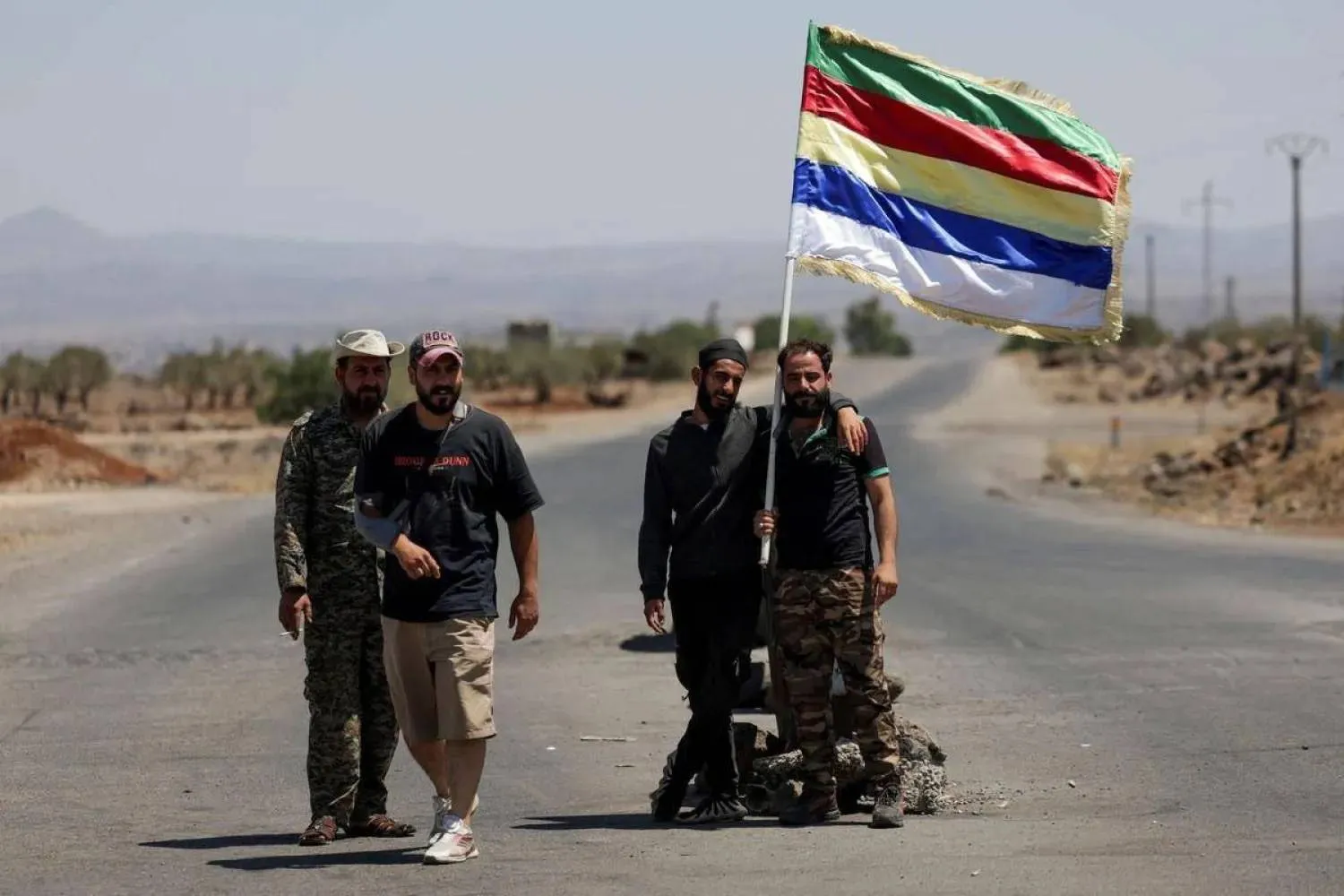
Members of the National Guard affiliated with Sheikh Hikmat al-Hijri in Sweida (File photo: Sweida 24). 
TT

Syrian State Media: Armed Groups Ban UN Delegation from Entering Sweida

Members of the National Guard affiliated with Sheikh Hikmat al-Hijri in Sweida (File photo: Sweida 24). 

Groups described by Syrian state media as operating outside the law prevented a joint UN humanitarian delegation from entering the southern Syrian city of Sweida on Sunday, citing a lack of coordination with them, according to Syria’s Al-Ikhbariya television channel.

The delegation included representatives of the UN Office for the Coordination of Humanitarian Affairs (OCHA) and international organizations. Its visit had been coordinated with the Sweida branch of the Syrian Arab Red Crescent, whose team was expected to accompany the delegation on field visits to Sweida city, Shahba and the village of Ara.

Al-Ikhbariya reported that the groups stopped the delegation at the Umm al-Zeitoun checkpoint for two to three hours before informing its members that entry was prohibited.

The delegation had earlier passed through the Al-Matouna checkpoint, operated by the Sweida Security Directorate.

The broadcaster also recalled that groups affiliated with Druze spiritual leader Sheikh Hikmat al-Hijri had blocked commercial trucks carrying essential goods and fuel from entering Sweida province on September 10.

According to Al-Ikhbariya’s correspondent at the time, the restrictions on commercial convoys coincided with the groups preventing approximately 12,000 students from reaching examination centers to sit special make-up exams for students in Sweida.