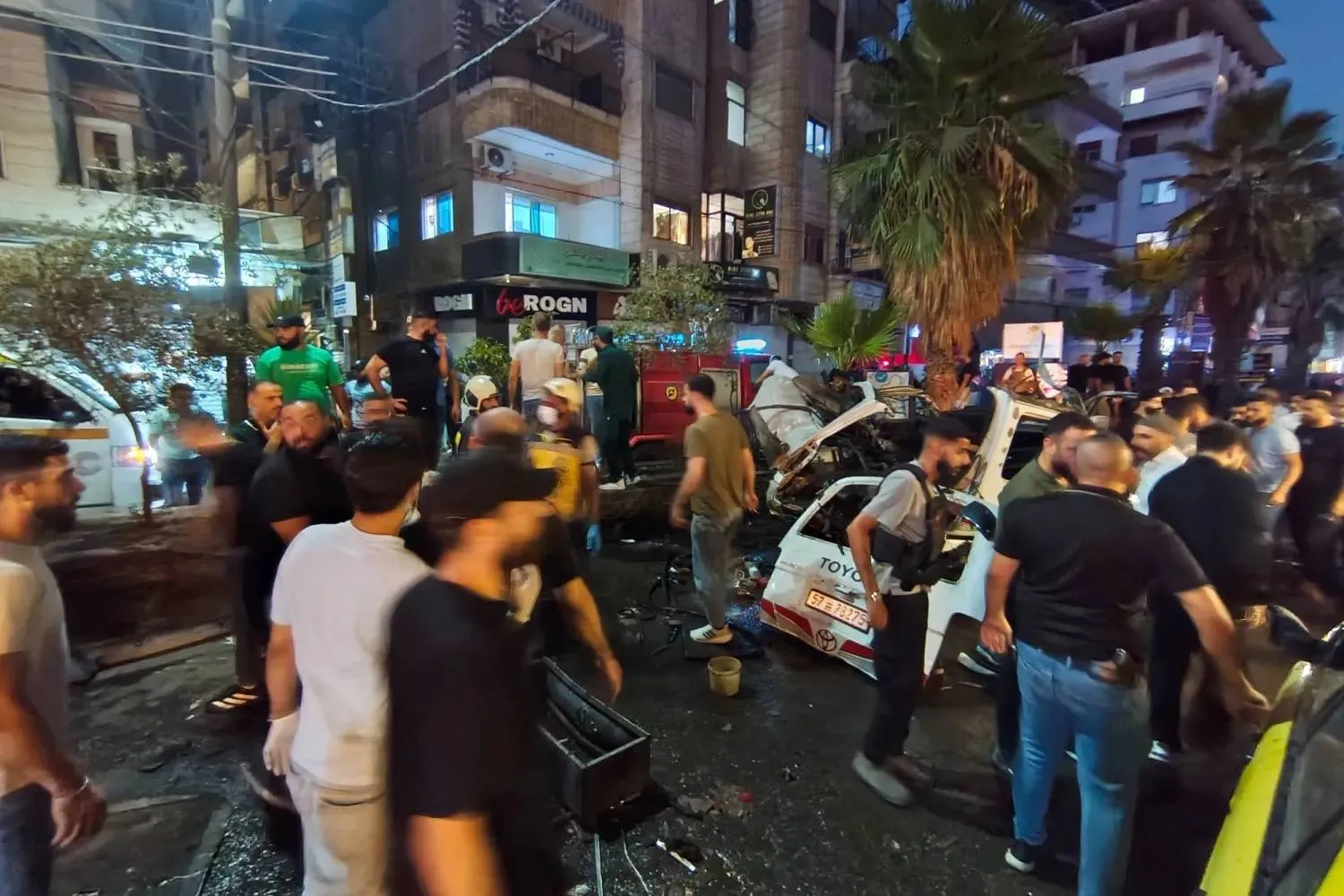

A bombing on a minibus in Jaramana, a city east of Damascus with a sizable Druze population, has thrust the area back into Syria’s spotlight, wounding 14 people, three of them critically.
The attack came just hours after Jaramana’s sheikhs and residents issued a statement setting out what they called key “national and social principles.” They said Damascus remained “the city’s primary destination” and Eastern Ghouta its natural depth, while rejecting “any attempts to sow discord or distort the social diversity and civil peace that distinguish the city.”
The statement also declared that “the people of Jaramana are not a mailbox for any party” and rejected “any form of interference in their affairs, in return for their non-interference in the affairs of others.”
Activists in the city told Asharq Al-Awsat they saw the statement as a political rejection of what they described as a separatist project in the southern province of Sweida pursued by Druze spiritual leader Sheikh Hikmat al-Hijri.
They said the project was backed by Israel, which they accused of promoting claims that Syria’s Druze were under threat and that it was acting to protect them.
The bombing also coincided with a visit by Syrian Foreign Minister Asaad al-Shibani to Türkiye as tensions mounted between Ankara and Tel Aviv.
Those tensions were underscored by Turkish President Recep Tayyip Erdogan, who said in June that his country’s security “does not begin in Hatay province, but in Aleppo, Damascus and Beirut.”
Israeli officials, meanwhile, have sharpened their rhetoric toward Türkiye. On July 29, Israeli Energy Minister Eli Cohen threatened that Israel could establish military bases inside Syria if Ankara pressed ahead with plans to set up bases there.
The attack also came after Syrian statements that Damascus would not oppose talks with Hezbollah if the interests of Syria and Lebanon required them. Hezbollah Secretary-General Naim Qassem later said the group was open to dialogue with Damascus.
As Syrian authorities investigate the bombing, several questions have emerged: Who was behind it? What was the motive? Who stands to benefit? And was the attack linked to the statement issued by Jaramana’s sheikhs and residents, or to Shibani’s visit to Ankara?
Asharq Al-Awsat spoke to civil society and civil peace activists, as well as human rights sources in Jaramana who closely follow developments in the city and across Syria.
Lawyer Makram Obeid, a Jaramana resident who helped draft the statement, said those behind the bombing had no interest in Syria’s unity, security or stability, or in allowing the emerging state to establish the foundations of justice.
“There are several parties that have no interest in stability in Syria, foremost among them Israel, which stands behind any move aimed at destabilizing this country,” he said.
Obeid said the message in the Jaramana statement was not new.
“Since the fall of the former regime, our message to the state and to every official met by the spiritual authority in our presence has been clear: Jaramana’s depth is Ghouta and its direction is Damascus,” he said.
Obeid also referred to Manbar Ansar al-Rasoul, an obscure group that claimed responsibility for the bombing and first announced itself about a month ago.
“There are radical groups targeting the Druze community and placing them on the list of those who must be eliminated,” he said.
He urged the state to take full responsibility for security and identify those behind such attacks before they strike.
“Security does not begin after an explosion. It begins before the explosion, and that is the responsibility of the state,” he said.
A civil society and civil peace activist in Jaramana, who asked not to be named, said there were “many beneficiaries” of the attack.
“The timing is not innocent,” he told Asharq Al-Awsat. “Logic suggests there must be a link between the statement by the city’s sheikhs and residents and the bombing. The two cannot be separated.”
Israel was among those that stood to benefit, he said, arguing that it did not want a model of coexistence such as Jaramana to survive in Syria and instead sought to reinforce its claims that Syrian Druze were in danger and needed its protection.
But the activist said the more likely perpetrators were “extremist radical forces.”
He pointed to what he described as incitement following demonstrations in Jaramana last month marking the anniversary of the Sweida events and said the inclusive national message in the sheikhs’ statement would also be unwelcome to such groups.
Whoever carried out the bombing, he said, whether a party outside Syria or radical organizations, the objective was the same: to undermine civil peace, destabilize Jaramana and strike at what he called a living model of coexistence.
“Israel is the primary beneficiary of this bombing because it reinforces its claims that Syrian minorities are in danger,” the activist said. “It will exploit the attack whether it was behind it or not.”
He urged Syrians to resist such efforts and avoid being drawn into sectarian strife.