


Lebanon to Inspect Facilities for Iraqi Fuel Oil Transit Through Syria

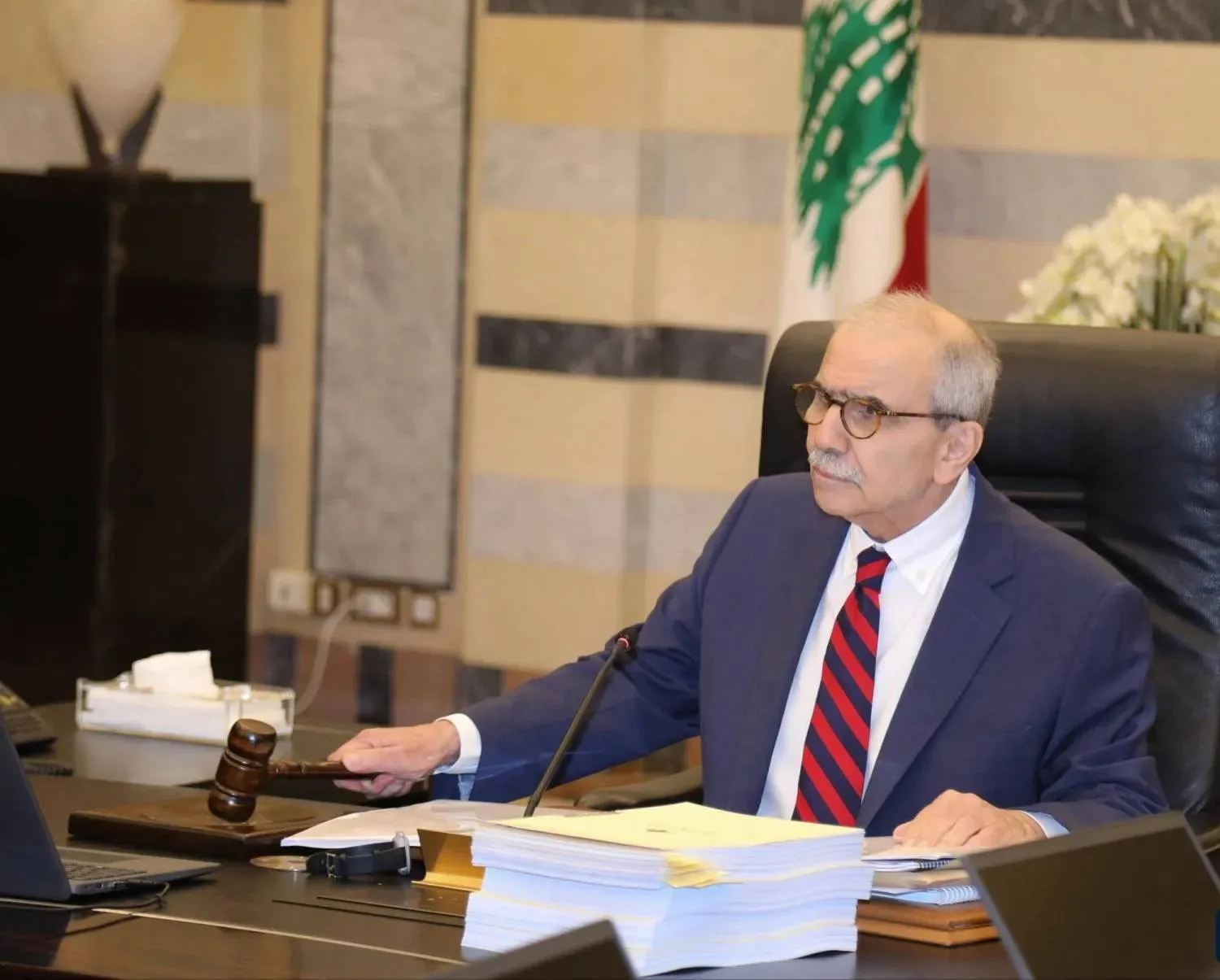
Lebanese Prime Minister Nawaf Salam. (Prime Minister’s Office)
TT

Lebanon to Inspect Facilities for Iraqi Fuel Oil Transit Through Syria

Lebanese Prime Minister Nawaf Salam. (Prime Minister’s Office)

Lebanon is laying the logistical and administrative groundwork for a project to transport Iraqi fuel oil by road through Syria to oil facilities in the northern city of Tripoli, though discussions have not yet reached the implementation stage.

The move follows after Iraq expressed readiness to export fuel oil through Lebanon during Prime Minister Nawaf Salam's recent visit to Baghdad.

Local media reported that Salam will chair a meeting on Monday to follow up on the issue and draw up a roadmap for requirements that must be met before any implementation steps are taken.

Discussions remain at a preparatory stage, with the meeting aimed mainly at identifying gaps and measures needed to prepare the logistical and administrative framework.

Lebanon’s Energy and Water Minister Joe Saddi, Finance Minister Yassine Jaber and Public Works and Transport Minister Fayez Rasamny are expected to be present, along with representatives from customs and the General Security directorate.

Talks are expected to focus on the condition of Lebanon's northern border crossings with Syria and the work needed to speed up their rehabilitation. The readiness of the crossings will be a key factor in determining whether the project can be implemented.

Under the proposed route, tanker trucks would travel from Iraq through Syria before entering Lebanon and heading to Tripoli, requiring suitable border crossings and roads, as well as customs and security procedures capable of handling the traffic.

Saddi is expected to tour the oil facilities in Tripoli on Monday to inspect storage tanks and infrastructure and identify rehabilitation work that would be needed if Lebanon later moves ahead with receiving, storing and re-exporting Iraqi fuel oil, reported local media.

The tour is also expected to include roads leading to the facilities and an assessment of their capacity to handle the expected tanker traffic.

If implemented, the project would add another dimension to oil cooperation between Beirut and Baghdad.

Since 2021, Lebanon has received Iraqi fuel oil under an agreement between the two countries to help secure fuel for Electricité du Liban, Lebanon's state-owned power utility. Because the Iraqi fuel oil is not directly suitable for Lebanon's power plants, it is exchanged for other types of fuel under the mechanism in place.

The new proposal would use Lebanon as a transit route and storage hub for Iraqi fuel oil before re-export, rather than limiting oil cooperation to supplying Lebanon with fuel.

Lebanon is studying the route alongside an existing operation transporting Iraqi fuel oil by road to Syria's Mediterranean port of Baniyas, where tanker trucks carry the fuel from Iraq through Syria before it is shipped by sea.

The Baniyas route offers a similar logistical model, though using Tripoli would require tanker trucks to continue across Syria to Lebanon's northern border and then travel by road to the oil facilities.


Iraq’s Kurdistan Region Officially Unifies Peshmerga Forces

Kurdistan Region President Nechirvan Barzani speaks during a ceremony marking the unification of the Peshmerga forces. (Kurdistan Region Presidency)
TT

Iraq’s Kurdistan Region Officially Unifies Peshmerga Forces

Kurdistan Region President Nechirvan Barzani speaks during a ceremony marking the unification of the Peshmerga forces. (Kurdistan Region Presidency)

Iraq’s Kurdistan Region formally announced Monday the unification of its Peshmerga forces, ending a division into two forces that had lasted more than three decades, in a step aimed at unifying Kurdish ranks that have long been divided politically and on security matters.

The ceremony at the Kurdistan Region Presidency in Erbil was overseen by President Nechirvan Barzani, commander-in-chief of the Peshmerga, and attended by Prime Minister Masrour Barzani, the deputy prime minister and minister of Peshmerga affairs, Kurdish officials, representatives of the international coalition and diplomatic missions.

Abdul-Amir al-Shammari, director of the Office of the Commander-in-Chief of the Iraqi Armed Forces, also attended.

The Peshmerga split in the mid-1990s during the Kurdish civil war between the Kurdistan Democratic Party, led by Masoud Barzani, and the Patriotic Union of Kurdistan, then led by the late Jalal Talabani.

The forces were divided between the KDP-affiliated Unit 80, based in the party’s areas of influence in Erbil and Duhok provinces, and the PUK-affiliated Unit 70, concentrated in Sulaymaniyah province and the Halabja area.

Kurdish sources said the ceremony culminated a lengthy reform process aimed at unifying and reorganizing the Peshmerga under an institutional military structure overseen by the Ministry of Peshmerga Affairs.

Under a new decree, no Peshmerga force will remain outside the ministry as of Sept. 21, according to the regional presidency.

The integration process began years ago with support and pressure from the international coalition, particularly the United States, Britain and Germany, as well as other European countries. Integration was among the conditions for continued military and logistical assistance.

Although the Peshmerga are not explicitly named in Iraq’s constitution, Article 121 allows regional authorities to establish and organize internal security forces, including police, security forces and regional guards. Kurdish authorities consider the Peshmerga part of the regional guard.

Nechirvan Barzani said no force remained outside the Peshmerga umbrella and that the force must rise above partisan interests.

“The Peshmerga are the force of the people of Kurdistan,” he stated, adding that their mission was to protect all the region’s communities, including Kurds, Turkmen, Christians, Yazidis and Arabs.

He described the Peshmerga as part of Iraq’s defense system, saying stronger capabilities and greater coordination with federal forces would strengthen Iraq as a whole.

Barzani noted that unification must extend to training, duties, rights, promotions and military doctrine, stressing that the military should not become an arena for settling political or partisan scores.

He thanked the United States, the international coalition and countries that supported Iraq and the Kurdistan Region in the war against ISIS, including Britain, Germany, the Netherlands, Italy and France, and praised their role in Peshmerga reform, training and restructuring.

Washington, with Baghdad’s approval, delivered 24 M119 105mm howitzers to the Peshmerga in early August to bolster their capabilities against ISIS remnants, a move that drew objections from some Sunni and Shiite factions and figures in Baghdad.

Despite the unification, serious doubts remain over Kurdish political unity after nearly two years of failure to complete the regional government lineup following parliamentary elections.

PUK official Soran Dawoodi told Asharq Al-Awsat that Peshmerga unification could pave the way for political rapprochement between the KDP and PUK, adding that it would strengthen Kurdish public confidence in the force and advance the institutional framework sought by Kurdish citizens.


Lebanon's Prisoners Continue Hunger Strike Over Suspension of Amnesty Law

A sign held by a protester at Roumieh Prison calls for the implementation of the General Amnesty Law (Al-Markazia)
TT

Lebanon's Prisoners Continue Hunger Strike Over Suspension of Amnesty Law

A sign held by a protester at Roumieh Prison calls for the implementation of the General Amnesty Law (Al-Markazia)

Inmates at Lebanon’s Roumieh Central Prison are on a hunger strike for a 10th day over an appeal to a general amnesty law, as warnings mounted that deteriorating conditions could trigger a broader humanitarian and social crisis.

Prisoners in Block B of Roumieh, Lebanon’s largest prison, have refused food, water and medication while awaiting a Constitutional Council ruling on the challenge to the law, which hundreds of inmates hope will secure their release.

The strike has coincided with protests outside prisons, including a demonstration Sunday that drew hundreds to Al-Nour Square in the northern city of Tripoli at the call of a committee representing prisoners’ families.

“The prisoners remain committed to the strike, but the situation is still under control and has not yet reached a highly dangerous stage,” a security source told Asharq Al-Awsat.

The main concern was for inmates with chronic illnesses, particularly those refusing medication, the source added. The prison doctor was examining strikers daily, prioritizing those with health conditions, while arrangements were in place to transfer any inmate whose condition deteriorated to hospital.

The source nevertheless warned that tensions could worsen if the Constitutional Council upheld the appeal and struck down the amnesty law, potentially prompting prisoners to escalate their protest.

Omar al-Atrash, spokesman for Lebanon’s prisoners, said the health of inmates had started to deteriorate “one after another,” adding that two prisoners were hospitalized Sunday.

Al-Atrash warned that the action could expand in the coming days into a general strike across Lebanon’s prisons.

He held Free Patriotic Movement leader Gebran Bassil and his political camp “morally and humanely responsible” because of its challenge to the amnesty law that was passed by parliament on Aug. 12.

Al-Atrash urged state institutions to implement the law, warning that further delays could lead to “a humanitarian catastrophe and an explosion inside the prisons” that could rapidly develop into a national and social crisis.

One Roumieh inmate told Asharq Al-Awsat that the strikers’ health was rapidly deteriorating and that prisoners with chronic illnesses were at particular risk.

The inmates “will not back down until the amnesty law is upheld and published in the Official Gazette,” he said.

A judicial source said prosecutors were monitoring the strikers’ health in coordination with Roumieh prison authorities.

Courts had already begun preparing cases to implement the amnesty should the Constitutional Council allow the law to stand, the source said, in an effort to avoid delays in releasing eligible prisoners.


Trump Praises Aoun’s Leadership During Critical Period

Lebanon’s President Joseph Aoun holds a meeting with former head of the Progressive Socialist Party, Walid Jumblatt and his son, MP Taymour Jumblatt, at the Presidential Palace in Baabda on Monday (Lebanese Presidency)
TT

Trump Praises Aoun’s Leadership During Critical Period

Lebanon’s President Joseph Aoun holds a meeting with former head of the Progressive Socialist Party, Walid Jumblatt and his son, MP Taymour Jumblatt, at the Presidential Palace in Baabda on Monday (Lebanese Presidency)

US President Donald Trump on Monday praised President Joseph Aoun’s leadership of Lebanon during this critical period, and acclaimed the shared commitment of both sides to peace, security, and prosperity around the world.

Lebanon is engaged in US-mediated direct negotiations with Israel, aimed at ending the war, securing an Israeli withdrawal from occupied Lebanese territory, facilitating the return of detainees, and enabling displaced residents to return to their homes.

The talks also seek to ensure that weapons across Lebanon are placed exclusively under the authority of the country’s official security and military forces.

Trump’s praise came in a letter sent to Aoun, in which he expressed his “honor” to welcome the President to the White House on July 21 for a “truly historic visit,” according to the Lebanese presidency said.

“It was an honor to welcome you to the White House for a visit that was historic in every sense of the word—the first visit by a Lebanese head of state in nearly two decades—at a time when the Middle East is experiencing conflict. I have admired your decisive leadership on behalf of Lebanon and its people,” the letter said.

Trump also thanked Aoun for awarding him the National Order of the Cedar, Grand Cordon, saying: “This initiative is an exceptional honor and embodies the proud Lebanese spirit. I will cherish this gesture as a symbol of our shared commitment to peace, security, and prosperity around the world.”

Unlike Hezbollah, the Lebanese state’s approach of negotiating with Israel enjoys the support of most major political forces.

Following a meeting with Aoun on Monday at the Presidential Palace, former head of the Progressive Socialist Party, Walid Jumblatt said he supports the negotiations and the ceasefire agreement if they lead to a gradual or complete Israeli withdrawal.

“If the framework agreement leads to a withdrawal and the demarcation of the border, then where is the problem? This is my personal point of view, no more and no less,” he noted.

Hezbollah has stepped up its criticism of Aoun over his decision to pursue direct negotiations with Israel under US mediation, putting the Lebanese president at odd with the Shiite movement.

Following a meeting with the President on Monday, MP Alain Aoun said the success of the president’s efforts to end the war and restore Lebanese sovereignty requires cooperation from all Lebanese parties and engagement with the process of placing weapons exclusively under state authority.

The deputy called on Hezbollah to engage in dialogue with the president at Baabda Palace to agree on a roadmap aimed at advancing negotiations, securing an Israeli withdrawal and enabling the Lebanese Army to deploy across the country.