



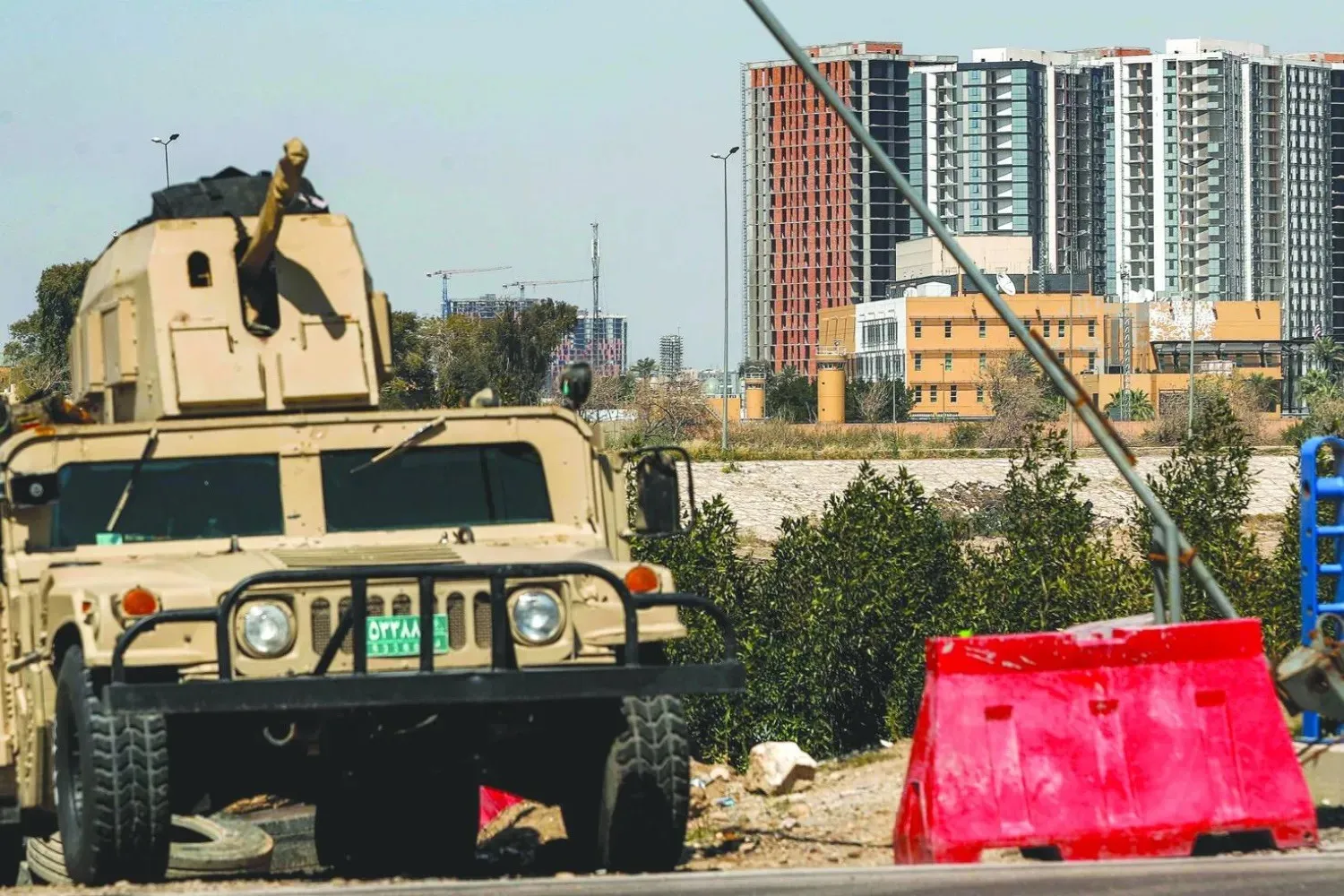

The Iraqi government is stepping up efforts to rein in armed groups as Shiite political circles debate the future relationship between the state and armed factions ahead of the US-led international coalition’s withdrawal deadline at the end of September.
Government measures include uncovering headquarters, cells and drone-production networks linked to factions planning attacks on neighboring countries.
In one of the boldest operations of its kind in years, Iraq’s Counter-Terrorism Service uncovered cells and drone-production networks in Baghdad overnight Friday into Saturday that were run by Iranian figures, along with weapons caches and equipment.
The operation was conducted jointly with the Iraqi National Intelligence Service, suggesting that detailed intelligence had been gathered ahead of the highly precise and secretive raids.
While the government disclosed details of the operation and arrests through its official spokesman, a security source who requested anonymity told Asharq Al-Awsat that intelligence obtained by the National Intelligence Service had been gathered “in coordination with external regional parties that provided evidence and detailed maps,” facilitating the raids and arrests.
According to the source, the operation caught the groups off-guard despite a visible military deployment across Iraq beginning Thursday night, when the Iraqi army was placed on its highest alert level.
The deployment had appeared intended primarily as a show of readiness and strength, particularly amid mounting tension between security forces and factions publicly declaring that they would not surrender their weapons by the September deadline.
The source described the raids as a major surprise for the cells, some of which had coordinated with individuals in official agencies and relied on advance warnings and leaks. This time, however, no information was leaked, underscoring both the secrecy of the operation and the limited number of parties aware of it beforehand.
Government spokesman Haider al-Aboudi told Iraqi television that the Counter-Terrorism Service and National Intelligence Service had infiltrated the network before raiding its members, making arrests and seizing equipment, including drones.
The joint security and intelligence effort thwarted an attack while it was still being prepared, al-Aboudi explained, noting that dismantling the network demonstrated Iraqi agencies’ ability to detect threats and intervene before their execution.
He described the operation as reassurance of the security and intelligence services’ readiness to confront potential threats and pursue networks plotting actions that could undermine security.
Al-Aboudi revealed that the arrested cell comprised three members of an armed faction. Advanced drones being prepared for attacks outside Iraq were found in their possession, while the cell itself was linked to Iranian figures responsible for carrying out drone attacks.
Iraqi authorities raised security readiness and combat preparedness nationwide Friday night and ordered intensified inspections of civilian and military vehicles at checkpoints.
The Security Media Cell announced that the commander-in-chief of the armed forces had ordered security and military units to heighten their readiness and combat preparedness, including through training exercises and troop movements, to strengthen their ability to protect citizens and public interests.


