


Athens Is Cleaning Its All-Marble Olympic Stadium for the First Time in More Than a Century

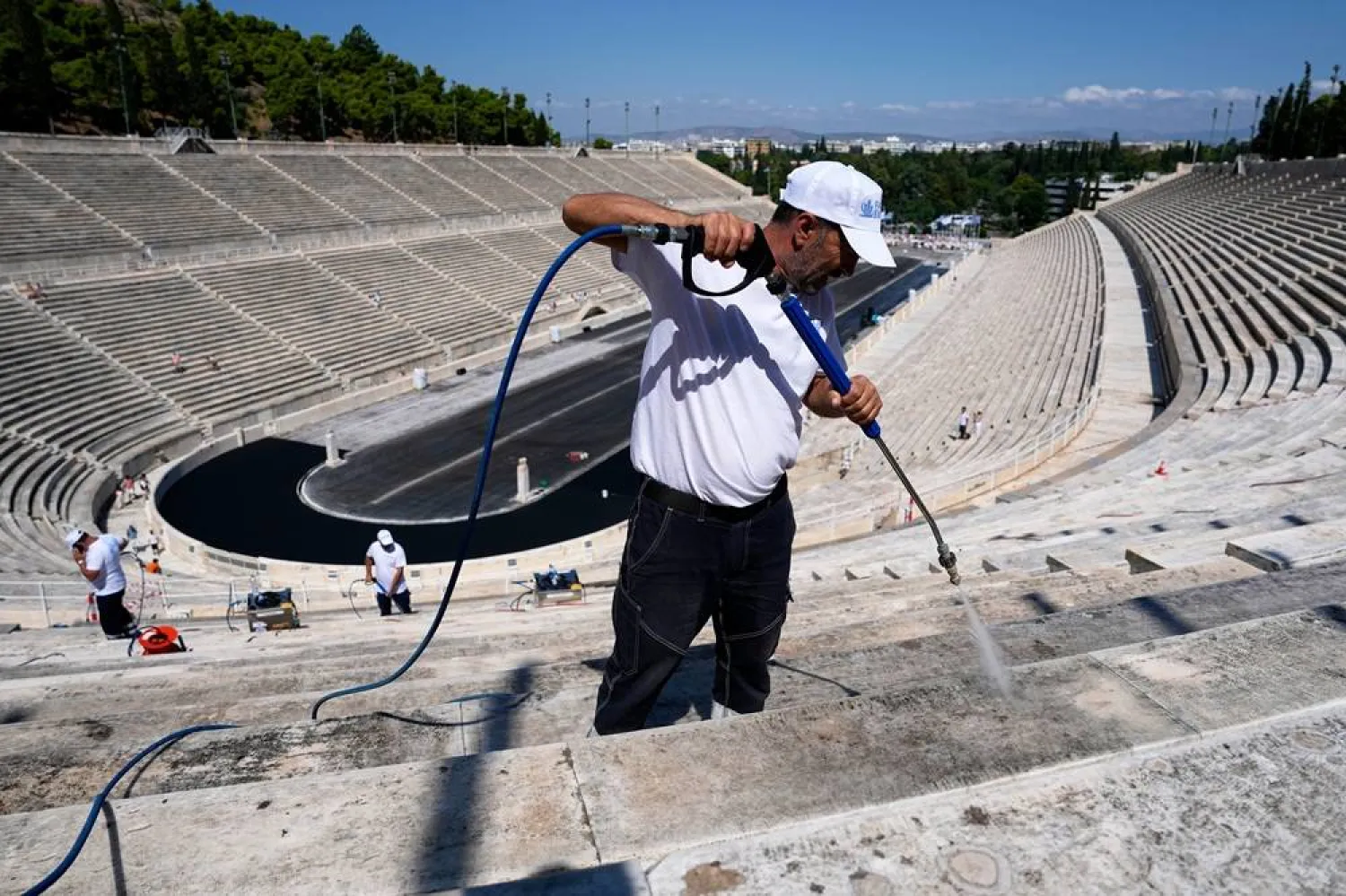
A worker cleans the marble surfaces of the Panathenaic Stadium, also known as "Kallimarmaro," or beautiful marble, which hosted the first modern Olympic Games in 1896, using a high-pressure water hose during renovation work in Athens, Greece, Thursday, Aug. 13, 2026. (AP Photo/Thanassis Stavrakis)
TT

Athens Is Cleaning Its All-Marble Olympic Stadium for the First Time in More Than a Century

A worker cleans the marble surfaces of the Panathenaic Stadium, also known as "Kallimarmaro," or beautiful marble, which hosted the first modern Olympic Games in 1896, using a high-pressure water hose during renovation work in Athens, Greece, Thursday, Aug. 13, 2026. (AP Photo/Thanassis Stavrakis)

It has welcomed marathon runners, rock stars and the first modern Olympic athletes. Now it’s time for a monumental scrub.

Athens’ U-shaped Panathenaic Stadium — made entirely of white marble — is getting its first systematic cleaning in more than a century.

Rebuilt for the first modern Olympics in 1896, the site is the ceremonial send-off point for the Olympic flame, including for Los Angeles 2028.

A fresh look in Athens ahead of LA 2028 The stadium is made of the same glittering marble used on the Acropolis, making the cleanup job delicate.

The work is revealing a monument changed by time, weather and millions of visitors. Cleaners in white and blue overalls move across the stadium’s 47 steep tiers with thin spray lances, using clean water at carefully controlled, low pressure. Machines vacuum up the runoff as they go.

“The goal of cleaning is not to make everything white. It’s to remove the dirt and the first layers of organic material that are deposited on the surface,” said Dimitris Selemis, a senior conservator at the site.

“The idea is to clean all the material that (contains) dirt from the surface, so we have a better understanding of the monument,” he said, noting that there is more weed growth and dirt in areas that receive less direct sunlight.

Crews are also using steam to remove blotches of chewing gum, which have turned black over time. Stadium officials say chewing gum, high heels and soft-drink stains are among the main culprits that stain the marble.

Now slowly being revealed, the original gleaming look of the venue earned it the widely used Greek nickname “Kallimarmaro,” or beautiful marble.

“We call it Kallimarmaro because it is made of the finest marble, the best that was ever produced ... We are very proud of it,” Isidoros Kouvelos, president of the Hellenic Olympic Committee, told The Associated Press in an interview.

“It needed to be cleaned of everything that has accumulated over all these years," he said. "This way the Panathenaic Stadium will show all its brilliance and will once again be the foremost monument of humanity for the Olympic Movement.”

Built into a natural ravine, the stadium’s site was used for ancient Greek athletic contests and later Roman spectacles before falling into centuries of disuse.

An African celebration planned in Athens Since its 1896 revival, it has staged fashion shows, rock concerts, boxing matches and national celebrations — as well as lavish patriotic ceremonies ordered by a military dictatorship in the 1960s.

Today, it’s a popular draw for tourists. Apart from the cleanup, the Kallimarmaro is also getting a new track, upgraded lighting and fresh support facilities. The project is privately funded by a shipping company and overseen by the Hellenic Olympic Committee with guidance from Culture Ministry experts.

The work will continue through 2026 but is currently concentrated on the stadium’s “sling,” or curved end, in time for the next torch-passing ceremony on Sept. 10.

That will be for the Dakar Youth Olympics, scheduled for Oct. 31-Nov. 13 in Senegal, which will be the first Olympic competition ever hosted in Africa.

IOC President Kirsty Coventry, a swimming gold medal winner from Zimbabwe, is due to attend the Sept. 10 ceremony, Kouvelos said.



Palestinian Artist Sliman Mansour Dies at 79

Painter and sculptor Sliman Mansour and his landmark 1973 painting, "Camel of Hardships". (Sliman Mansour on Instagram)
TT

Palestinian Artist Sliman Mansour Dies at 79

Painter and sculptor Sliman Mansour and his landmark 1973 painting, "Camel of Hardships". (Sliman Mansour on Instagram)

Painter and sculptor Sliman Mansour, one of the most prominent names in Palestinian art, has died at the age of 79, his family announced.

Mansour, whose vivid artwork depicted both Palestinian traditions and his people's struggles under Israeli occupation, died on Monday at his home in east Jerusalem, his family said.

"The final chapter has been written. With hearts gripped by sorrow beyond description, we announce that our dear father has left this world," the family said in a statement.

"For the world, he leaves behind a life filled with beauty and memories, and a legacy that will continue through everyone whose lives he touched. As for us, we have lost a father who was the source of our love, our strength and our refuge."

Mansour was born in Birzeit, north of Ramallah, in 1947 and studied art and design in Jerusalem, graduating in 1970.

The Palestinian Culture Ministry mourned Mansour, calling him "one of the most important pillars of contemporary Palestinian visual art, whose career over decades formed part of the Palestinian visual and national memory".

The ministry hailed his landmark 1973 painting, "Camel of Hardships", depicting an elderly Palestinian porter carrying the city of Jerusalem on his back, as "an artistic and national icon", adding that his work served "as witness to Palestinian history and guardian of identity".

Mansour was the recipient of numerous awards, among them the UNESCO-Sharjah Prize for Arab Culture in 2019.


Saudi Arabia Establishes Cultural Center in Paris

Saudi Arabia Establishes Cultural Center in Paris
TT

Saudi Arabia Establishes Cultural Center in Paris

Saudi Arabia Establishes Cultural Center in Paris

The Saudi Ministry of Culture announced on Monday the establishment of a Saudi cultural center in Paris on the sidelines of the visit of Prince Mohammed bin Salman bin Abdulaziz Al Saud, Crown Prince and Prime Minister, to France.

The center will serve as a platform for promoting Saudi culture and highlighting its historical depth and creative diversity through high-quality cultural programs and initiatives involving French practitioners, institutions and the public.

It will support the international presence of Saudi cultural practitioners, strengthen communication between intellectuals and creative professionals in the two countries, and build strategic partnerships between Saudi and French cultural institutions, facilitating the exchange of expertise and implementation of joint cultural initiatives.

The establishment of the center reflects the continued development of Saudi-French relations and underscores the Kingdom's commitment to strengthening its international cultural presence and presenting an authentic cultural image that introduces the world to its rich heritage and contemporary creative output.


Saudi-French Joint Ministerial Committee on AlUla Underlines Commitment to Deepen Partnership

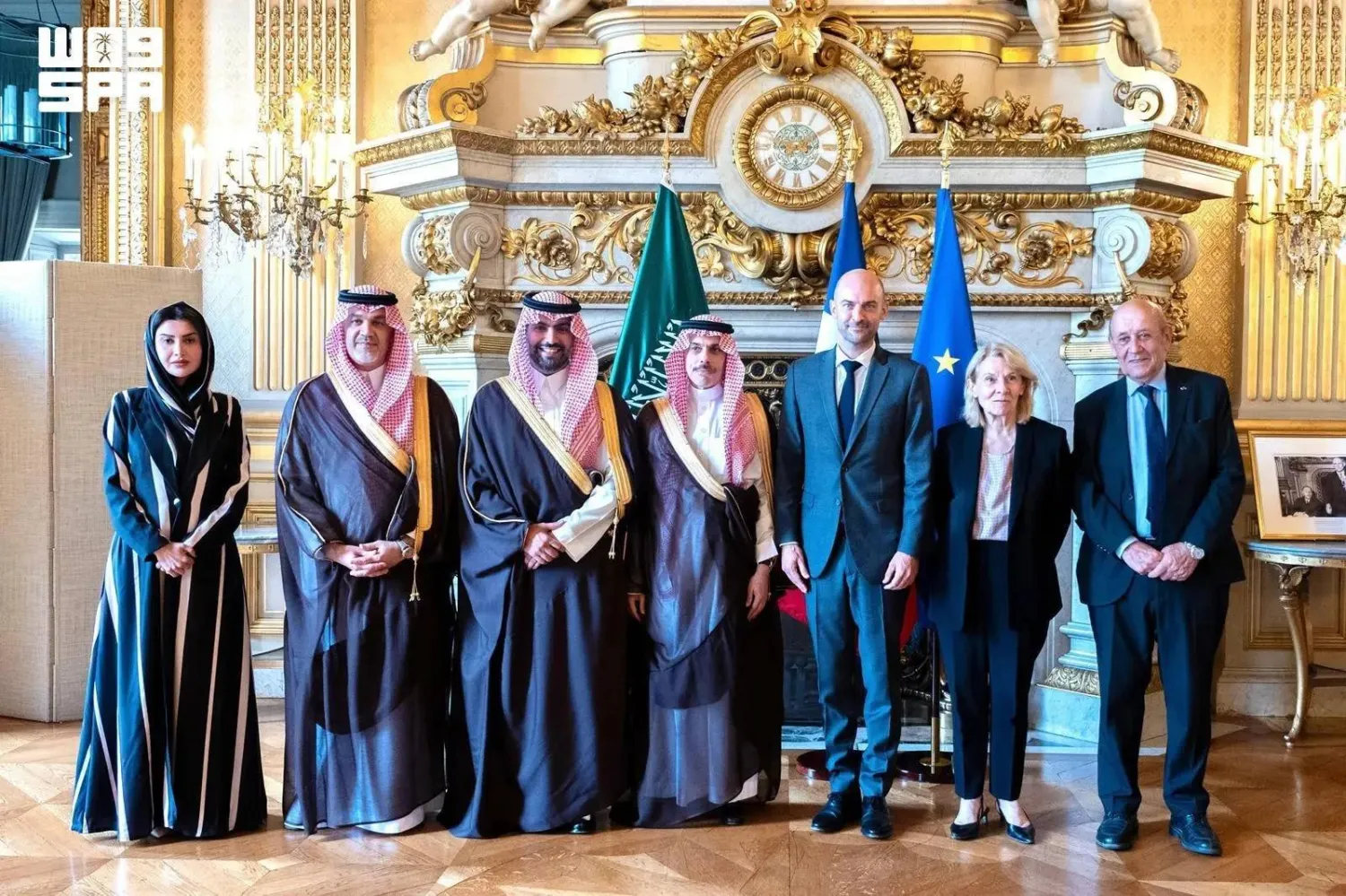
Saudi Minister of Culture and Governor of the Royal Commission for AlUla Prince Badr bin Abdullah bin Farhan (third from left) and French Minister for Europe and Foreign Affairs Jean-Noel Barrot (third from right) during the meeting of the joint Saudi-French Ministerial Committee on AlUla on Monday. (SPA)
TT

Saudi-French Joint Ministerial Committee on AlUla Underlines Commitment to Deepen Partnership

Saudi Minister of Culture and Governor of the Royal Commission for AlUla Prince Badr bin Abdullah bin Farhan (third from left) and French Minister for Europe and Foreign Affairs Jean-Noel Barrot (third from right) during the meeting of the joint Saudi-French Ministerial Committee on AlUla on Monday. (SPA)

The joint Saudi-French Ministerial Committee on AlUla held a meeting in Paris on Monday, chaired by Saudi Minister of Culture and Governor of the Royal Commission for AlUla Prince Badr bin Abdullah bin Farhan and French Minister for Europe and Foreign Affairs Jean-Noel Barrot.

The meeting was attended by Saudi Minister of Foreign Affairs Prince Faisal bin Farhan bin Abdullah, Minister of Investment Fahad Al-Saif, and Chief Executive Officer of the Royal Commission for AlUla Abeer Al-Akel. Also present were French Minister of Culture Catherine Pegard, Minister of Economy, Finance and Industry Roland Lescure, and Chairman of the French Agency for AlUla Development (AFALULA) Jean-Yves Le Drian.

The officials welcomed the signing of an agreement to extend and amend the agreement concluded between the Saudi and French governments on the cultural, environmental, tourism, human, economic, and heritage development of AlUla Governorate.

They reviewed the partnership's achievements and discussed avenues for future cooperation, reflecting the strength of relations between the two countries and affirming AlUla's position as a meeting point of civilizations and a global destination for culture, creativity, and sustainable development.

They underlined their commitment to further deepening the partnership, which has become a global model for international cooperation based on the exchange of mutual benefits and knowledge, contributing to the achievement of comprehensive and sustainable development goals.

The meeting reviewed the scale of joint investments and areas of ongoing cooperation in the sectors of archaeology, arts, culture, sports, hospitality, and human-capital development.

The partnership reflects a shared commitment to sustainable development through strategic projects, such as the AlUla Tram and the Sharaan Resort, designed by Jean Nouvel, as well as investments in renewable energy, water, and mobility, supporting the objectives of Saudi Vision 2030 to attract one million visitors and global investments while preserving AlUla's cultural and natural heritage.