
'People Could Get Hurt': Conservationists Decry AI Wildlife Visuals

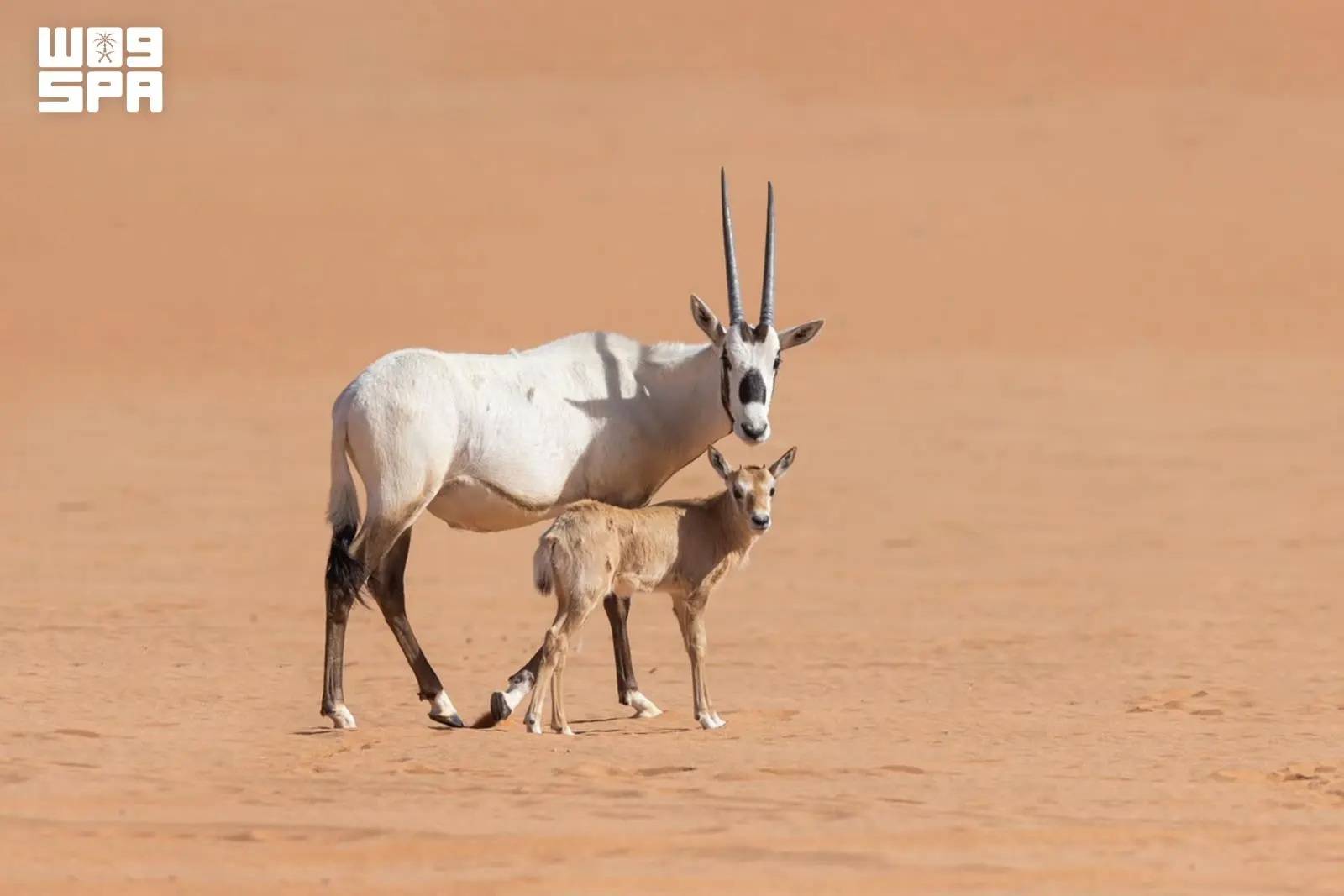
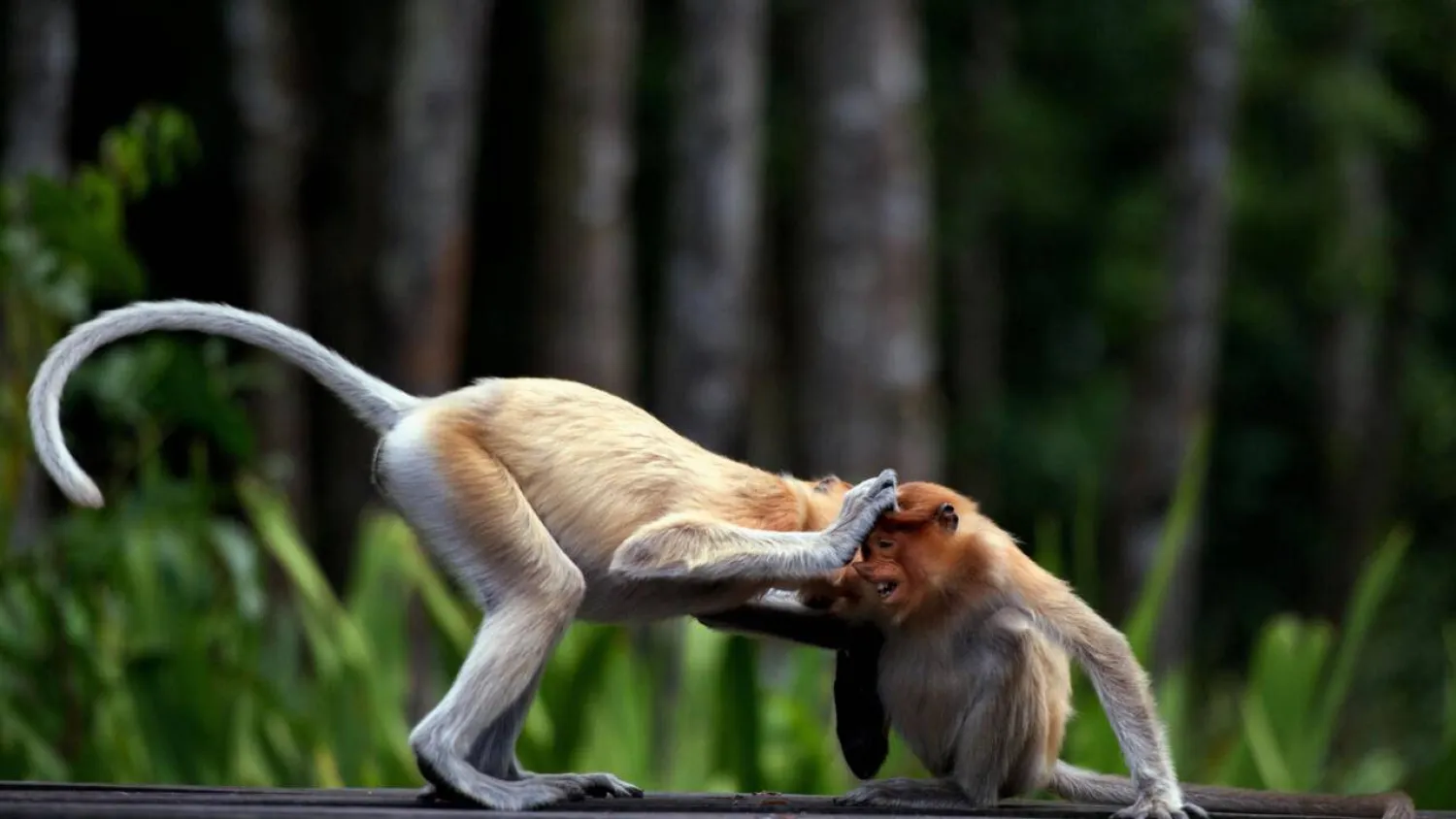
Conservationists warn AI visuals of wild animals make it harder for people to discern what is real. Alex Ogle / AFP/File
TT

'People Could Get Hurt': Conservationists Decry AI Wildlife Visuals

Conservationists warn AI visuals of wild animals make it harder for people to discern what is real. Alex Ogle / AFP/File

The black-and-white image appears to show the unlikeliest of interactions: an orangutan cradling endangered leopard cubs deep in the jungles of Malaysia's Sabah state.

But the viral image is not just unlikely, it is fake, part of a trend of wildlife images generated by artificial intelligence that experts warn endanger animals and people.

AFP fact-checkers have debunked scores of similar synthetic visuals, from an elephant climbing a tree to escape flooding in Myanmar to a pink dolphin leaping out of water in the Philippines.

The images are often accompanied by heartwarming anecdotes and have circulated widely in multiple languages on platforms such as Facebook, TikTok and X.

They may seem more like feel-good fiction than dangerous misinformation, but experts warn hyper-realistic visuals of wild animals behaving like pets, or even like humans, can distort public perceptions of wildlife and harm conservation efforts.

"This misunderstanding can lead people to approach animals too closely or interact with them in unsafe ways," Jose Guerrero-Casado, a zoology professor at Spain's University of Cordoba, told AFP.

He cited a widely reported incident in China's northwest Xinjiang region in January, where a woman was attacked by a rare snow leopard after trying to get closer for a photo.

China's forestry department said it stepped up patrols after the incident and warned the public to maintain a safe distance when encountering wild animals.

- Sowing doubt -

Conservationists say AI visuals portraying wild animals as cute or cuddly make it harder for social media users to discern what is real and can fuel exploitation.

They increase demand for certain species "to be used in the tourism industry as photo props, exploited to make social media content or to be kept as pets", said Chris Lewis, a researcher at the international wildlife charity Born Free.

And while the visuals could encourage some people to support animal protection, "the negative impacts outweigh that completely," said Jenny Roberts of conservation group WWF.

"People could get hurt," she told AFP.

WWF uses real images for its fundraising efforts, but fake content online "desensitizes" people to even the most incredible original visuals, she said.

"When you do have something remarkable, people question it," Roberts said, recounting an incident where a camera trap set up by her charity captured a tiger with five cubs in China.

Such footage had never been filmed before in the East Asian country, she said.

"But when we put the content out there, we were questioned on social media: 'Is this AI-generated?'"

- 'Major threat' -

A September study in the journal Conservation Biology, co-authored by Guerrero-Casado, concluded that the rapid spread of AI misinformation and its potential to harm environmental efforts is a "major threat" to society.

The researchers highlighted another challenge for those working in conservation: AI images "could affect the ability of people to identify species" and cause misunderstandings about the abundance and distribution of wildlife.

Scientists often mine data from citizen science platforms that accept photos and recordings of wildlife submitted by users.

But AI generation and manipulation could lead to flawed research, several experts warned in a recent commentary in the journal Nature.

They called for more robust authentication of submissions, and education of users about the risks of manipulating images and recordings.

Meta, Facebook's parent company, and TikTok require users to label realistic visuals that have been generated or significantly altered using AI. They also say their platforms have tools that automatically label content as AI-generated.

However, AFP fact-checkers spotted multiple wildlife posts without clear labels -- even when users had already said in their captions that they were fake.

Meta and TikTok pay AFP to fact-check posts with potentially false information.

"Conservation depends on a well-informed society that understands the ecological and conservation needs of wild species," Guerrero-Casado said.

"AI-generated fake content does not contribute to this goal."


Belgium’s Biggest Wildfire on Record Heads Towards Germany

This aerial photograph shows a wildfire burning in the Hautes Fagnes (High Fens) nature reserve in Waimes on August 15, 2026. (AFP)
TT

Belgium’s Biggest Wildfire on Record Heads Towards Germany

This aerial photograph shows a wildfire burning in the Hautes Fagnes (High Fens) nature reserve in Waimes on August 15, 2026. (AFP)

Firefighters worked through the night to battle Belgium's biggest wildfire on record, which by Sunday morning had burned 3,000 hectares of land and was heading towards the German border, local authorities said.

The blaze in the High Fens, a nature reserve in the east of the country, has been burning since Friday and firefighters from across Belgium and neighboring Germany and Luxembourg have sought ‌to contain it, ‌as have the army and ‌farmers.

Responders ⁠on Sunday were ⁠focused on the front line of the fire moving towards Germany and were hopeful that cooler, more humid weather would support efforts to contain it, Stephanie Ernoux, spokesperson for the administration of the Belgian region of Wallonia, told Reuters.

The fire is ⁠more than double the size of ‌a blaze in ‌2011 that burned close to 1,400 hectares, data from the ‌European Forest Fire Information System showed.

The EU deployed ‌three helicopters and two water bomber aircraft from around Europe on Saturday after Belgium requested emergency reinforcements.

Local authorities said the defensive line protecting evacuated villages from the fire ‌was holding on Sunday, though residents who had been evacuated on Saturday were ⁠told ⁠they should not yet return to their homes.

"No homes have been affected at this stage, although the fire remains close and smoke levels are significant," the office of the governor of Liege said in an update.

The blaze ignited as European countries including Belgium suffered their fifth heatwave of the summer this week.

Scientists say that human-caused climate change has increased the likelihood of the hot and dry conditions that allow wildfires to spread faster and burn longer.


Firefighters Battle Second Day of Blaze on Greek Island

A burnt vehicle after a fire that broke out in the summer resort of Siviri, Chalkidiki, northern Greece, 14 August 2026. (EPA)
TT

Firefighters Battle Second Day of Blaze on Greek Island

A burnt vehicle after a fire that broke out in the summer resort of Siviri, Chalkidiki, northern Greece, 14 August 2026. (EPA)

Firefighters battled for a second day on Sunday to contain a forest fire on the Greek Aegean island of Skyros, as the local mayor voiced hope it could soon be brought under control.

"Within the day I believe the fire will be fully extinguished," Skyros mayor Kyriakos Antonopoulos told state TV ERT.

The fire, which broke out on Saturday, prompted the evacuation of two small communities, but Antonopoulos said no inhabited areas were under threat on Sunday.

Reinforcements to the island of some 3,000 have been rushed in from neighboring areas.

After largely escaping the heatwave temperatures that blanketed much of Europe earlier this summer, Greece has been hit with several major wildfires since late July, fueled by unusually strong winds.

Five firefighters have died so far, including a Danish pilot killed in a mid-air collision between two Bell helicopters while battling a blaze near Athens earlier this month.

There was another scare last week when about 500 tourists were evacuated from beaches on the Halkidiki peninsula in northern Greece as a forest fire threatened two popular resorts.

Some 20,000 hectares of forest and agricultural land have burned this year in major fires near Athens and on the islands of Crete and Paros.

Greece is hit by wildfires every year. Experts say the risk is growing because of human-fueled climate change, which has made droughts and other extreme weather events more severe.


Passenger 53 on Flight 103: The Lebanese-American Haunted by Lockerbie in Life and Death

A photo of Lebanese-American Khaled Nazir Jaafar and his memorial. (Lockerbie Legacy Foundation website)
TT

Passenger 53 on Flight 103: The Lebanese-American Haunted by Lockerbie in Life and Death

A photo of Lebanese-American Khaled Nazir Jaafar and his memorial. (Lockerbie Legacy Foundation website)

On Dec. 21, 1988, Lebanese-American Khaled Nazir Jafaar boarded Pan Am Flight 103, traveling from Frankfurt to New York via London. He could not have known that the journey would end over the quiet Scottish town of Lockerbie or that his death would become entangled in one of the 20th century’s most complex criminal and political investigations.

The Boeing 747 exploded over Lockerbie, killing 270 people. As wreckage scattered across the Scottish countryside, Jafaar’s story was transformed from that of a young immigrant with plans for his future into the subject of conspiracy theories, accusations and intelligence intrigue stretching from Beirut to Washington.

The case has returned to public attention with “The Bombing of Pan Am 103,” a BBC-Netflix drama starring Patrick J. Adams and Peter Mullan. Beyond the politics of the international prosecution, the series examines the victims, their families and the initial investigation.

Among those stories is Jafaar’s. The architecture student, who occupied seat 53K, became a focus of early suspicion largely because of his background.

Born in Lebanon’s Bekaa Valley, Jafaar grew up in a family that emigrated to the United States and settled in Detroit, Michigan. At 20, he was studying architecture and hoped to build his future there.

A winter trip to Lebanon to visit family before Christmas abruptly ended those plans.

In the immediate aftermath of the bombing, investigators scrutinizing the passenger list quickly focused on Jafaar, the only Arab aboard the flight. His Lebanese origins and the fact that his journey began in Frankfurt fueled theories that he might have been a suicide bomber or an unwitting carrier of explosives planted in his luggage by Palestinian or Iranian groups.

His family in Detroit was left with the ordeal of mourning their son while confronting a terrorism stigma that followed his name in the international media for years.

Jafaar subsequently became central to an alternative theory of the Lockerbie bombing advanced for years by defense teams and prominent journalists.

The theory alleged that, because of his travel between Lebanon and Germany, Jafaar had been unwittingly drawn into a drug-smuggling network operating under the protection of the CIA and US Drug Enforcement Administration as part of a covert operation linked to efforts to secure the release of American hostages held in Beirut.

According to that scenario, the Popular Front for the Liberation of Palestine-General Command penetrated the protected route at Frankfurt Airport and substituted a suitcase containing a radio packed with Semtex for a drug shipment associated with Jafaar. The bomb was then allegedly transferred through a feeder flight to London Heathrow and loaded aboard Flight 103 without inspection.

Jafaar’s name also became intertwined in intelligence reports and competing theories with that of Badri Hassan, a figure linked to Libyan intelligence and to Swiss electronics company MEBO, which manufactured timers connected to the bombing investigation.

These claims helped sustain for years the so-called suitcase-switch theory and allegations that a protected drug-smuggling route had been exploited to place the bomb aboard the aircraft.

But forensic evidence presented before the special Scottish court ultimately pointed investigators in another direction.

Travel records and subsequent inquiries established that Jafaar had not checked luggage into the Boeing 747’s cargo hold. He carried two small pieces of hand luggage into the passenger cabin, including a cylindrical cloth bag.

After the explosion, investigators recovered both bags largely intact near Langholm, about 13 kilometers east of Lockerbie. They still contained Jafaar’s identification, wallet and some cash.

Technical examinations found no traces of explosives, burning or internal charring in his hand luggage. The findings showed that the bomb had detonated in the main baggage container, away from Jafaar and his seat, undermining claims that he had knowingly or unknowingly carried the explosives.

The court cleared Jafaar of involvement and convicted Libyan intelligence officer Abdelbaset al-Megrahi, concluding that the bomb suitcase had originated in Malta rather than through Jafaar in Frankfurt.

Despite his exoneration, Jafaar’s name remained embedded in the political history of Lockerbie — the story of a young Lebanese-American whose architectural ambitions ended aboard Flight 103 and whose reputation became another casualty of the bombing.